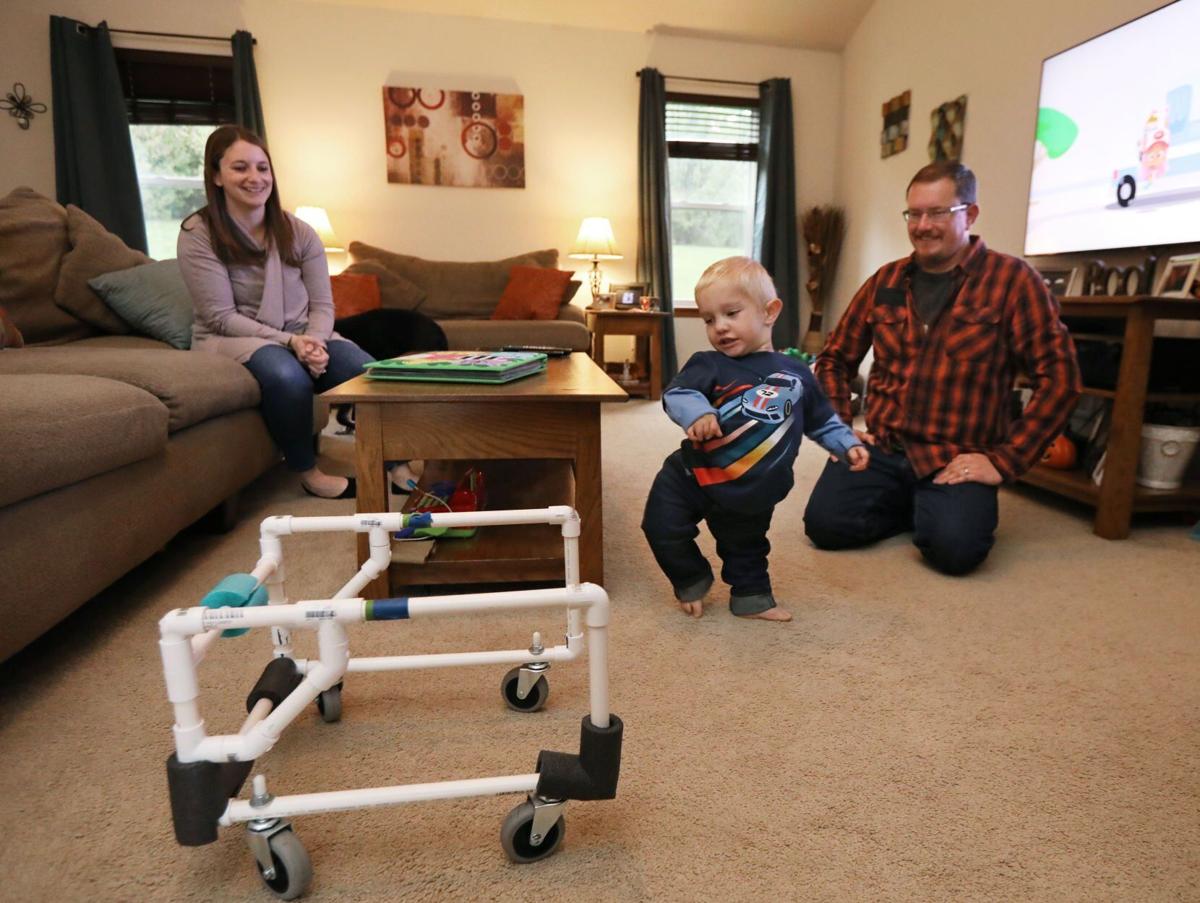
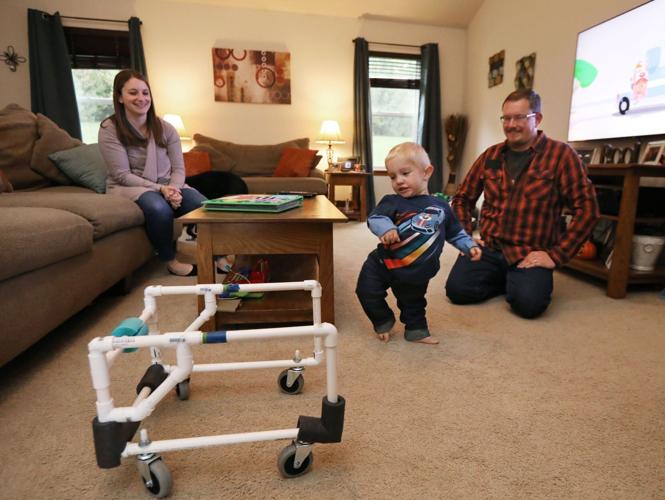
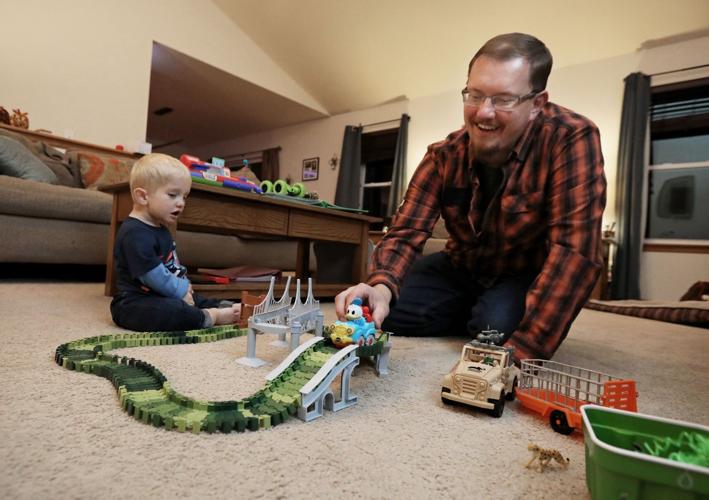
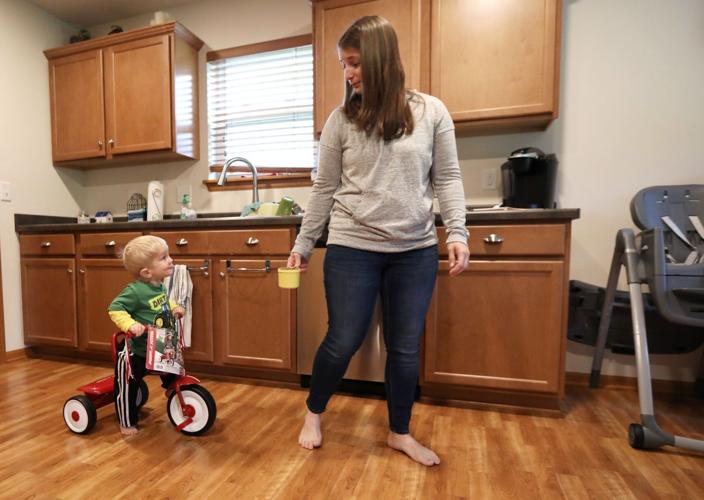
Theo Gutzdorf, with parents Rikki and Josh Gutzdorf at their home in Watertown, was born with numerous medical problems for which routine tests couldn't identify a cause. Through genome sequencing, he was diagnosed with the rare disorder Stuve-Wiedemann syndrome, which helped doctors know how to treat him. Josh custom-made Theo a walker before the 3-year-old started walking on his own.
Rikki and Joshua Gutzdorf’s son, Theo, 3, was born with Stuve-Wiedemann syndrome that was diagnosed three weeks after birth through genome sequencing at Children’s Hospital of Wisconsin near Milwaukee
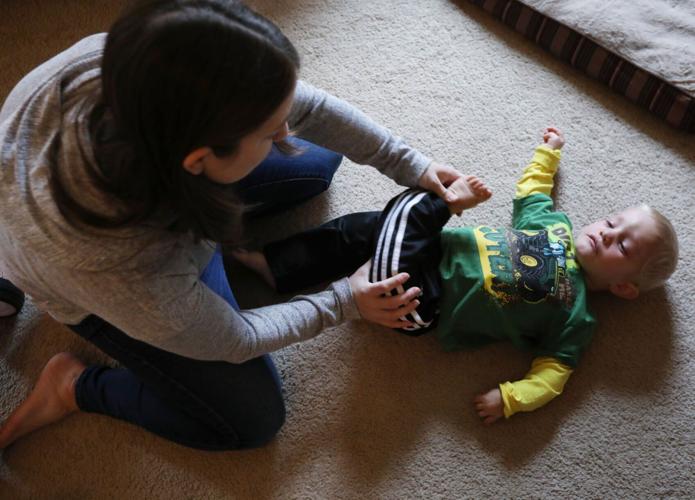
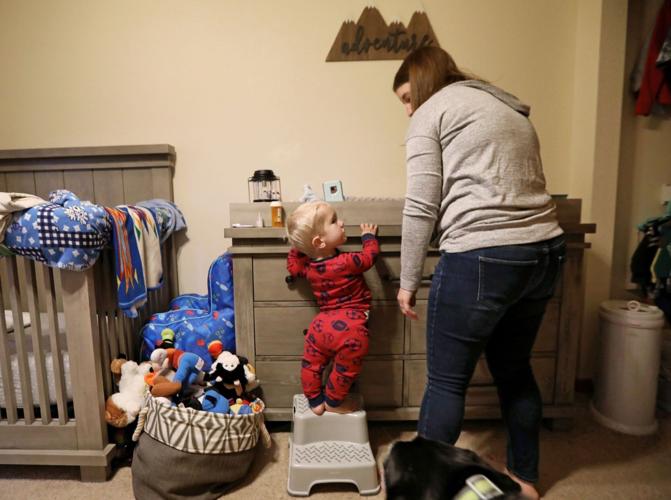
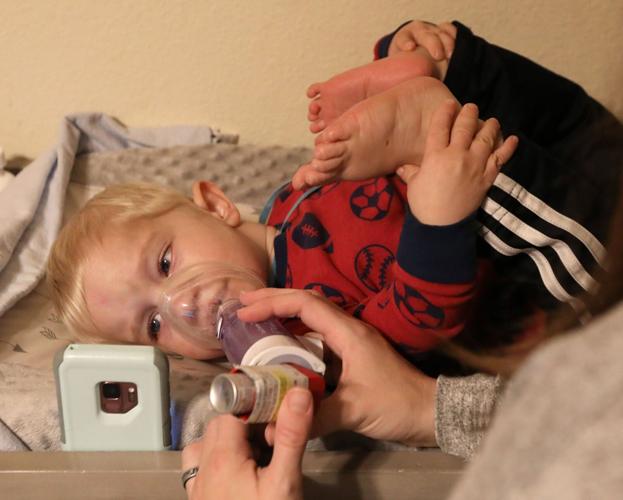
Rikki Gutzdorf regularly takes Theo, who has Stuve-Wiedemann syndrome, to therapy appointments and does stretches at home. The rare disorder can be fatal by age 1, but with an early diagnosis and regular care, Rikki said her son can thrive. “We want to make sure we’re giving Theo the best possible life," she said.
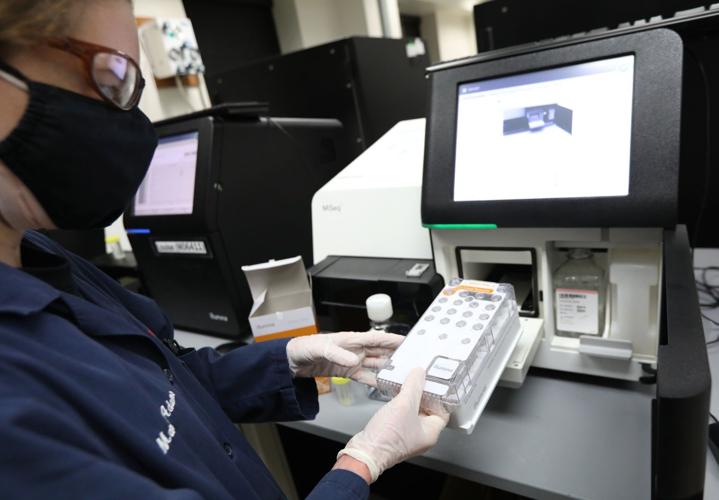
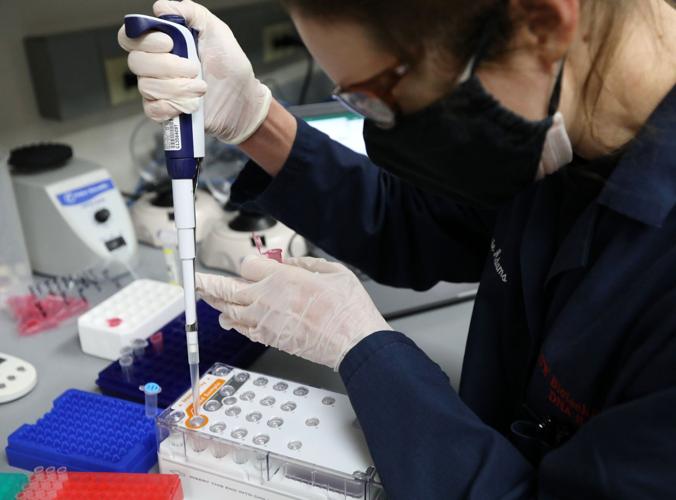
Amanda Maegli, research specialist at the DNA sequencing lab at the UW-Madison Biotechnology Center, loads a cartridge with DNA samples into a DNA sequencer.
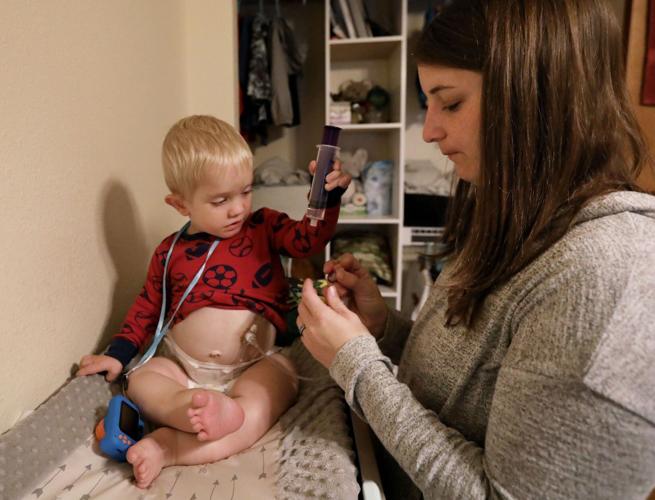
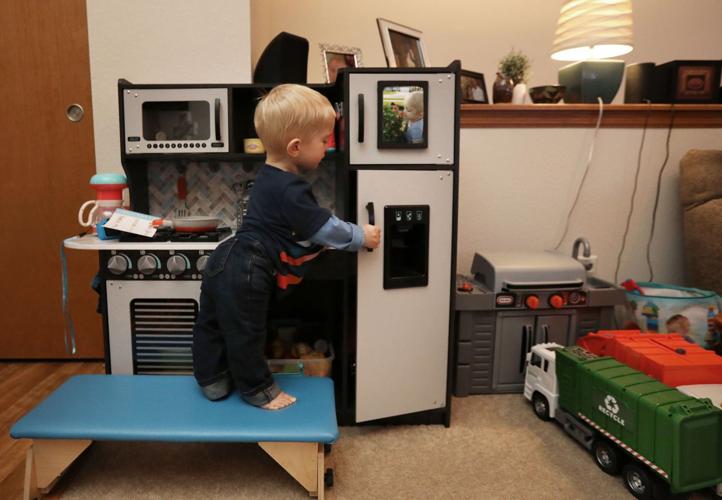
Josh Gutzdorf said he's grateful for every day with Theo, who spent his first 100 days in the neonatal intensive care unit. “We didn’t know if he was going to make it past one year of age," Josh said.
Rikki Gutzdorf was a preschool teacher specializing in special education before Theo was born with Stuve-Wiedemann syndrome. Her background, she said, “was the universe’s way of preparing us for Theo."
Genome sequencing for patients at UW Health's new Undiagnosed Genetic Disease Clinic is done at the UW-Madison Biotechnology Center, where research specialist Amanda Maegli prepares DNA samples for sequencing.
Theo Gutzdorf, with parents Rikki and Josh Gutzdorf at their home in Watertown, was born with numerous medical problems for which routine tests couldn't identify a cause. Through genome sequencing, he was diagnosed with the rare disorder Stuve-Wiedemann syndrome, which helped doctors know how to treat him. Josh custom-made Theo a walker before the 3-year-old started walking on his own.
Rikki Gutzdorf regularly takes Theo, who has Stuve-Wiedemann syndrome, to therapy appointments and does stretches at home. The rare disorder can be fatal by age 1, but with an early diagnosis and regular care, Rikki said her son can thrive. “We want to make sure we’re giving Theo the best possible life," she said.
Amanda Maegli, research specialist at the DNA sequencing lab at the UW-Madison Biotechnology Center, loads a cartridge with DNA samples into a DNA sequencer.
Josh Gutzdorf said he's grateful for every day with Theo, who spent his first 100 days in the neonatal intensive care unit. “We didn’t know if he was going to make it past one year of age," Josh said.
Rikki Gutzdorf was a preschool teacher specializing in special education before Theo was born with Stuve-Wiedemann syndrome. Her background, she said, “was the universe’s way of preparing us for Theo."
Genome sequencing for patients at UW Health's new Undiagnosed Genetic Disease Clinic is done at the UW-Madison Biotechnology Center, where research specialist Amanda Maegli prepares DNA samples for sequencing.