
The police raid of the Stonewall Inn didn't go as expected.

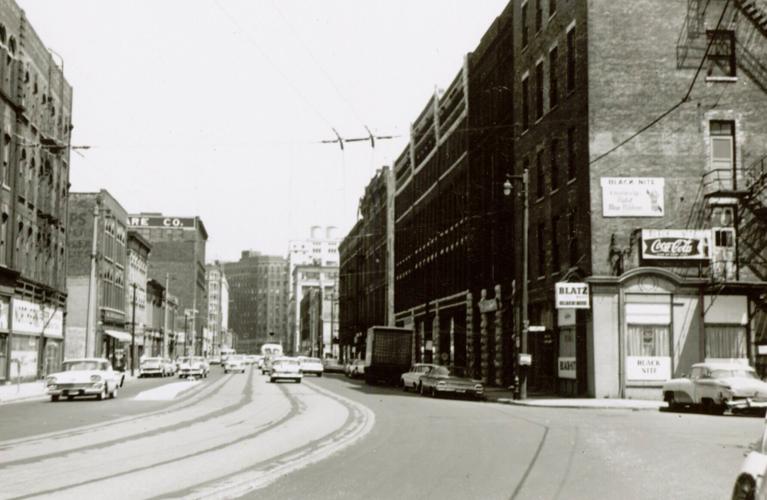
The former Black Nite tavern, an LGBTQ-friendly establishment, is at right in this photo from the early 1960s. The neighborhood just west of the Milwaukee River was leveled in the 1960s to make way for Interstate 794.
People are also reading…

Josie Carter identified as a woman in 1961 and helped fight back assailants who wanted to harass and beat customers at the Black Nite, a gay bar in downtown Milwaukee.

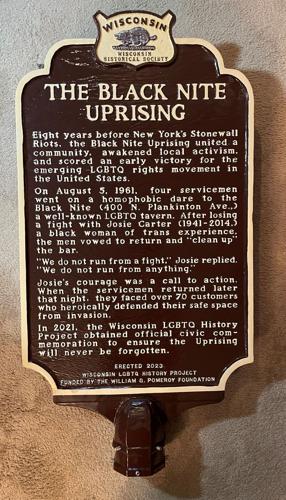
This historical marker from the Wisconsin Historical Society and the William G. Pomeroy Foundation will be installed at the corner of Plankinton and St. Paul avenues in downtown Milwaukee. The marker tells the story of the Black Nite Uprising.

Now an empty lot at the intersection of North Plankinton and East St. Paul avenues in Milwaukee, the site was the location of the former Black Nite tavern, an LGBTQ-friendly establishment in the early 1960s.

Peter Baker, a longtime resident of the community of Lake Ivanhoe in Walworth County, walks along the shoreline of the lake he first visited as a 10-year-old in 1965. Founded in 1926 as a resort by African American residents from Chicago, the development, no longer a resort, is now a collection of about 60 homes. The property's past was recognized with the installation of a marker from the Wisconsin Historical Society and the William G. Pomeroy Foundation.

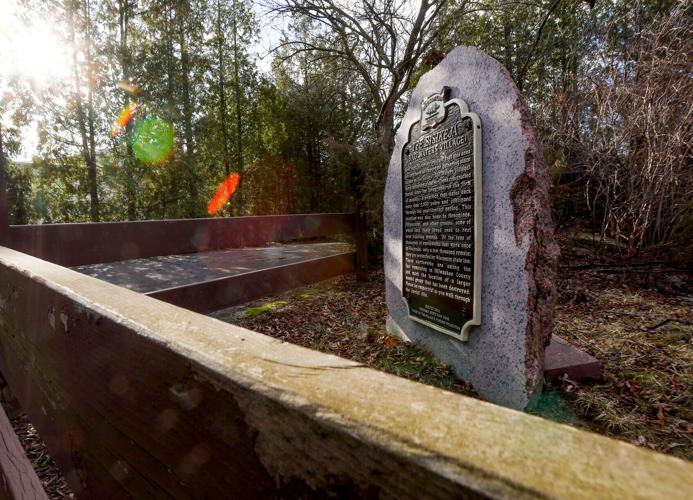
A marker from the Wisconsin Historical Society identifies the location of a former gathering place of ancestral Native Americans inside what is now State Fair Park in West Allis. Burial sites constructed in the form of mounds were made nearby, one of which still remains in the park.

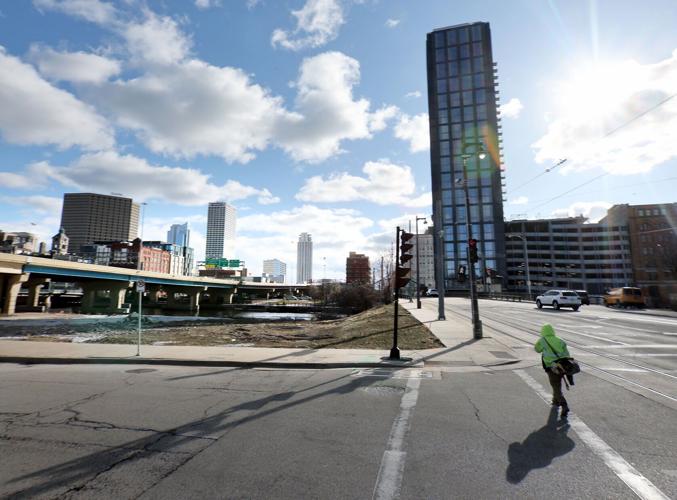
In 1967, residents from predominantly Black neighborhoods north of the 16th Street Viaduct in Milwaukee, above, marched on consecutive nights to the opposite end to protest discriminatory housing policies in the city. The marches sparked a movement that forced the city to confront segregation and prompted the City Council to pass an open housing ordinance. The site will soon be memorialized with a historical marker from the Wisconsin Historical Society.

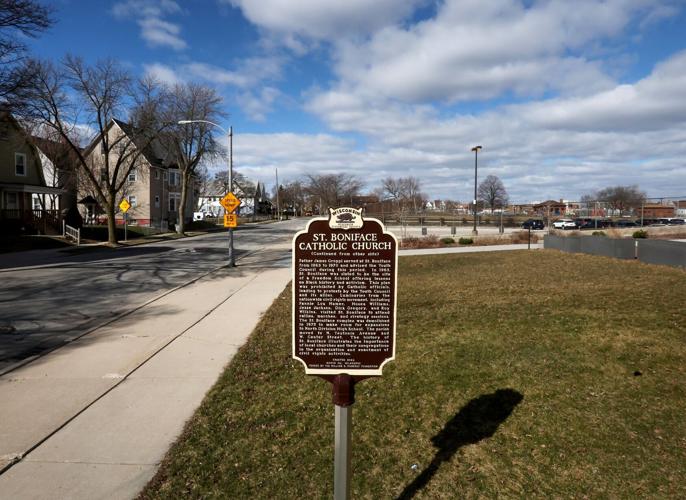
A Wisconsin Historical Society marker notes the former location of St. Boniface Catholic Church on Milwaukee's northwest side. The church, long since removed, served as a hub in the late 1960s for housing rights activists who staged marches, rallies and strategy sessions to protest discriminatory housing practices.
Photos: The Driftless Digger

Jim Winter has permission to search about 80 properties in southwestern Wisconsin, northeastern Iowa and northwestern Illinois.

Using a metal detector can mean finding a wide range of items. These toys were found in Benton and made the cover page of the History in the Dirt Metal Detecting Facebook group in May.

While searching the property of a rural church near Platteville last month, Jim Winter unearthed, from left, a lantern piece, crotal bell and a Wayne Tail Curler token.

Jim Winter was contacted last year by Jude Clayton but Winter was unable to search her Mineral Point yard until this year. Clayton's house was built in the mid-1870s.

Among Jim Winter's favorite finds are trade tokens, like these from E.E. Berry and Vollhardt & Winbigler, former businesses in Platteville. Winter found the tokens outside a rural church in Grant County.

Jim Winter, the Driftless Digger, marks a potential find while using a metal detector in the yard of a historic home in Mineral Point. Winter became fascinated with metal detecting as a child and in 2019 bought a professional metal detector to scour the lands of southwestern Wisconsin and beyond.

This Armed Expeditionary Forces pin from World War I was found by Jim Winter while searching a rural property in Vernon County.

Vintage coins are among some of the more common finds by Jim Winter.

Jim Winter, the Driftless Digger, pictured in Mineral Point.

Jim Winter inspects a find unearthed during an expedition in Mineral Point with his metal detector. His discoveries have included vintage coins, old locks, toys and small bells.

Jim Winter, the Driftless Digger, holds the tools of his trade, a metal detector and a small shovel during an outing in Mineral Point.

Jim Winter brings a padded case to store his better finds each time he searches a property. On this day in Mineral Point the objects included an escutcheon, left, a half-dollar-sized piece of metal commonly used years ago for ornamentation, and part of a square nail.
Barry Adams covers regional news for the Wisconsin State Journal. Send him ideas for On Wisconsin at 608-252-6148 or by email at badams@madison.com.