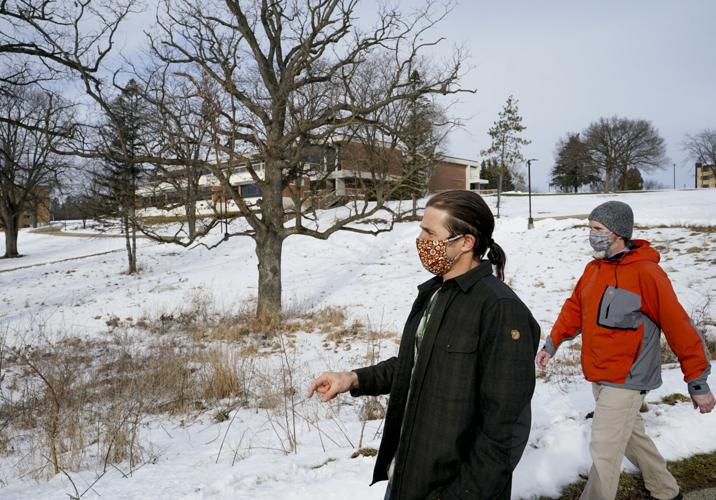
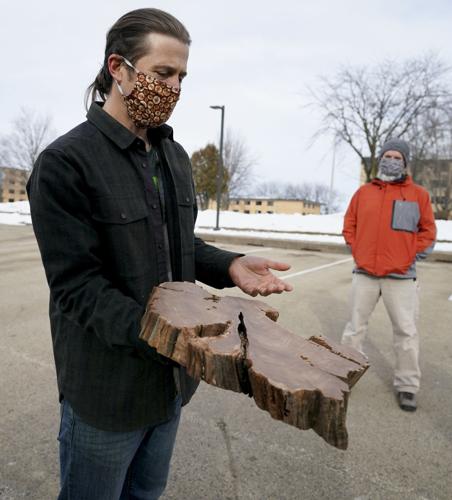
UW-Platteville geographers Evan Larson, left, and Chris Underwood study tree rings to reconstruct prehistoric climate patterns in the Driftless area. They've sampled oaks that date from the 1600s and cedars that are nearly 900 years old.
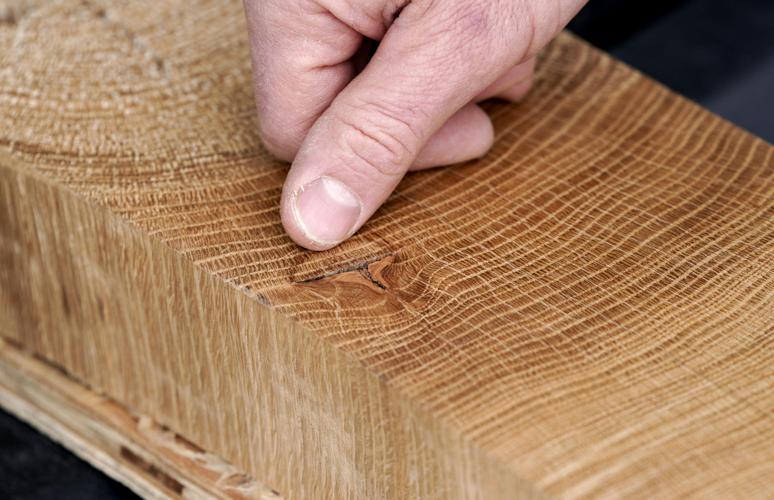
Evan Larson, a dendrochronologist, points to evidence of an injury on a piece of a white oak stump that dates from the early 1800s. The rings that trees add each year provide evidence of what was happening in their environment.
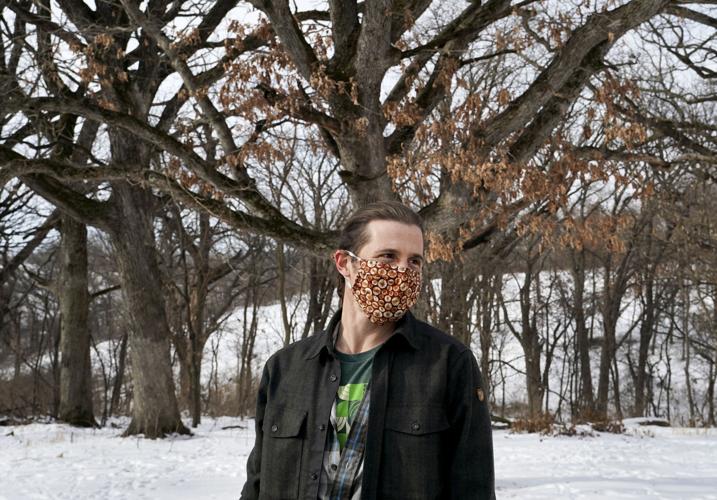
Evan Larson on the UW-Platteville campus. Larson and his colleague Christopher Underwood sampled live oaks, stumps and timber beams to reconstruct rainfall patterns in the 1700s and 1800s.
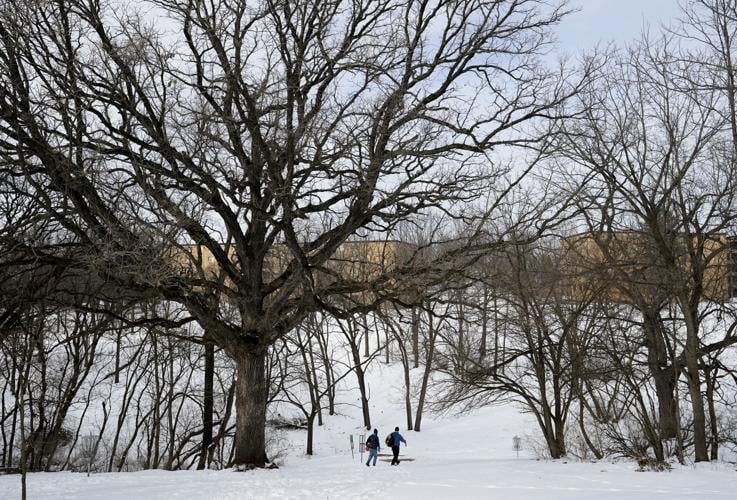
A white oak on the UW-Platteville campus. Geographer Evan Larson says the oldest oaks are often not the largest but have contorted, reaching branches — relics of a time before European settlers when trees were sparse.
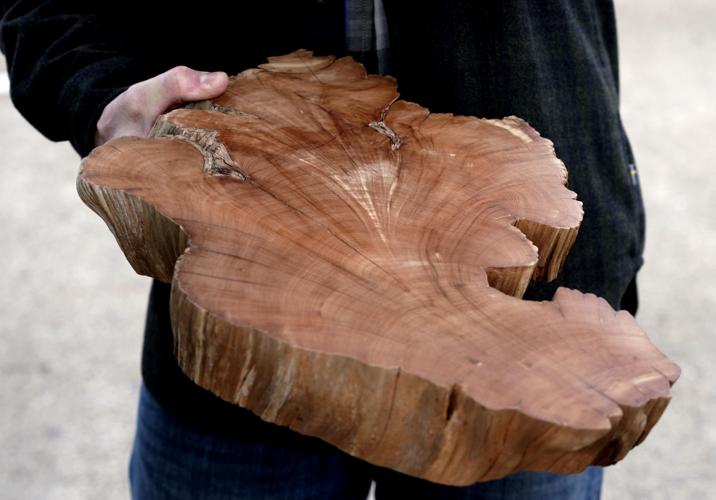
Evan Larson holds a piece of an Eastern red cedar stump. By comparing patterns in the tree rings, Larson determined the tree was growing near Devil's Lake in the early 1100s.
Geographer Evan Larson holds a piece of wood cut from the stump of an Eastern red cedar containing weather data going back nearly 900 years. "A tree is rooted to place," Larson said. "It is recording the environment all around it."
UW-Platteville geographers Evan Larson, left, and Chris Underwood study tree rings to reconstruct prehistoric climate patterns in the Driftless area. They've sampled oaks that date from the 1600s and cedars that are nearly 900 years old.
A white oak on the UW-Platteville campus. Geographer Evan Larson says the oldest oaks are often not the largest but have contorted, reaching branches — relics of a time before European settlers when trees were sparse.
Evan Larson, a dendrochronologist, points to evidence of an injury on a piece of a white oak stump that dates from the early 1800s. The rings that trees add each year provide evidence of what was happening in their environment.
Evan Larson holds a piece of an Eastern red cedar stump. By comparing patterns in the tree rings, Larson determined the tree was growing near Devil's Lake in the early 1100s.
Geographer Evan Larson holds a piece of wood cut from the stump of an Eastern red cedar containing weather data going back nearly 900 years. "A tree is rooted to place," Larson said. "It is recording the environment all around it."
Evan Larson on the UW-Platteville campus. Larson and his colleague Christopher Underwood sampled live oaks, stumps and timber beams to reconstruct rainfall patterns in the 1700s and 1800s.