UW-Madison team looks to bring carbon capture to market
CHRIS HUBBUCH
Updated
1 of 2
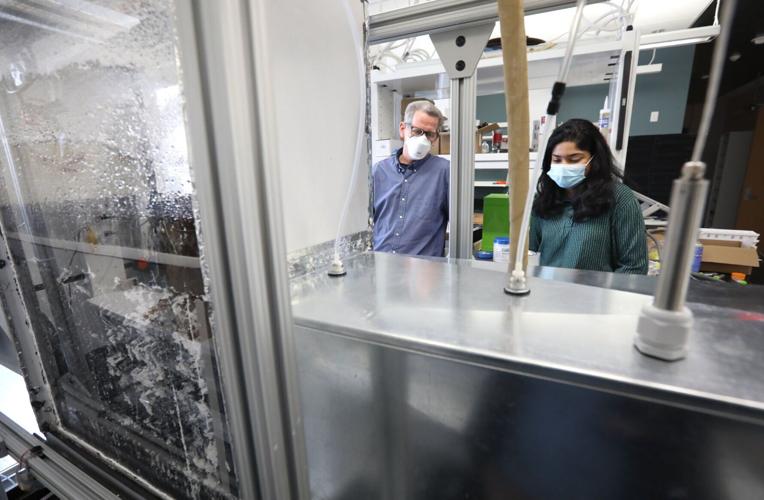
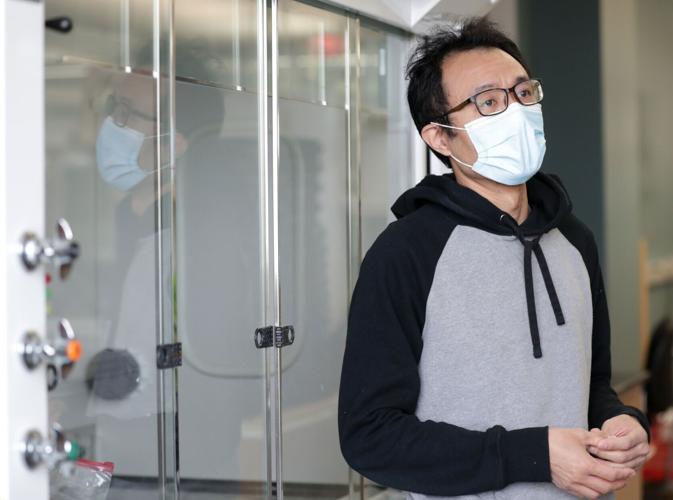
UW-Madison professor Rob Anex and graduate student Keerthana Sreenivasan discuss an "air contactor" that removes carbon dioxide from the air in Anex's lab at the Wisconsin Energy Institute in Madison.
AMBER ARNOLD, STATE JOURNAL
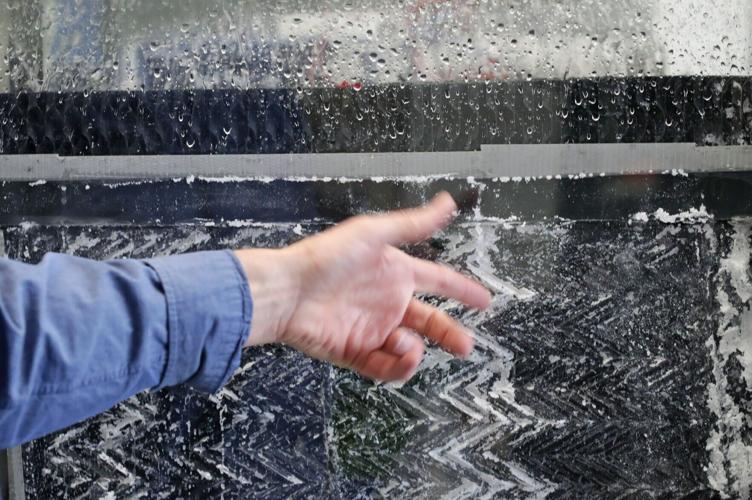
UW-Madison professor Rob Anex explains how a sodium hydroxide solution absorbs carbon dioxide molecules from the air.
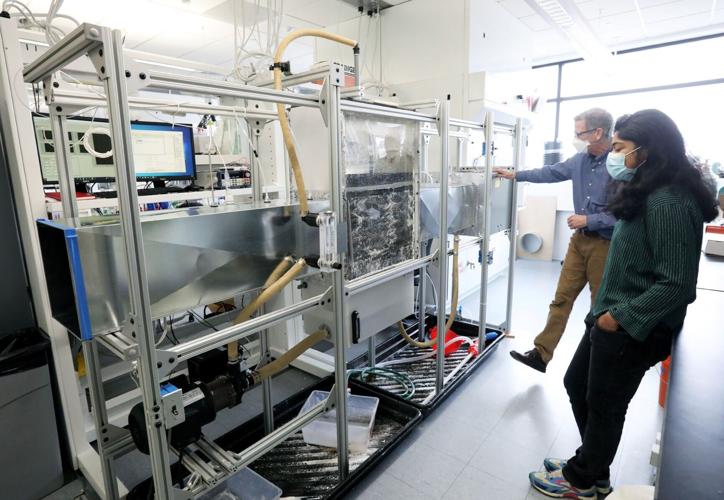
Professor Rob Anex and graduate student Keerthana Sreenivasan demonstrate Earth RepAIR, a technology that pulls carbon dioxide from the air so it can be trapped in particles used in building materials. The student-led project is a finalist in a $100 million XPRIZE competition for carbon removal.
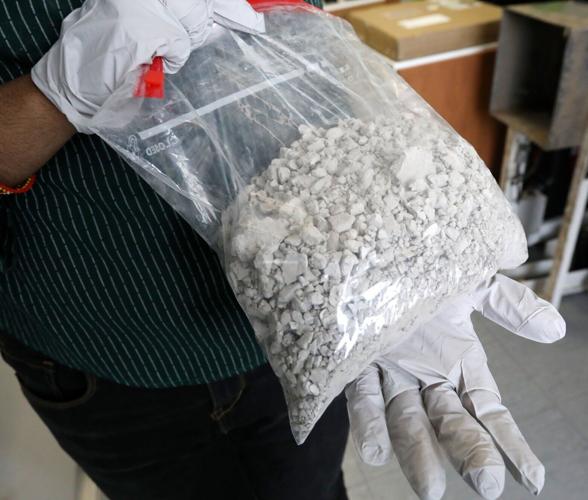
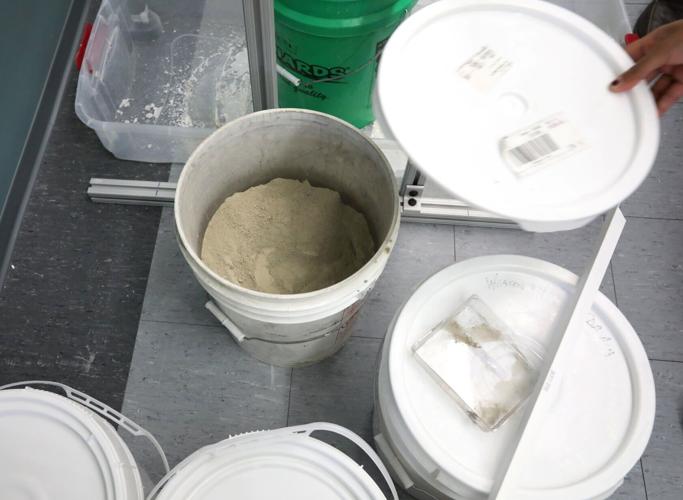
Pulled from the air, carbon dioxide is mixed with material like coal ash to form limestone, which can be mixed with building materials or used as a substitute for cement.
Bu Wang, an assistant professor of civil and environmental engineering, patented a method of removing carbon dioxide from the air and trapping it in solid particles with little energy input.
Once carbonated, the hydroxide solution is mixed with alkali waste such as coal ash, where it bonds with calcium to form calcium carbonate, commonly known as limestone, which can be used in cement.
UW-Madison professor Rob Anex and graduate student Keerthana Sreenivasan discuss an "air contactor" that removes carbon dioxide from the air in Anex's lab at the Wisconsin Energy Institute in Madison.
Professor Rob Anex and graduate student Keerthana Sreenivasan demonstrate Earth RepAIR, a technology that pulls carbon dioxide from the air so it can be trapped in particles used in building materials. The student-led project is a finalist in a $100 million XPRIZE competition for carbon removal.
Pulled from the air, carbon dioxide is mixed with material like coal ash to form limestone, which can be mixed with building materials or used as a substitute for cement.
Bu Wang, an assistant professor of civil and environmental engineering, patented a method of removing carbon dioxide from the air and trapping it in solid particles with little energy input.
Once carbonated, the hydroxide solution is mixed with alkali waste such as coal ash, where it bonds with calcium to form calcium carbonate, commonly known as limestone, which can be used in cement.