Rick Bernstein was intrigued when he heard about an interactive map showing close to 1,000 Madison-area properties with “racial covenants” — explicit language in property deeds from the first half of the 20th century that, at that time, legally promoted housing discrimination by forbidding the sale of a property to non-whites.
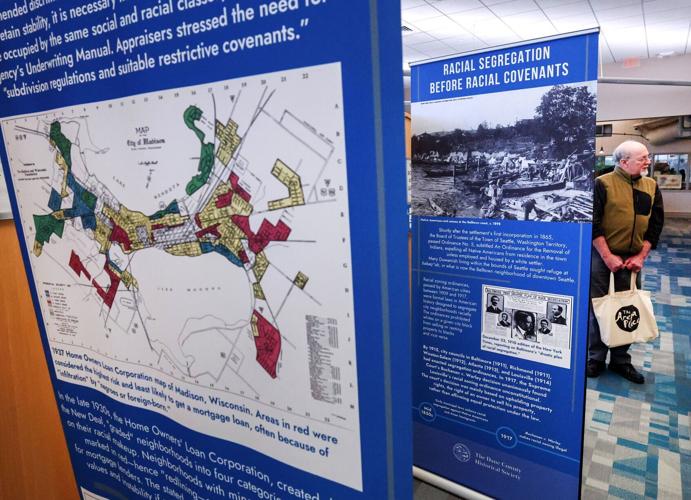
Rick Bernstein, executive director of the Dane County Historical Society, created the exhibit "Unjust Deeds: A History of Racial Covenants in Dane County and Beyond" after learning how prevalent the practice of restricted racial covenants was across the county in the first half of the 20th century. The exhibit also includes a discussion of redlining, with a map of the practice in Madison shown at left.
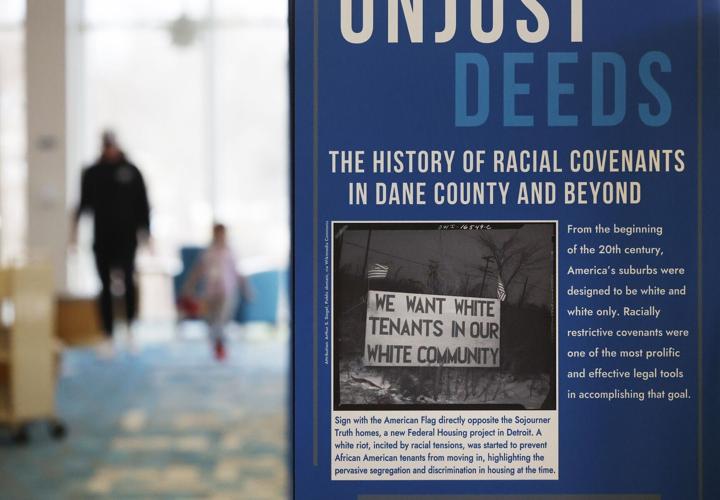
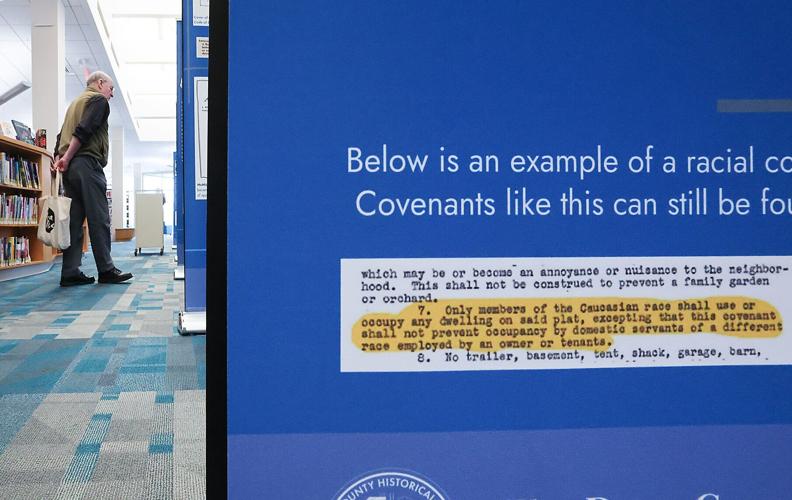
A panel in the "Unjust Deeds" exhibit, which was on display at Monona Public Library through February, shows an example of the wording from a racial covenant. Although today they are illegal and unenforceable, the statements remain in many property deeds in Dane County and across the country.
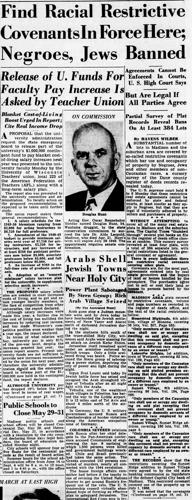
The Capital Times "thumbed through" Dane County plat books in 1948 after the U.S. Supreme Court declared racial covenants unconstitutional and found several deeds that contained the restrictions.
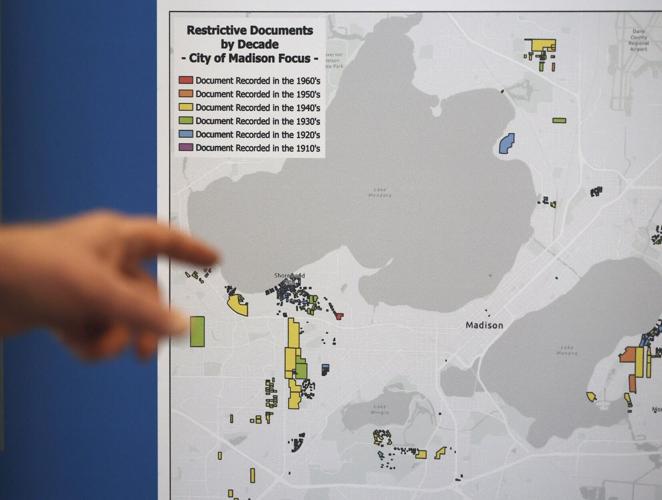
A map featured in "Unjust Deeds" shows where racial covenants have been identified across the Madison area. Those in yellow date from the 1940s while those in blue date from the 1920s.
The display "Unjust Deeds," shown here at the Monona Public Library, is traveling monthly to area libraries, with the next stop at the Belleville Public Library in March. Rick Bernstein, executive director of the Dane County Historical Society, will give a talk at each stop.
JOHN HART, STATE JOURNAL
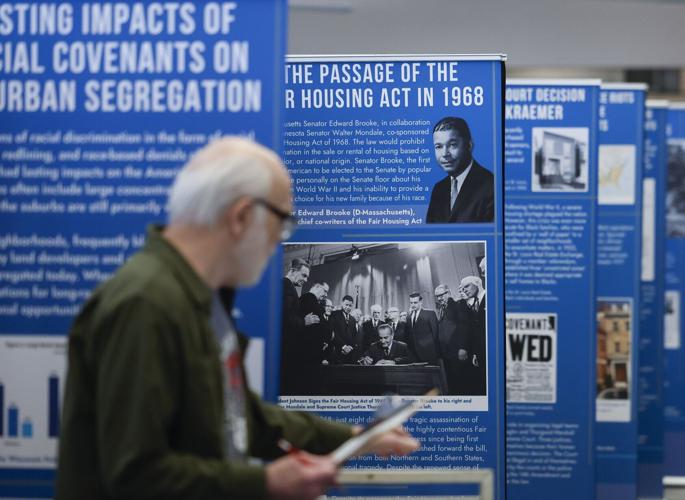
Rick Bernstein, executive director of the Dane County Historical Society, wanted to place racial covenants in a historical context in the exhibit "Unjust Deeds." The discriminatory practice was made illegal with the passage of the Fair Housing Act in 1968.
JOHN HART, STATE JOURNAL
Belleville library is the next stop for ‘Unjust Deeds’
Rick Bernstein, executive director of the Dane County Historical Society, created the exhibit "Unjust Deeds: A History of Racial Covenants in Dane County and Beyond" after learning how prevalent the practice of restricted racial covenants was across the county in the first half of the 20th century. The exhibit also includes a discussion of redlining, with a map of the practice in Madison shown at left.
The display "Unjust Deeds," shown here at the Monona Public Library, is traveling monthly to area libraries, with the next stop at the Belleville Public Library in March. Rick Bernstein, executive director of the Dane County Historical Society, will give a talk at each stop.
A map featured in "Unjust Deeds" shows where racial covenants have been identified across the Madison area. Those in yellow date from the 1940s while those in blue date from the 1920s.
Rick Bernstein, executive director of the Dane County Historical Society, wanted to place racial covenants in a historical context in the exhibit "Unjust Deeds." The discriminatory practice was made illegal with the passage of the Fair Housing Act in 1968.
A panel in the "Unjust Deeds" exhibit, which was on display at Monona Public Library through February, shows an example of the wording from a racial covenant. Although today they are illegal and unenforceable, the statements remain in many property deeds in Dane County and across the country.
The Capital Times "thumbed through" Dane County plat books in 1948 after the U.S. Supreme Court declared racial covenants unconstitutional and found several deeds that contained the restrictions.