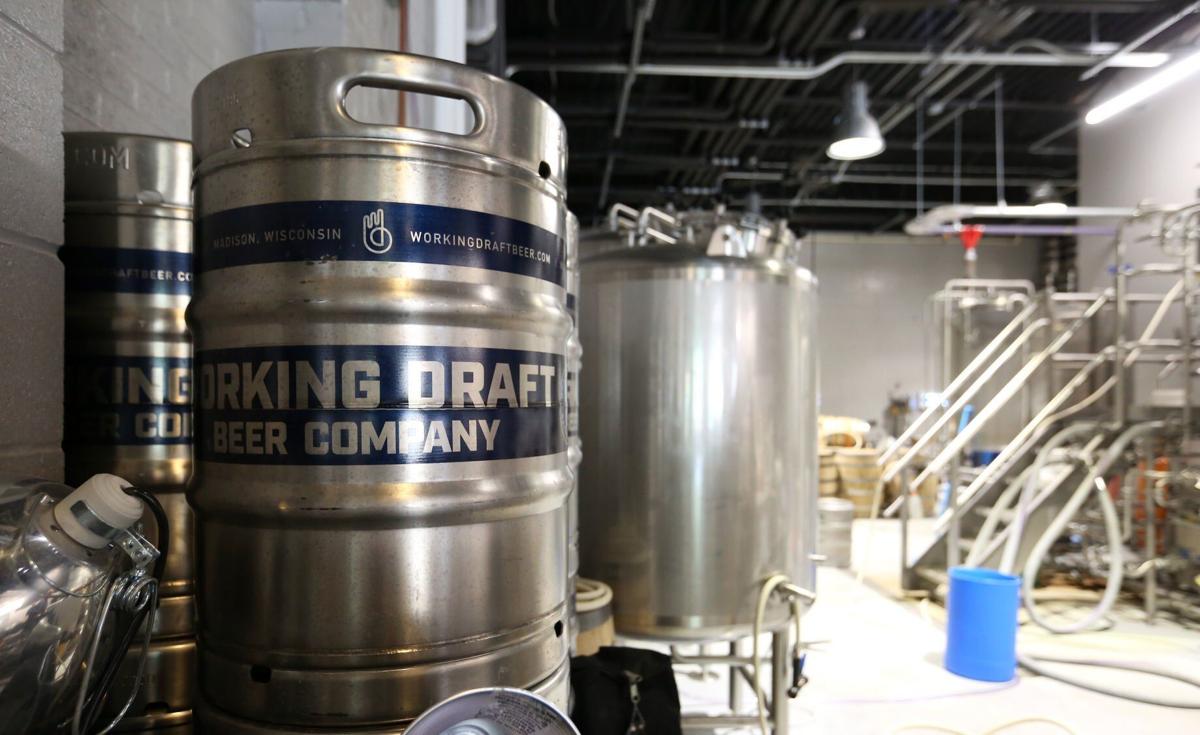
Five years ago, when Working Draft Beer head brewer Clint Lohman drew up a traditional Czech pilsner for the brewery’s pilot system, he had no idea it would lead to this.
Got a beer you’d like the Beer Baron or Draft Queen to pop the cap on? Contact Chris Drosner at chrisdrosner@gmail.com or follow him on Twitter @WIbeerbaron. Contact Katie Herrera at cellaredkatie@gmail.com or on Twitter @CellaredKatie.
If you go
What: Czech Fest, a celebration of Czech beer and culture, including 13 Czech or Czech-style beers poured on traditional side-pull taps
Where: Working Draft Beer, 1129 E. Wilson St.
When: Noon-11 p.m. Friday and Saturday. “Milk pour” toast at 5:30 p.m. Friday. Discussion of Czech beer led by head brewer Clint Lohman at 2 p.m. Saturday.
What makes a beer Czech?
The Czech family of styles stands apart even among the kaleidoscope of continental European lagers. Generally, Czech beers are low-alcohol (all of Working Draft’s are under 5% ABV) lagers.
Balance:Czech beers tend to be more heavily hopped (the gorgeous Saaz is very commonly used) but also have a correspondingly bigger malt bill than their German peers. They remain balanced but with moderately more intense flavors and aromas.
Czech yeast:Working Draft uses a single yeast strain of Czech origin for all its Czech-style beers.
Decoction:This pre-industrial technique in which a portion of the mashed grain is boiled then returned to the rest is deployed in modern breweries to impart depth and richness of malt character and denser foam (both hallmarks of Czech beers). Many craft breweries cannot decoct; Working Draft can only use the technique on its smaller pilot system.
Diacetyl:This compound with a buttery or butterscotch flavor is considered a flaw in most beers but is widely embraced at detectable levels in Czech styles. Lohman says that acceptance of a taboo characteristic was one of the reasons he became interested in Czech beers.