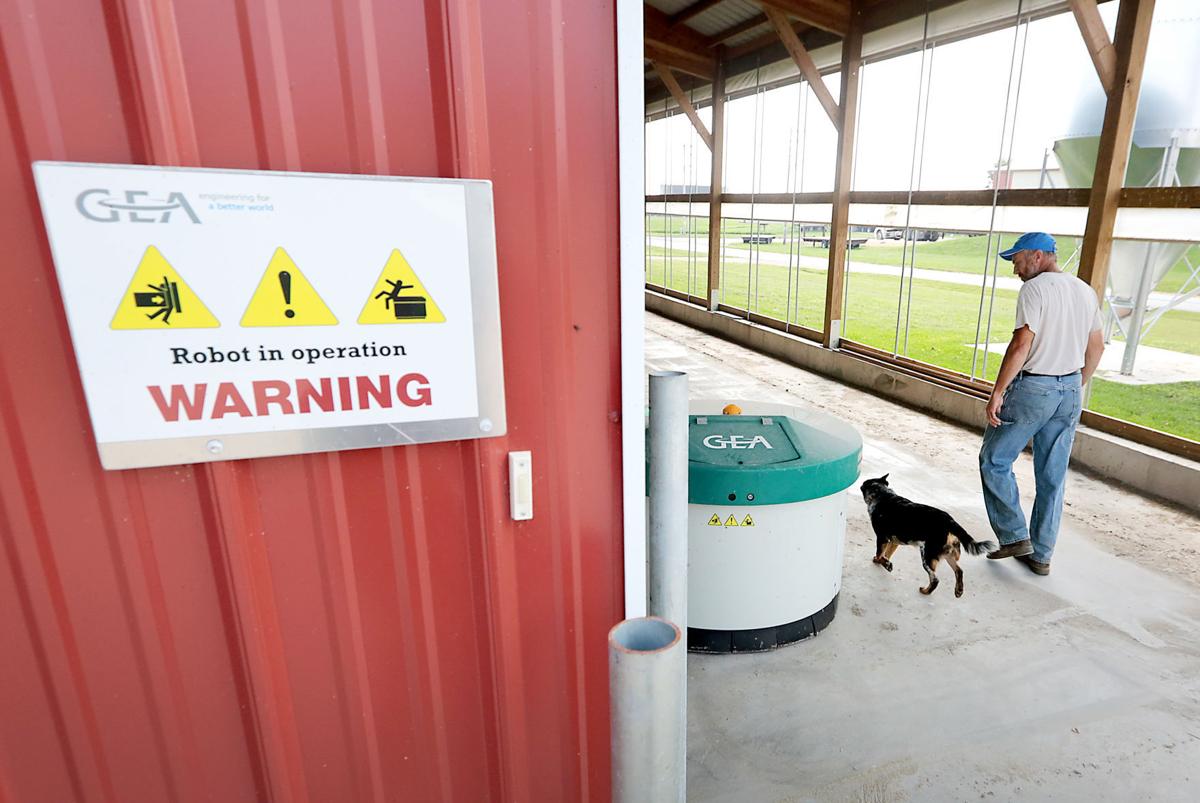
A sign indicating the presence of robotic equipment is affixed to the entrance of a cow barn at Corey De Buhr's dairy farm in Lancaster. Like many other employers, De Buhr has turned to automation to fill a need for reliable workers.
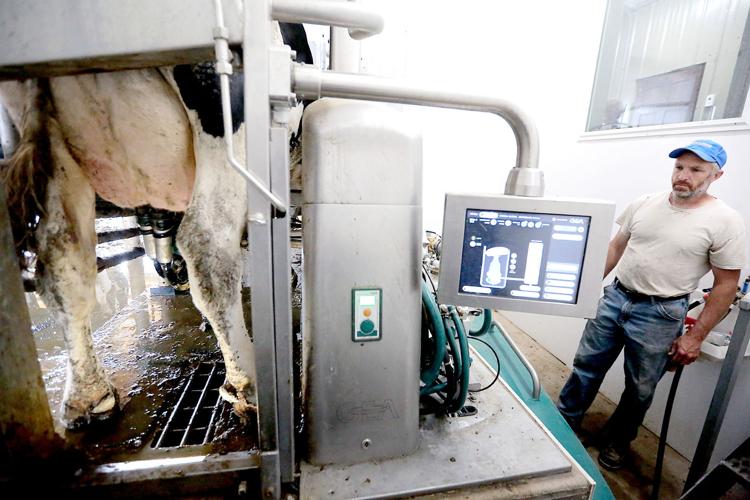
Unlike the previous mechanical milking devices at the De Buhr farm in Lancaster, the new robotic system doesn't require human workers to bring cows into the barn or attach the milking device to their udders.
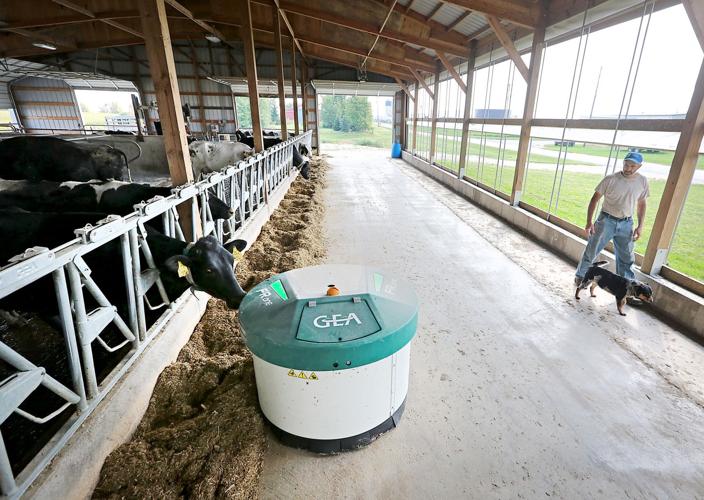
A robotic feeder made by GEA Farm Technologies makes its way through the cow barn at the De Buhr farm in Lancaster. The German-based company is hiring workers in the United States, but they require more education and training than the manual laborers the robots are replacing.
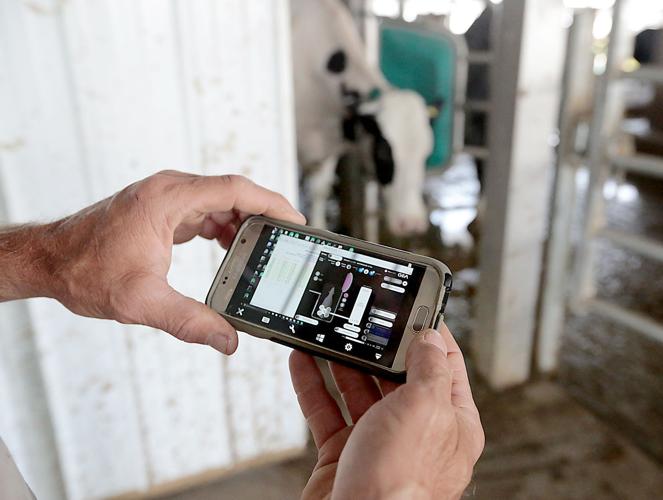
Cory De Buhr watches the progress of a robotic milking machine through a connection on his mobile phone at his dairy farm in Lancaster. As automation expands, more and more human jobs will require complex judgments, adaptation to unexpected events and interactions with other humans.
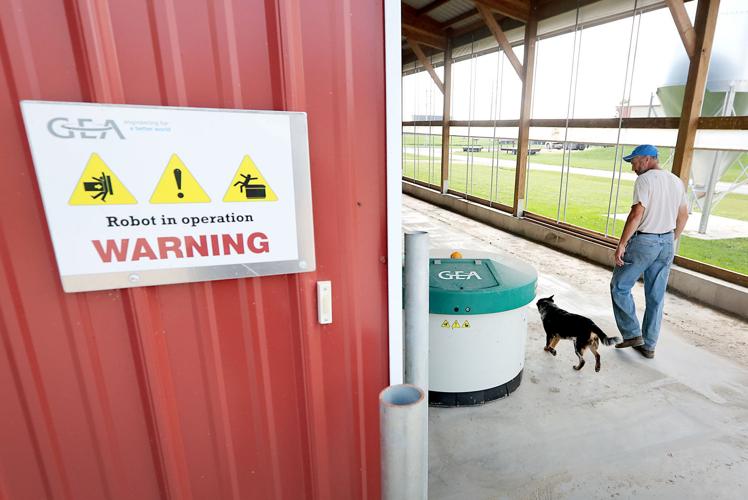
A sign indicating the presence of robotic equipment is affixed to the entrance of a cow barn at Corey De Buhr's dairy farm in Lancaster. Like many other employers, De Buhr has turned to automation to fill a need for reliable workers.
Unlike the previous mechanical milking devices at the De Buhr farm in Lancaster, the new robotic system doesn't require human workers to bring cows into the barn or attach the milking device to their udders.
A robotic feeder made by GEA Farm Technologies makes its way through the cow barn at the De Buhr farm in Lancaster. The German-based company is hiring workers in the United States, but they require more education and training than the manual laborers the robots are replacing.
Cory De Buhr watches the progress of a robotic milking machine through a connection on his mobile phone at his dairy farm in Lancaster. As automation expands, more and more human jobs will require complex judgments, adaptation to unexpected events and interactions with other humans.