Clean energy from ammonia: UW discovery a step toward carbon-free economy
CHRIS HUBBUCH
Updated
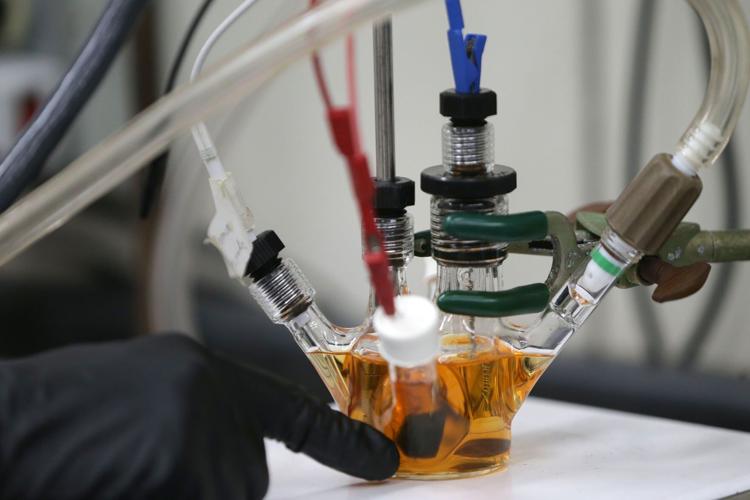
Researchers in Prof. John Berry’s chemistry lab found that ammonia combined with a catalyst containing ruthenium -- a transition metal similar to platinum -- spontaneously produces nitrogen, releasing electrons that can be siphoned off.
Researchers in Prof. John Berry’s chemistry lab found that ammonia combined with a catalyst containing ruthenium -- a transition metal similar to platinum -- spontaneously produces nitrogen, releasing electrons that can be siphoned off.
UW-Madison researchers discovered that ammonia, when combined with a ruthenium catalyst, spontaneously produces nitrogen, releasing electrons that can be harnessed as clean energy.
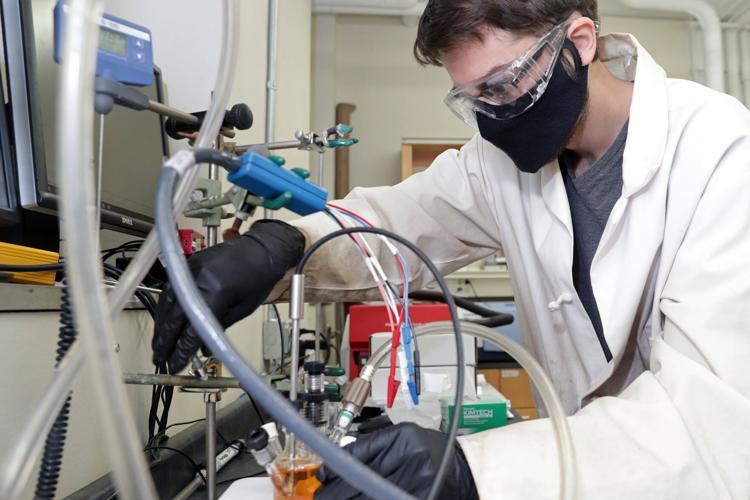
Graduate student Mike Trenerry sets up an experiment in the UW-Madison Chemistry Building, where he and other scientists discovered a new process to harness clean energy from ammonia.
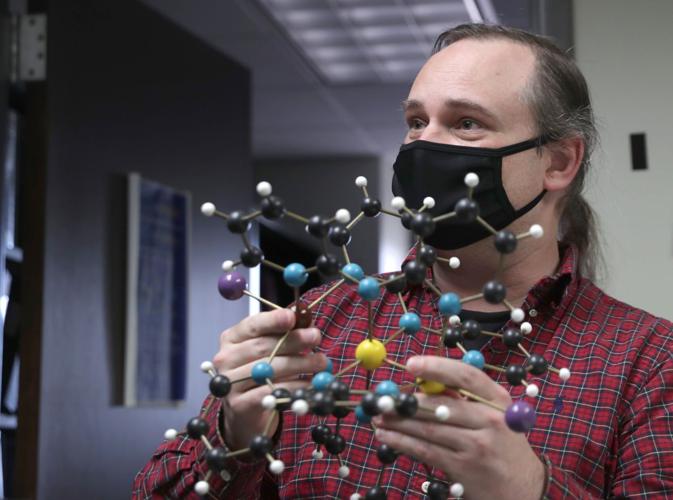
Professor John Berry, in his office at the UW-Madison Chemistry Building, discovered a new process for capturing energy from ammonia. "It’s very rare you find something ... that would actually be practical," he said.
Environmental reporter Chris Hubbuch's favorite stories of 2021
Stories are a bit like children when it comes to picking favorites. But then who has room in their wallet for pictures of 278 kids? So here are five that kind of stand out in my mind. I hope you enjoyed reading them as much as I did writing them.
UW-Madison researchers discovered that ammonia, when combined with a ruthenium catalyst, spontaneously produces nitrogen, releasing electrons that can be harnessed as clean energy.
Professor John Berry, in his office at the UW-Madison Chemistry Building, discovered a new process for capturing energy from ammonia. "It’s very rare you find something ... that would actually be practical," he said.
Graduate student Mike Trenerry sets up an experiment in the UW-Madison Chemistry Building, where he and other scientists discovered a new process to harness clean energy from ammonia.