UW-Madison is training Ukrainians on microsurgery to heal victims of war
SABINE MARTIN
Updated
OWEN ZILIAK, STATE JOURNAL
Dr. Aaron Dingle helped develop a low-cost microscope to help surgeons overcome financial barriers while acquiring equipment to properly train in microsurgery techniques.
Ruslana Hoisa peers into a microscope in a UW-Madison lab, carefully maneuvering fine-tipped metal forceps to stitch together a blood vessel that’s only a few millimeters wide.
Ruslana Hoisa, a pediatric plastic surgeon from Kyiv, practices microsurgical techniques using a 3D-printed microscope at UW-Madison. The 26-year-old frontline microsurgeon treats young patients with burn and blast injuries from the Russia-Ukraine War.
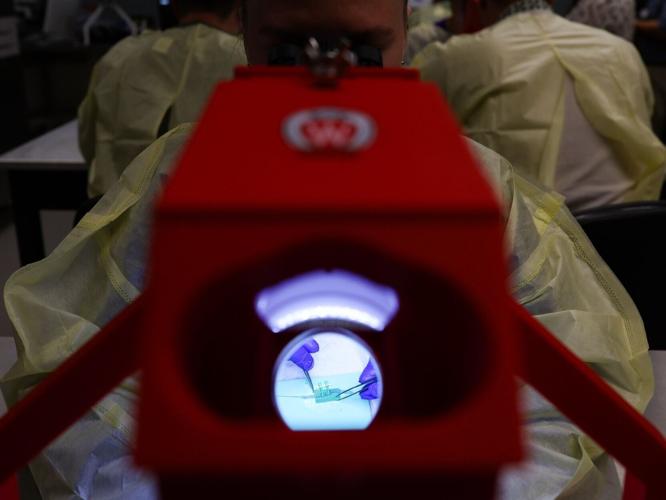
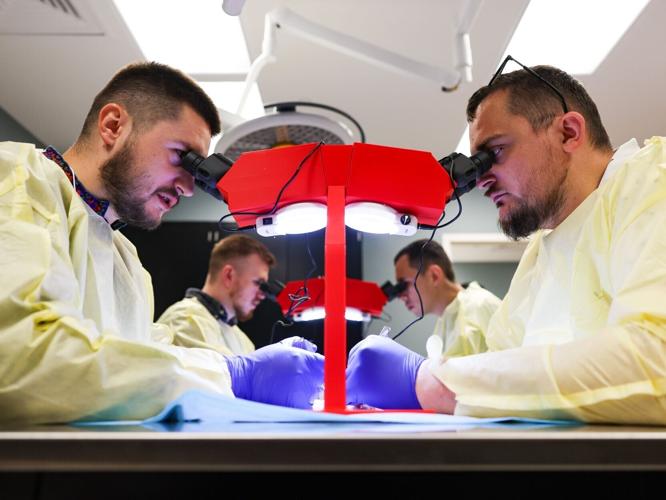
Ukrainian surgeons Vitalii Diachuk, left, and Mykola Dutchak work together while practicing microsurgery through a 3D printed microscope that a UW-Madison lab invented to make the specialty more accessible.
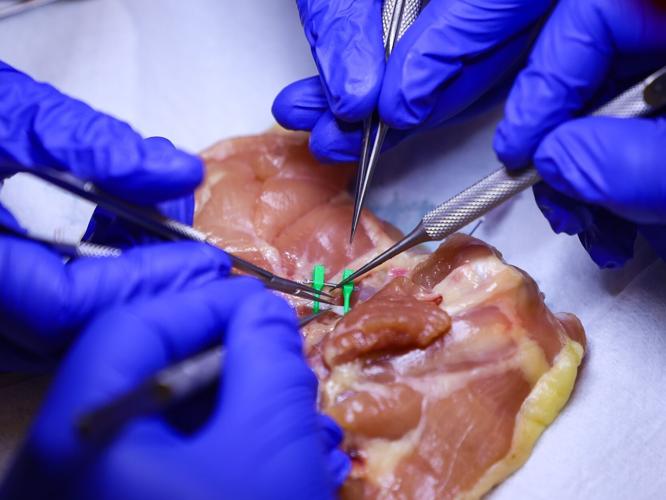
Surgeons work together to practice using small surgical sutures on a piece of chicken at a UW-Madison lab to model human tissue. They inject blue dye into blood vessels to simulate blood flow.
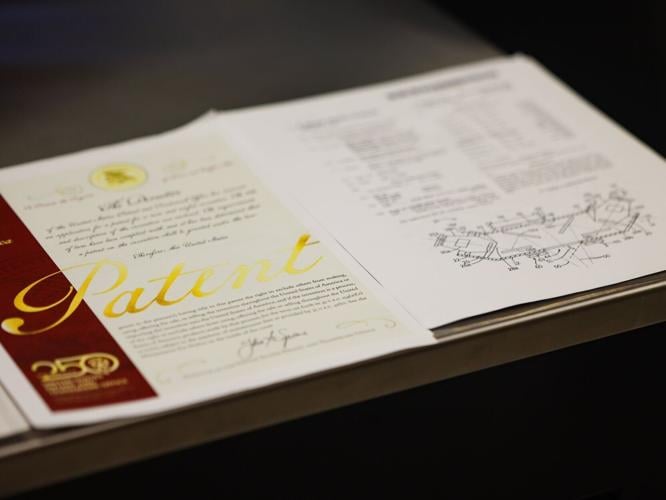
The design for the 3D printed microscope is patented, with the pages on display. To expand the UW-Madison lab’s reach and output even further, the team is preparing to launch a startup called WiscVision.
Ukrainian surgeons Vitalii Diachuk, left, and Mykola Dutchak work together while practicing microsurgery through a 3D printed microscope that a UW-Madison lab invented to make the specialty more accessible.
Surgeons work together to practice using small surgical sutures on a piece of chicken at a UW-Madison lab to model human tissue. They inject blue dye into blood vessels to simulate blood flow.
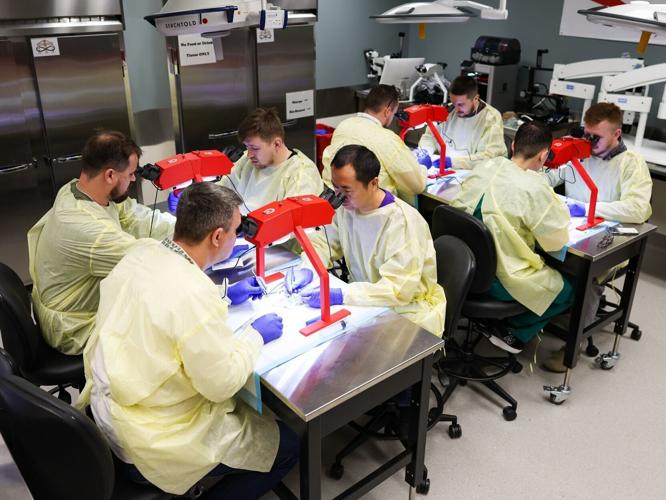
Doctors visiting from abroad, mostly from Ukraine, practice microsurgery techniques on pieces of chicken. The group of Ukrainians is the second cohort of physicians visiting to learn microsurgery skills to bring back to other frontline doctors.
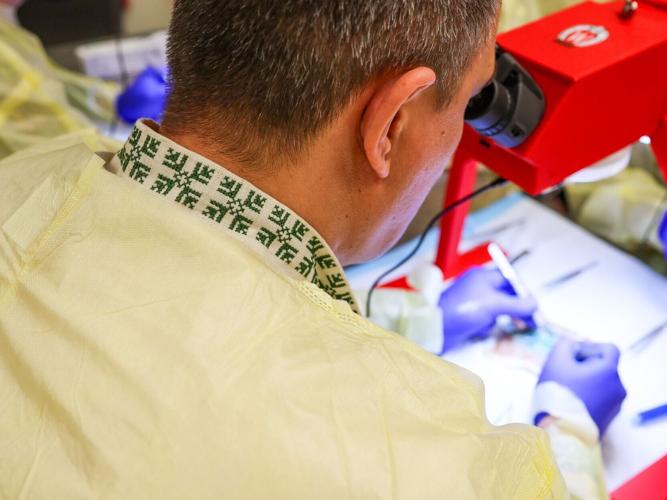
Maksym Korzachenko, a doctor from Ukraine, wears a vyshyvanka, a traditional embroidered shirt native to Ukraine, as he works at a lab in UW Health University Hospital.
Ruslana Hoisa, a pediatric plastic surgeon from Kyiv, practices microsurgical techniques using a 3D-printed microscope at UW-Madison. The 26-year-old frontline microsurgeon treats young patients with burn and blast injuries from the Russia-Ukraine War.
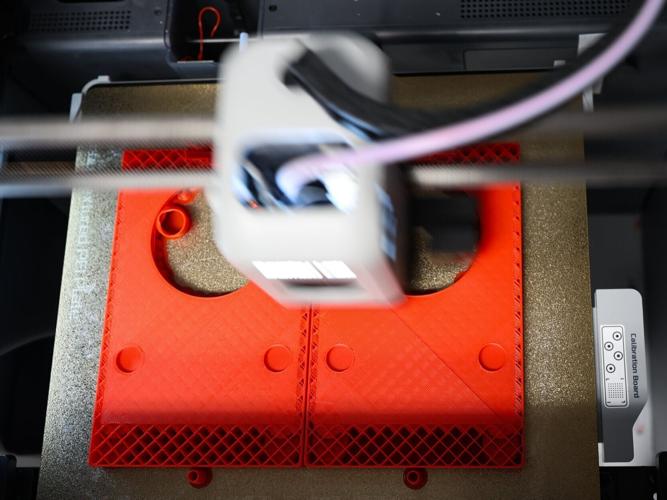
A 3D printer whirrs around as it constructs a piece of the microscopes that can be used for surgical training at UW Health. The microsurgery lab at UW-Madison 3D prints its microscope invention for $800.
The design for the 3D printed microscope is patented, with the pages on display. To expand the UW-Madison lab’s reach and output even further, the team is preparing to launch a startup called WiscVision.
Photos: Ukrainian physicians visit UW-Madison for intensive microsurgery training
A UW-Madison lab is leading the way in microsurgery, training hundreds of surgeons worldwide.
Ukrainian surgeons Vitalii Diachuk, left, and Mykola Dutchak work together while practicing microsurgery through a 3D printed microscope that a UW-Madison lab invented to make the specialty more accessible.
OWEN ZILIAK, STATE JOURNAL
Surgeons work together to practice using small surgical sutures on a piece of chicken at a UW-Madison lab to model human tissue. They inject blue dye into blood vessels to simulate blood flow.
OWEN ZILIAK, STATE JOURNAL
Doctors visiting from abroad, mostly from Ukraine, practice microsurgery techniques on pieces of chicken. The group of Ukrainians is the second cohort of physicians visiting to learn microsurgery skills to bring back to other frontline doctors.
OWEN ZILIAK, STATE JOURNAL
Maksym Korzachenko, a doctor from Ukraine, wears a vyshyvanka, a traditional embroidered shirt native to Ukraine, as he works at a lab in UW Health University Hospital.
OWEN ZILIAK, STATE JOURNAL
Ruslana Hoisa, a pediatric plastic surgeon from Kyiv, practices microsurgical techniques using a 3D-printed microscope at UW-Madison. The 26-year-old frontline microsurgeon treats young patients with burn and blast injuries from the Russia-Ukraine War.
OWEN ZILIAK, STATE JOURNAL
A 3D printer whirrs around as it constructs a piece of the microscopes that can be used for surgical training at UW Health. The microsurgery lab at UW-Madison 3D prints its microscope invention for $800.
OWEN ZILIAK, STATE JOURNAL
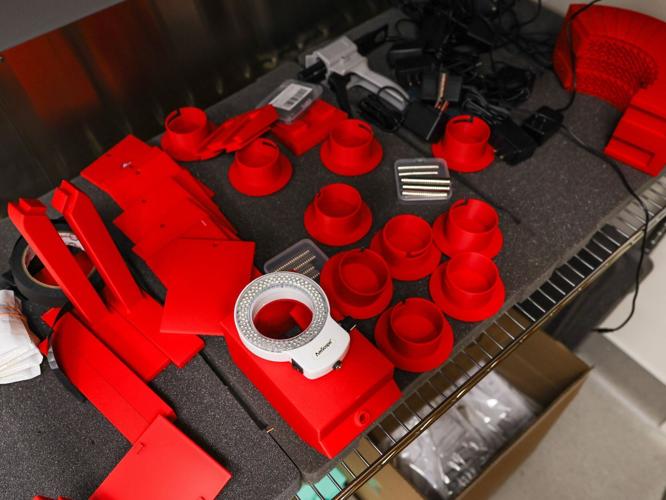
The 3D-printed microscopes will be used to train surgeons at UW and around the world, with the parts awaiting assembly.
OWEN ZILIAK, STATE JOURNAL
The design for the 3D printed microscope is patented, with the pages on display. To expand the UW-Madison lab’s reach and output even further, the team is preparing to launch a startup called WiscVision.
Ruslana Hoisa, a pediatric plastic surgeon from Kyiv, practices microsurgical techniques using a 3D-printed microscope at UW-Madison. The 26-year-old frontline microsurgeon treats young patients with burn and blast injuries from the Russia-Ukraine War.
Ukrainian surgeons Vitalii Diachuk, left, and Mykola Dutchak work together while practicing microsurgery through a 3D printed microscope that a UW-Madison lab invented to make the specialty more accessible.
Surgeons work together to practice using small surgical sutures on a piece of chicken at a UW-Madison lab to model human tissue. They inject blue dye into blood vessels to simulate blood flow.
The design for the 3D printed microscope is patented, with the pages on display. To expand the UW-Madison lab’s reach and output even further, the team is preparing to launch a startup called WiscVision.