UW-Madison researcher Francis Halzen on the improbable path to a Nobel Prize
NOE GOLDHABER
Updated
1 of 3
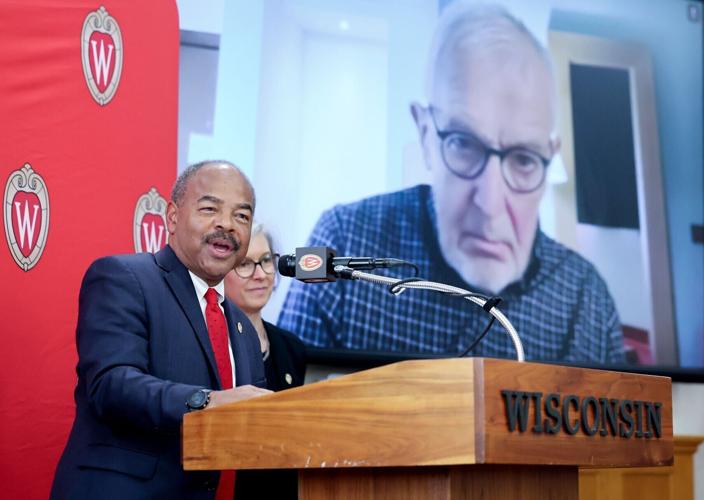
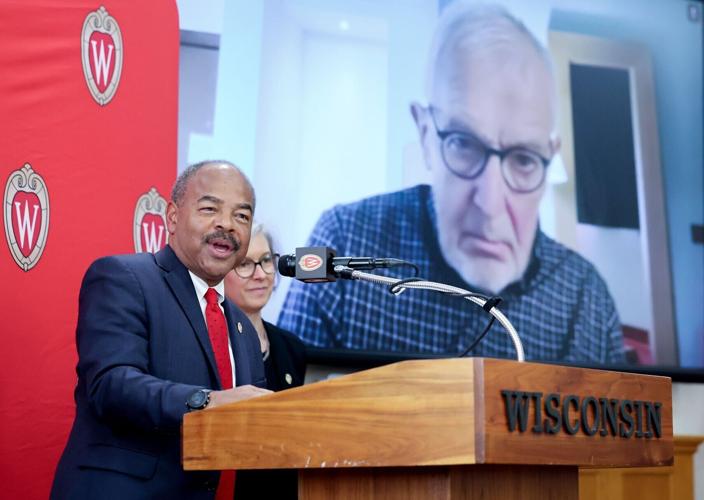
UW-Madison Interim Chancellor Eric Wilcots recognizes the work of Professor Francis Halzen, who appeared by video from Italy, at a press conference Tuesday to announce Halzen had won the 2026 Nobel Prize in physics. Halzen’s work studying neutrinos is “a powerful reminder of something fundamental about who we are,” Wilcots said.
JOHN HART, STATE JOURNAL
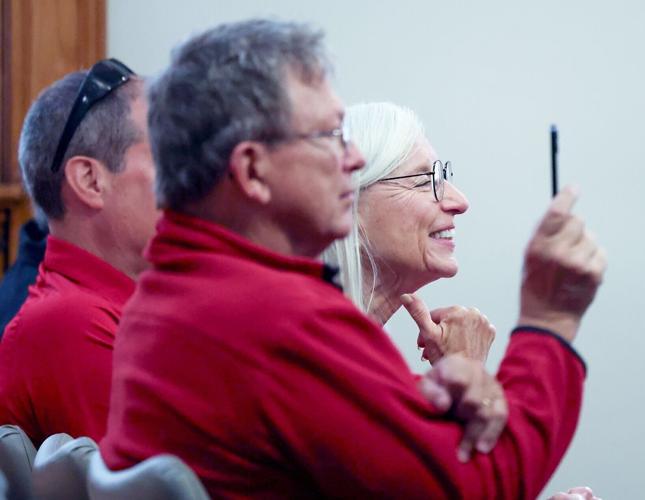
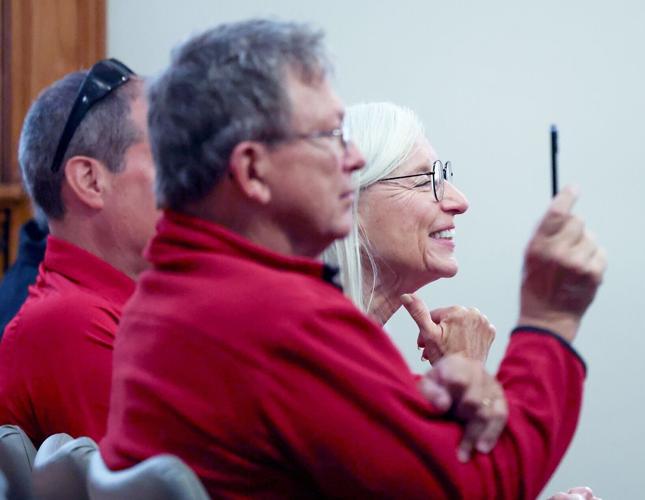
Tim Zinnen, foreground, emeritus biotech outreach specialist, and Cindy Czajkowski, senior associate vice chancellor for research, were among Halzen’s colleagues and supporters at Tuesday’s recognition ceremony in Madison. Some 450 people from 58 institutions in 14 countries worked on the IceCube project, Halzen said.
JOHN HART, STATE JOURNAL
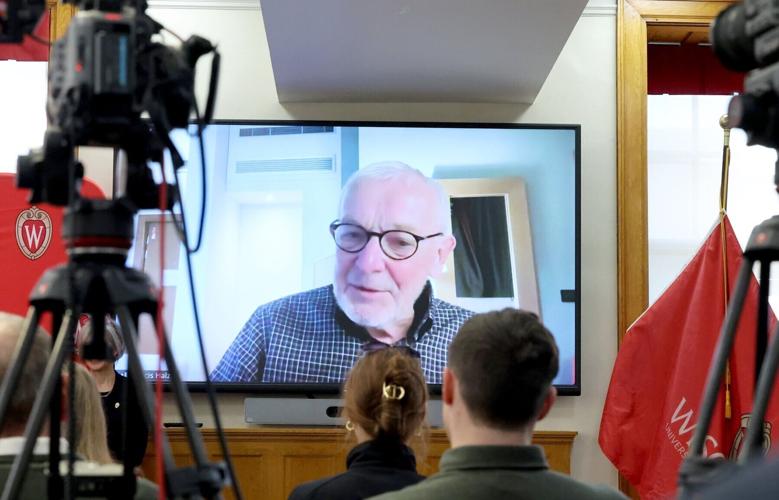
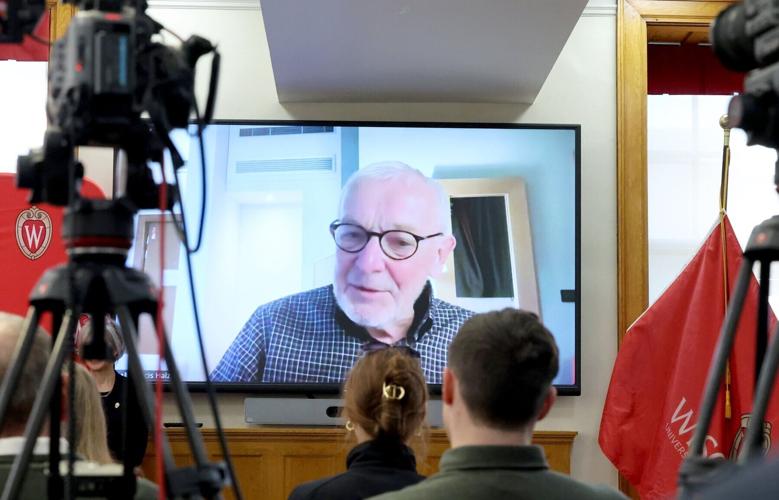
Halzen praised UW-Madison for believing in his far-fetched idea of sinking thousands of probes deep in the ice of Antarctica to detect neutrinos passing through the earth. “It couldn’t have happened anywhere else,” Halzen said from Italy, where he appeared via video. “Wisconsin is a place where unconventional, dangerous ideas can thrive.”
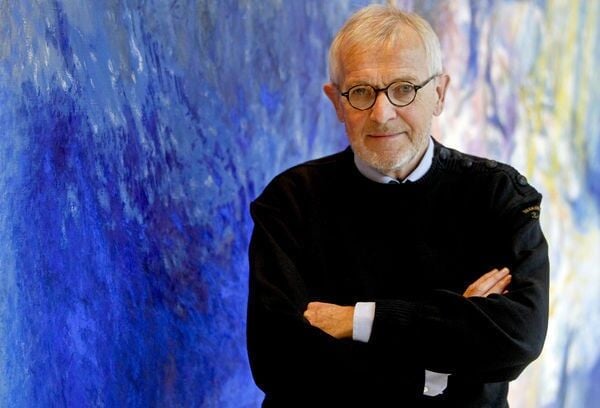
When UW-Madison physics professor Francis Halzen began working decades ago on the idea of buring a telescope in a cubic kilometer of Antarctic ice to detect subatomic particles passing through the earth at nearly the speed of light, the idea seemed improbable, highly theoretical — fanciful, even.
UW-Madison Interim Chancellor Eric Wilcots recognizes the work of Professor Francis Halzen, who appeared by video from Italy, at a press conference Tuesday to announce Halzen had won the 2026 Nobel Prize in physics. Halzen’s work studying neutrinos is “a powerful reminder of something fundamental about who we are,” Wilcots said.
Tim Zinnen, foreground, emeritus biotech outreach specialist, and Cindy Czajkowski, senior associate vice chancellor for research, were among Halzen’s colleagues and supporters at Tuesday’s recognition ceremony in Madison. Some 450 people from 58 institutions in 14 countries worked on the IceCube project, Halzen said.
Halzen praised UW-Madison for believing in his far-fetched idea of sinking thousands of probes deep in the ice of Antarctica to detect neutrinos passing through the earth. “It couldn’t have happened anywhere else,” Halzen said from Italy, where he appeared via video. “Wisconsin is a place where unconventional, dangerous ideas can thrive.”
UW-Madison Interim Chancellor Eric Wilcots recognizes the work of Professor Francis Halzen, who appeared by video from Italy, at a press conference Tuesday to announce Halzen had won the 2026 Nobel Prize in physics. Halzen’s work studying neutrinos is “a powerful reminder of something fundamental about who we are,” Wilcots said.
Tim Zinnen, foreground, emeritus biotech outreach specialist, and Cindy Czajkowski, senior associate vice chancellor for research, were among Halzen’s colleagues and supporters at Tuesday’s recognition ceremony in Madison. Some 450 people from 58 institutions in 14 countries worked on the IceCube project, Halzen said.
Halzen praised UW-Madison for believing in his far-fetched idea of sinking thousands of probes deep in the ice of Antarctica to detect neutrinos passing through the earth. “It couldn’t have happened anywhere else,” Halzen said from Italy, where he appeared via video. “Wisconsin is a place where unconventional, dangerous ideas can thrive.”
UW-Madison Interim Chancellor Eric Wilcots recognizes the work of Professor Francis Halzen, who appeared by video from Italy, at a press conference Tuesday to announce Halzen had won the 2026 Nobel Prize in physics. Halzen’s work studying neutrinos is “a powerful reminder of something fundamental about who we are,” Wilcots said.
Tim Zinnen, foreground, emeritus biotech outreach specialist, and Cindy Czajkowski, senior associate vice chancellor for research, were among Halzen’s colleagues and supporters at Tuesday’s recognition ceremony in Madison. Some 450 people from 58 institutions in 14 countries worked on the IceCube project, Halzen said.
Halzen praised UW-Madison for believing in his far-fetched idea of sinking thousands of probes deep in the ice of Antarctica to detect neutrinos passing through the earth. “It couldn’t have happened anywhere else,” Halzen said from Italy, where he appeared via video. “Wisconsin is a place where unconventional, dangerous ideas can thrive.”