How UW-Madison plans to transform cancer care with new $62 million facility
SABINE MARTIN
Updated
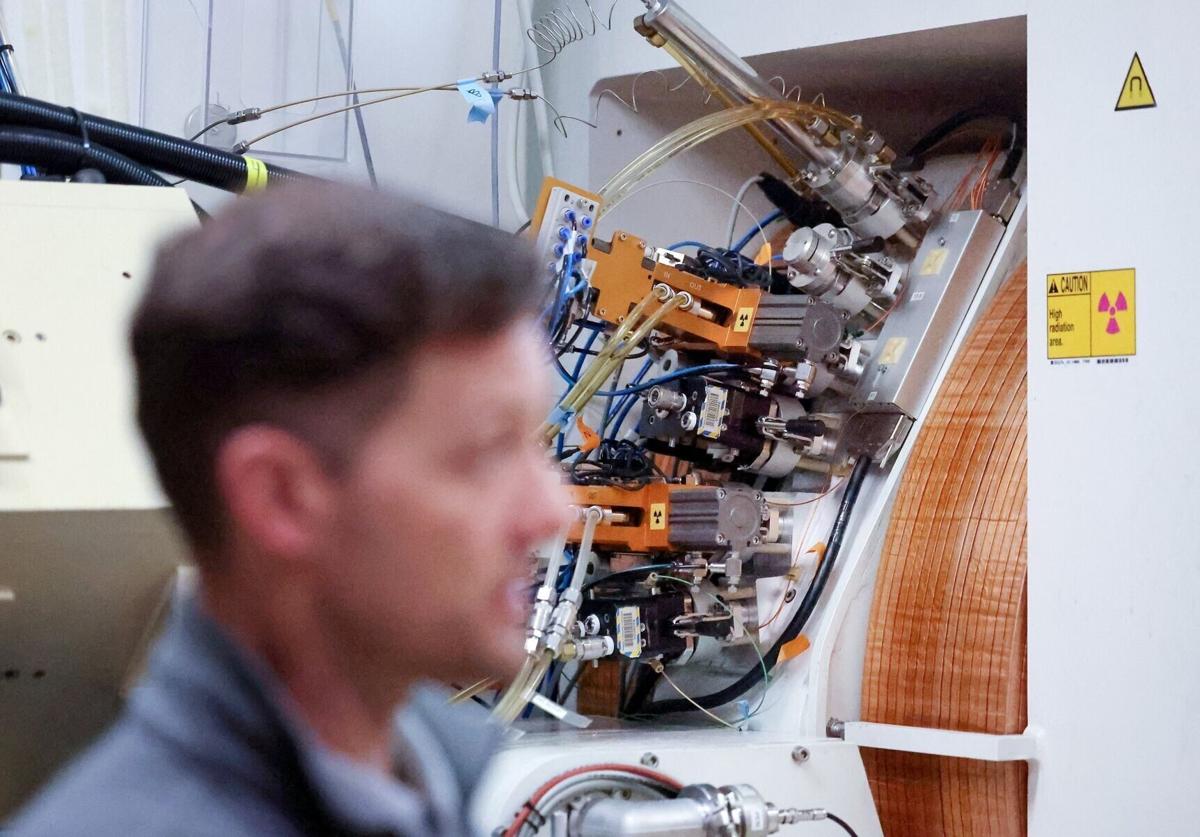
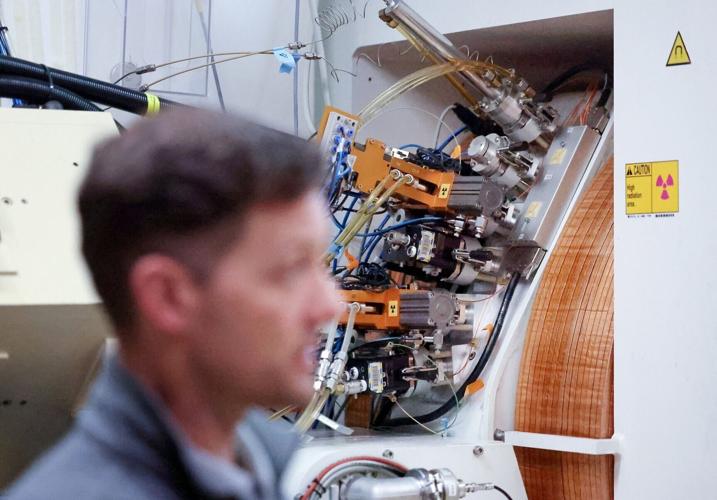
Components of UW-Madison's cyclotron are seen in the current location of the apparatus on the campus. The university is adding two more cyclotrons to its collection with the construction of a new lab.
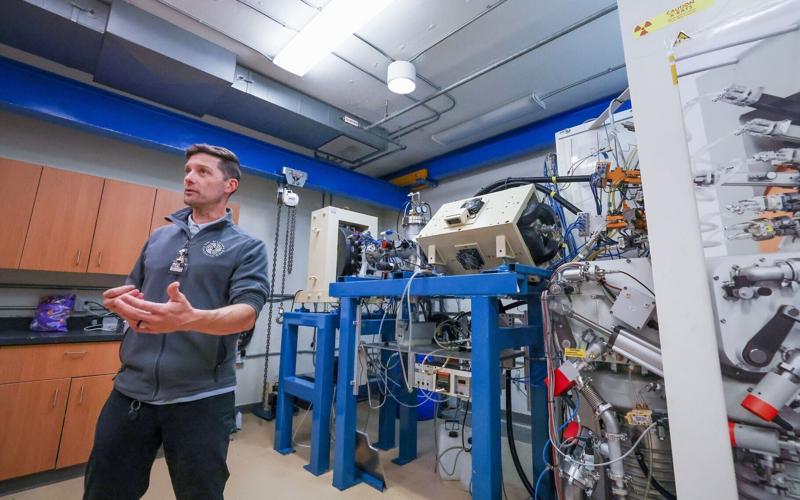
Jonathan Engle, head of UW-Madison’s Cyclotron Research Group, shows the facility inside the Wisconsin Institute for Medical Research on the campus in Madison. In addition to adding two more-powerful cyclotrons, the university is overhauling the cyclotron that’s been in use since 2008.
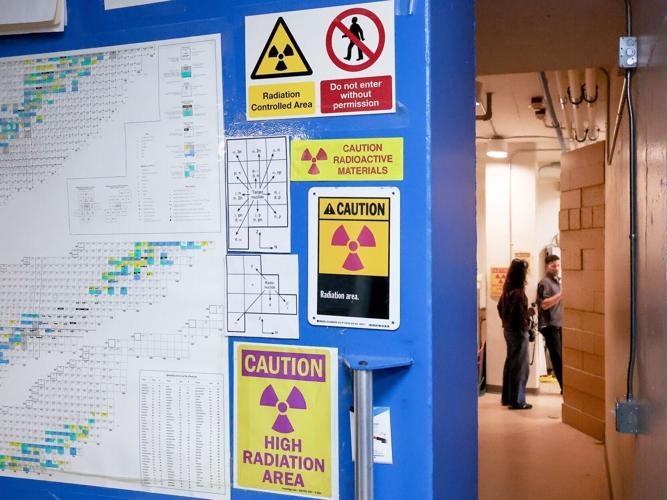
Jonathan Engle, head of UW-Madison’s Cyclotron Research Group, converses near a map showing destinations for the facility’s production of radionuclides at the Wisconsin Institute for Medical Research.
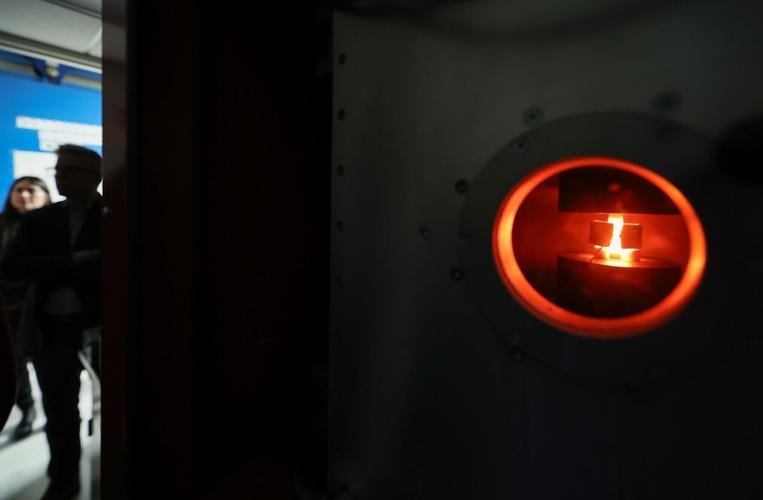
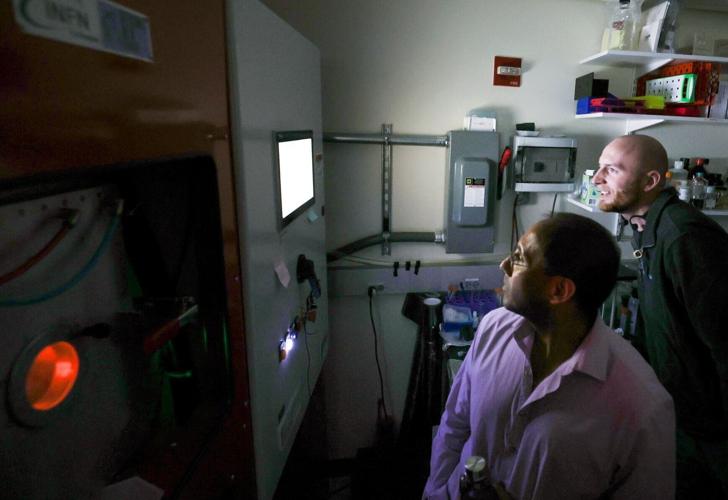
Jon Audhya, vice dean for research in the UW School of Medicine and Public Health, left, and Travis Wiese, a research intern in the university's Cyclotron Research Group lab, converse in the lab on the campus. The machine they are watching uses an electric current, pressure and temperature to produce materials that can be used in a cyclotron to create radioactive substances.
JOHN HART, STATE JOURNAL
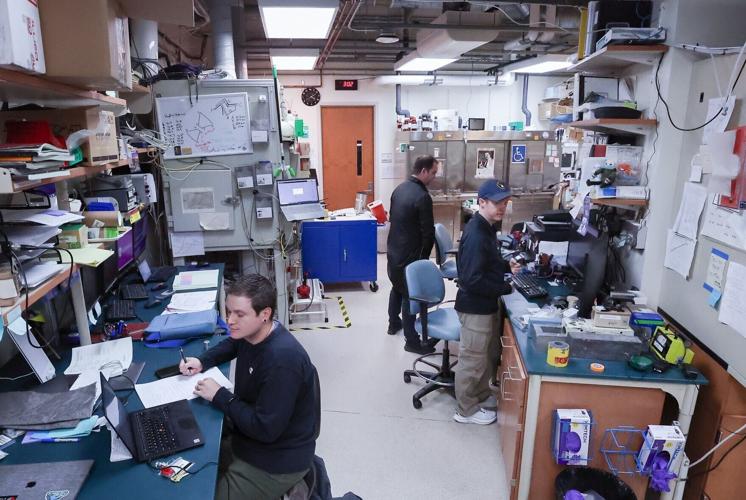
Researchers at UW-Madison's Cyclotron Research Group lab work in an adjacent lab on the campus. A new cyclotron lab will be built between two research buildings on Highland Avenue.
JOHN HART, STATE JOURNAL
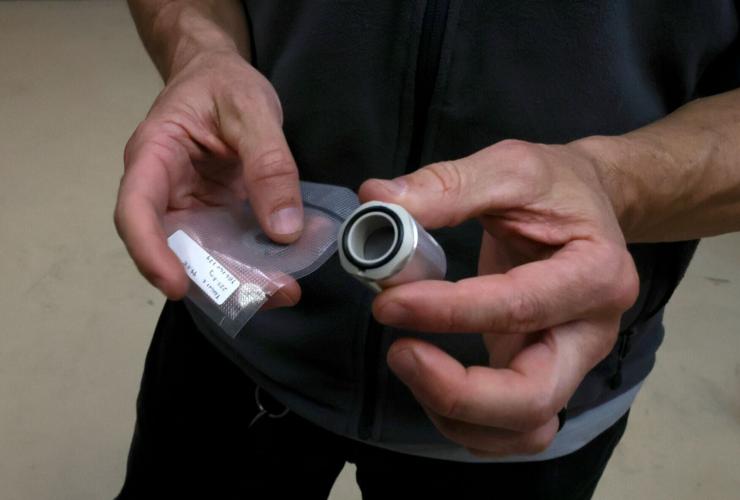
Jonathan Engle, head of UW-Madison's Cyclotron Research Group, holds a capsule containing a target disk used in a cyclotron to produce radioactive atoms at the Wisconsin Institute for Medical Research on campus.
JOHN HART, STATE JOURNAL
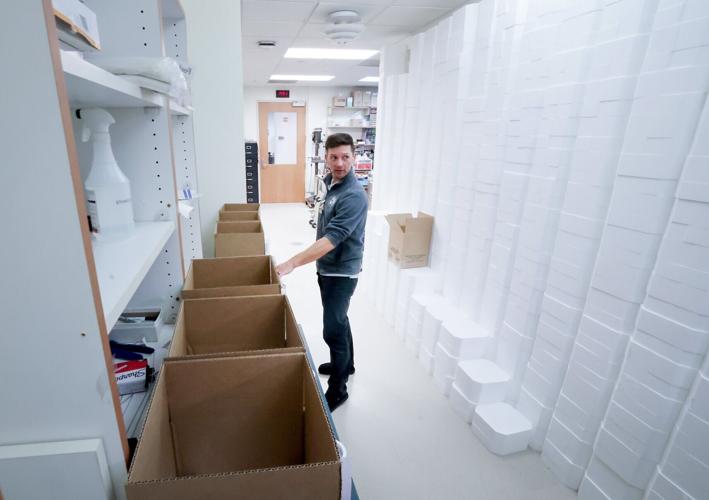
Jonathan Engle, head of UW-Madison’s Cyclotron Research Group, explains the shipping procedures for the facility’s production of radionuclides at the Wisconsin Institute for Medical Research on the campus. His team ships out to about 100 different institutions and labs annually.
JOHN HART, STATE JOURNAL
A thick steel door closes off UW-Madison's cyclotron particle accelerator from an adjacent lab on the campus.
Researchers at UW-Madison's Cyclotron Research Group lab work in an adjacent lab on the campus. A new cyclotron lab will be built between two research buildings on Highland Avenue.
Jonathan Engle, head of UW-Madison's Cyclotron Research Group, holds a capsule containing a target disk used in a cyclotron to produce radioactive atoms at the Wisconsin Institute for Medical Research on campus.
Components of UW-Madison's cyclotron are seen in the current location of the apparatus on the campus. The university is adding two more cyclotrons to its collection with the construction of a new lab.
Jonathan Engle, head of UW-Madison’s Cyclotron Research Group, explains the shipping procedures for the facility’s production of radionuclides at the Wisconsin Institute for Medical Research on the campus. His team ships out to about 100 different institutions and labs annually.
Jonathan Engle, head of UW-Madison’s Cyclotron Research Group, converses near a map showing destinations for the facility’s production of radionuclides at the Wisconsin Institute for Medical Research.
Jonathan Engle, head of UW-Madison’s Cyclotron Research Group, shows the facility inside the Wisconsin Institute for Medical Research on the campus in Madison. In addition to adding two more-powerful cyclotrons, the university is overhauling the cyclotron that’s been in use since 2008.
Jon Audhya, vice dean for research in the UW School of Medicine and Public Health, left, and Travis Wiese, a research intern in the university's Cyclotron Research Group lab, converse in the lab on the campus. The machine they are watching uses an electric current, pressure and temperature to produce materials that can be used in a cyclotron to create radioactive substances.