Wisconsinites fear possible Trump Medicaid cuts; 'This time, it just feels different.'
STEVE RUNDIO
Updated
6 min to read
Saskia Hatvany, River Valley Media Group
Matt Frederick was diagnosed with Down syndrome at birth, and since then, him and his family have relied on Medicaid to ensure fullp-time care and wellbeing, including at school and at home. The U.S. House of Representatives recently passed a broad budget outline that calls for $880 billion …
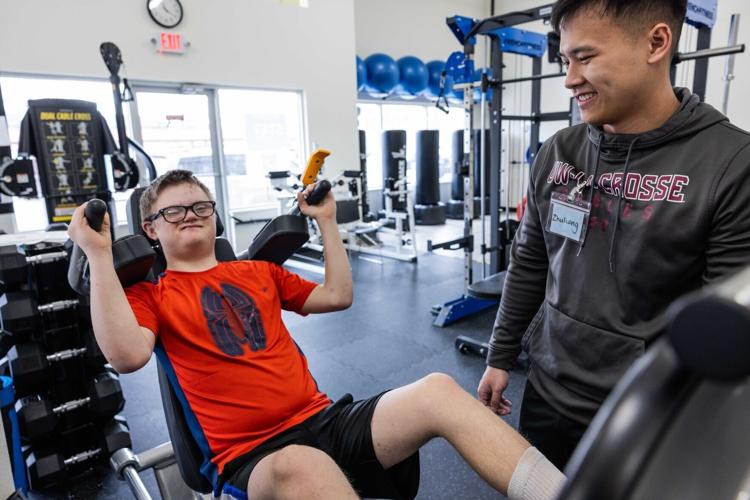
Matt Frederick, 17, attends his weekly physical therapy session March 26 with trainer Zhuliang Chang at STAR Center, an adaptive gymnasium in La Crosse. Frederick, who has down syndrome, relies on Medicaid to pay for the sessions and many essential parts his care.
Matt Frederick and his mother Kim Frederick pose for a portrait March 26 in La Crosse. "Without Medicaid, Matt's world gets much, much smaller," said Kim Frederick.
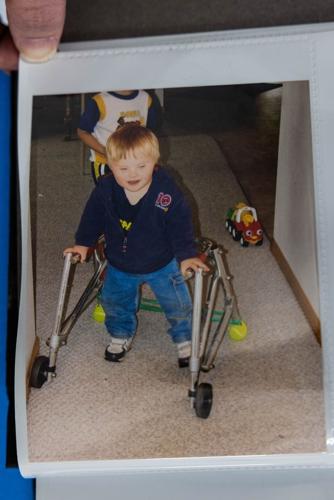
Family photos show Matt Fredrick as a toddler using a specialized walker. Since he was a baby, him and his family have relied on Medicaid-funded programs to pay for essential and costly treatments associated with Down syndrome and other medical complications.
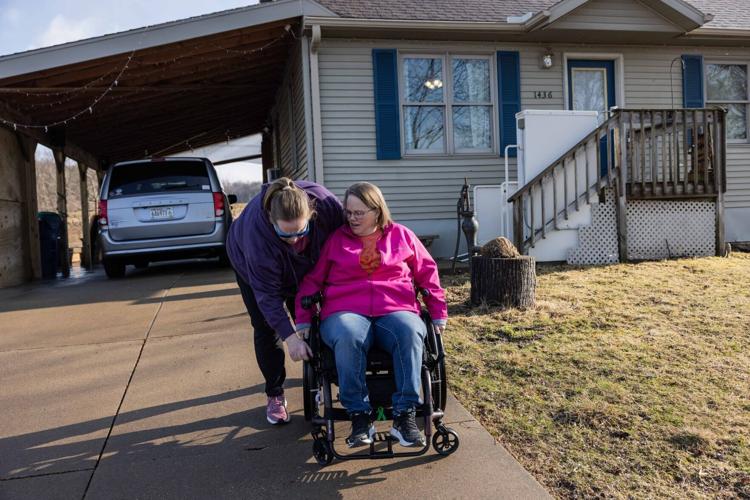
Karena Wegner helps Dana Horstman outside their home Wednesday in Bangor. Wegner is Hortsman's partner of 25 years, and also her full-time caretaker receiving wages through Medicaid. Without Medicaid, Horstman would be unable to work her day job, which would force Wegner to find work outside the home, requiring a full-time nurse for Wegner.
Karena Wegner sits in her living room on Wednesday in Bangor. Wegner is a full-time caretaker for her partner Dana, who relies mostly on a wheelchair to get around. "I think (people) misunderstand that I should be taking care of her anyway, that I shouldn't get paid," Wegner said.
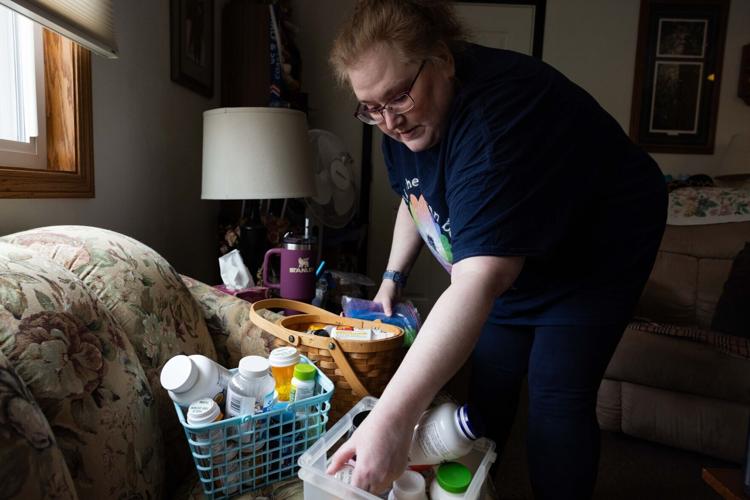
Tina Pohlman arranges her daily medication in her living room Thursday in La Crosse. Pohlman takes over two dozen medications and supplements per day, many of which are covered by Medicaid.
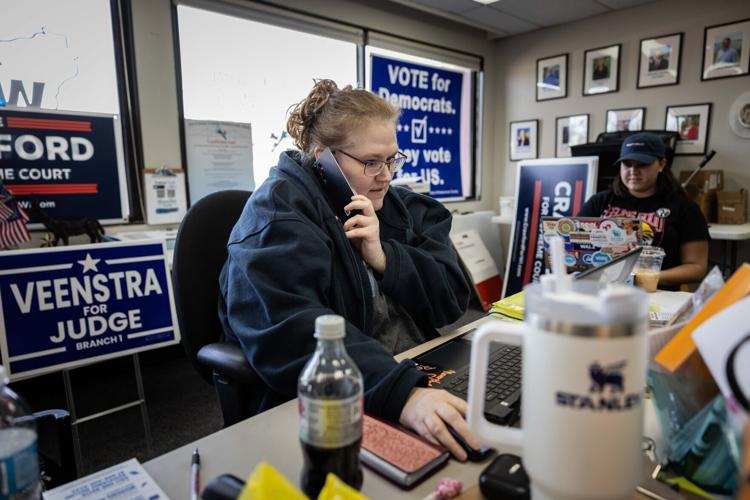
Tina Pohlman makes calls ahead of the Wisconsin spring election while volunteering with the La Crosse Democrats on March 27. Pohlman is unable to work for wages because it would disqualify her from Medicaid, which pays for her current treatments. "If you would just give people the opportunity, most of us just want our health care, and want to be able to work," Pohlman said.
IN PHOTOS: Wisconsin Medicaid recipients fear they could lose care
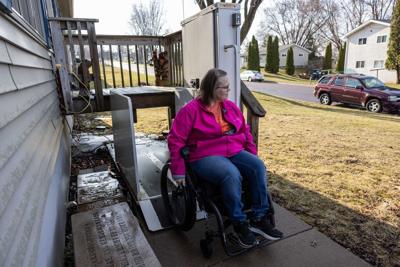
Dana Horstman uses the lift in front of her house on Wednesday, April 2 in Bangor, Wis. Nearly every aspect of Horstman's care, from the wages paid to her caretaker, to her doctors visits, medications and her ability to work and get paid are made possible by Medicaid.
Saskia Hatvany,River Valley Media Group
Karena Wegner and Dana Horstman stand in their home with their two dogs on Wednesday, April 2. Horstman, wo has relied on a wheelchair for over 15 years,said that being able to work 30 hours a week has given her a sense of independence and fullfillment.
Saskia Hatvany,River Valley Media Group
Tina Pohlman sits in her livingroom with her cat Link on Thursday, April 3 in La Crosse, Wis. Pohlman lives in section 8 housing funded through Housing and Urban Development.
Saskia Hatvany,River Valley Media Group
Kim and Matt Frederick get ready to leave the STAR Center on March 26, 2025. Matt is one of roughly 80 million Americans who receive care through Medicaid, which can be distributed in a variety of ways through funding of various local and state programs.
Saskia Hatvany,River Valley Media Group
Saskia Hatvany,River Valley Media Group
Saskia Hatvany,River Valley Media Group
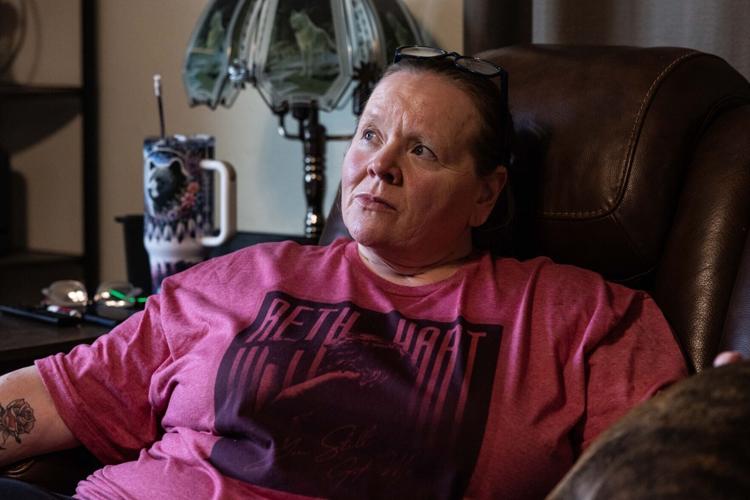
Tina Pohlman poses for a portrait in her home on Thursday, April 3 in La Crosse, Wis.
Saskia Hatvany,River Valley Media Group
Saskia Hatvany,River Valley Media Group
Matt Frederick, 17, attends his weekly physical therapy session March 26 with trainer Zhuliang Chang at STAR Center, an adaptive gymnasium in La Crosse. Frederick, who has down syndrome, relies on Medicaid to pay for the sessions and many essential parts his care.
Saskia Hatvany, River Valley Media Group
Tina Pohlman arranges her daily medication in her living room Thursday in La Crosse. Pohlman takes over two dozen medications and supplements per day, many of which are covered by Medicaid.
Saskia Hatvany, River Valley Media Group
Karena Wegner helps Dana Horstman outside their home Wednesday in Bangor. Wegner is Hortsman's partner of 25 years, and also her full-time caretaker receiving wages through Medicaid. Without Medicaid, Horstman would be unable to work her day job, which would force Wegner to find work outside the home, requiring a full-time nurse for Wegner.
Saskia Hatvany, River Valley Media Group
Matt Frederick and his mother Kim Frederick pose for a portrait March 26 in La Crosse. "Without Medicaid, Matt's world gets much, much smaller," said Kim Frederick.
Saskia Hatvany,River Valley Media Group
Family photos show Matt Fredrick as a toddler using a specialized walker. Since he was a baby, him and his family have relied on Medicaid-funded programs to pay for essential and costly treatments associated with Down syndrome and other medical complications.
Saskia Hatvany,River Valley Media Group
Karena Wegner sits in her living room on Wednesday in Bangor. Wegner is a full-time caretaker for her partner Dana, who relies mostly on a wheelchair to get around. "I think (people) misunderstand that I should be taking care of her anyway, that I shouldn't get paid," Wegner said.
Saskia Hatvany,River Valley Media Group
Tina Pohlman makes calls ahead of the Wisconsin spring election while volunteering with the La Crosse Democrats on March 27. Pohlman is unable to work for wages because it would disqualify her from Medicaid, which pays for her current treatments. "If you would just give people the opportunity, most of us just want our health care, and want to be able to work," Pohlman said.
Matt Frederick, 17, attends his weekly physical therapy session March 26 with trainer Zhuliang Chang at STAR Center, an adaptive gymnasium in La Crosse. Frederick, who has down syndrome, relies on Medicaid to pay for the sessions and many essential parts his care.
Tina Pohlman arranges her daily medication in her living room Thursday in La Crosse. Pohlman takes over two dozen medications and supplements per day, many of which are covered by Medicaid.
Karena Wegner helps Dana Horstman outside their home Wednesday in Bangor. Wegner is Hortsman's partner of 25 years, and also her full-time caretaker receiving wages through Medicaid. Without Medicaid, Horstman would be unable to work her day job, which would force Wegner to find work outside the home, requiring a full-time nurse for Wegner.
Matt Frederick and his mother Kim Frederick pose for a portrait March 26 in La Crosse. "Without Medicaid, Matt's world gets much, much smaller," said Kim Frederick.
Karena Wegner sits in her living room on Wednesday in Bangor. Wegner is a full-time caretaker for her partner Dana, who relies mostly on a wheelchair to get around. "I think (people) misunderstand that I should be taking care of her anyway, that I shouldn't get paid," Wegner said.
Family photos show Matt Fredrick as a toddler using a specialized walker. Since he was a baby, him and his family have relied on Medicaid-funded programs to pay for essential and costly treatments associated with Down syndrome and other medical complications.
Tina Pohlman makes calls ahead of the Wisconsin spring election while volunteering with the La Crosse Democrats on March 27. Pohlman is unable to work for wages because it would disqualify her from Medicaid, which pays for her current treatments. "If you would just give people the opportunity, most of us just want our health care, and want to be able to work," Pohlman said.