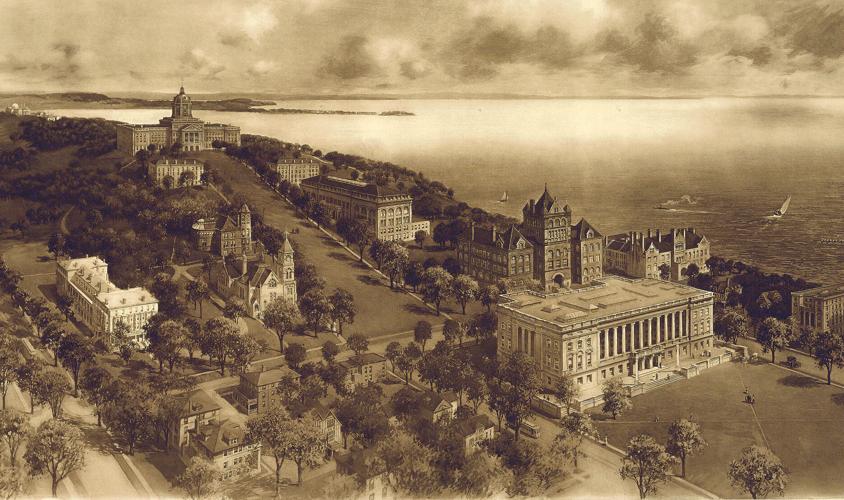
A LAKEFRONT TRANSFORMED A bird's-eye view of the UW-Madison campus in 1907. Buildings shown are, clockwise from top, Bascom Hall, North Hall, Education Hall, Science Hall, two unidentified buildings along the lake shore, the Wisconsin Historical Society, Music Hall and Chadbourne Hall to the left, the Law building and South Hall.
Wisconsin Historical Society
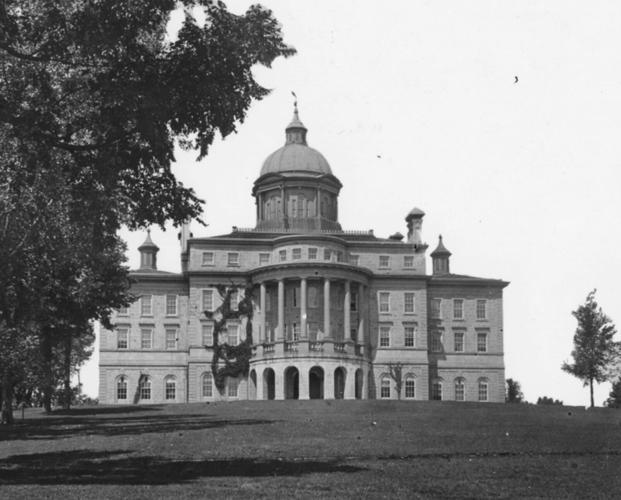
MAIN HALL The front view of Main Hall (now Bascom Hall) in 1890. A mysterious fire in 1916 destroyed the dome.
Wisconsin Historical Society
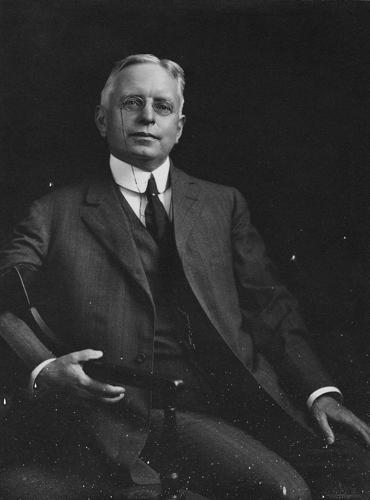
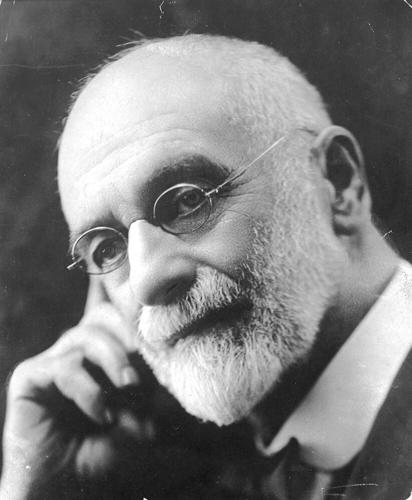
PROGRESSIVE ROOTS Richard T. Ely was a pioneering social theorist whose ideas would inspire the progressive movement of Robert M. La Follette and, eventually, Franklin Delano Roosevelt's New Deal reforms.
Wisconsin Historical Society
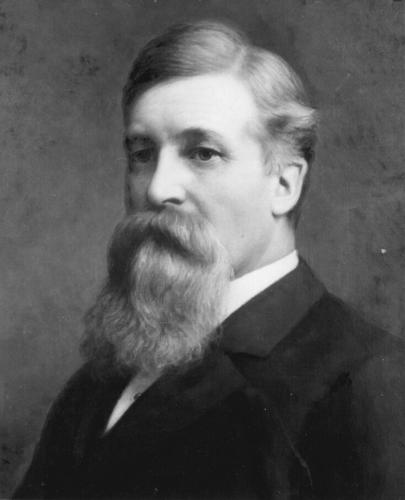
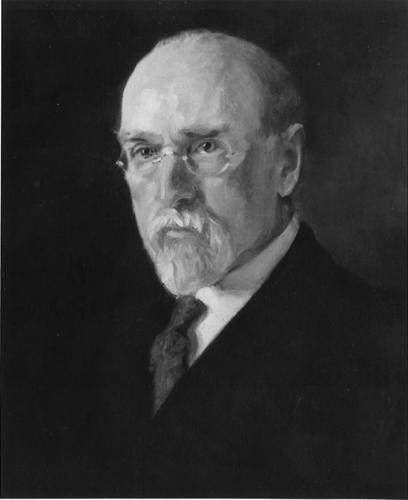
Thomas C. Chamberlin, renowned scientist and UW president from 1887-1892. One of his first appointments was Stephen M. Babcock.
Wisconsin Historical Society
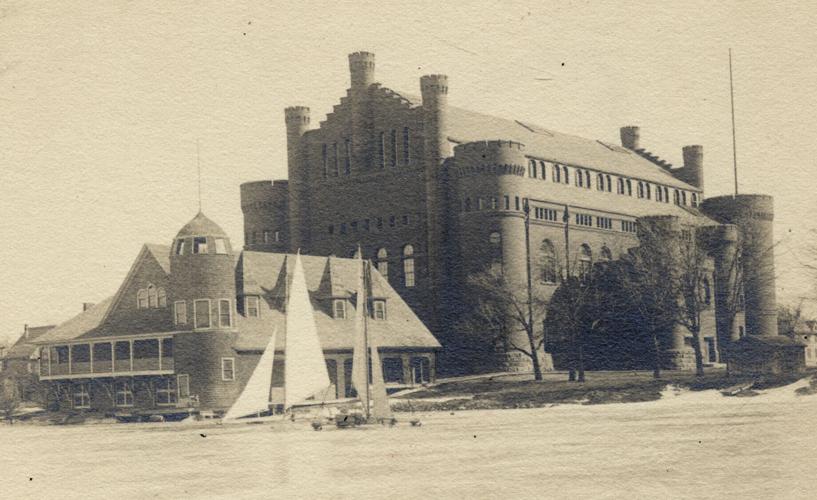
RED GYM The view from frozen Lake Mendota in 1898 of the University Boathouse, built in 1892, and the Red Gym, built as an armory and gymnasium in 1894.
Wisconsin Historical Society
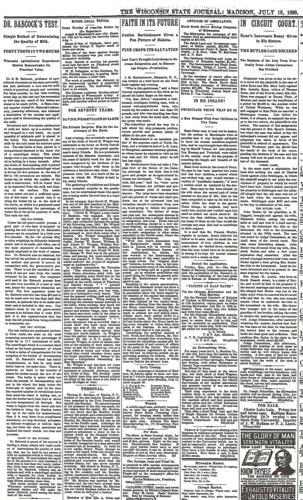
BREAKTHROUGH Front page of the Wisconsin State Journal on July 10, 1890, announcing Professor Stephen Babcock's butterfat test discovery.
Wisconsin State Journal archives
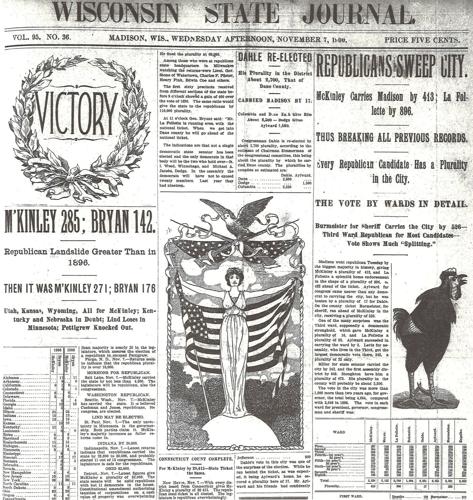
LA FOLLETTE VICTORY Front page of the Wisconsin State Journal from November 7, 1900, announcing the election of Republican Gov. Robert M. La Follette.
Wisconsin State Journal archives
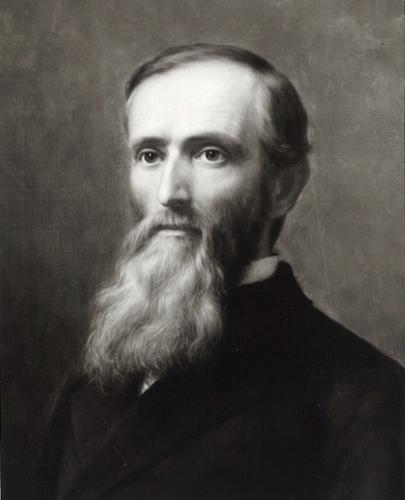
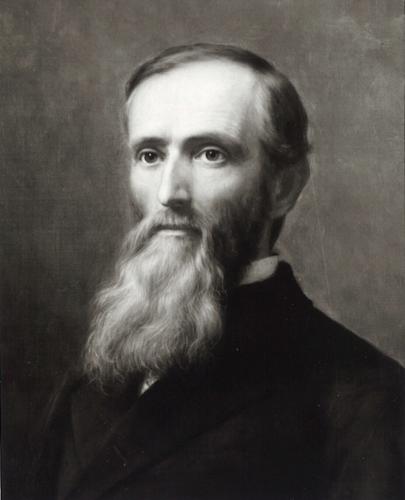
John Bascom, UW president 1874-1887.
UW Archives
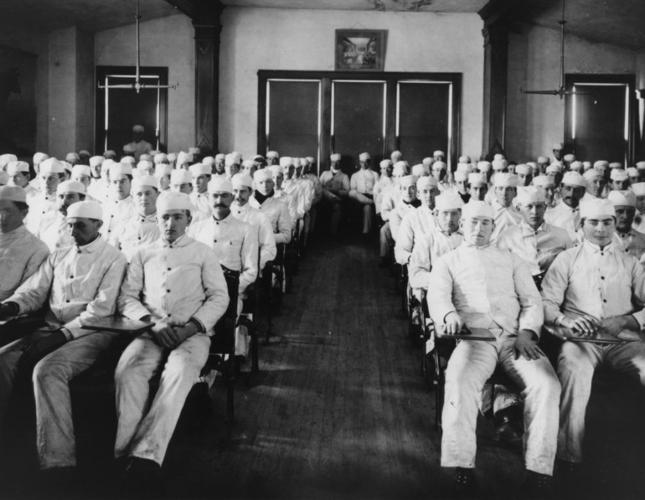
DAIRY U University of Wisconsin dairy students in 1901. The university developed the first college dairy school in the nation. Students manufactured products from the school’s dairy herd and sold them on campus and to local markets.
FORWARD VISION Under the presidency of John Bascom, 1874-1887, the University allowed co-educational instruction, and raised its standards to match those of eastern colleges.
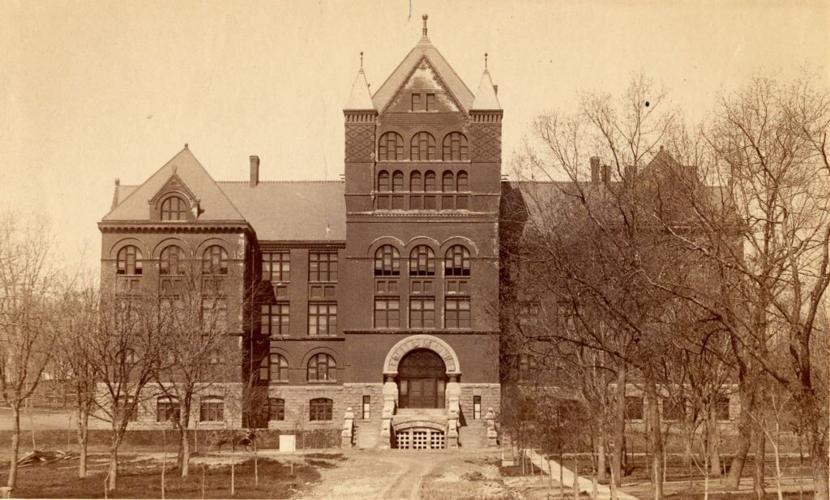
SCIENCE HALL To meet the needs of a rapidly expanding student body, the university launched a major building campaign, rebuilding Science Hall (seen here in 1887) and adding the Old Red Gym, the Dairy Barn and the State Historical Society-UW Library.
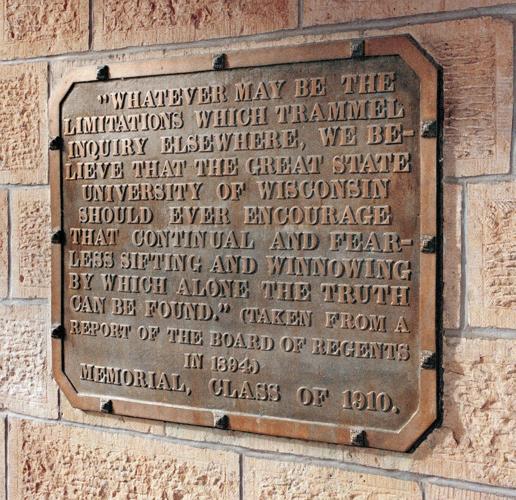
GUIDING PRINCIPLE The university's hallmark statement of academic freedom, known as the "sifting and winnowing'' principle, was memorialized in 1910 with a plaque bolted to the entry of Bascom Hall.
A LAKEFRONT TRANSFORMED A bird's-eye view of the UW-Madison campus in 1907. Buildings shown are, clockwise from top, Bascom Hall, North Hall, Education Hall, Science Hall, two unidentified buildings along the lake shore, the Wisconsin Historical Society, Music Hall and Chadbourne Hall to the left, the Law building and South Hall.
GUIDING PRINCIPLE The university's hallmark statement of academic freedom, known as the "sifting and winnowing'' principle, was memorialized in 1910 with a plaque bolted to the entry of Bascom Hall.
SCIENCE HALL To meet the needs of a rapidly expanding student body, the university launched a major building campaign, rebuilding Science Hall (seen here in 1887) and adding the Old Red Gym, the Dairy Barn and the State Historical Society-UW Library.
PROGRESSIVE ROOTS Richard T. Ely was a pioneering social theorist whose ideas would inspire the progressive movement of Robert M. La Follette and, eventually, Franklin Delano Roosevelt's New Deal reforms.
FORWARD VISION Under the presidency of John Bascom, 1874-1887, the University allowed co-educational instruction, and raised its standards to match those of eastern colleges.
RED GYM The view from frozen Lake Mendota in 1898 of the University Boathouse, built in 1892, and the Red Gym, built as an armory and gymnasium in 1894.
DAIRY U University of Wisconsin dairy students in 1901. The university developed the first college dairy school in the nation. Students manufactured products from the school’s dairy herd and sold them on campus and to local markets.