'Trying to buy time': Scientists battle to slow spread of invasive carp in Mississippi River
Saskia Hatvany
Updated
3 min to read
Kayla Zankle is part of a small team at the Minnesota DNR leading the charge against the spread of invasive Asian carp on the Mississippi River between Wisconsin and Minnesota. The agency is working in collaboration with the local US Geological Survey office, the US Fish and Wildlife Service…
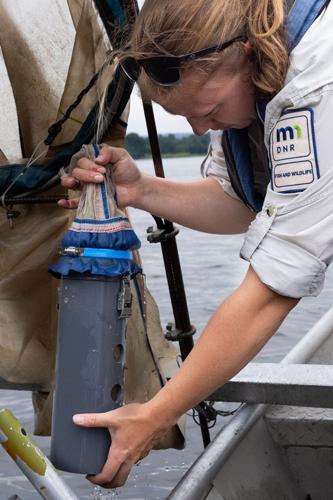
On a vast stretch of the Mississippi River, Kayla Zankle drags a trawl over the front of an aluminum fishing boat. A custom metal frame clangs loudly as the net swings into the water below, where Zankle hopes to collect fish eggs suspended in the water column.
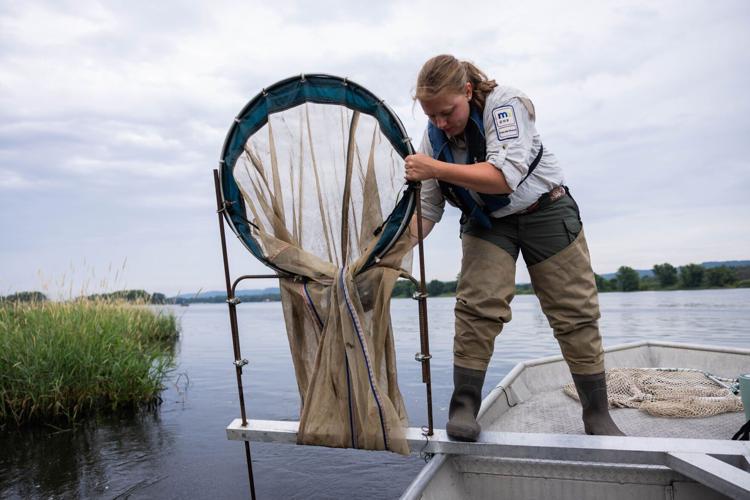
Kayla Zankle, invasive carp specialist with the Minnesota DNR, adjusts the ichthyoplankton trawl on Pool 8 of the Mississippi River near La Crosse. The trawl is used to collect fish eggs suspended in the water column to monitor for invasive Asian carp eggs.
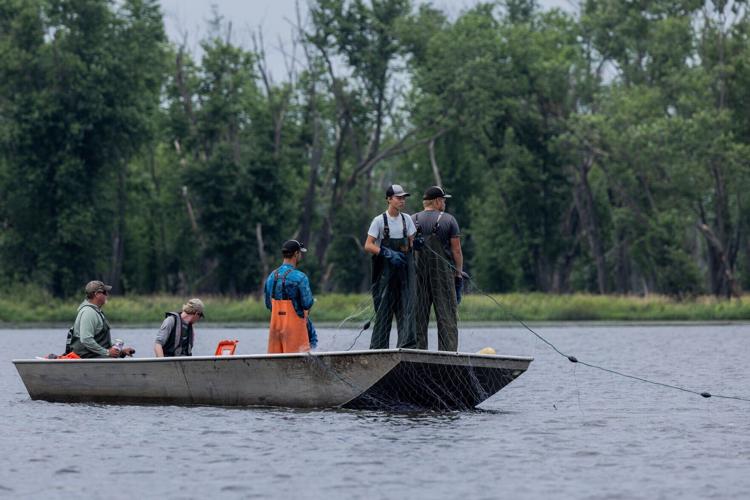
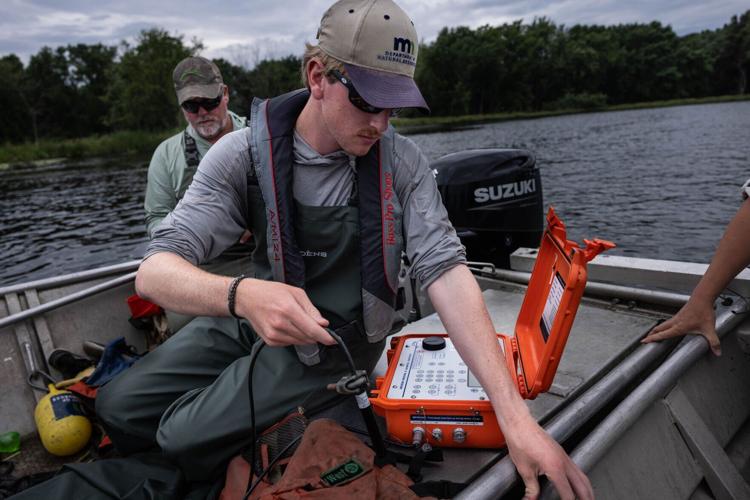
Noah Thelen, an intern with the Minnesota DNR, uses a remote receiver to track tagged invasive carp near La Crosse, Wis. Removal operations rely heavily on tagged fish to monitor movement up and down the river.
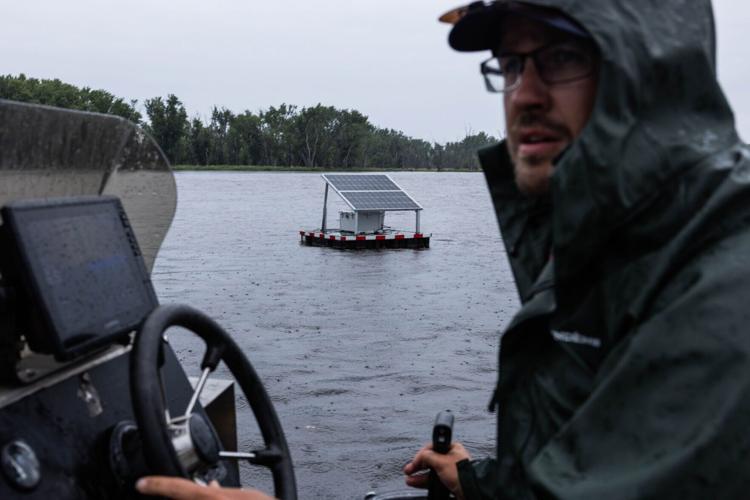
A receiver designed to continually track tagged Asian carp floats in Pool 8 of the Mississippi River on July 10. The device is one of 30 that have been installed up and down the river by the Minnesota DNR to track the species' movement.
Saskia Hatvany, River Valley Media Group
k9am}6H >6E9@5Dk3C ^mk3C ^mk^9am
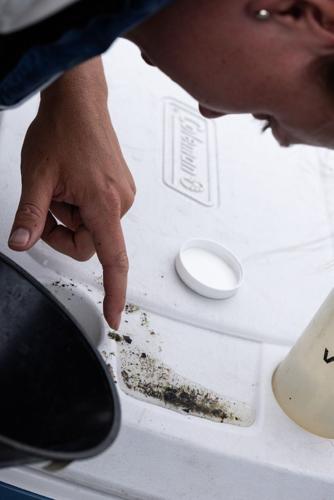
Kayla Zankle manually sifts through some spilled sample for invasive carp eggs on July 10, 2025. Several samples are collected and brought to a lab where they are meticulously searched for evidence of Asian carp eggs.
Kayla Zankle collects a sample from the trawl on July 10, 2025 on the Mississippi River near Hokah, Minn. Researchers have been monitoring the mouth of the Root River, which spills into the Mississippi, after a school of Asian carp was detected by receivers there.
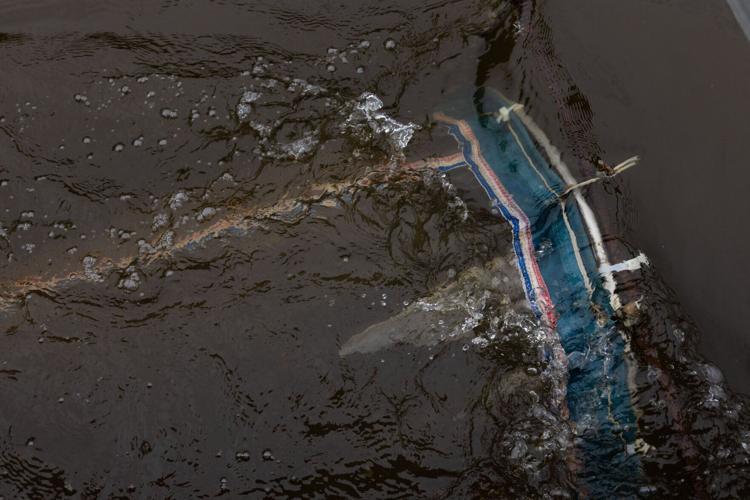
A trawl moves through the water in Pool 8 of the Mississippi River, where it will collect fish eggs on July 10, 2025. While invasive carp have been detected in this section Mississippi River, no evidence of reproduction events has been collected.
Saskia Hatvany, River Valley Media Group
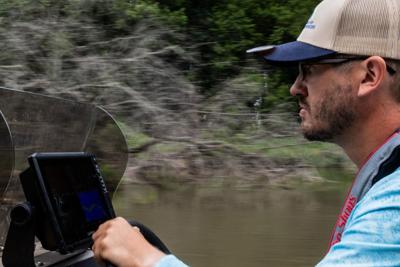
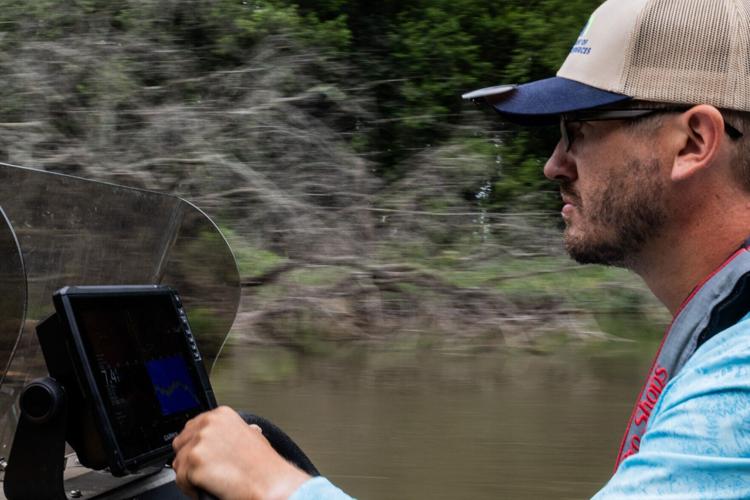
Kennan Bruening, an invasive carp specialist with the Minnesota DNR, navigates the Root River near Hokah, Minn. on July 10, 2025. Researchers are monitoring the area for invasivve carp, which have been detected in several other Mississippi River tributaries.
Kayla Zankle is part of a small team at the Minnesota DNR leading the charge against the spread of invasive Asian carp on the Mississippi Rive…
Kayla Zankle, invasive carp specialist with the Minnesota DNR, adjusts the ichthyoplankton trawl on Pool 8 of the Mississippi River near La Crosse. The trawl is used to collect fish eggs suspended in the water column to monitor for invasive Asian carp eggs.
A receiver designed to continually track tagged Asian carp floats in Pool 8 of the Mississippi River on July 10. The device is one of 30 that have been installed up and down the river by the Minnesota DNR to track the species' movement.
Noah Thelen, an intern with the Minnesota DNR, uses a remote receiver to track tagged invasive carp near La Crosse, Wis. Removal operations rely heavily on tagged fish to monitor movement up and down the river.
Kennan Bruening, an invasive carp specialist with the Minnesota DNR, navigates the Root River near Hokah, Minn. on July 10, 2025. Researchers are monitoring the area for invasivve carp, which have been detected in several other Mississippi River tributaries.
Kayla Zankle manually sifts through some spilled sample for invasive carp eggs on July 10, 2025. Several samples are collected and brought to a lab where they are meticulously searched for evidence of Asian carp eggs.
A trawl moves through the water in Pool 8 of the Mississippi River, where it will collect fish eggs on July 10, 2025. While invasive carp have been detected in this section Mississippi River, no evidence of reproduction events has been collected.
Kayla Zankle collects a sample from the trawl on July 10, 2025 on the Mississippi River near Hokah, Minn. Researchers have been monitoring the mouth of the Root River, which spills into the Mississippi, after a school of Asian carp was detected by receivers there.