UW-Madison hemp researchers brace for shock to industry
SABINE MARTIN
Updated
1 of 3
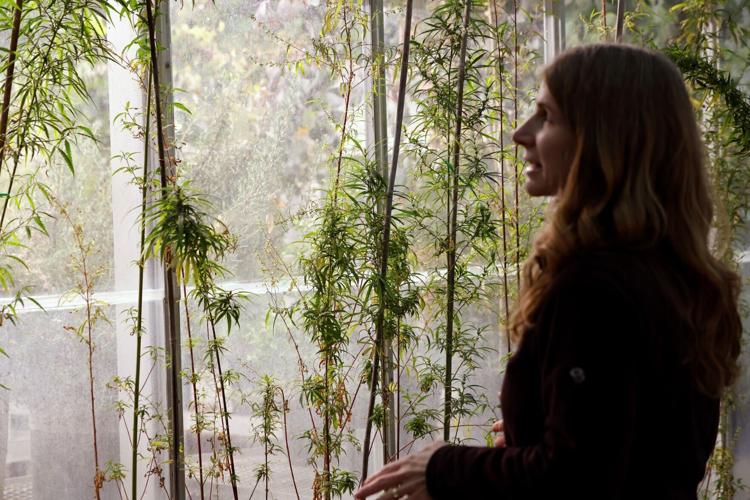
Ellison’s lab also studies hemp’s grains and fibers to explore their uses as an alternative food source or in clothing fabrication.
AMBER ARNOLD, STATE JOURNAL
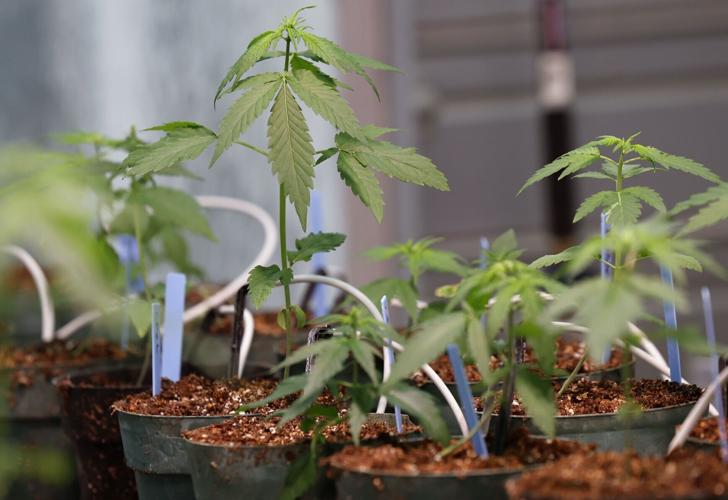
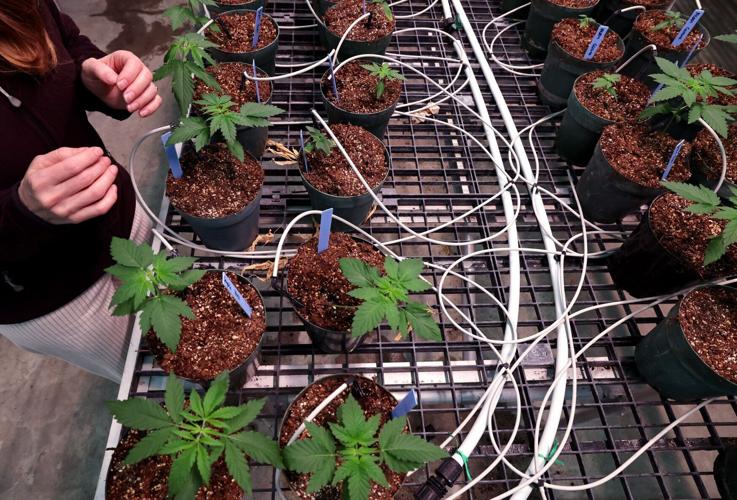
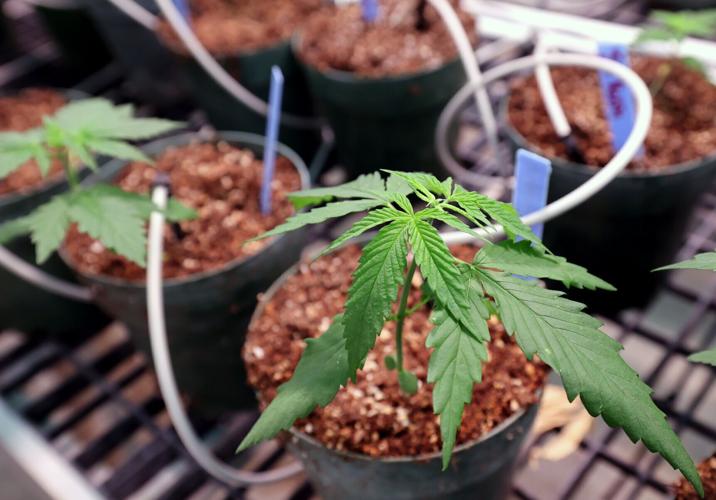
Hemp plants are grown for research in the Walnut Street Greenhouse on campus at the University of Wisconsin on Tuesday.
AMBER ARNOLD, STATE JOURNAL
AMBER ARNOLD photos, STATE JOURNAL
Although the federal crackdown on hemp won’t ban Shelby Ellison’s research, she expects there will be an impact as farmers shut down hemp production, leaving her with fewer growers to collaborate with for her research.
After the hemp-derived products industry took off in 2018 through a legal loophole in the federal farm bill, UW-Madison researcher Shelby Ellison set about exploring how Wisconsin farmers could best grow the newly accessible crop.
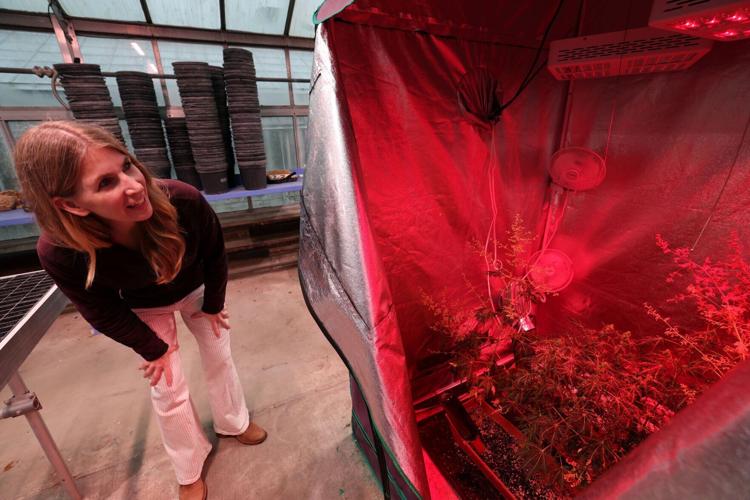
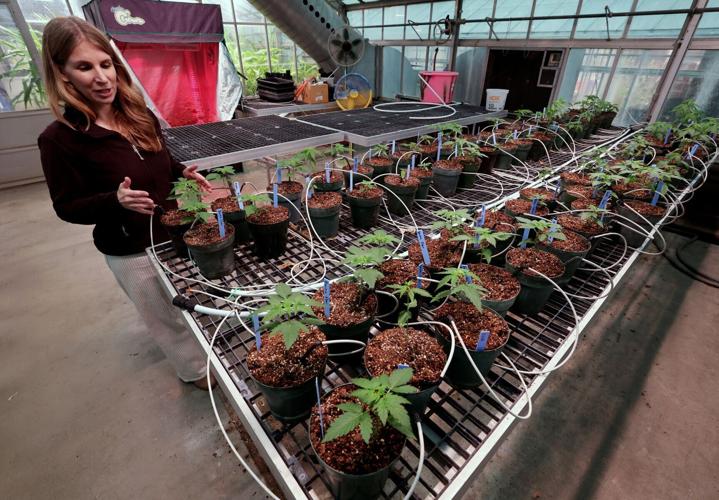
Shelby Ellison, assistant professor in the Department of Plant and Agroecosystem Sciences at UW-Madison, shows hemp being grown for research in the Walnut Street Greenhouse on campus Tuesday. Hemp production for nonintoxicating fibers or grains, which is a lot of what Ellison’s lab works with, is exempt in the new law.
With three other Midwestern universities, Ellison’s lab has studied how hemp accumulates cannabinoids, which are the psychoactive compounds in cannabis, over its growth cycle.
After the 2018 farm bill legalized hemp, Ellison saw a need to study the plant to give guidance and knowledge that hadn’t been available since the first half of the 20th century.
Photos: Hemp grows in UW-Madison greenhouse for research
AMBER ARNOLD photos, STATE JOURNAL
Shelby Ellison, assistant professor in the Department of Plant and Agroecosystem Sciences at UW-Madison, shows hemp being grown for research in the Walnut Street Greenhouse on campus Tuesday. Hemp production for nonintoxicating fibers or grains, which is a lot of what Ellison’s lab works with, is exempt in the new law.
AMBER ARNOLD, STATE JOURNAL
AMBER ARNOLD photos, STATE JOURNAL
Although the federal crackdown on hemp won’t ban Shelby Ellison’s research, she expects there will be an impact as farmers shut down hemp production, leaving her with fewer growers to collaborate with for her research.
AMBER ARNOLD, STATE JOURNAL
Hemp plants are grown for research in the Walnut Street Greenhouse on campus at the University of Wisconsin on Tuesday.
AMBER ARNOLD, STATE JOURNAL
With three other Midwestern universities, Ellison’s lab has studied how hemp accumulates cannabinoids, which are the psychoactive compounds in cannabis, over its growth cycle.
AMBER ARNOLD, STATE JOURNAL
Ellison’s lab also studies hemp’s grains and fibers to explore their uses as an alternative food source or in clothing fabrication.
AMBER ARNOLD, STATE JOURNAL
After the 2018 farm bill legalized hemp, Ellison saw a need to study the plant to give guidance and knowledge that hadn’t been available since the first half of the 20th century.
Shelby Ellison, assistant professor in the Department of Plant and Agroecosystem Sciences at UW-Madison, shows hemp being grown for research in the Walnut Street Greenhouse on campus Tuesday. Hemp production for nonintoxicating fibers or grains, which is a lot of what Ellison’s lab works with, is exempt in the new law.
With three other Midwestern universities, Ellison’s lab has studied how hemp accumulates cannabinoids, which are the psychoactive compounds in cannabis, over its growth cycle.
After the 2018 farm bill legalized hemp, Ellison saw a need to study the plant to give guidance and knowledge that hadn’t been available since the first half of the 20th century.
Although the federal crackdown on hemp won’t ban Shelby Ellison’s research, she expects there will be an impact as farmers shut down hemp production, leaving her with fewer growers to collaborate with for her research.