UW-MADISON | BURIAL GROUNDS NEAR LAKESHORE PRESERVE
UW-Madison’s forgotten burial site snags Lakeshore road plan
SABINE MARTIN
Updated
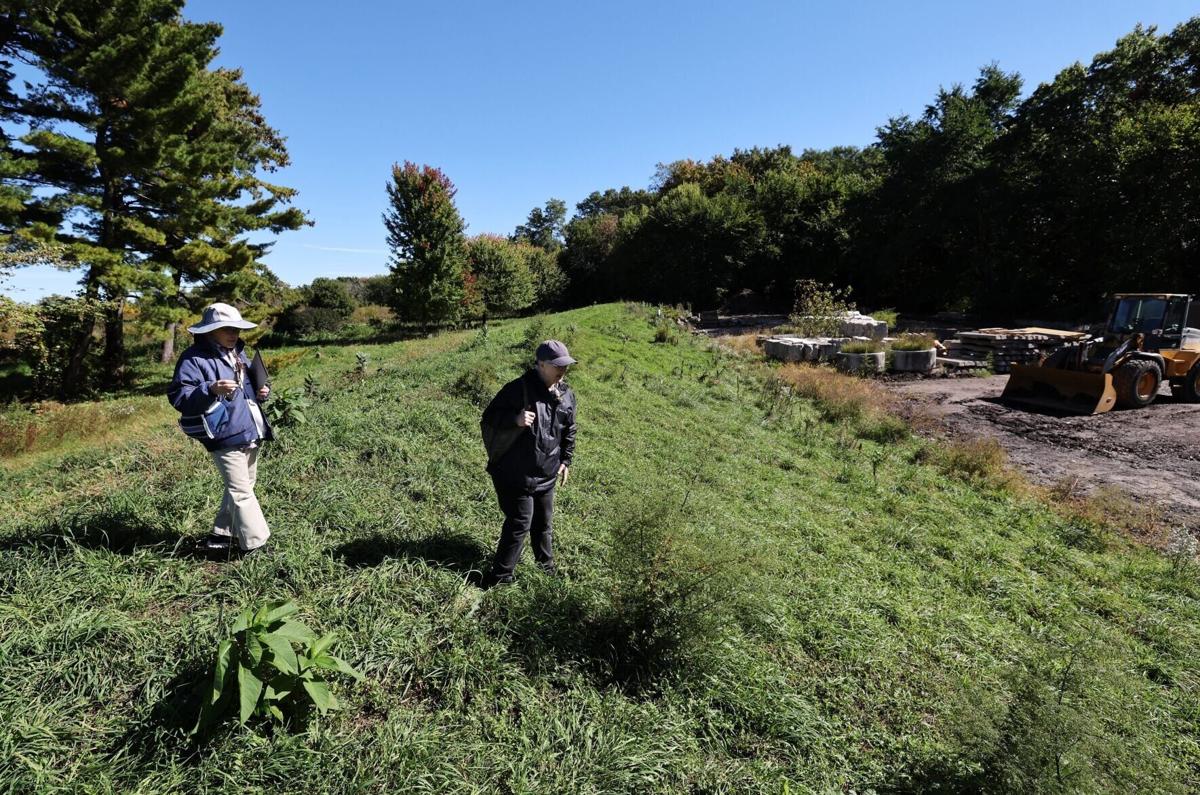
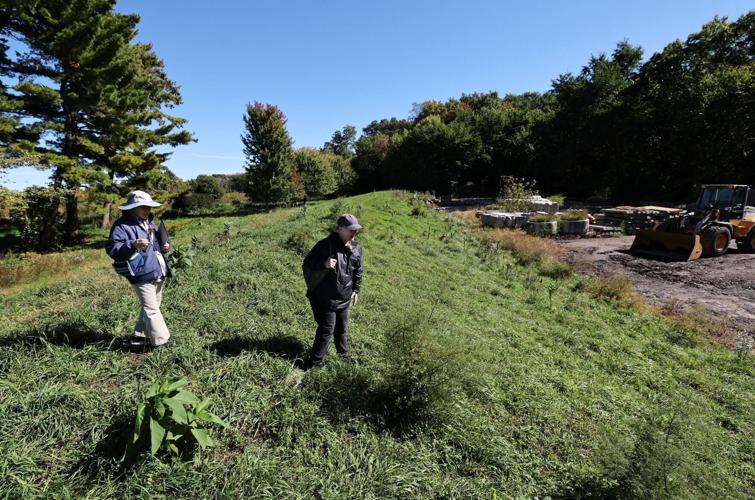
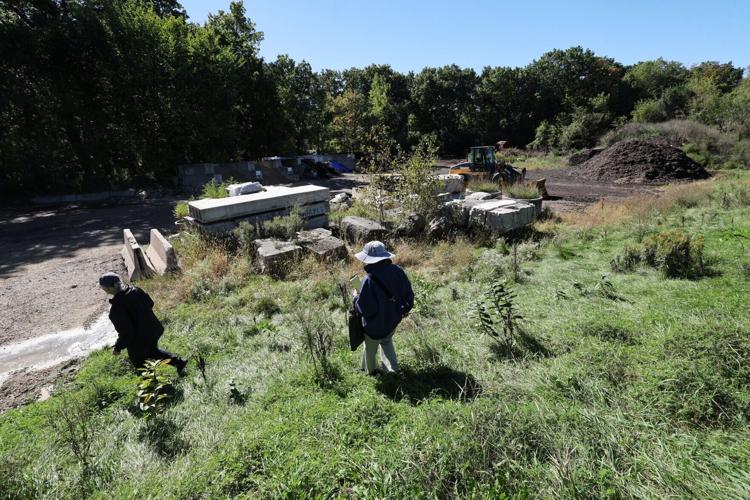
Cathie Bruner, left, and Karen Cornwell stand on a berm where cremated remains of people who donated their bodies to science at UW-Madison were buried, next to the maintenance yard at Lakeshore Nature Preserve in Madison. Bruner and Cornwell are concerned about the construction of a service road that would go through part of the berm.
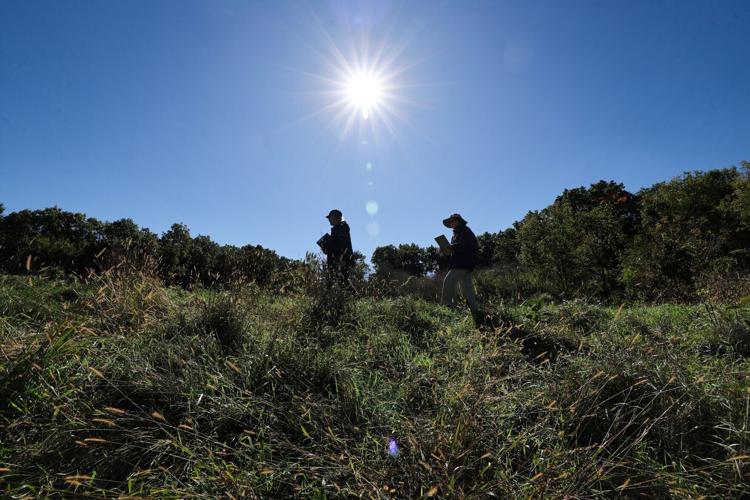
Cathie Bruner, right, and Karen Cornwell walk the berm where a proposed $400,000 construction project to build an 860-foot, 14-foot-wide service road is now on hold because cremated remains were buried there.
The new service road is being proposed because of the construction of the new visitor and education building, called the Lakeshore Nature Preserve Frautschi Center.
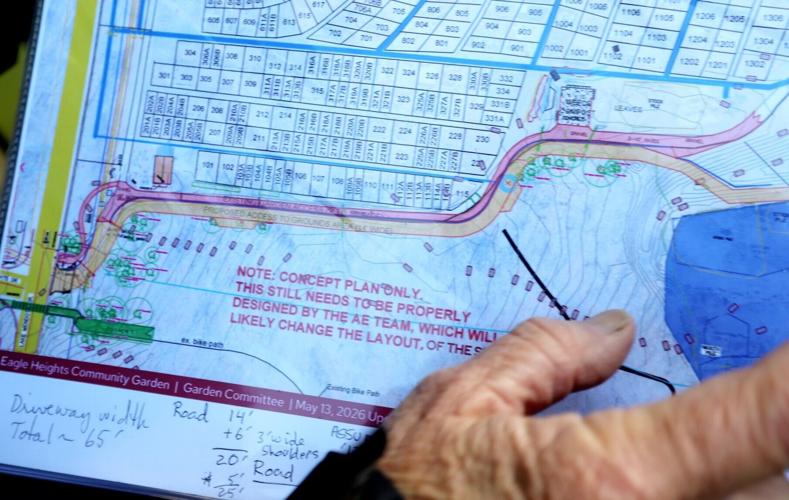
Karen Cornwell shows the proposed plans for a service road that would go through part of a berm where cremains of people who donated their bodies to science at UW-Madison were buried, at the Lakeshore Nature Preserve.
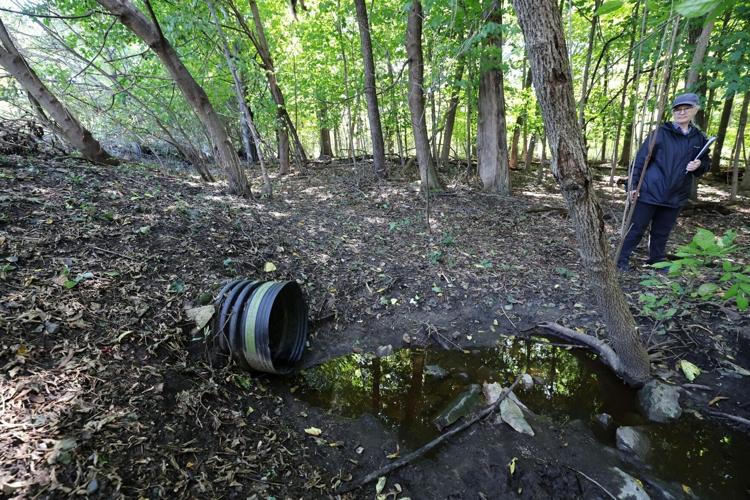
Karen Cornwell shows a culvert at the site of a berm in the Lakeshore Nature Preserve. Around 40 residents attended a public meeting on July 7 to provide feedback to Ayres Associates, the engineering firm the university hired to draft an environmental impact assessment for the service road project.
AMBER ARNOLD, STATE JOURNAL
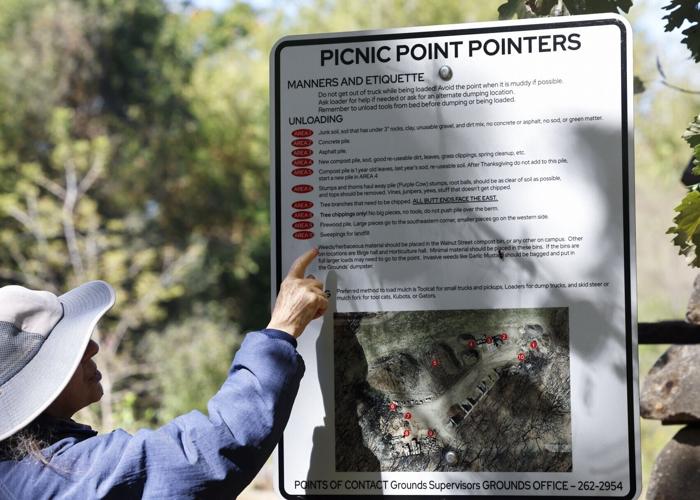
Cathie Bruner reads a sign displayed at a maintenance yard at UW-Madison Lakeshore Nature Preserve in Madison.
AMBER ARNOLD, STATE JOURNAL
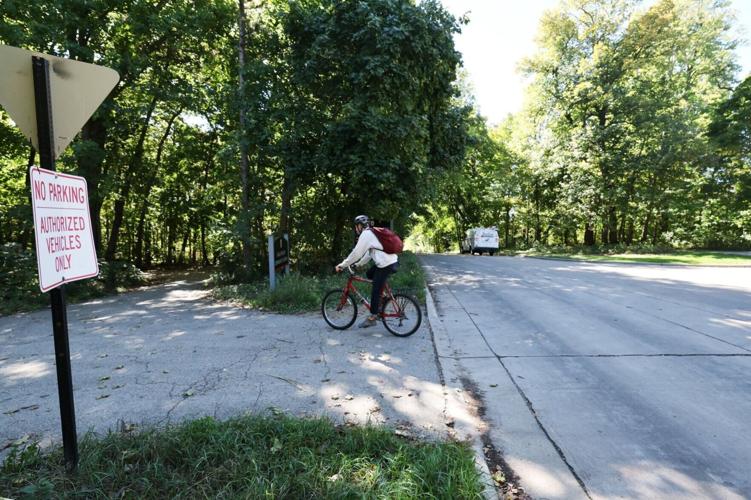
A cyclist heads to the bike path at UW-Madison’s Lakeshore Nature Preserve at the entrance to Eagle Heights Community Gardens, where a service road is being proposed in Madison.
AMBER ARNOLD, STATE JOURNAL
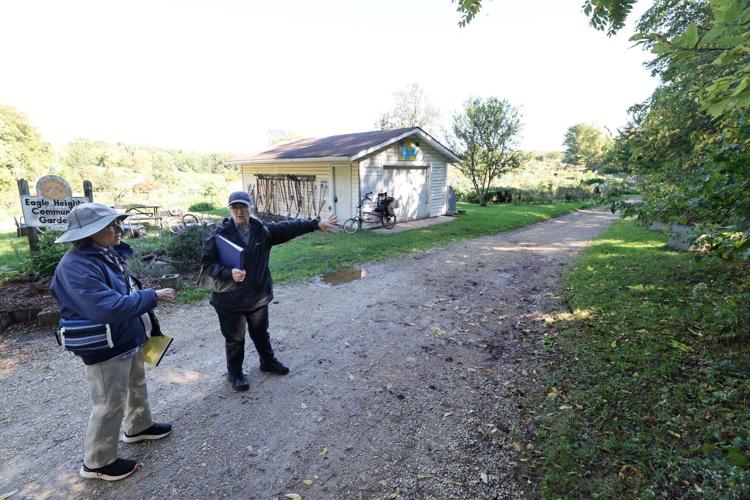
Cathie Bruner, left, and Karen Cornwell show the area where a service road is being proposed near the current road by Eagle Heights Community Gardens. The placement of the Frautschi Center will convert the current service road entrance and drive at the stone wall into a pedestrian-only path.
Cathie Bruner, left, and Karen Cornwell stand on a berm where cremated remains of people who donated their bodies to science at UW-Madison were buried, next to the maintenance yard at Lakeshore Nature Preserve in Madison. Bruner and Cornwell are concerned about the construction of a service road that would go through part of the berm.
Karen Cornwell shows the proposed plans for a service road that would go through part of a berm where cremains of people who donated their bodies to science at UW-Madison were buried, at the Lakeshore Nature Preserve.
Cathie Bruner, right, and Karen Cornwell walk the berm where a proposed $400,000 construction project to build an 860-foot, 14-foot-wide service road is now on hold because cremated remains were buried there.
The new service road is being proposed because of the construction of the new visitor and education building, called the Lakeshore Nature Preserve Frautschi Center.
Karen Cornwell shows a culvert at the site of a berm in the Lakeshore Nature Preserve. Around 40 residents attended a public meeting on July 7 to provide feedback to Ayres Associates, the engineering firm the university hired to draft an environmental impact assessment for the service road project.
A cyclist heads to the bike path at UW-Madison’s Lakeshore Nature Preserve at the entrance to Eagle Heights Community Gardens, where a service road is being proposed in Madison.
Cathie Bruner, left, and Karen Cornwell show the area where a service road is being proposed near the current road by Eagle Heights Community Gardens. The placement of the Frautschi Center will convert the current service road entrance and drive at the stone wall into a pedestrian-only path.