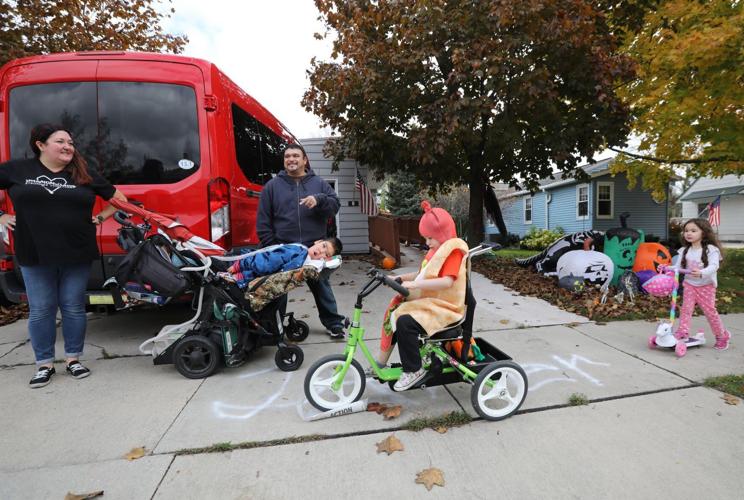
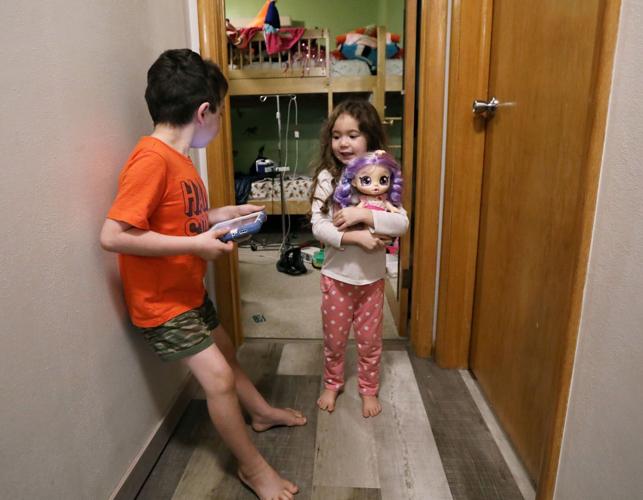
Amy and Adan Medina of Fond du Lac have three children with the most serious form of spinal muscular atrophy, or SMA, a rare disorder that weakens muscles. Treatments that have become available in recent years are most effective if the disease is caught early, usually through newborn screening. From right, Amelia, 3, is barely affected by the condition; Javier, 5, is somewhat affected; and Mateo, 10, is significantly affected.
AMBER ARNOLD, STATE JOURNAL
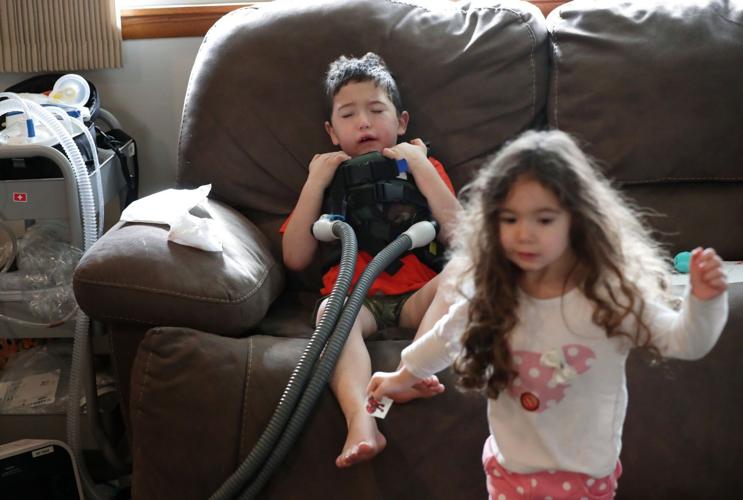
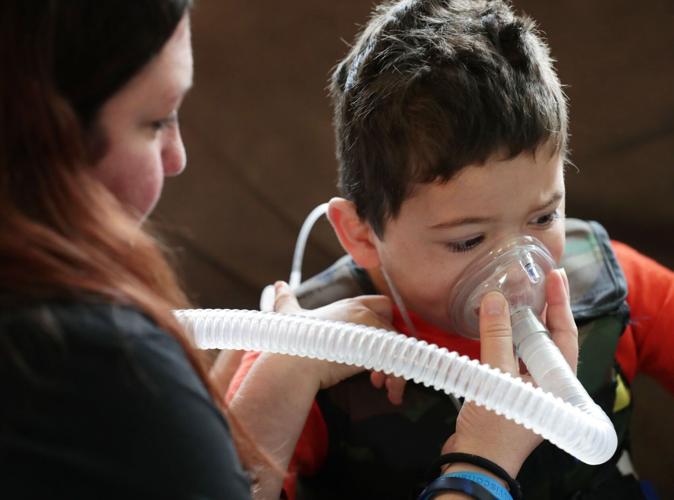
Javier Medina, 5, wears a vest that shakes to extract mucus from his lungs as part of a breathing treatment he gets twice a day. His sister, Amelia, 3, also has spinal muscular atrophy but doesn't need such treatments because she received a new gene therapy shortly after birth.
AMBER ARNOLD, STATE JOURNAL
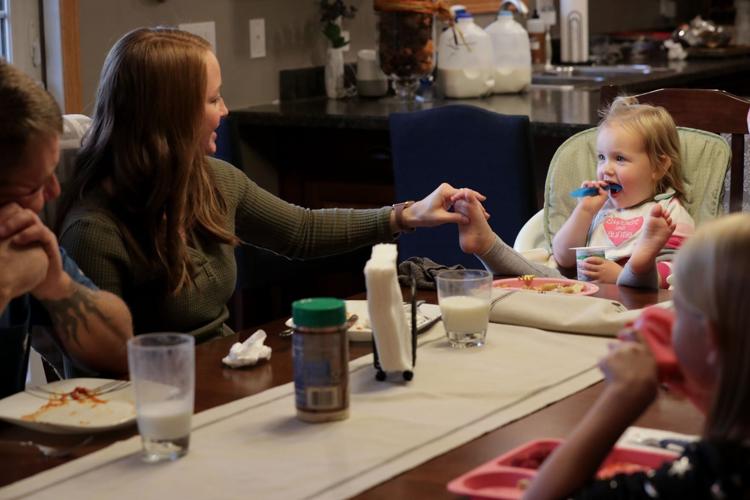
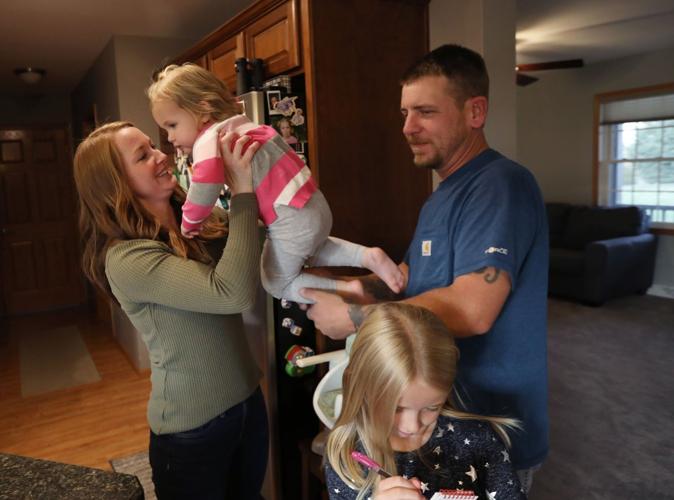
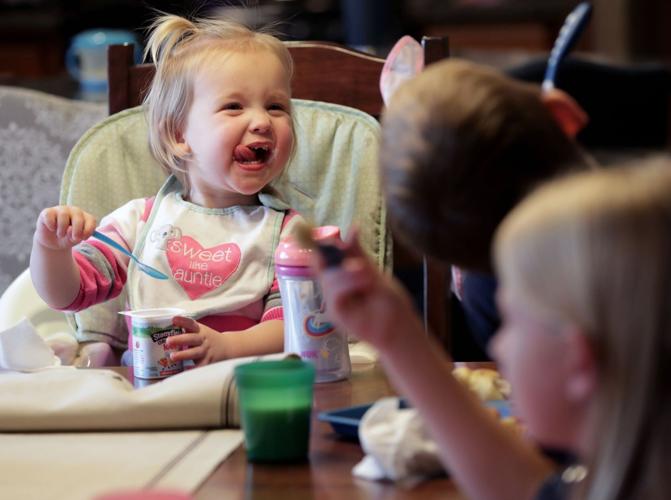
Piper Droessler props up her feet while eating with her family at their home near Platteville a few weeks before turning 2 on Nov. 25. Piper was the first baby to test positive for spinal muscular atrophy through newborn screening in Wisconsin, which started the testing in October 2019. She got a new gene therapy for the condition shortly after birth and shows no signs of SMA.
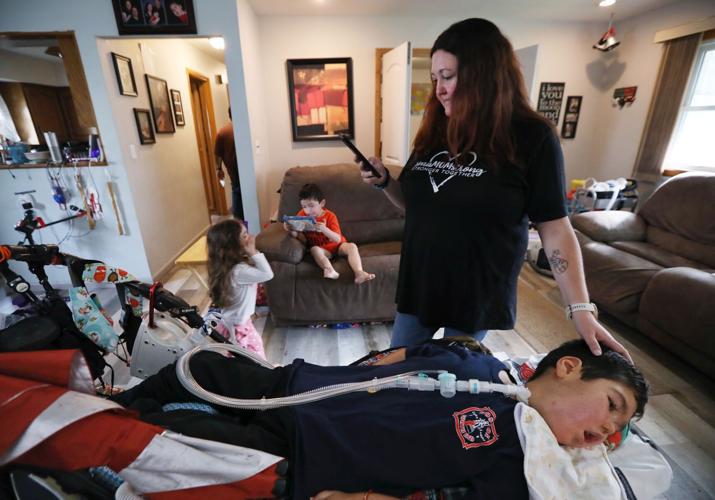
Amy Medina, with children Mateo, 10, foreground, Amelia, 3, and Javier, 5, said she and husband Adan worked full-time jobs, with opposite shifts, until their daughter was born. “We didn’t see much of each other," she said. Adan started staying home with the kids until recently, when he went back to work and she started staying home.
Javier Medina gets breathing treatments to remove secretions from his airway and mucus from his lungs twice a day. His brother, Mateo, gets the treatments three times a day.
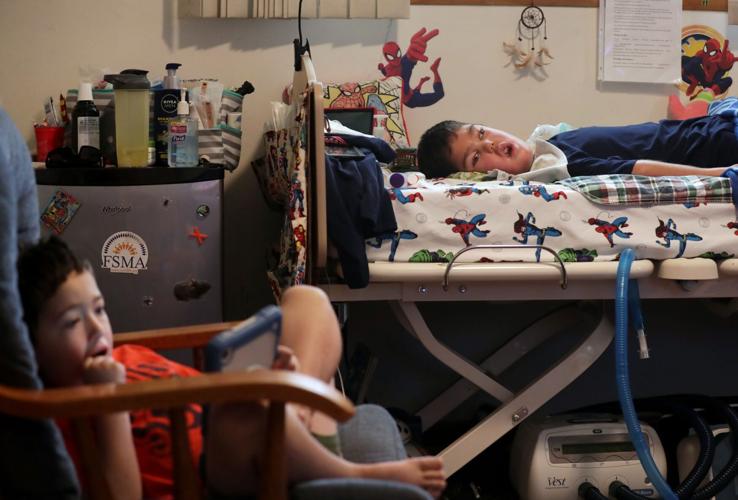
Javier Medina, left, plays on his tablet as his brother Mateo lies on his bed at their home in Fond du Lac. Sometimes Javier or his sister Amelia will grab Mateo's hand and help him play a game, their father said. “They include him as much as they know how to include them," Adan Medina said.
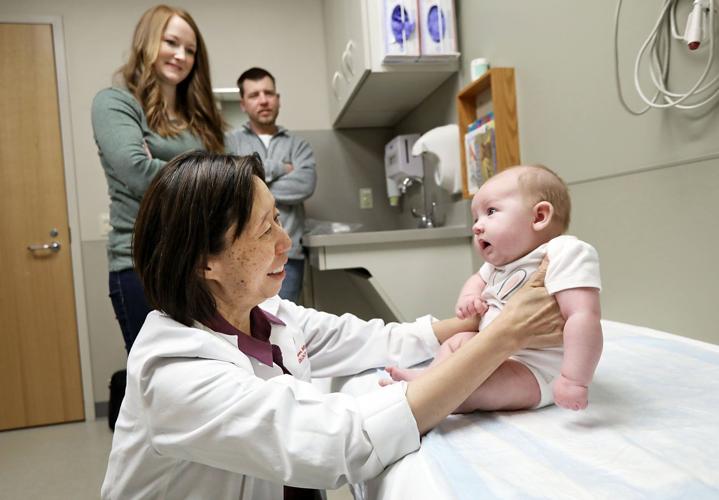
Dr. Jennifer Kwon, a pediatric neurologist at UW Health, tests Piper Droessler's strength in this photo from January 2020, as her parents Caiti and Ben Droessler look on.
Piper Droessler eats with her family at their home near Platteville a few weeks before turning 2 on Nov. 25. Piper was the first baby to test positive for spinal muscular atrophy through newborn screening in Wisconsin, which started the testing in October 2019. She got a new gene therapy for the condition shortly after birth and shows no signs of SMA.
Caiti Droessler said she's grateful Wisconsin started screening babies for spinal muscular atrophy six weeks before daughter Piper was born. After Piper tested positive, Caiti and husband Ben learned they are carriers, meaning each of their children has a 25% chance of having the disease. Ellianna, 8, and Finley, 5, don't have it, but “if one of them would have had it, it would have been a whole different story," Caiti said.
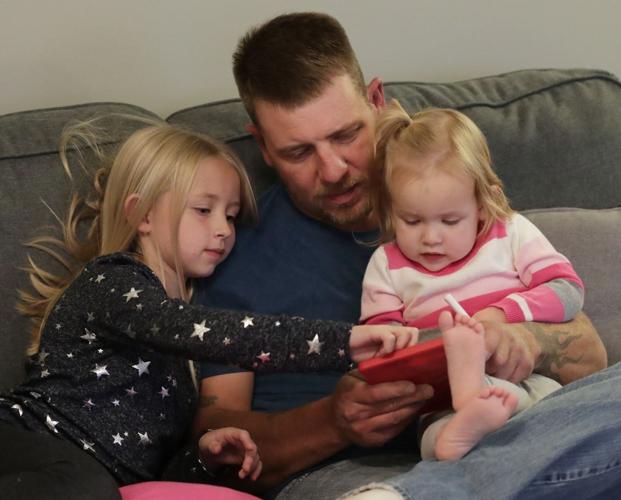
Ben Droessler, with daughters Ellianna, 8, and Piper, who turned 2 on Nov. 25, said Piper shows no signs of the spinal muscular atrophy she was born with but treated for shortly after birth.
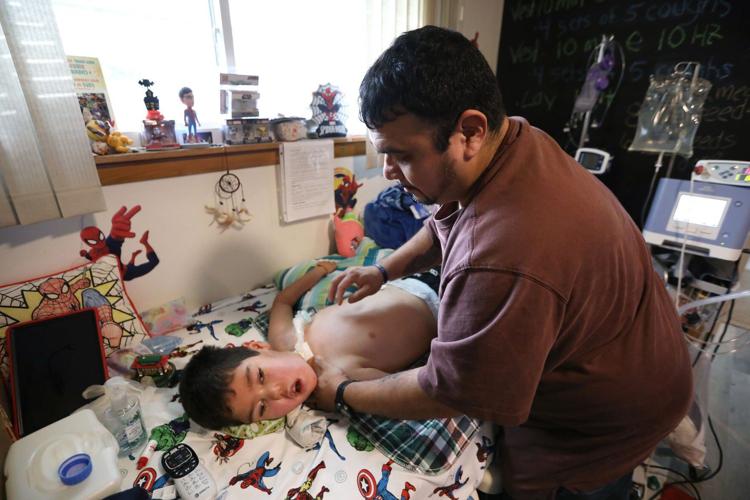
Adan Medina cleans around his 10-year-old son Mateo's breathing tube before getting him dressed. Nurses provide some care for Mateo, but Adan and his wife Amy also spend a lot of time caring for him.
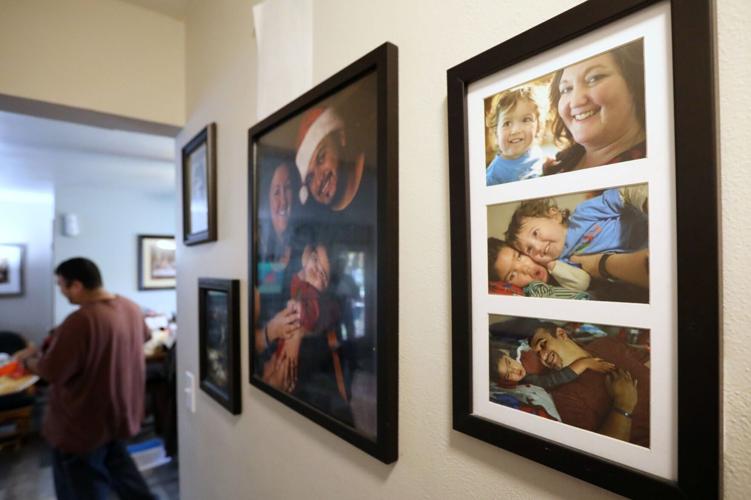
Photos in the hallway of Amy and Adan Medina's home in Fond du Lac show them with their sons, Mateo and Javier, who were born with spinal muscular atrophy. Photos of Javier, right, show him grinning before age 3, when his facial muscles weakened so much he became unable to smile.
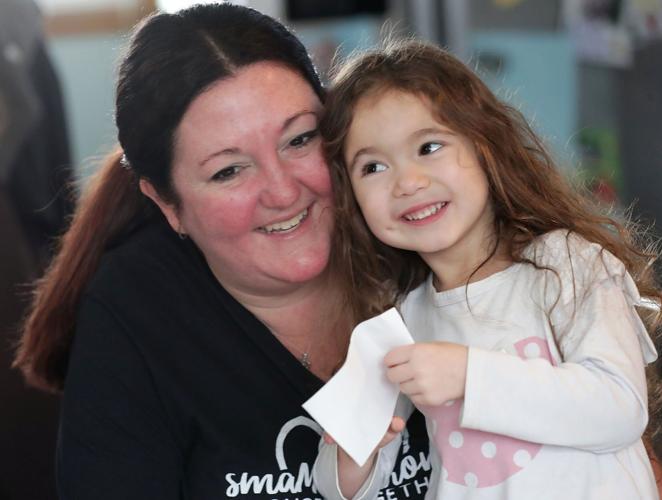
Amy Medina, shown with 3-year-old daughter, Amelia, said the only sign Amelia shows of having a spinal muscular atrophy is an occasional tremor in the morning.
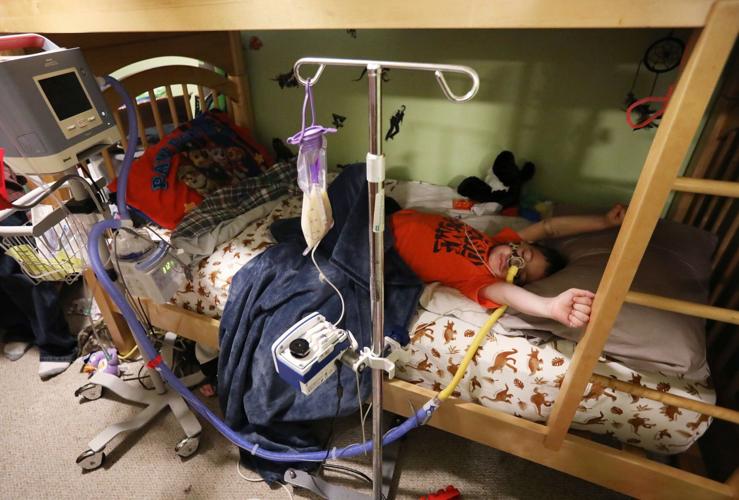
Javier Medina, 5, wakes up at his home in Fond du Lac. He started treatment for spinal muscular atrophy less than two weeks after he was born, but he still has some symptoms of the muscle weakening disease. At night, he receives supplemental oxygen and nourishment through a feeding tube.
Amy and Adan Medina of Fond du Lac have three children with the most serious form of spinal muscular atrophy, or SMA, a rare disorder that weakens muscles. Treatments that have become available in recent years are most effective if the disease is caught early, usually through newborn screening. From right, Amelia, 3, is barely affected by the condition; Javier, 5, is somewhat affected; and Mateo, 10, is significantly affected.
Javier Medina, 5, wakes up at his home in Fond du Lac. He started treatment for spinal muscular atrophy less than two weeks after he was born, but he still has some symptoms of the muscle weakening disease. At night, he receives supplemental oxygen and nourishment through a feeding tube.
Javier Medina gets breathing treatments to remove secretions from his airway and mucus from his lungs twice a day. His brother, Mateo, gets the treatments three times a day.
Dr. Jennifer Kwon, a pediatric neurologist at UW Health, tests Piper Droessler's strength in this photo from January 2020, as her parents Caiti and Ben Droessler look on.
Caiti Droessler said she's grateful Wisconsin started screening babies for spinal muscular atrophy six weeks before daughter Piper was born. After Piper tested positive, Caiti and husband Ben learned they are carriers, meaning each of their children has a 25% chance of having the disease. Ellianna, 8, and Finley, 5, don't have it, but “if one of them would have had it, it would have been a whole different story," Caiti said.
Adan Medina cleans around his 10-year-old son Mateo's breathing tube before getting him dressed. Nurses provide some care for Mateo, but Adan and his wife Amy also spend a lot of time caring for him.
Photos in the hallway of Amy and Adan Medina's home in Fond du Lac show them with their sons, Mateo and Javier, who were born with spinal muscular atrophy. Photos of Javier, right, show him grinning before age 3, when his facial muscles weakened so much he became unable to smile.
Amy Medina, shown with 3-year-old daughter, Amelia, said the only sign Amelia shows of having a spinal muscular atrophy is an occasional tremor in the morning.
Ben Droessler, with daughters Ellianna, 8, and Piper, who turned 2 on Nov. 25, said Piper shows no signs of the spinal muscular atrophy she was born with but treated for shortly after birth.
Amy Medina, with children Mateo, 10, foreground, Amelia, 3, and Javier, 5, said she and husband Adan worked full-time jobs, with opposite shifts, until their daughter was born. “We didn’t see much of each other," she said. Adan started staying home with the kids until recently, when he went back to work and she started staying home.
Javier Medina, left, plays on his tablet as his brother Mateo lies on his bed at their home in Fond du Lac. Sometimes Javier or his sister Amelia will grab Mateo's hand and help him play a game, their father said. “They include him as much as they know how to include them," Adan Medina said.
Javier Medina, 5, wears a vest that shakes to extract mucus from his lungs as part of a breathing treatment he gets twice a day. His sister, Amelia, 3, also has spinal muscular atrophy but doesn't need such treatments because she received a new gene therapy shortly after birth.
Piper Droessler props up her feet while eating with her family at their home near Platteville a few weeks before turning 2 on Nov. 25. Piper was the first baby to test positive for spinal muscular atrophy through newborn screening in Wisconsin, which started the testing in October 2019. She got a new gene therapy for the condition shortly after birth and shows no signs of SMA.
Piper Droessler eats with her family at their home near Platteville a few weeks before turning 2 on Nov. 25. Piper was the first baby to test positive for spinal muscular atrophy through newborn screening in Wisconsin, which started the testing in October 2019. She got a new gene therapy for the condition shortly after birth and shows no signs of SMA.