
Golf courses are pretty accustomed to dealing with wildlife.
People are also reading…

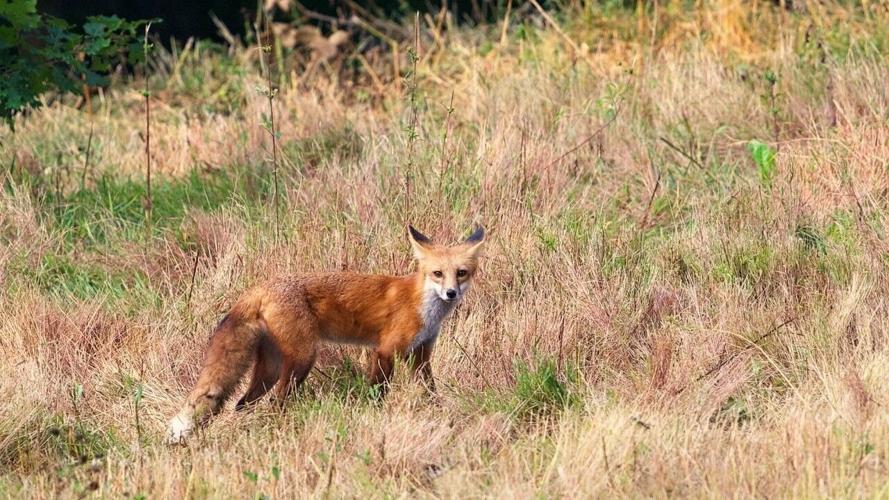
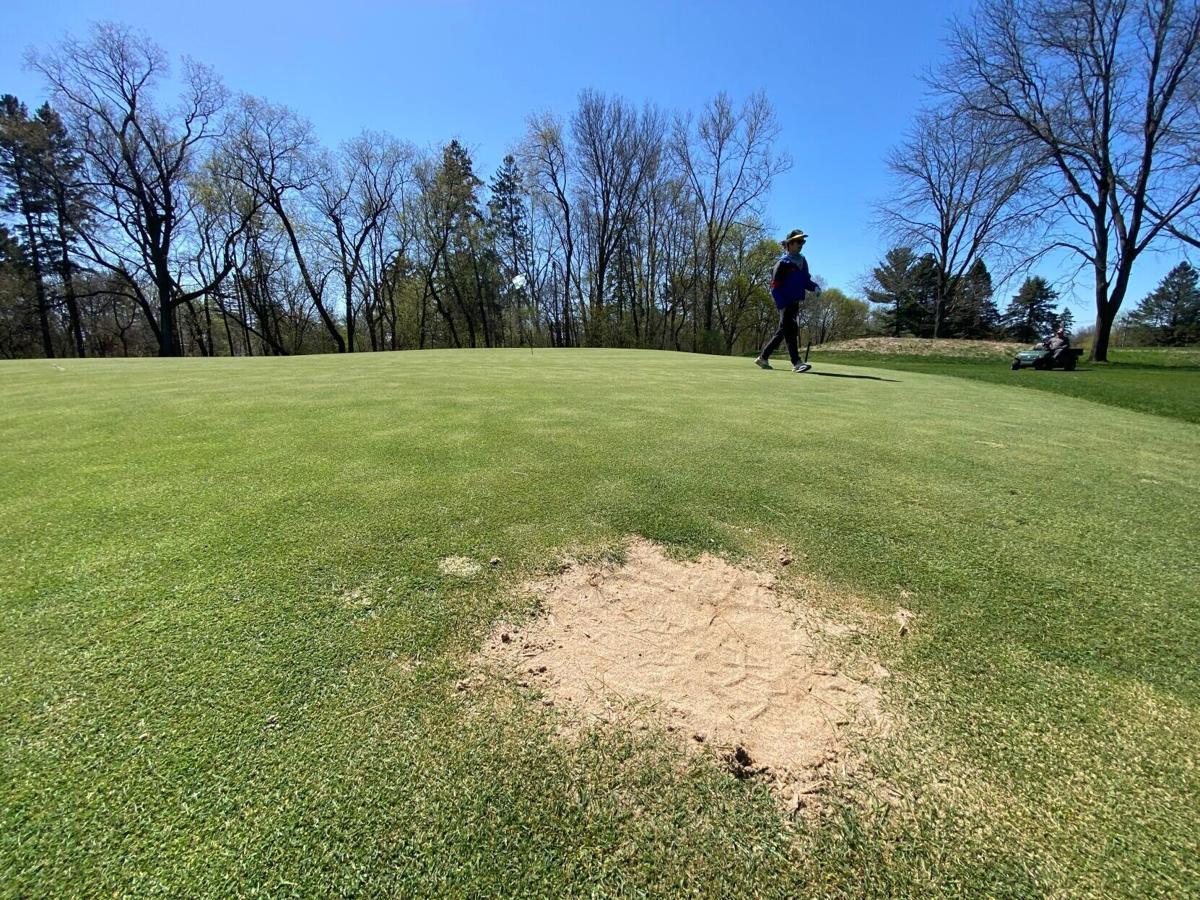
This fox, photographed here in September at The Glen Golf Park in Madison, was later captured by UW Urban Canid Project researchers and moved to Yahara Hills Golf Course. The Glen's greens were rebuilt in 2021 on a base of sand. That attracted the foxes, which like to dig in sand and in the past had primarily dug in the course's sand traps.

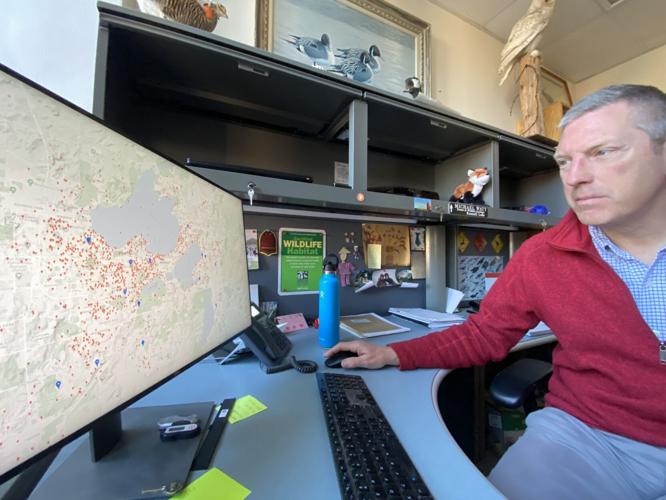
David Drake, a professor and wildlife specialist at UW-Madison and director of the UW Urban Canid Project, looks at an online map that shows fox and coyote sightings reported by the public.

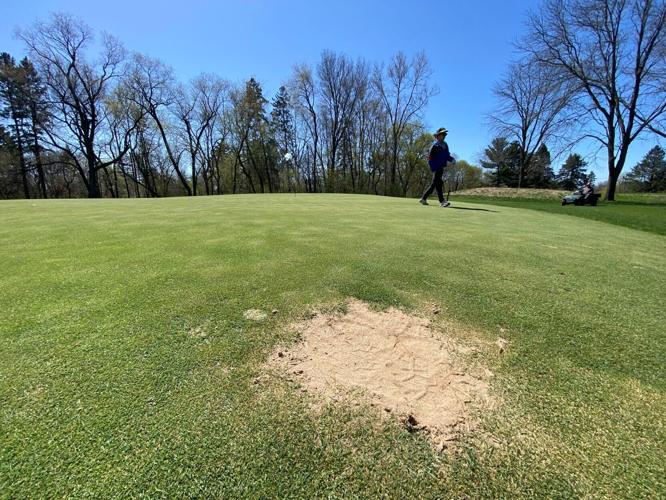
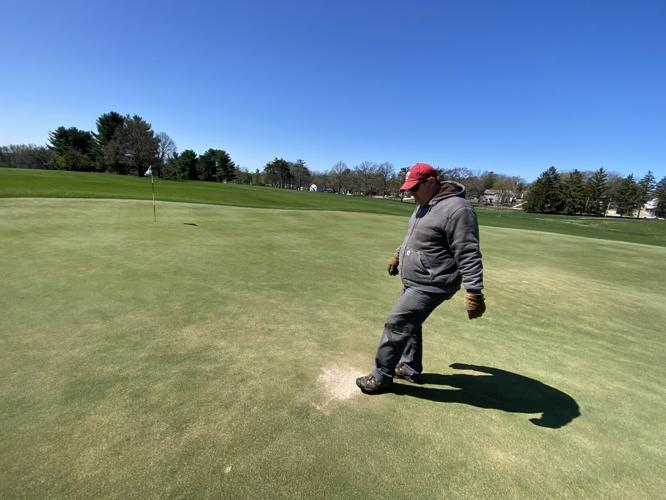
Dave Vetrovec, superintendent at The Glen Golf Park, tamps down sand from a hole dug by a fox on the course's fifth hole last week.

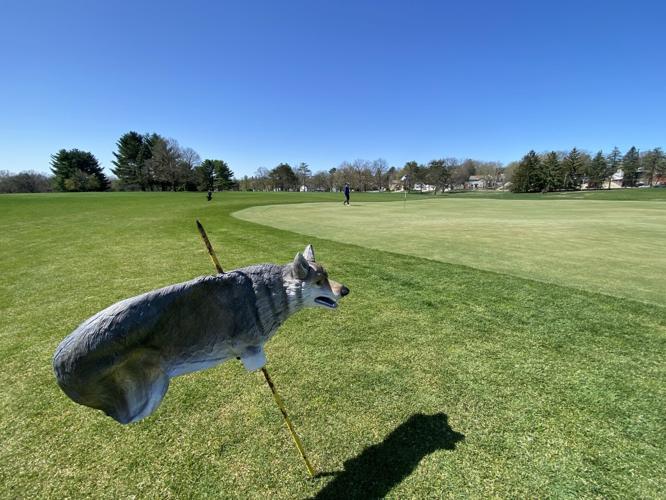
This coyote decoy stands guard on the fifth hole at The Glen Golf Park on Madison's Near West Side. The decoy, however, has done little to scare a fox away from the hole.

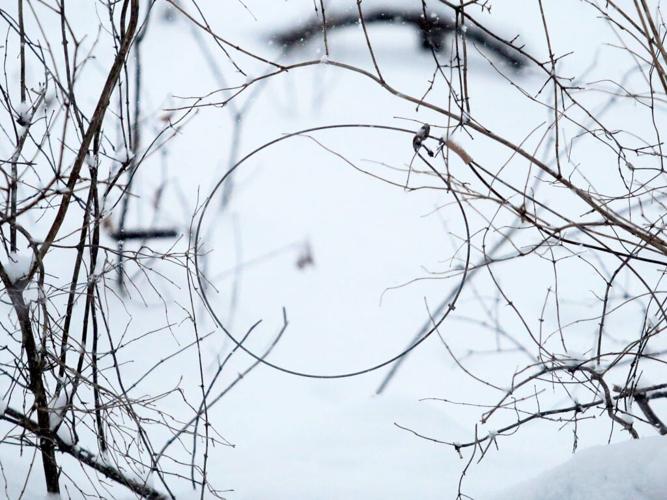
This circular wire trap, seen here in 2015 at Frautschi Point west of Picnic Point, is what is used to humanely trap coyotes and foxes for study by the UW Urban Canid Project.
Photos: see bears, bucks, and fighting foxes caught on Wisconsin trail cams

A wild turkey tom displays his feathers for a hen in Adams County. Male turkeys strut to attract females and to establish dominance over subordinate males. On adult males, like the one pictured, the tail forms a full, unbroken contour when fanned out. On juvenile males, the middle 4-6 tail feathers are longer than the outer feathers, so the tail appears uneven when fanned out.

A long-tailed weasel, one of three weasel species in Wisconsin, dashes through the snow in Ashland County in a trail cam photo from the Snapshot Wisconsin collection.

A porcupine photographed in Bayfield County. Volunteers say the lumbering gait is a key characteristic to identifying porcupines -- that, and the sharp quills.

A pair of Clark County bear cubs wrestle near the end of their first summer. Black bear cubs weigh a pound or less when they're born during the winter but grow quickly after emerging from the den.

A muskrat captured in Dane County.

Primary growth forest, where the herbaceous layer stays relatively low to the ground, makes for great opportunities to capture wildlife, such as this fisher photographed near a Door County brook.

A pack of coyote cubs prowl through the woods of Iowa County.

Moose are an uncommon sight in Wisconsin, but the number of moose observations in the Snapshot Wisconsin database more than doubled in 2020, with at least four photographed in September and October across Iron, Price, and Burnett Counties.

Trail cams sometimes capture more than one species in a frame, though rarely a predator. This Juneau County shot captured two -- as a black bear and coyote cross paths.

Predator and prey come together in this La Crosse County image of a barred owl carrying off a fresh catch.

Introduced to Wisconsin in the late 1800s, the ring-necked pheasant can be distinguished from other upland game birds by its long, pointed tail. This Lafayette County pheasant makes a rare appearance after snowfall.

Not only does this Marquette County image show an uninhibited moment between two red foxes; it also showcases the distinct pelage of this iconic Wisconsin species.

A Virginia opossum carries her young on her back in this Milwuakee County image. North America's only marsupial, Opossums carry their young in a pouch until they are old enough to cling to their mother's back.

The color of wolves' coats can vary widely. Black (melanistic) wolves, are less common than those sporting the traditional grizzled coat, so staff and volunteers enjoy coming across photos like this one. The unusual eye color of this Oneida County wolf is especially noteworthy.

A deer, rabbit and skunk cross paths in this Pepin County photo. Only about 0.2% of Snapshot Wisconsin photos contain multiple species.

Greater prairie chickens lekking in Portage County. Snapshot Wisconsin teamed up with wildlife management to use trail cameras to monitor leks, such as this one, where male birds display to attract females.

A Racine County mink captured in a rare still moment. Mink are often captured at night or in motion, making it difficult to distinguish their features.

Perhaps less recognized than their relatives the hairy and downy woodpeckers, red-bellied woodpeckers are nonetheless relatively common and widespread across the state. This action shot from Richland County showcases the red caps and beautiful checkered plumage.

Wisconsin's mascot is typically seen at night, but this Sauk County badger photo shows off its fantastic markings in the daylight.

A bull elk in Sawyer County. Snapshot Wisconsin has been used to help monitor elk herds reintroduced to the state.

A bobcat caught on a trail camera in Trempealeau County. In addition to being smaller than cougars, bobcats are recognizable for their short -- or "bobbed" -- tails.

The American marten is extremely rare in Wisconsin. In more than 50 million photos, this 2019 shot from Vilas County is the only one to capture one -- or at least part of one.

This white buck was captured by a Snapshot Wisconsin camera in Waukesha County. Wisconsin law forbids hunting white deer.

This male cougar, likely from the Dakotas, photographed in Waupaca County, is one of only two captured by a network of 2,100 volunteer trail cams in the Department of Natural Resource's Snapshot Wisconsin project.