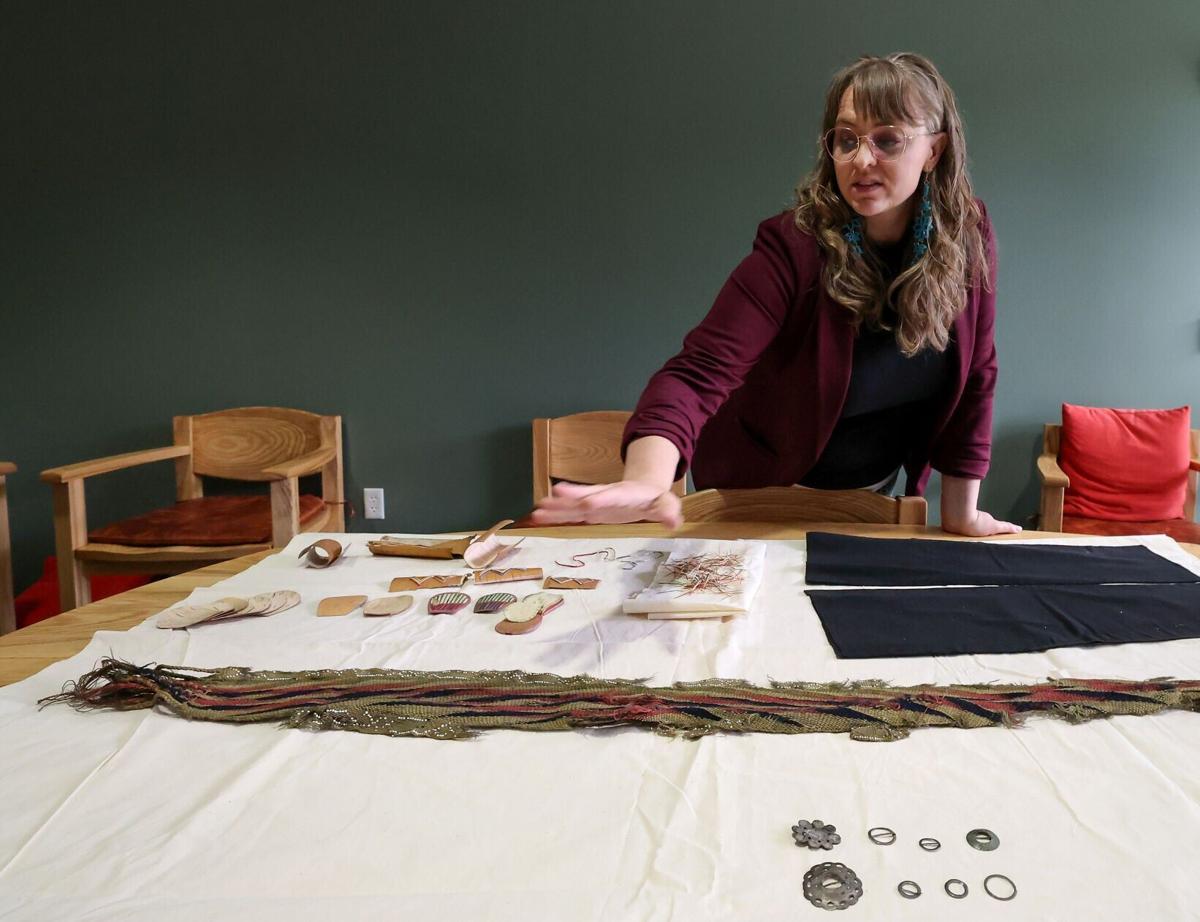
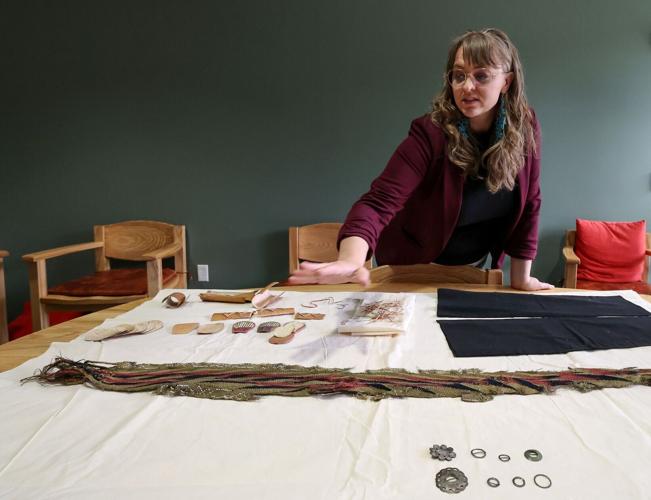
Jackie Pozza Reisner, the Wisconsin Historical Society’s curator of American Indian collections, displays items that belonged to Therese Marcot LaSaliere Schindler, a Métis woman who was born in the Upper Peninsula in 1775 and later moved to Green Bay. Here, far from the 13 colonies, Britain remained the dominant European power at the time of the American Revolution, controlling the fur trade and maintaining mostly friendly relations with Native nations.
In Philadelphia, New York and Boston, American colonists were preparing to pledge their lives, fortunes and sacred honor to declare their independence from an oppressive monarch.
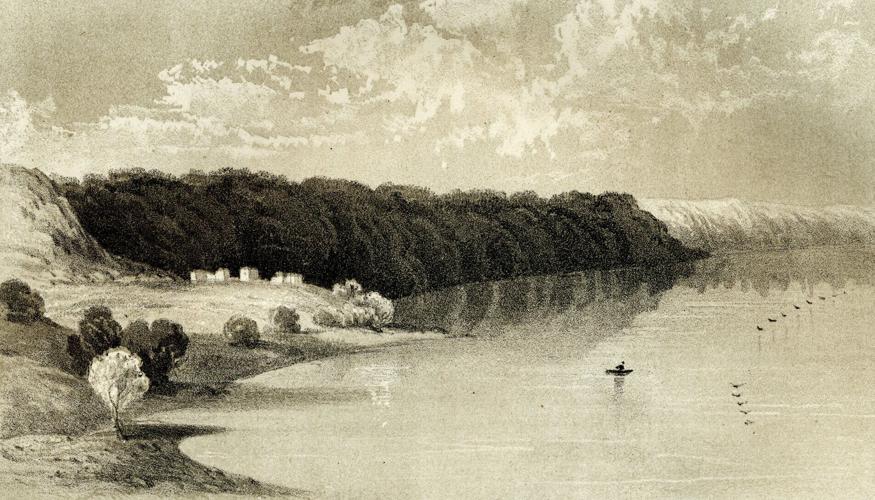
Lithographic view of a man in a canoe on Big-Foot's Lake (modern day Lake Geneva) with a small Ho-Chunk village on a bluff overlooking the lake. The sketch by Juliette Kinzie dates to the mid-1800s.
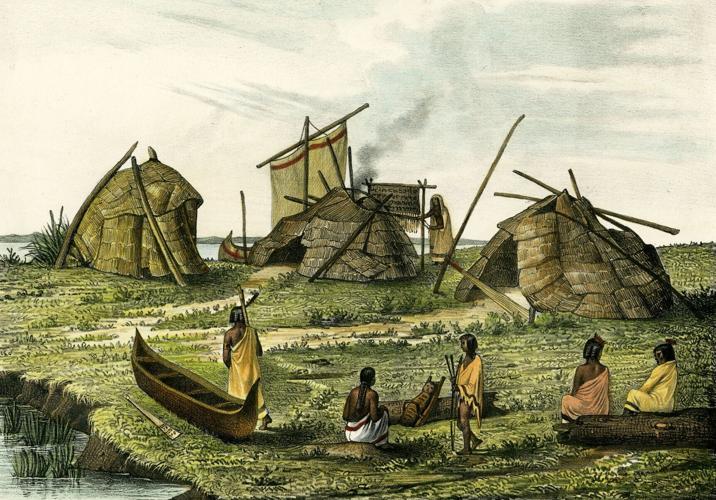
A Menominee village as depicted in a hand-colored lithograph by Francois Comte de Castelnau, a French naturalist and diplomat who visited the Green Bay area in about 1838. By 1776, Green Bay had become an important trading post for Native, European and Métis peoples.
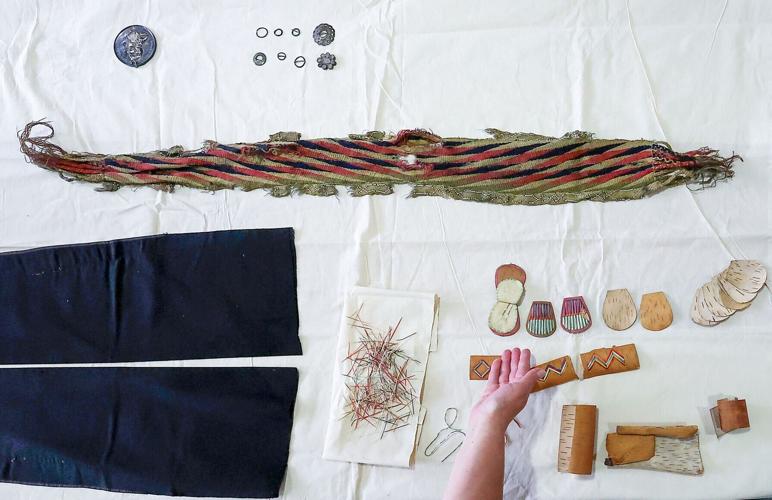
Items in the Wisconsin Historical Society’s collection that belonged to Therese Marcot LaSaliere Schindler include a finger-woven belt made with materials imported from Europe and birch bark needle books decorated with dyed porcupine quills. The medallion at the top left is a peace medal from King George III, which the British gave out to Native nations to solidify their alliances around 1776.
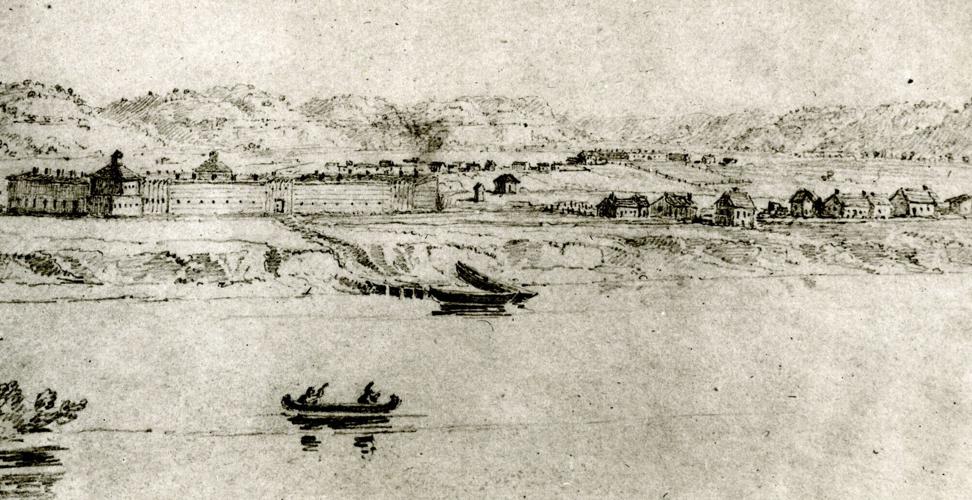
Prairie du Chien as drawn by Seth Eastman soon after the War of 1812. The fort on the left wouldn’t have been there in 1776, said Amy Rosebrough, Wisconsin’s state archaeologist, and the row of houses would have extended farther in that direction.
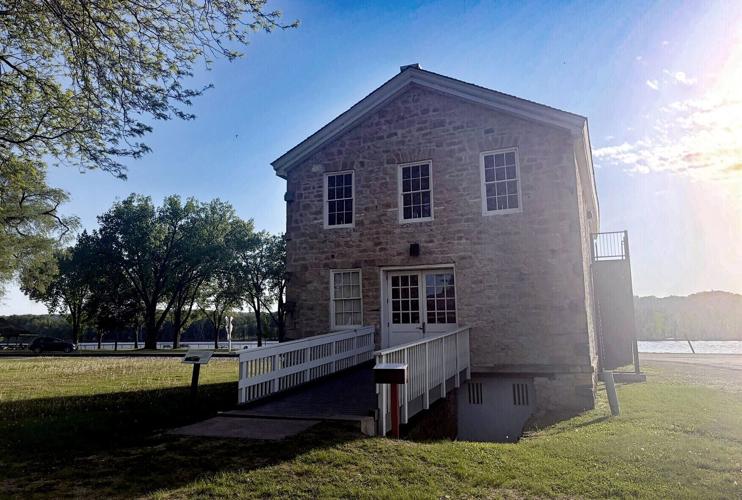
A former fur warehouse built in 1851 by fur trader B.W. Brisbois in Prairie du Chien. The building, which replaced buildings owned by the American Fur Company, later served as a museum but is now used primarily for school tours and public programming.
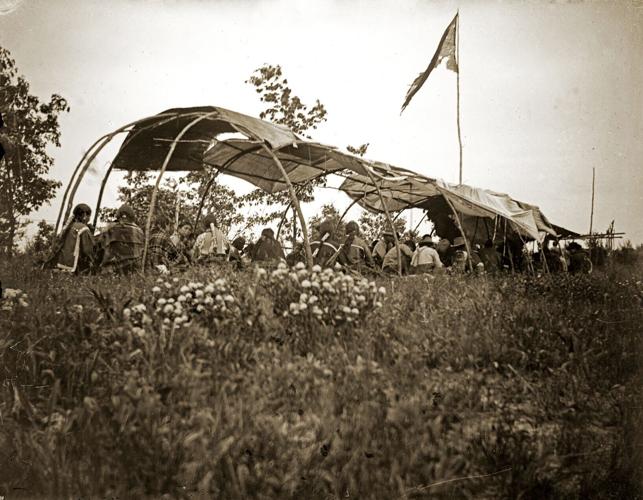
An undated image of a Ho-Chunk Thunder Clan feast lodge flying a British flag. The flag came to the Ho-Chunk when they joined forces with the British against the United States during the War of 1812.
The market features apple cider doughnuts, pies, breads, apples, cookies, fudge, cider, jams, apple sauce, honey, caramel apples and gift items.
Jackie Pozza Reisner, the Wisconsin Historical Society’s curator of American Indian collections, displays items that belonged to Therese Marcot LaSaliere Schindler, a Métis woman who was born in the Upper Peninsula in 1775 and later moved to Green Bay. Here, far from the 13 colonies, Britain remained the dominant European power at the time of the American Revolution, controlling the fur trade and maintaining mostly friendly relations with Native nations.
Items in the Wisconsin Historical Society’s collection that belonged to Therese Marcot LaSaliere Schindler include a finger-woven belt made with materials imported from Europe and birch bark needle books decorated with dyed porcupine quills. The medallion at the top left is a peace medal from King George III, which the British gave out to Native nations to solidify their alliances around 1776.
An undated image of a Ho-Chunk Thunder Clan feast lodge flying a British flag. The flag came to the Ho-Chunk when they joined forces with the British against the United States during the War of 1812.
Prairie du Chien as drawn by Seth Eastman soon after the War of 1812. The fort on the left wouldn’t have been there in 1776, said Amy Rosebrough, Wisconsin’s state archaeologist, and the row of houses would have extended farther in that direction.
Lithographic view of a man in a canoe on Big-Foot's Lake (modern day Lake Geneva) with a small Ho-Chunk village on a bluff overlooking the lake. The sketch by Juliette Kinzie dates to the mid-1800s.
A Menominee village as depicted in a hand-colored lithograph by Francois Comte de Castelnau, a French naturalist and diplomat who visited the Green Bay area in about 1838. By 1776, Green Bay had become an important trading post for Native, European and Métis peoples.
A former fur warehouse built in 1851 by fur trader B.W. Brisbois in Prairie du Chien. The building, which replaced buildings owned by the American Fur Company, later served as a museum but is now used primarily for school tours and public programming.