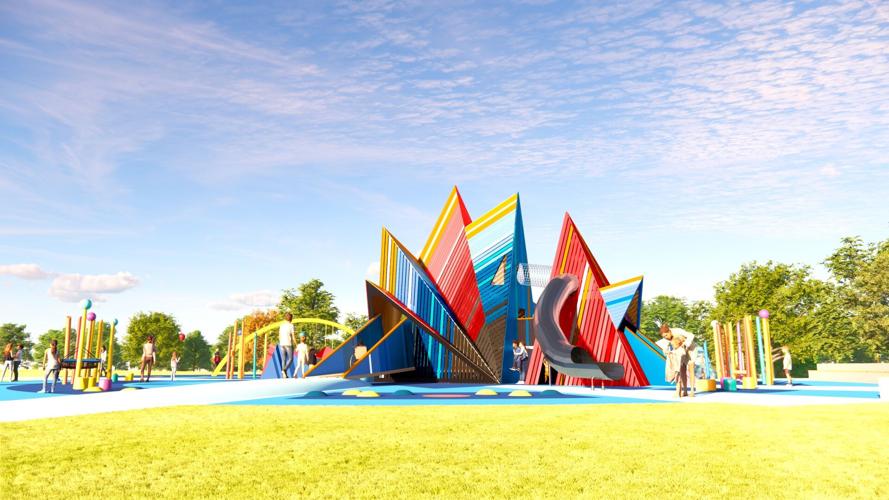


Designed for play in all four Wisconsin seasons, Copenhagen, Denmark-based Monstrum’s abstracted supernova playground, proposed for installation at historic Yerkes Observatory in Williams Bay, takes the form of a 7,000-square-foot, multi-level playground rising 26 feet in the air.
People are also reading…

Kois

A colorful supernova provided the inspiration for the design of Denmark-based Monstrum's proposed Play/Space playground at Yerkes Observatory in Williams Bay. On March 13, the nonprofit Yerkes Future Foundation announced the launch of an online crowdfunding campaign at kickstarter.com to raised funds for the proposed 7,000-square-foot astronomy-themed playground, with a dollar-for-dollar match by the Blair Family Foundation.

Chadick

Artist's concept winter view scene of Denmark-based Monstrum's proposed four seasons playground installation at Yerkes Observatory in Williams Bay. Crowdfunding for the playground was launched online at kickstarter.com by the nonprofit Yerkes Future Foundation on March 13, with donations to be matched dollar-for-dollar by the Blair Family Foundation.

Bauer
This artist's rendering video shows the proposed playground to be developed at Yerkes Observatory in Williams Bay by Copenhagen, Denmark-based Monstrum. The Yerkes Future Foundation on March 13 announced a crowdfunding initiative on Kickstarter in support of its development of its proposed Play/Scape playground. Donations up to $500,000 will be matched dollar-for-dollar by the Blair Family Foundation.

Artist’s concept aerial layout view on Denmark-based Monstrum’s proposed 7,000-square-foot year-round playground installation at Yerkes Observatory in Williams Bay. The Yerkes Future Foundation on March 13 announced a crowdfunding Kickstarter campaign to help fund the project, with dollar-for-dollar matching by the Blair Family Foundation.
In photos: 100 years ago Einstein visited Yerkes Observatory and more Yerkes photos
Einstein visit
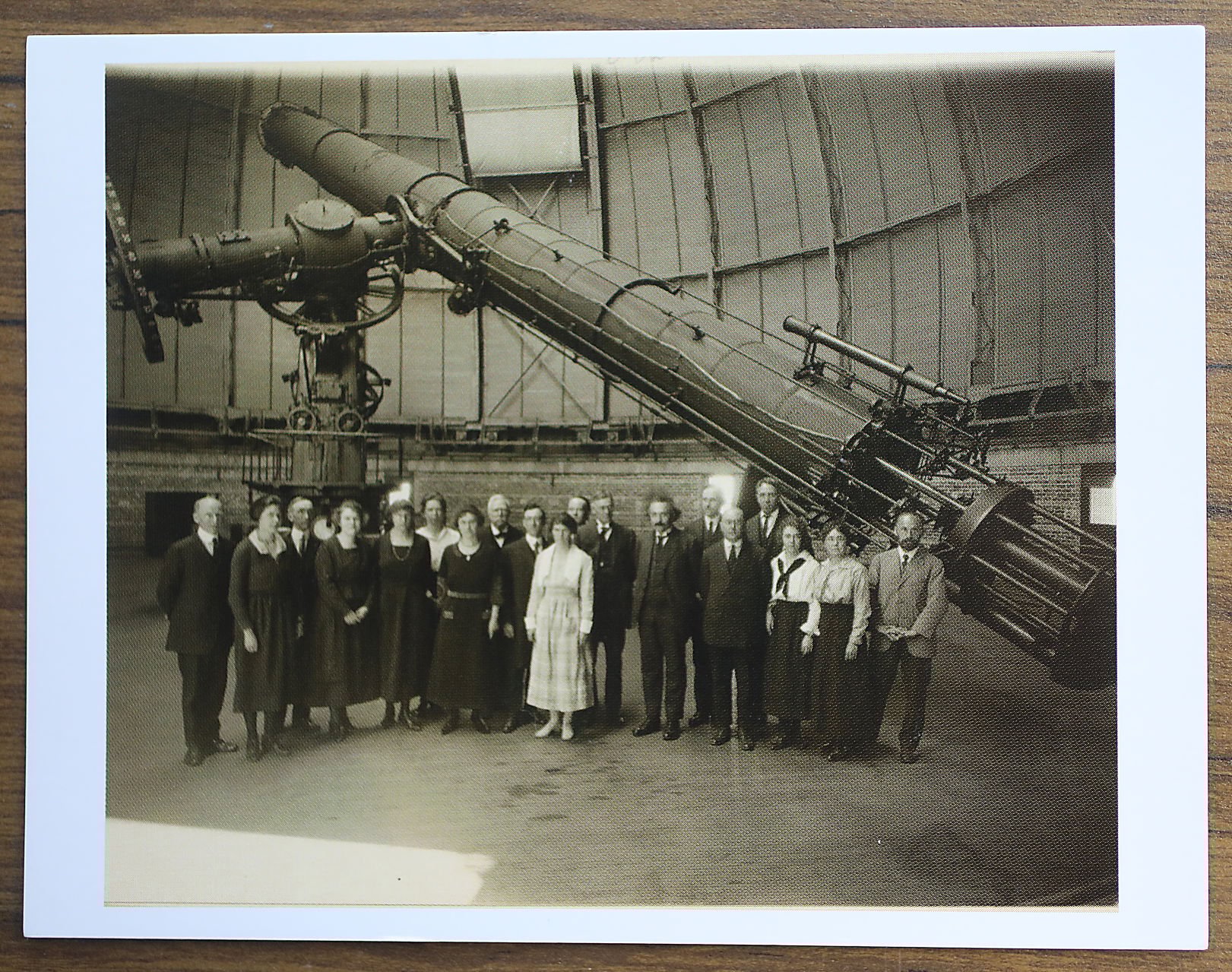
Famed mathematician Albert Einstein, seventh from left, appears in a photo dated May 6, 1921, with staff at the Yerkes Observatory in Williams Bay. The facility has hosted scores of influential and groundbreaking researchers over its 123 years.
Williams Bay history - 23

An unidentified woman feeds ducks and chickens with Yerkes Observatory looming large in the background.
Williams Bay history - 16
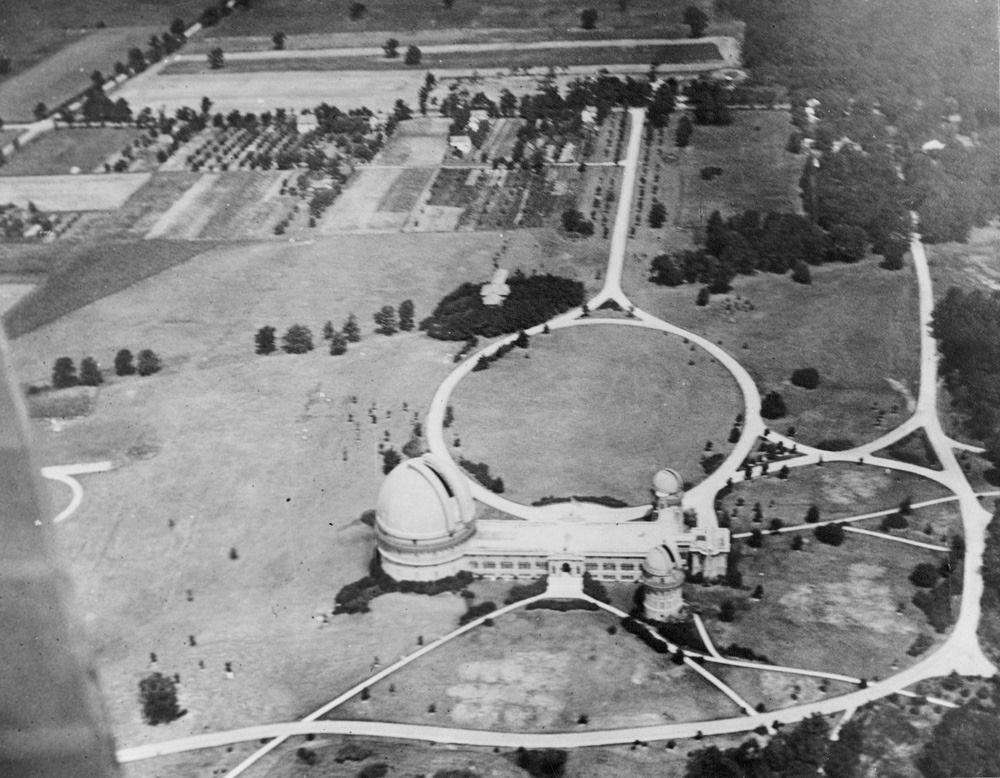
Yerkes Observatory and the surrounding lakefront campus is shown in an aerial from the early 1900s.
Williams Bay history - 28
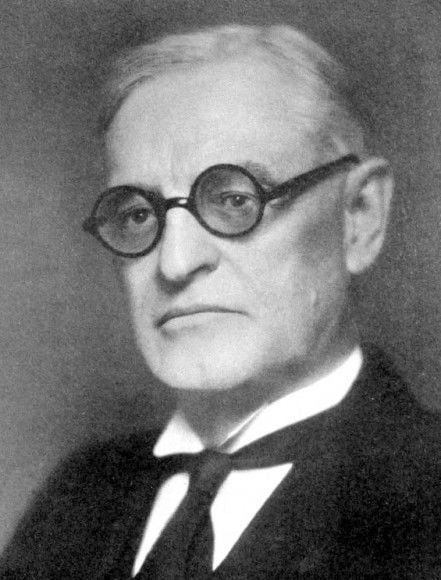
Edwin Brant Frost, a former Yerkes Observatory director who died in 1935, for whom the current Frost Park is named at the corner of Geneva and Congress streets.
E.E. Barnard Yerkes figure
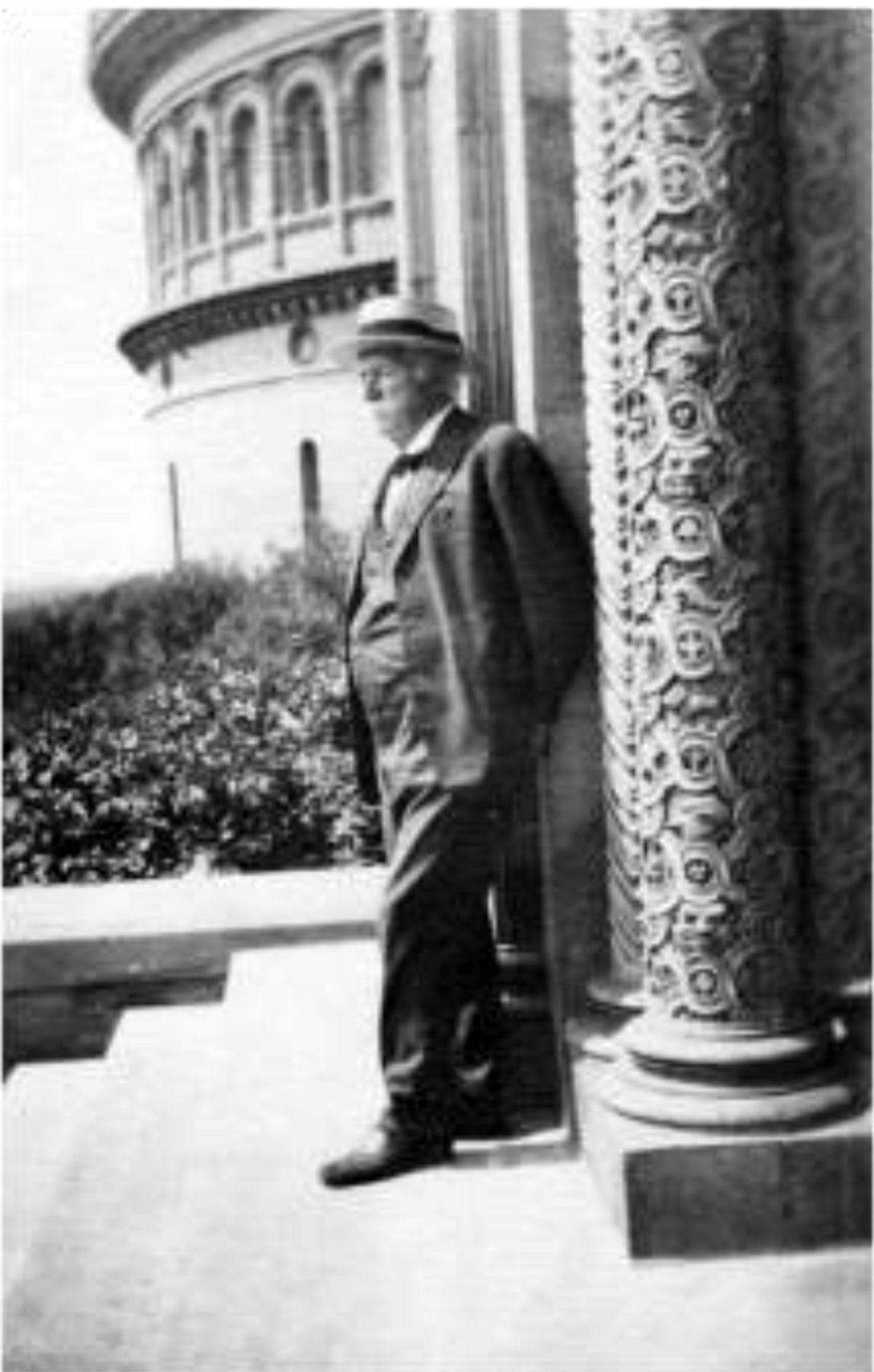
E.E. Barnard is shown standing outside Yerkes Observatory in Williams Bay in 1920, just a few years before his death. (Contributed photo/Regional News)
Watch now: A look inside Yerkes Observatory in Williams Bay
Planning for the future
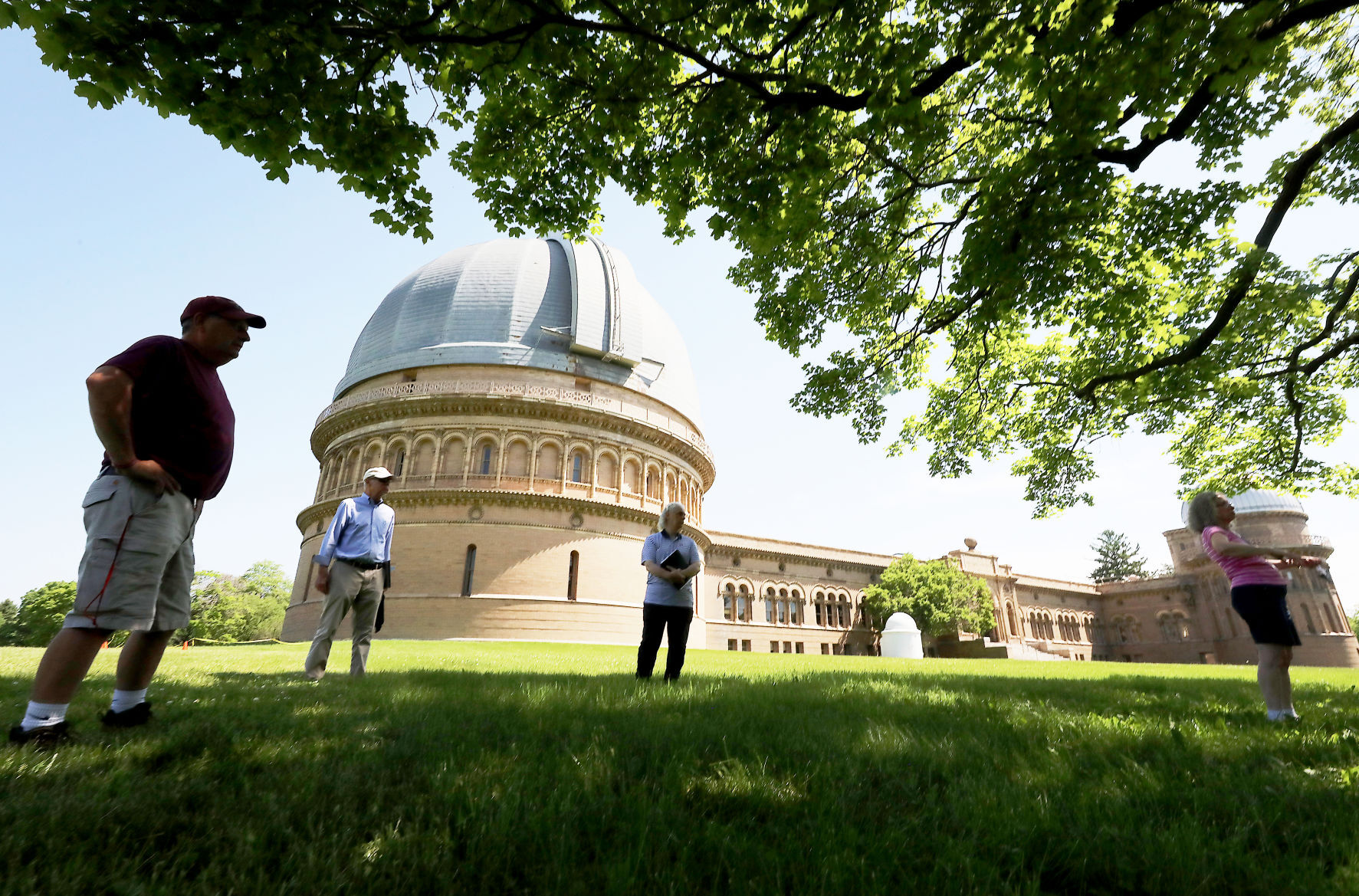
Members of the Yerkes Future Foundation find shade under a large maple tree on a portion of the 48-acre John Olmsted-designed grounds of the Yerkes Observatory in Williams Bay. The 60,000-square-foot facility, home to three domes each with its own telescope, was constructed between 1894 and 1897.
Ornate design
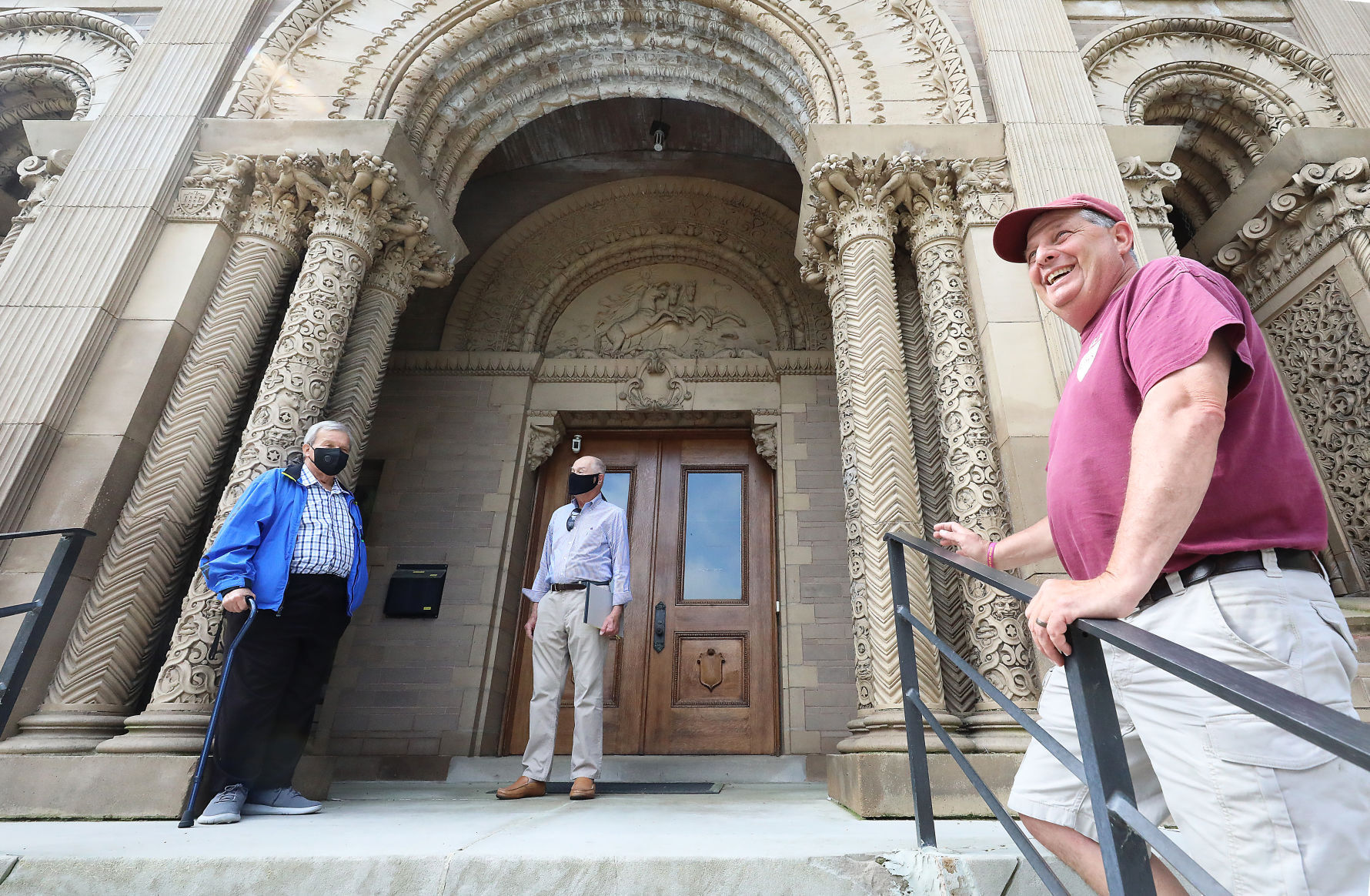
Yerkes Future Foundation committee members Chuck Ebeling, left, and Frank Bonifacic, center, visit with Ed Struble, who has been the director of building and grounds at the Yerkes Observatory in Williams Bay, Wis. for nearly 30 years Wednesday, June 10, 2020. JOHN HART, STATE JOURNAL
Gathering in the rotunda
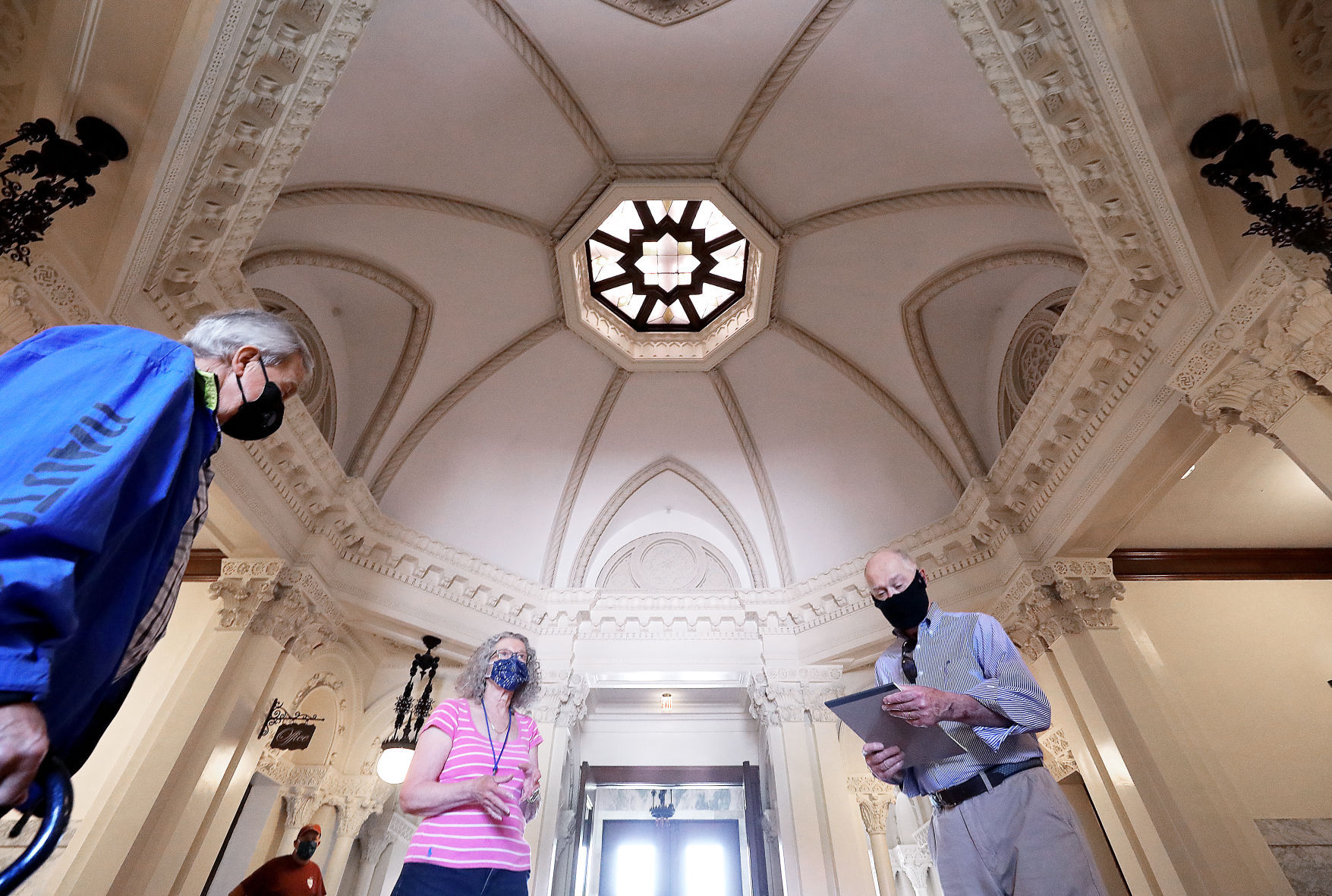
Yerkes Future Foundation committee members Chuck Ebeling, left, Dianna Colman, center, and Frank Bonifacic gather in the ornate lobby of the 1890’s-era Yerkes Observatory in Williams Bay, Wis. Wednesday, June 10, 2020.
Historic library
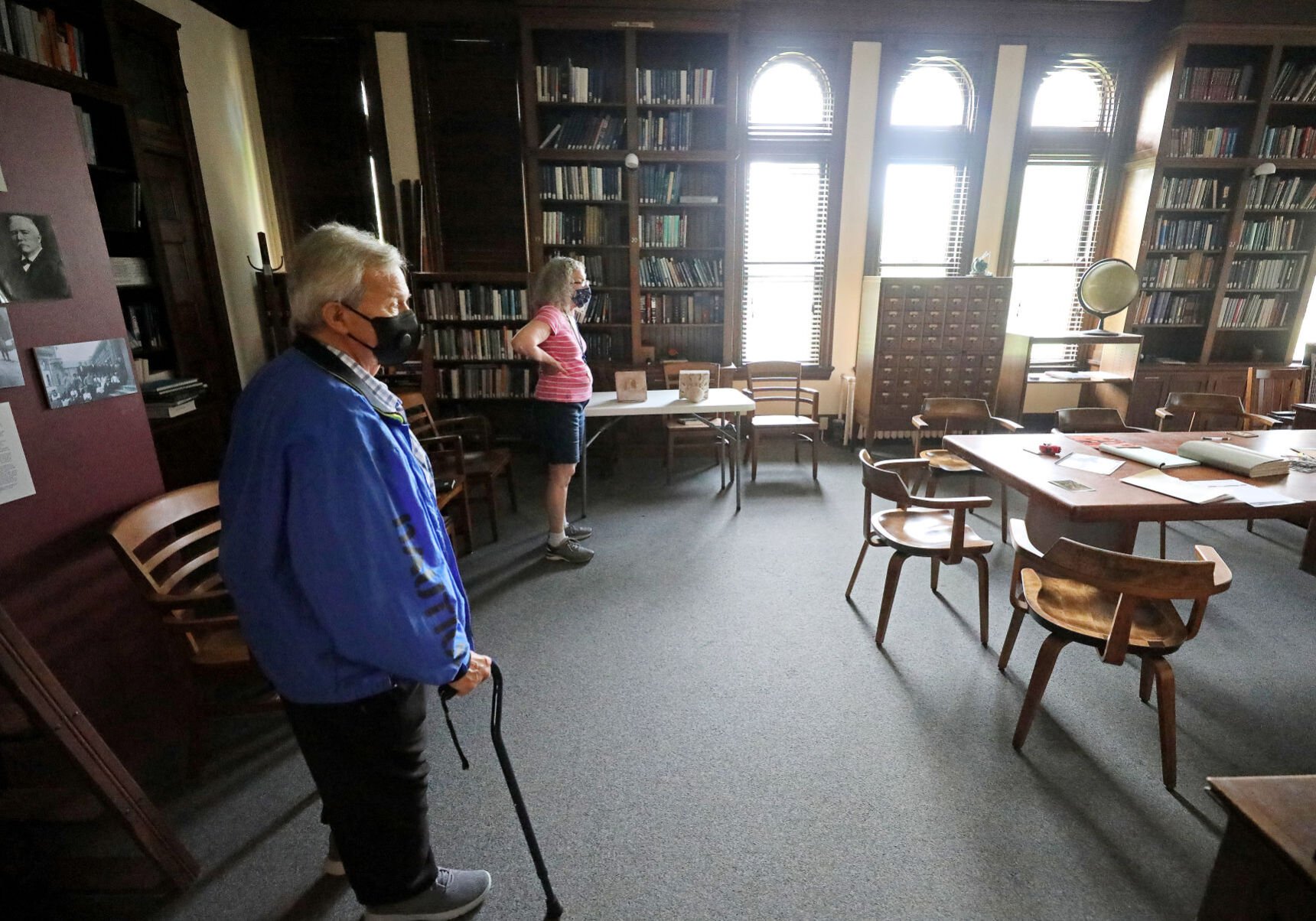
Yerkes Future Foundation committee members Chuck Ebeling and Dianna Colman look over the library of the Yerkes Observatory in Williams Bay. The facility is also home to laboratories, a machine shop and a vault that holds thousands of glass-plate images of stars, planets and distant solar systems.
Opening the roof
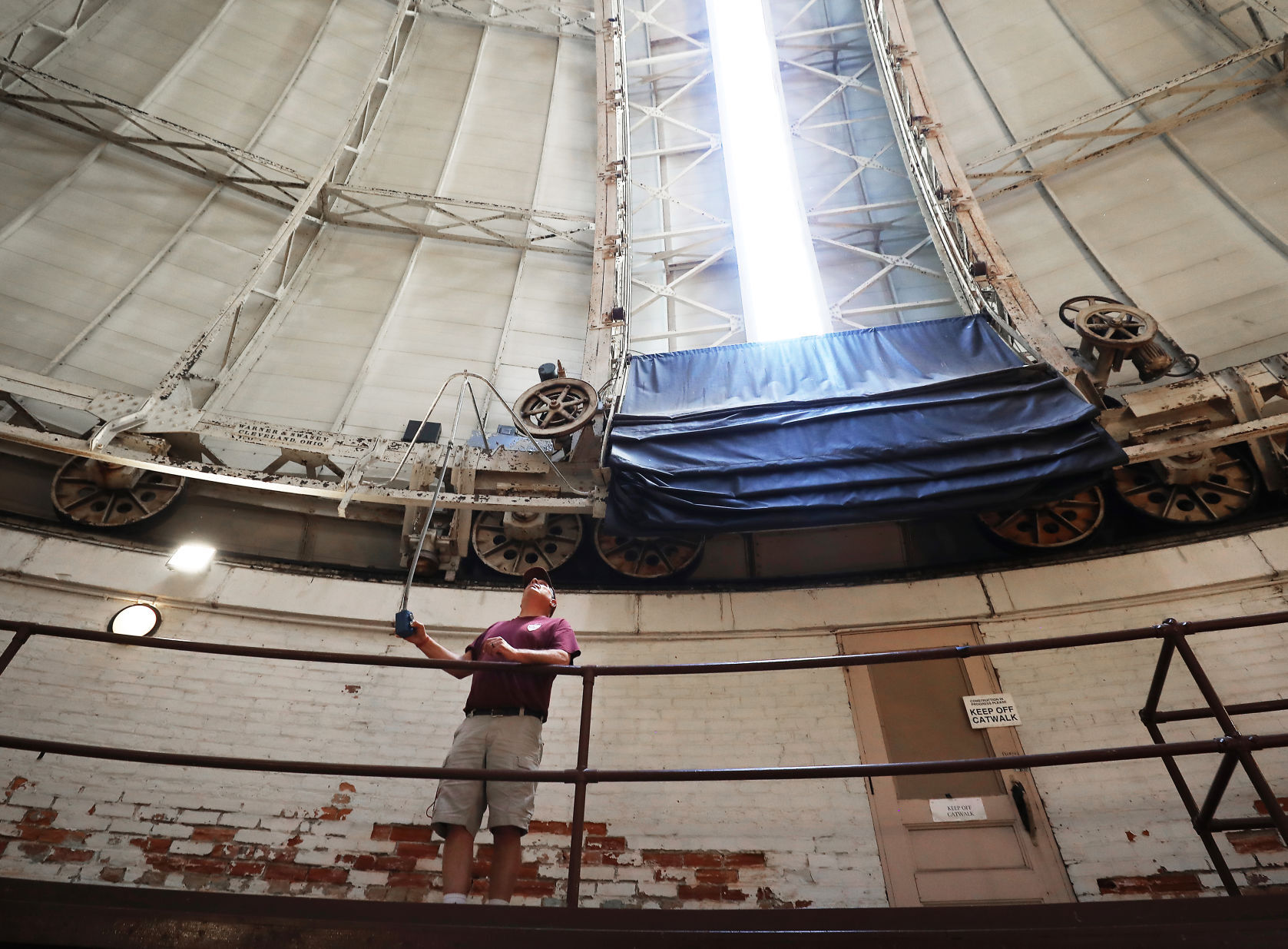
Ed Struble, who has been the director of building and grounds at Yerkes Obervatory for nearly 30 years, controls the dome's movable roof panels with an electric control switch at the 1890's-era research facility in Williams Bay, Wis. Wednesday, June 10, 2020. JOHN HART, STATE JOURNAL
World's largest refracting telescope
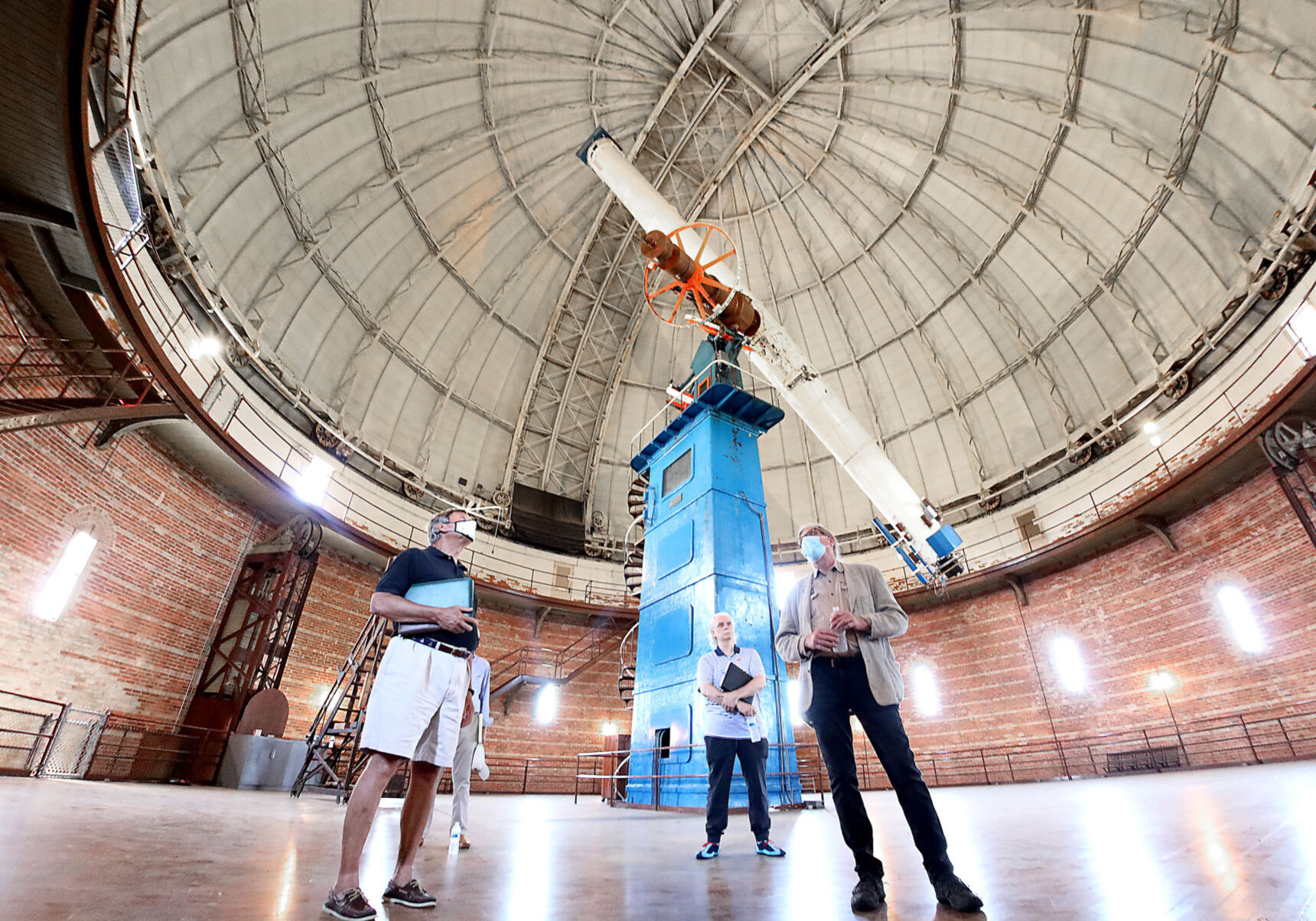
Centered inside a 90-foot diameter dome, the 1890s-era refracting telescope at Yerkes Observatory in Williams Bay towers over visitors. The University of Chicago last month transferred ownership of the 123-year-old facility to the Yerkes Future Foundation, a preservation group that plans to restore, refurbish and reopen the historic research center.
Maneuverable by hand
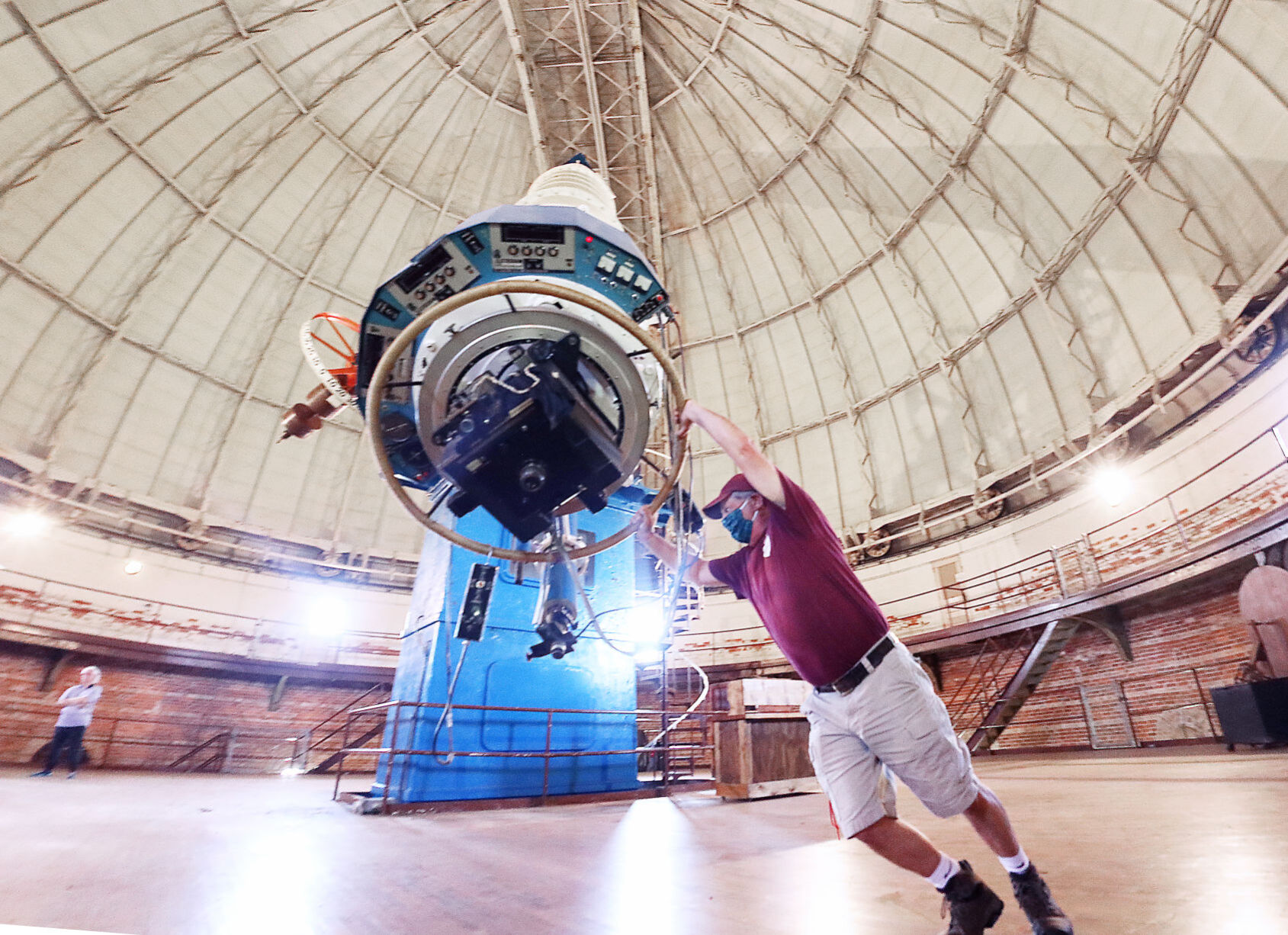
Built in the 1890s, the world's largest refracting telescope is maneuvered by hand by Ed Struble, who has served for nearly 30 years as director of building and grounds at the Yerkes Observatory in Williams Bay. The floor can also be raised and lowered to bring people closer to the eye piece.
Historic plate
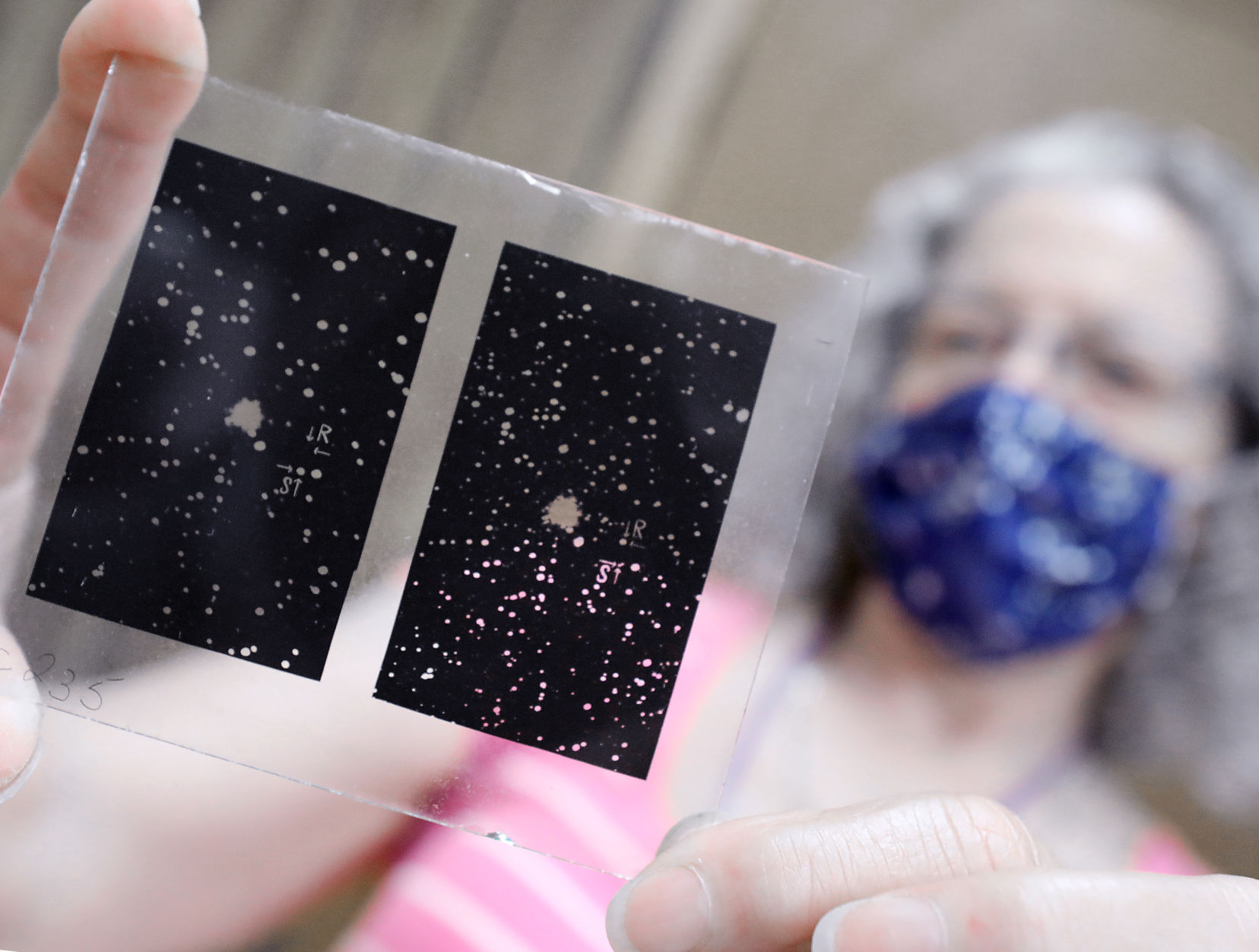
One of tens of thousands of glass photograph plates captured by the 40-inch refracting telescope at the Yerkes Observatory in Williams Bay is held by Dianna Colman, chairwoman of the Yerkes Future Foundation.
Rotating the dome
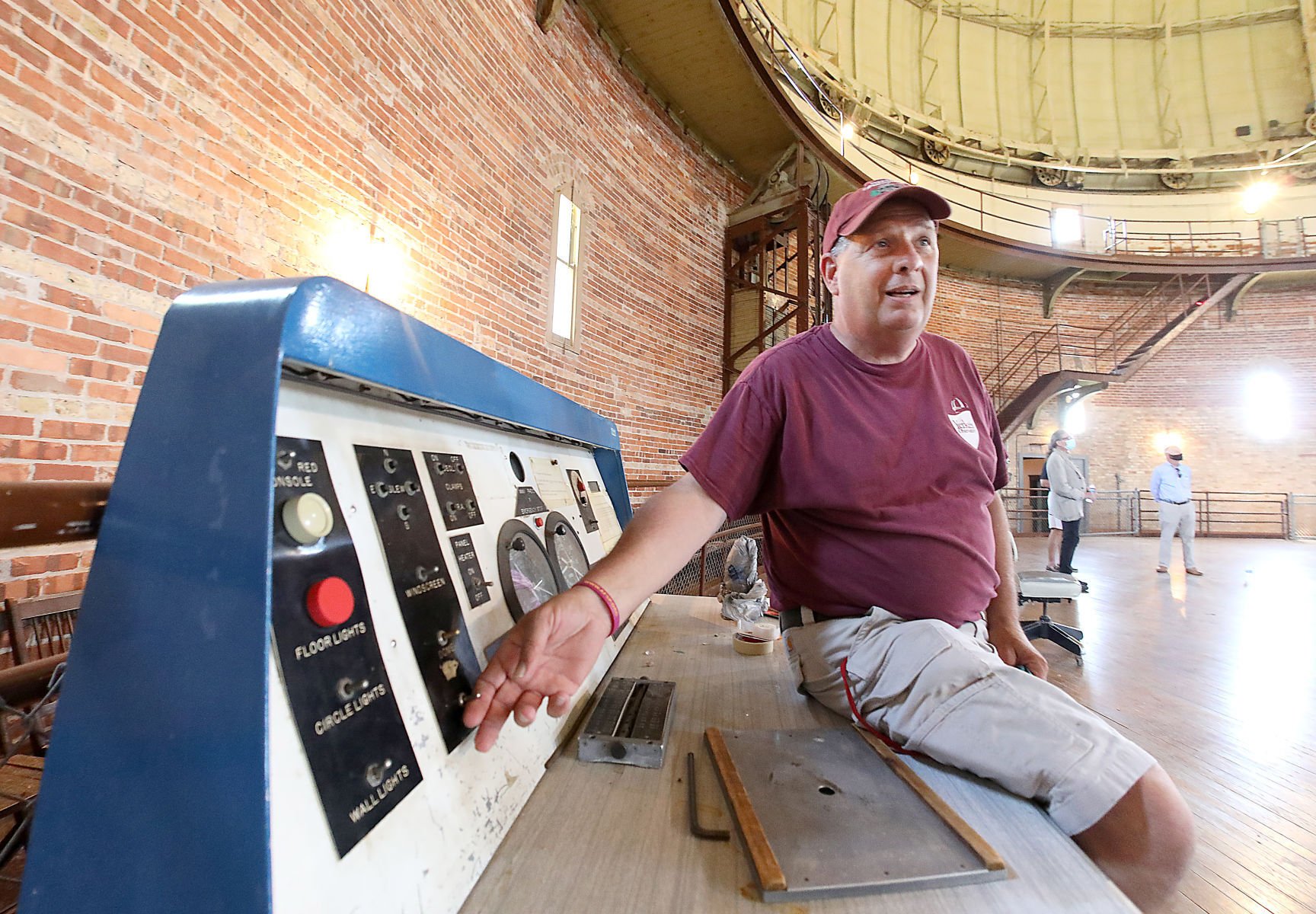
Ed Struble, who has been the director of building and grounds at Yerkes Obervatory for nearly 30 years, rotates the dome's movable roof with an electric control panel at the 1890's-era research facility in Williams Bay, Wis. Wednesday, June 10, 2020. JOHN HART, STATE JOURNAL
Viewer's angle
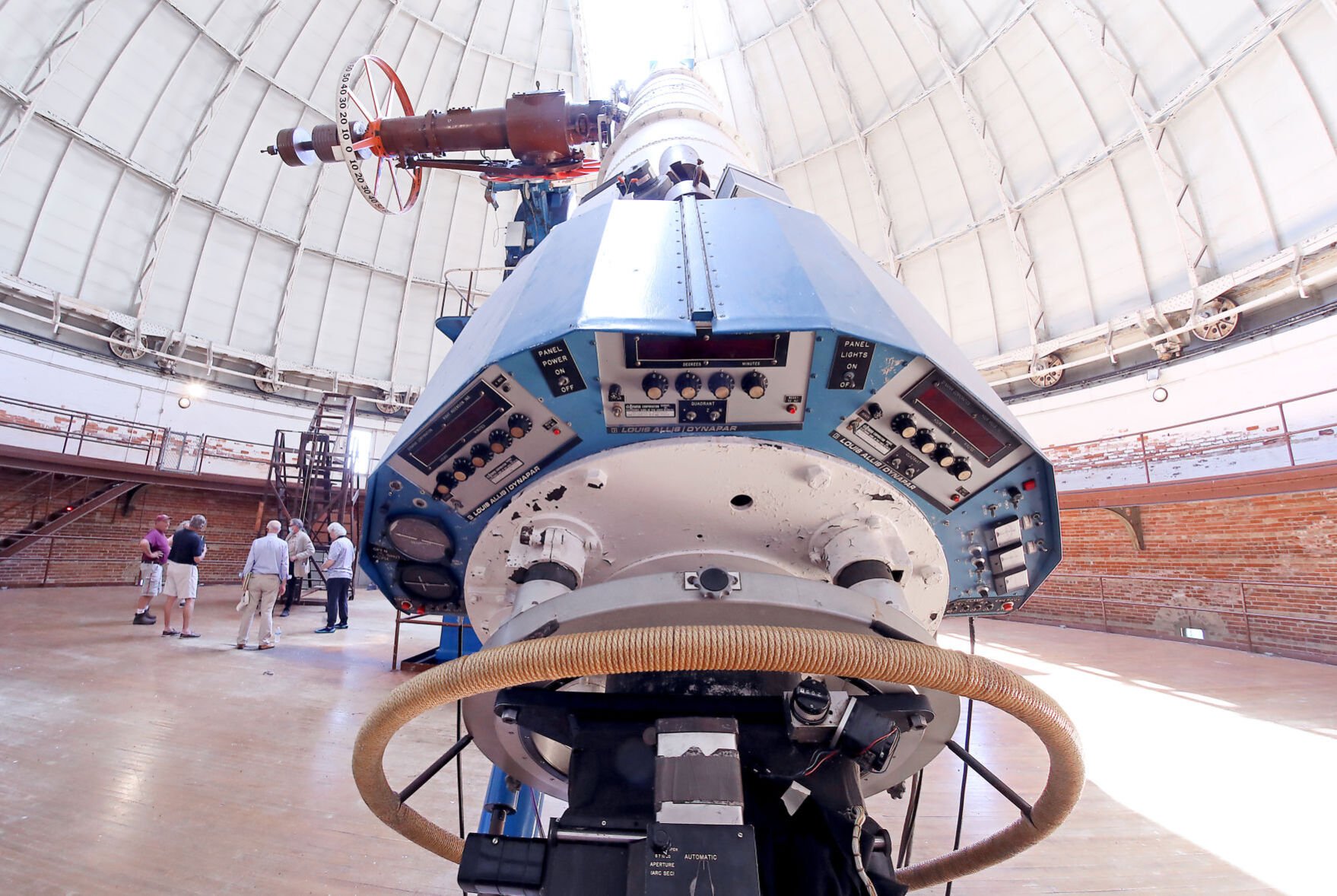
Built in the 1890's, the telescope at the Yerkes Observatory in Williams Bay, Wis., seen Wednesday, June 10, 2020, is the largest refracting telescope in the world. Electrical components added in the 1960's are visible on the lower end of the 60-foot-long viewing tube. JOHN HART, STATE JOURNAL
Historic facade
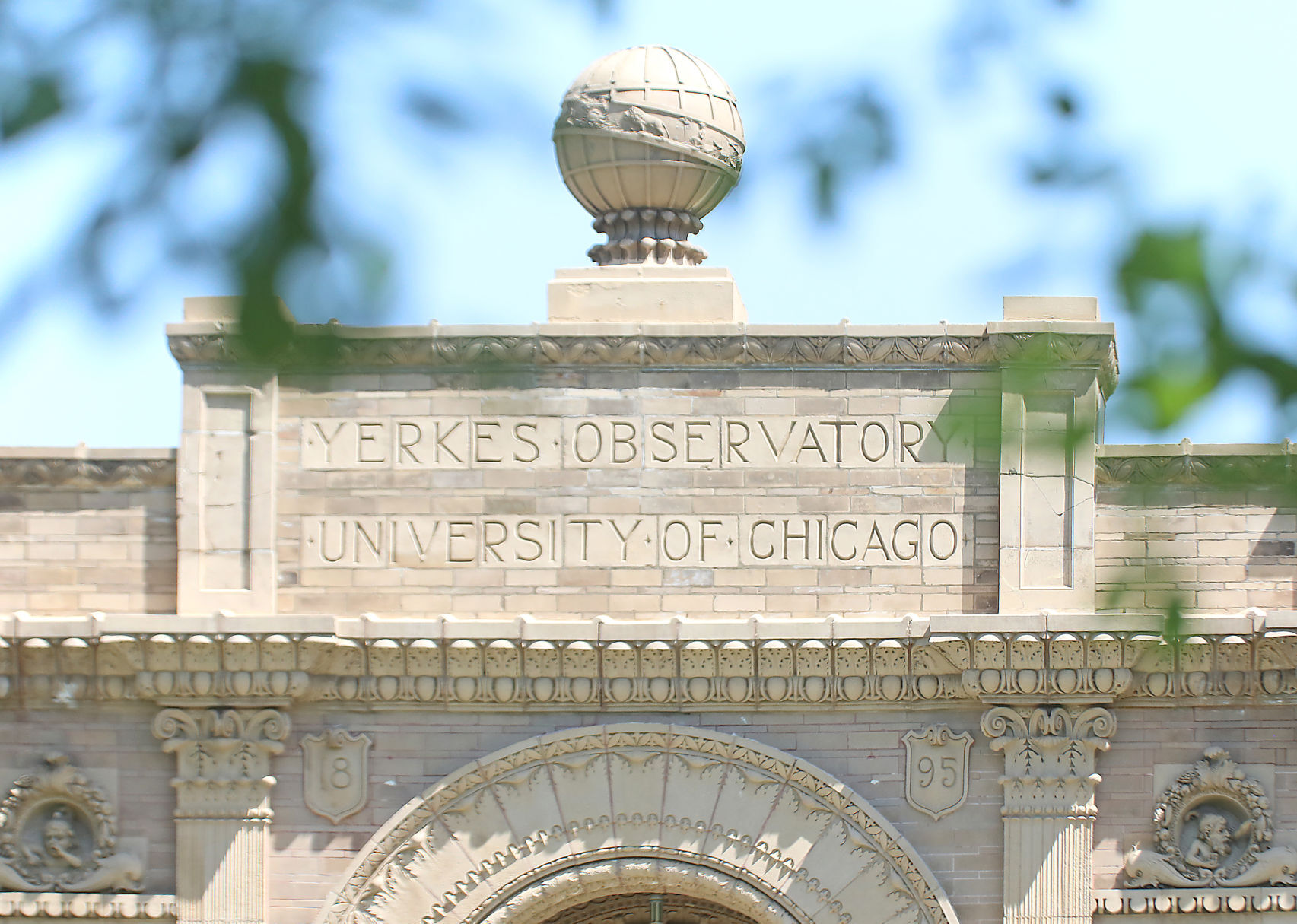
In operation since 1897, ownership of the Yerkes Observatory in Williams Bay was transferred last month from the University of Chicago to the Yerkes Future Foundation, which has plans to raise $20 million for its renovation and operations.
Elaborate entrance

Ornate stonework in the entrance of the Yerkes Observatory in Williams Bay, Wis. greets visitors Wednesday, June 10, 2020. Designed by architect Henry Ives Cobb and built on the shores of Lake Geneva in the 1890's, the research facility has been referred to as the birthplace of modern astrophysics. JOHN HART, STATE JOURNAL
Largest of three
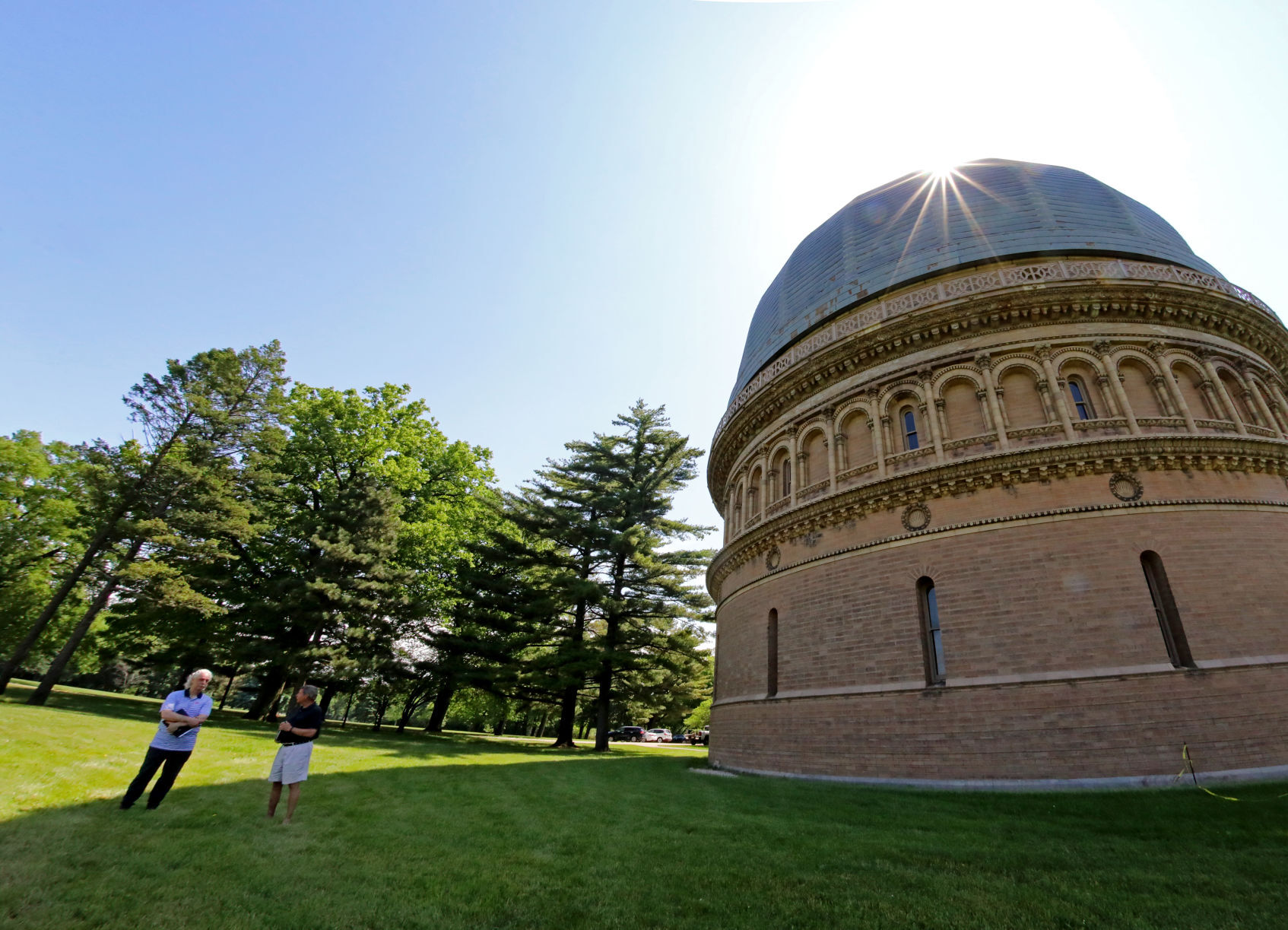
The largest of three domes at the Yerkes Observatory in Williams Bay, Wis. shades visitors to the grounds of the research facility Wednesday, June 10, 2020. Recently, the University of Chicago transferred ownership of the 123-year-old building to the Yerkes Future Foundation, a preservation group that plans to restore, refurbish and reopen the historically-significant center. JOHN HART, STATE JOURNAL
Forty-eight acres on Lake Geneva
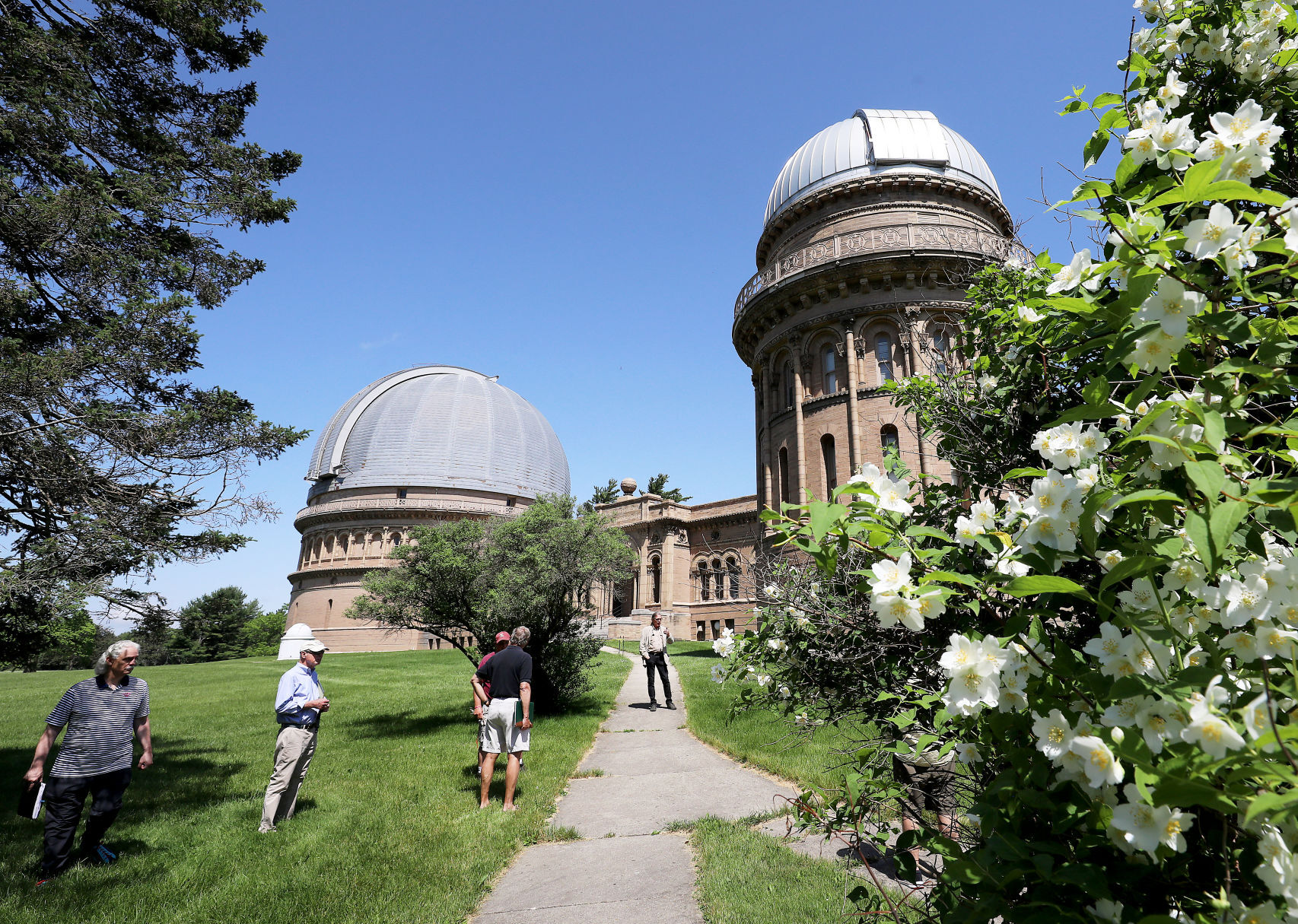
Members of the Yerkes Future Foundation explore the John Olmsted-designed grounds of the Yerkes Observatory in Williams Bay, Wis. Wednesday, June 10, 2020. Recently, the University of Chicago transferred ownership of the 123-year-old facility to the foundation, a preservation group that plans to restore, refurbish and reopen the research center. JOHN HART, STATE JOURNAL