UW-Madison's School of Veterinary Medicine finally has room to breathe
KIMBERLY WETHAL
Updated
1 of 3
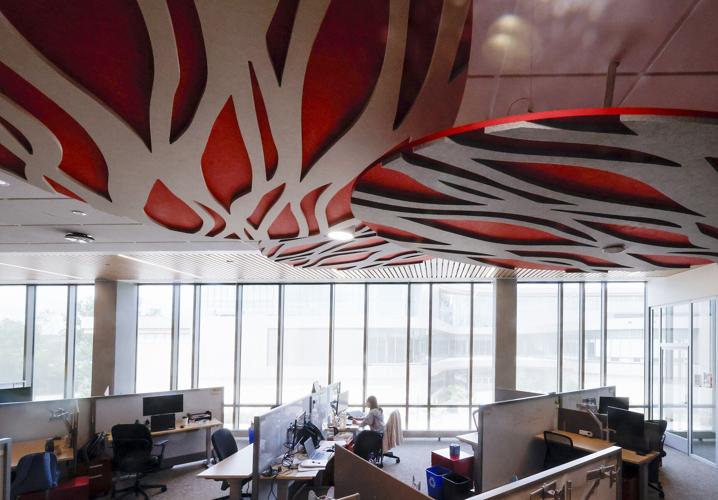
Open office spaces on the second floor of UW-Madison's School of Veterinary Science expansion give researchers a place to work as they study health issues that affect both animals and humans. There are about 400 computer workstations in the School of Veterinary Science, a need designers of the original 1983 building didn't anticipate.
JOHN HART, STATE JOURNAL
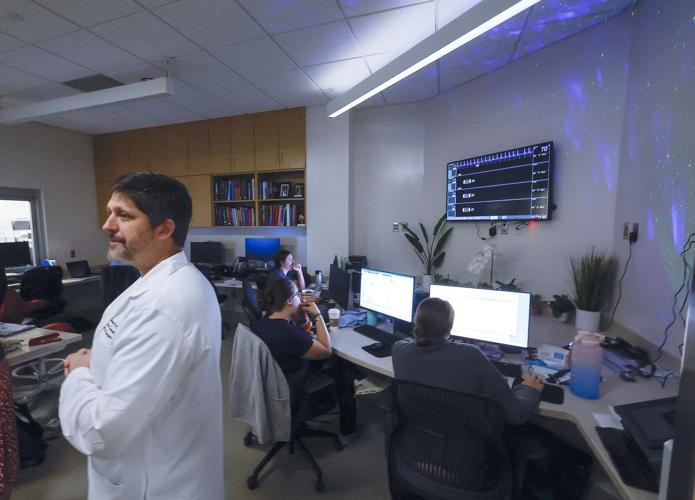
UW-Madison Animal Hospital Director Christopher Snyder shows off the new cardiology area in the expansion, which is at least three times larger than the department's old space in the original 1983 building. The new cardiology department features three testing bays, compared with the one it had before, and gives nurses, staff and students their own work areas instead. Kennels are no longer tucked between the desk and the door.
JOHN HART, STATE JOURNAL
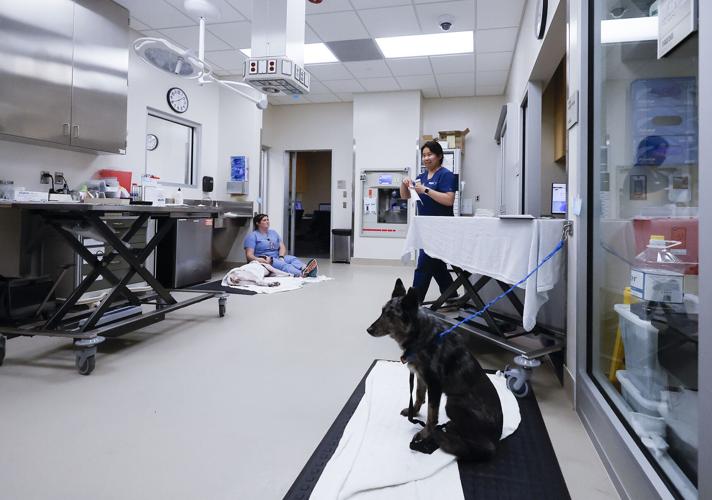
Animals sit alongside their human caretakers inside the internal medicine area of the UW-Madison School of Veterinary Medicine expansion. There's a designated quiet room, and computers are off to the side where staff and students can work just steps away.
After years of being crammed in an outdated UW-Madison School of Veterinary Science building, staff, students and their patients finally have a bit of breathing room.
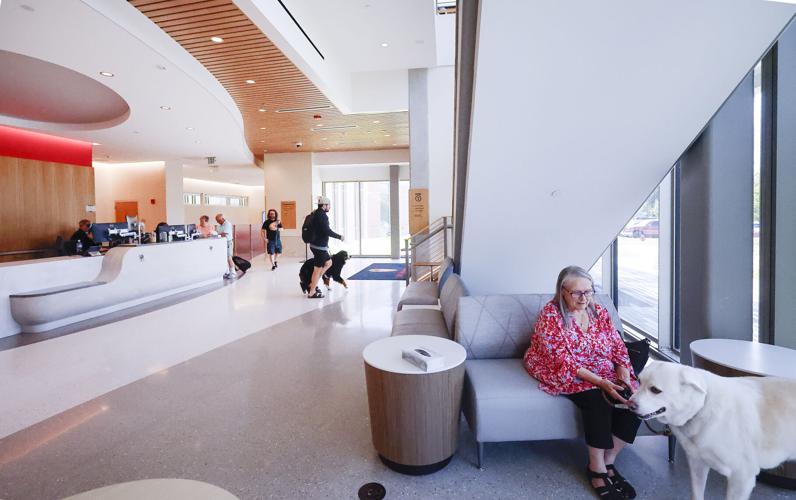
Ellen Khalifa and her dog, Walter, share a moment in the lobby of the newly opened UW-Madison School of Veterinary Science expansion. The new 139,000-square-foot expansion opened in June and will let the school better serve its nearly 30,000 patients, send fewer cases out of state by offering more specialized services and improve collaboration between researchers.
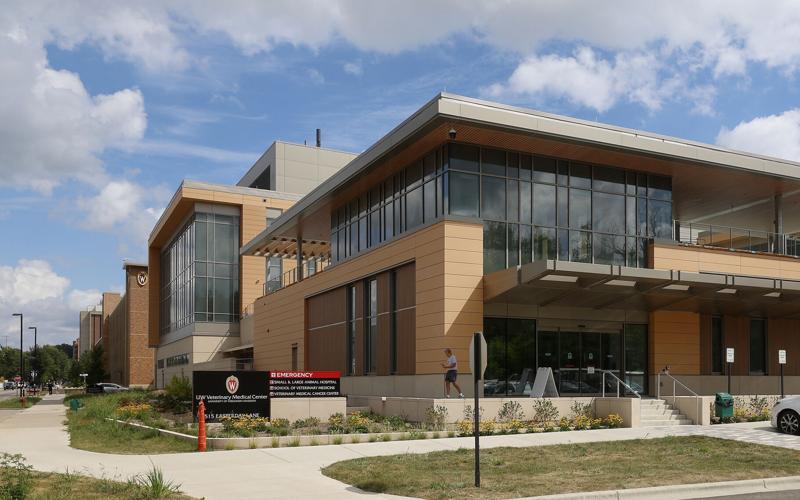
The Emergency Room entrance at the new UW-Madison School of Veterinary Science expansion sits in a prominent spot at Observatory Drive and Easterday Lane. Inside are a handful of exam rooms reserved for emergency room patients.
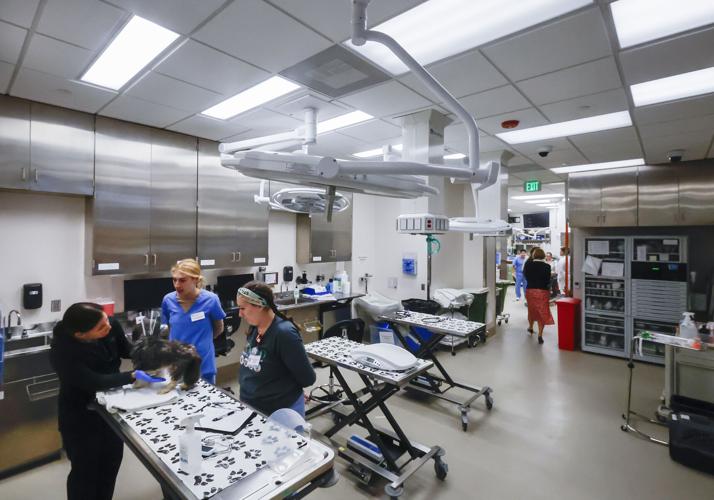
Spacious prep rooms across the new UW-Madison School of Veterinary Sciences expansion allow students and staff to better treat the nearly 30,000 patients that come through their doors each year. The previous hospital, just south of the expansion and now undergoing its own renovations, was built for an anticipated 12,000 patients a year.
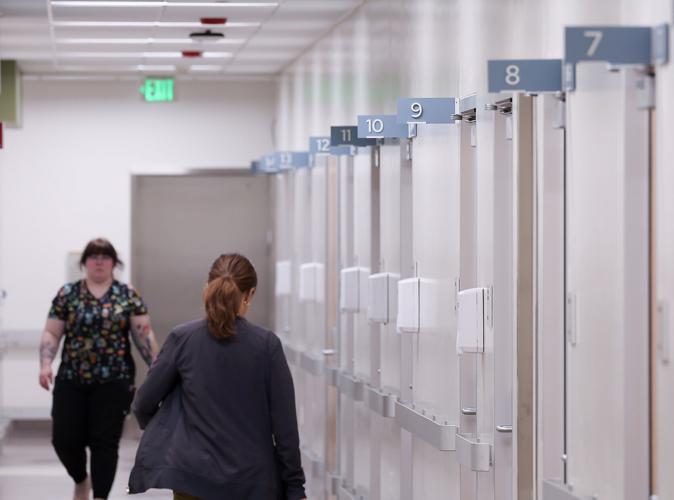
The new School of Veterinary Science expansion increases the number of exam rooms to 15 and reserves some for cats to prevent the smell of other animals from stressing them out.
Ellen Khalifa and her dog, Walter, share a moment in the lobby of the newly opened UW-Madison School of Veterinary Science expansion. The new 139,000-square-foot expansion opened in June and will let the school better serve its nearly 30,000 patients, send fewer cases out of state by offering more specialized services and improve collaboration between researchers.
The Emergency Room entrance at the new UW-Madison School of Veterinary Science expansion sits in a prominent spot at Observatory Drive and Easterday Lane. Inside are a handful of exam rooms reserved for emergency room patients.
Spacious prep rooms across the new UW-Madison School of Veterinary Sciences expansion allow students and staff to better treat the nearly 30,000 patients that come through their doors each year. The previous hospital, just south of the expansion and now undergoing its own renovations, was built for an anticipated 12,000 patients a year.
Open office spaces on the second floor of UW-Madison's School of Veterinary Science expansion give researchers a place to work as they study health issues that affect both animals and humans. There are about 400 computer workstations in the School of Veterinary Science, a need designers of the original 1983 building didn't anticipate.
UW-Madison Animal Hospital Director Christopher Snyder shows off the new cardiology area in the expansion, which is at least three times larger than the department's old space in the original 1983 building. The new cardiology department features three testing bays, compared with the one it had before, and gives nurses, staff and students their own work areas instead. Kennels are no longer tucked between the desk and the door.
The new School of Veterinary Science expansion increases the number of exam rooms to 15 and reserves some for cats to prevent the smell of other animals from stressing them out.
Animals sit alongside their human caretakers inside the internal medicine area of the UW-Madison School of Veterinary Medicine expansion. There's a designated quiet room, and computers are off to the side where staff and students can work just steps away.