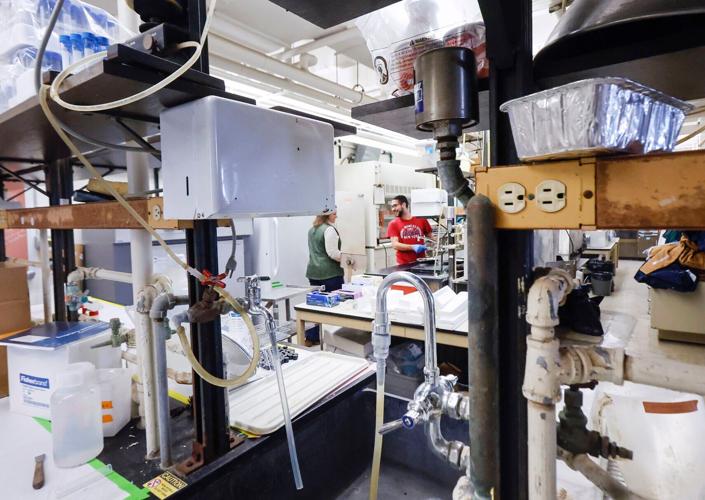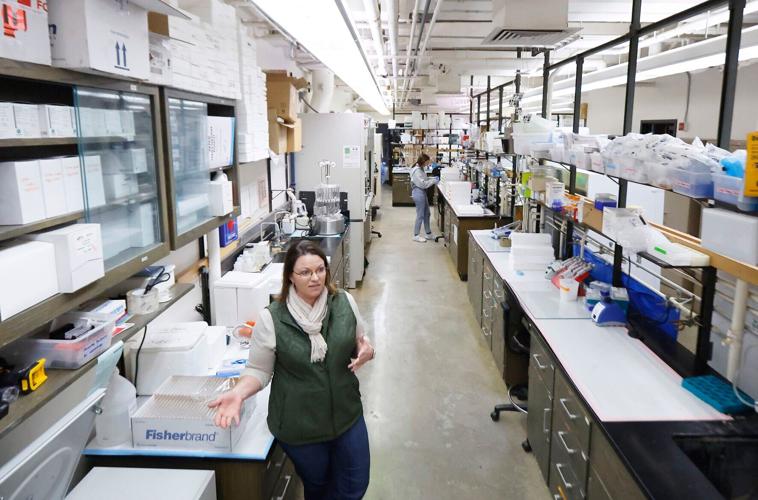

In a poorly ventilated room in a dairy lab on ninth floor of UW-Madison's Animal and Dairy Sciences building, more than $1 million of research equipment sits on decades-old desks. An average-looking air purifier on the floor nearby keeps the machines running.

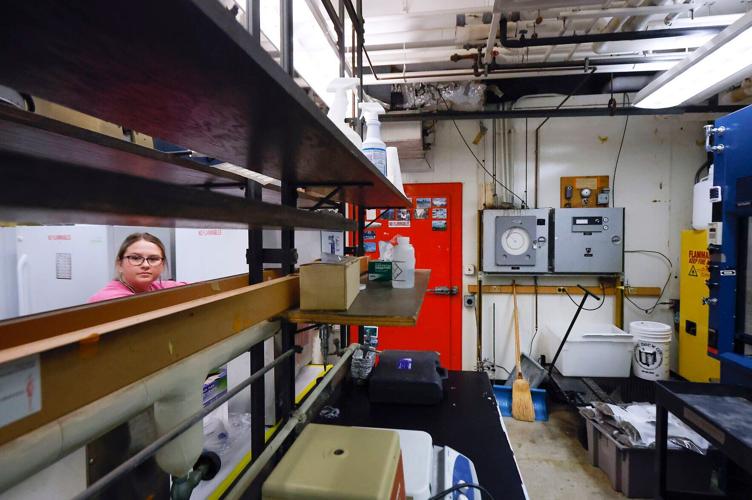
Several areas in the sixth-floor Animal Sciences lab where research specialist Sara Johnson works either don’t work or have required staff to create temporary fixes. The freezer behind the red door is defunct, and just behind Johnson is a window sealed up with insulation after the 1970s-era window was letting in drafts that disrupted the lab’s drying ovens.
People are also reading…

Researchers often must dry cow manure, baked into aluminum pie tins, in ovens before they can inspect it. Modern drying ovens require more energy than the labs in the 1970s-era Animal and Dairy Sciences building can handle.

UW-Madison Animal and Dairy Sciences professor Heather White has battled a lack of electrical power and developed workarounds in her lab to account for aging infrastructure such as leaking sinks or outdated ventilation systems that threaten research integrity.
25 plates: The culinary dishes that define Madison
Babcock Dairy's ice cream

The plate: Unless you have a dairy intolerance, you’ve probably had, and savored, Babcock Hall ice cream. The ice cream is made on the west end of the UW-Madison campus in a plant established in 1951 (now under renovation). It's named after Stephen Moulton Babcock, a UW-Madison researcher in the department of Agricultural Chemistry and the inventor of the first reliable butter fat content milk test.
Why it defines Madison: The ice cream can’t be beat, whether you are a fan of the orange custard chocolate chip, a devotee of the mocha macchiato or a chocolate peanut butter enthusiast. In summer, the lines to buy it at the Memorial Union are legendary and attest to its power over people.
Brasserie V's moules et frites

The plate: Moules et frites (pronounced mool ay freet) is a simple dish, despite the fancy name. Prince Edward Island mussels — chosen for their size and texture — are steamed in a broth of Chardonnay, shallots and garlic. The frites, made with Idaho Russet potatoes, are fried twice in canola oil — once early in the preparation at a lower heat, then again at a high heat just before serving. The dish is also served with a baguette chunk to soak up remaining broth.
Why it defines Madison: It's a neighborhood tavern with good beer and special food offerings, and a chance to experience that outside of Downtown.
Fraboni's original Italian sub

The plate: Tear open the butcher paper that wraps up a Fraboni's Italian sub, and you'll find more than a quarter-pound of meat and cheese — Genoa salami, Capicola ham and mild provolone. On top of that is what co-owner Steve Fraboni calls the ever-important "L-T-S": lettuce, tomato, sub sauce. That sauce is Fraboni's original vinaigrette, made with a secret recipe but also available for separate purchase. (Fraboni's Italian deli on Regent Street closed in August 2018 after 47 years. However, a location in Monona remains.)
Why it defines Madison: The restaurant's original, and most popular sandwich has been around since the Fraboni brothers — Gary and Steve — opened the place in 1971. Since then, the quality of the ingredients has never changed, Steve Fraboni said.
The Graze Burger

The plate: Dry-aged beef from Fountain Prairie Farm in Fall River is the foundation. Executive chef and co-owner Tory Miller uses the short ribs, ribeye, New York strip and sirloin cuts along with bacon from Willow Creek Farm in Loganville to form the patty, which is seasoned with salt and pepper. A butter compound made with Hook’s Swiss cheese from Mineral Point is formed into a disc and refrigerated. The butter compound is melted onto the meat patty as it is cooked. Finished with a cabernet red wine jus with caramelized onion, The Graze Burger is served on a house-made SarVecchio cheese brioche bun. Fries served with aioli or a mixed green salad accompany the $21 burger.
Why it defines Madison: “I think it’s everything Madison wants to be — and is — a big city experience with farm-to-table standards,” Miller said.
Heritage Tavern's family-style pork

The plate: Diners are served a platter of brined-and-braised heritage pork, tuna sashimi, fried headcheese and pickled ginger vegetables, with which they fill lettuce wraps. They also receive two sauces — one, a Korean sauce called ssamjang, the other, a truffled fish dipping sauce.
Why it defines Madison: Even if the family-style pork dish blends many different cuisines, the origins of the pork used in the dish are distinctive: Chef Dan Fox himself helps raise the pigs, at farms in Mount Horeb and New Glarus. “They’re all pasture-raised on open-air farms,” Fox said of the pigs. “We have them on a very specific diet... giving a beautifully marbled fat-to-meat ratio.”
Ian's Pizza mac 'n cheese pizza

The plate: As with all Ian’s pizzas, it starts with dough that has been allowed to rise for 36 to 48 hours. Wisconsin all-whole-milk mozzarella cheese tops the dough, and a special-made crème fraiche, a thick, rich custard of a cream, covers the mozzarella cheese. A layer of elbow macaroni noodles is added, and a layer of Wisconsin mild cheddar tops it all.
Why it defines Madison: Mac n’ Cheese pizza is the most popular pizza sold at Ian’s. College students and after-bar patrons seek it out late at night. In 2011, Ian’s Pizza became known worldwide for providing pizza to protesters of Gov. Scott Walker’s plan to curb collective bargaining rights. Donations to buy the pizza for protesters came from every state and 60 sites around the world, including Antarctica.
Kavanaugh's chicken dinner

The plate: Half a chicken that’s lightly fried, then baked, along with mashed potatoes, dressing, coleslaw and enough homemade bread to satisfy the hungriest of Sunday diners.
Why it defines Madison: Kavanaugh’s chicken dinner is a wholesome reminder of a less harried time, when alcohol couldn’t be purchased before noon on Sundays and families ate early, after weekends spent boating or traveling.
Lane's kringle

The plate: An O-shaped ring of pastry — layers and layers of pastry, in fact — with fruit or nut fillings and frosting. It’s a Danish treat that found a stronghold in Racine, which likes to claim its kringle is the best. Fans of Lane’s — and there are many — would beg to differ.
Lane’s makes 25 kinds of kringle, with pecan and cherry cheese the best sellers. It’s a three-day process of rolling, cooling, folding, cutting and filling the dough.
Why it defines Madison: Anyone can bring doughnuts and bagels to the office. Lucky folks in Madison get kringle.
Because kringles are sold whole, they’re a social kind of sweet. Kringle appeals to those with a taste for tradition and those with a discerning palate, much like Madison’s food scene.
Lao Laan-Xang's squash curry

The plate: The squash curry has been the signature dish at Lao Laan-Xang since Christine Inthachith and her mother, Bounyong, first opened it on Odana Road in the early 1990s. The Laotian-Thai restaurant moved to Williamson Street in 1997. It has had a location on Atwood Avenue since 2005.
The dish features squash with chicken or tofu (or neither) in a creamy coconut milk curry sauce with Thai eggplant and zucchini. It’s the restaurant’s biggest seller.
Why it defines Madison: The recipe is something the Inthachiths brought over when they emigrated from Laos, and people in Madison like to try new things.
Lombardino's spaghetti Bolognese

The plate: Lombardino’s spaghetti Bolognese combines fresh local ingredients with imported Italian ones -- pork, beef, pancetta, tomatoes, white wine and Parmigiano-Reggiano cheese.
Why it defines Madison: Lombardino’s opened as an Italian-American restaurant in 1952. But when Patrick O’Halloran and Michael Banas took over the restaurant in 2000, they decided to serve Italian, rather than Italian-American, fare. They say their food is “the way Italians would cook if they lived in Wisconsin.”
Mickies Dairy Bar Scrambler

The plate: Beginning with a layer of “Yanks” (Mickies’ signature fried potatoes), three scrambled eggs with a choice of one omelet ingredient — bacon, chicken, ham, sausage, broccoli, green pepper, jalapenos, mushrooms, onion, spinach, tomato — are added then topped with a choice of American, cheddar, Swiss, or pepper Jack cheese. Gravy tops the whole dish, or you can opt for it on the side or not at all. Comes with a side of toast.
Why it defines Madison: Mickies has been a Madison institution since 1946. It still provides the same cozy, hometown diner feel of the original establishment that encourages people to “step back in time” and savor a hearty, filling breakfast.
Natt Spil Three Cup Chicken

The plate: Three Cup Chicken, a popular South China and Taiwanese dish, has been on Natt Spil’s menu since the King Street restaurant opened in 2004.
The dish gets its name from its three sauces and the fact that it was traditionally made in three cups or three bowls. In the three bowls are soy sauce, sesame oil and Shaoxing wine, a distilled rice wine that is popular in Taiwan and mainland China.
Why it defines Madison: The ingredients are eclectic, and they are mostly sourced from Wisconsin.
Oakcrest Tavern's perch

The plate: Five pieces of deep-fried perch with a choice of sides including coleslaw, potato salad, hash browns or fries.
Why it defines Madison: Since the Oakcrest opened in the 1950s, its consistent quality and Wisconsin ambiance have made the tavern’s perch fry — and its other fare — popular among West Side residents. Food is served in a 1,000-square-foot building, with wall-mounted televisions showing Packers and Badgers games, and a bar area where customers stand to wait for tables on fish fry Fridays (and Wednesdays). It feels like a small-town Wisconsin tavern.
The Old Fashioned's cheese curds

The plate: Long before The Old Fashioned opened its doors on Dec. 1, 2005, the owners tried many recipes before creating the No. 13 on their menu — house-made Wisconsin beer-battered cheese curds.
Fresh cheese curds are brought in twice a week from Vern’s Cheese Inc. in Chilton. Separated and dipped into a buttermilk/lager beer wash and then dredged in a “top secret” seasoned flour mix, they go right into the deep fryer. Always made to order, the cheese curds are never frozen.
Over the past decade, the recipe has remained the same -- right down to using the same brands of flour, buttermilk and lager.
Why it defines Madison: This is Wisconsin. Cheese is important. Fried cheese is even better.
And The Old Fashioned is the perfect place to indulge in the state delicacy. After all, the popular Capitol Square restaurant proudly claims Wisconsin’s taverns and classic supper clubs as its inspirations.
Parthenon's gyro sandwich

The plate: Since 1972, Parthenon Gyros Restaurant has lured gyro lovers to State Street for the Greek sandwich. The Greek owners modified their recipe, making a milder version to accommodate American palates. Lamb and beef is mixed with select spices and molded into a cone shape that is skewered on a “spit” to rotate on the fire grill. Order a gyro, and the meat is sliced off the spit and placed on pita bread along with onion, tomato, and their tzatziki sauce — a homemade Greek yogurt-based cucumber sauce with a hint of garlic and lemon.
Why it defines Madison: Although it was demolished and rebuilt in 1990, the restaurant has been in the same location on State Street since its 1972 opening. Consistency, quality, atmosphere and service bring people back over the years.
A Pig in a Fur Coat's fois gras mousse

The plate: Cured patés are stacked atop savory bomboloni (Italian hole-less doughnuts — but made with hearty-tasting malt and honey). The pastries are wrapped in cured lardo and set upon a bed of a fig port jam, and the whole stack is drizzled with an aged balsamic.
Why it defines Madison: The restaurant, located on the Near East Side, is a favorite haunt for Madison’s epicures.
The Plaza's Plazaburger

The plate: In 1964, Mary Huss, wife of then-owner Harold Huss, made the first Plazaburger using her secret-ingredient Plaza Sauce. The Plazaburger is a quarter-pound hamburger on a wheat bun topped with Huss’ sour cream/mayonnaise-based Plaza Sauce.
Why it defines Madison: It's been on the menu for more than 50 years, so it's something people have come to expect and look forward to. In all those years, it hasn't changed. (In 1993, The Plaza Tavern & Grill held a party for the 2 millionth Plazaburger sold.)
Salvatore's Tomato Pies

The plate: Don’t call it a pizza. In New Jersey, where the owner grew up, they would call it a tomato pie. In true tomato pie “reverse” style, Salvatore’s cooks swirl olive oil onto dough made with Wisconsin wheat flour, then add Wisconsin whole-milk mozzarella. The tomato sauce — made from Wisconsin tomatoes in the summer and vine-ripened-then-canned Stanislaus County (California) tomatoes the rest of the year — is added last, and swirled with the cheese before being baked in a stone hearth pizza oven.
Why it defines Madison: Despite its New Jersey origins, Salvatore’s tops pies with local ingredients from the Dane County Farmers’ Market whenever possible.
Smoky's Club steak

The plate: This steak’s juicy secret is the way it’s seared — on thick, flat steel, which stays hot and seals in flavor. The steak is the star of the classic, supper-club steak dinners, but meals come with much more. A favorite side is the club’s hash browns.
Why it defines Madison: The casual Wisconsin supper club is overflowing with nostalgia, getting its start in 1953, when Janet and Leonard “Smoky” Schmock bought an old University Avenue supper club. It's been a Madison institution ever since.
Smoky Jon's full slab St. Louis-style spareribs dinner

The plate: A full slab of St. Louis-style spare ribs dinner, including two sides, roll and butter, and a side dish of Smoky Jon’s bar-b-que sauce. Rubbed with special seasoning, the ribs are cooked low and slow for hours. Finished on the grill and then topped with heated barbecue sauce, the ribs are ready for customers.
Why it defines Madison: A Madison native, creator/owner Jon Olson learned to grill with his dad. By 10 years old, he was grilling for his family; by 18, he had formulated his own barbecue sauce recipe.
State Street Brats' World's Best Brat

The plate: State Street Brats added Rhinelander’s Trig’s Smokehouse brats to the menu after an extensive search. The “World’s Best Brats” were so named after taking the title two years in a row — 2010 and 2011 — for traditional bratwurst at a Watertown festival.
Also known as the White Brat, it’s made with quality pork and Trig’s secret blend of seasonings. The restaurant marinates the brats in beer and onions before char-grilling them. Served on a traditional bun, you top your own from State Street’s extensive condiment bar, including several types of mustard, sauerkraut, horseradish, onions and relish.
Why it defines Madison: It’s not just the bratwurst, but the legacy of founders Seymour “Shorty” Kayes and Warren “Lammy” Lamm and their original restaurant “The Brathaus,” that sends many back to State Street Brats. With Wisconsin’s strong German heritage, brats are associated as much with the state as beer, cheese, and the Packers.
Stella's Bakery hot and spicy cheese bread

The plate: The bread started out as a mistake made with empanada dough, but quickly took off in popularity. Over the years, the recipe has evolved into unbleached unbromated flour, water, provolone cheese, Monterey Jack cheese, eggs, butter, yeast, sugar, salt, parsley, chives and hot red peppers.
Why it defines Madison: The bread is sold straight from the oven at the Dane County Farmers’ Market. It’s also available at other area farmers’ markets, Stella’s Bakery on Syene Road, select local shops and restaurants.
Taqueria Guadalajara's tacos al pastor

The plate: The restaurant slices pork loin into thin strips and boils mildly spicy guajillo chile peppers. Next, a cook stirs together the salsa — a blend of pineapple slices, lime, garlic, cilantro, oregano, salt and two secret ingredients — which gets grilled with the pork, then placed in a corn shell.
Why it defines Madison: The family-owned Mexican restaurant opened in 2006, when owner Josefa Trejo, who was already working in the service industry, realized she wanted something better for herself, according to her son, Jorge Perez (also a restaurant manager). He said she bought her own business, “to build upon her own dreams.”
Quivey's Grove Duck Wilcox

The plate: Duck Wilcox — semi-boneless roasted duck with a port wine cherry sauce — is named for Westport poet Ella Wheeler Wilcox, whose poem “Solitude” contains the famed line “Laugh and the whole world laughs with you; weep and you weep alone.” Half a duck is seasoned with an herb spice that includes juniper berries, bay leaves, rosemary, thyme, sea salt, peppercorns and garlic powder. Dried cherries are added to port wine and veal stock, and the sauce is reduced. It’s served on a bed of wild rice with shallots and red pepper, with a side of sauteed apples (gala apples sauteed in butter, with some of the butter drained off before serving).
Why it defines Madison: Duck Wilcox is something special and something comfortable at the same time. It’s a dish that gives diners a chance to mark an occasion and maybe remind them of something Grandma might have made in her more elegant moments. And with Madison being an educated city, diners get a serving of history with their dishes at the Stone House. The Duck Wilcox is joined by Veal Vilas and Lamb Nolen, among other dishes.