As hunger grows, UW-Madison is redirecting excess food from the landfill to its students
KIMBERLY WETHAL
Updated
David R. Martin, Associated Press
A growing number of states are working to keep food out of landfills over concerns that it is taking up too much space and posing environmental problems. New York is requiring supermarkets and other businesses to redirect food to food pantries instead of throwing it out.
UW-Madison’s largest food providers are working to reduce the amount of food waste produced in the university’s kitchens while using excess food whenever possible to fight the growing problem of food insecurity among students.
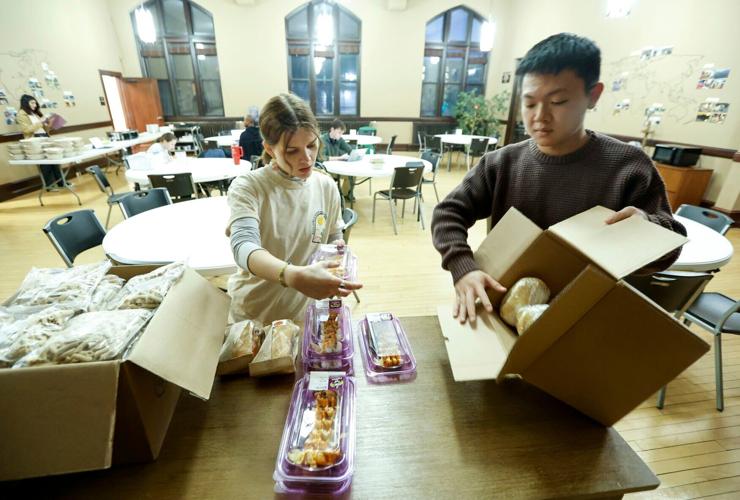
UW-Madison students Christina Treacy, left, co-president of the Food Recovery Network, and Kit Low set out prepackaged food left over from Capital Cafe in Grainger Hall during a free meal by the Food Recovery Network at The Crossing Campus Ministry during the organization's first meal of the spring semester. Food Recovery Network rescues leftover food from multiple places, including the UW-Madison dining halls and the Wisconsin Union.
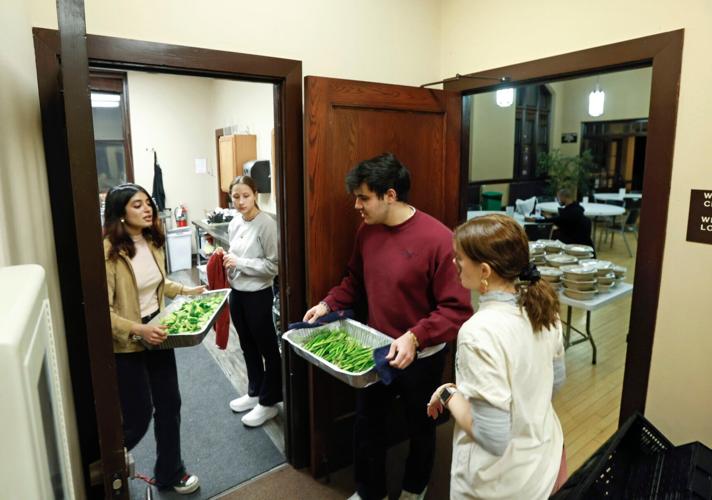
UW-Madison students with Food Recovery Network, including, from left, Nina Saluja, Claire Jacobson, Andre Acra and Christina Treacy, co-president, prepare a free meal, with food donated by Healthy Food for All, at The Crossing Campus Ministry. Food Recovery Network is a student-run organization that collects leftover food from UW-Madison's biggest dining services to make free meals.
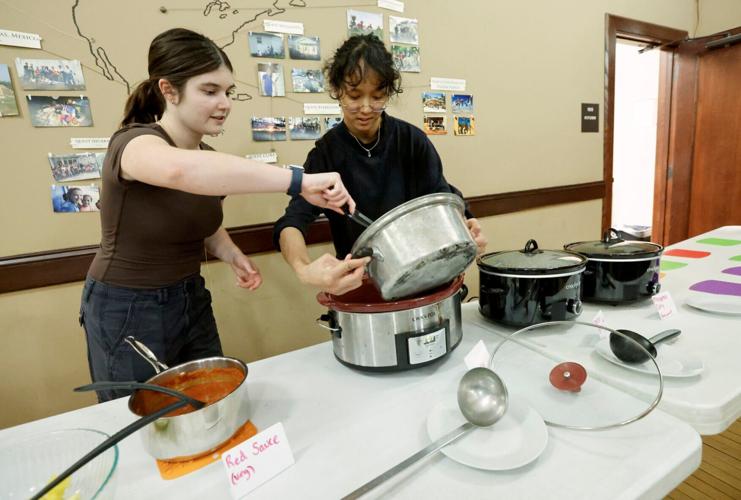
UW-Madison students Madeline Wilson, left, and Journey Prack prepare food for a free meal put on by Food Recovery Network at The Crossing Campus Ministry. Passing on leftover food to student organizations is one piece of UW-Madison's strategy in diverting it from the landfill, which also includes tracking food use, educating students on taking only as much as they think they can eat and repackaging frozen food as free meals.
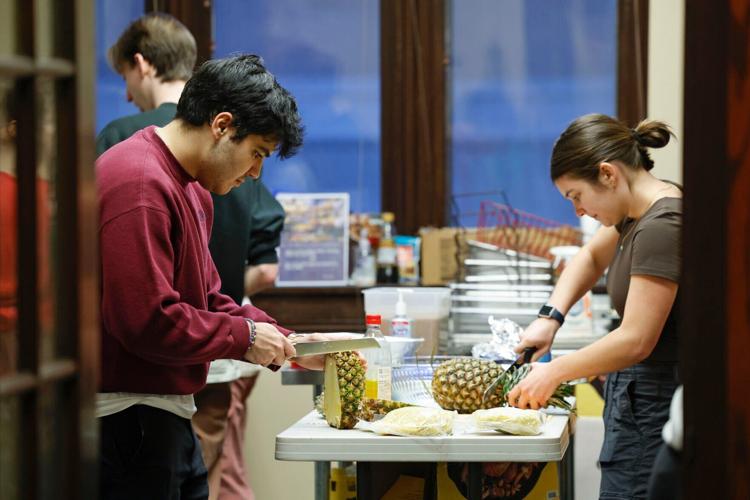
UW-Madison students Andre Acra, left, and Madeline Wilson prepare food, donated by Healthy Food for All, for a free meal put on by Food Recovery Network at The Crossing Campus Ministry. Food waste is a significant contributor to climate change, as methane, a potent greenhouse gas that has 80 times the warming effect of carbon dioxide, is released when food rots in a landfill.
UW-Madison students Christina Treacy, left, co-president of the Food Recovery Network, and Kit Low set out prepackaged food left over from Capital Cafe in Grainger Hall during a free meal by the Food Recovery Network at The Crossing Campus Ministry during the organization's first meal of the spring semester. Food Recovery Network rescues leftover food from multiple places, including the UW-Madison dining halls and the Wisconsin Union.
UW-Madison students with Food Recovery Network, including, from left, Nina Saluja, Claire Jacobson, Andre Acra and Christina Treacy, co-president, prepare a free meal, with food donated by Healthy Food for All, at The Crossing Campus Ministry. Food Recovery Network is a student-run organization that collects leftover food from UW-Madison's biggest dining services to make free meals.
UW-Madison students Madeline Wilson, left, and Journey Prack prepare food for a free meal put on by Food Recovery Network at The Crossing Campus Ministry. Passing on leftover food to student organizations is one piece of UW-Madison's strategy in diverting it from the landfill, which also includes tracking food use, educating students on taking only as much as they think they can eat and repackaging frozen food as free meals.
UW-Madison students Andre Acra, left, and Madeline Wilson prepare food, donated by Healthy Food for All, for a free meal put on by Food Recovery Network at The Crossing Campus Ministry. Food waste is a significant contributor to climate change, as methane, a potent greenhouse gas that has 80 times the warming effect of carbon dioxide, is released when food rots in a landfill.