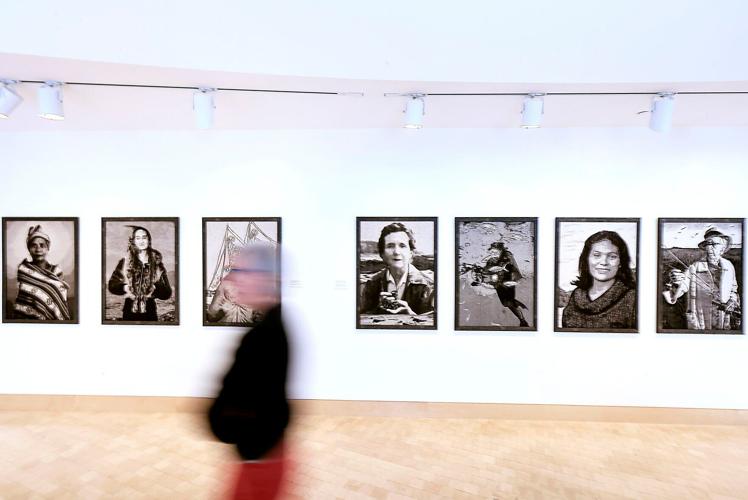

Rachel Carson exposed the dangers of pesticides, wrote the environmental science book “Silent Spring” and helped advance the environmental movement of the 1960s. Gretchen Gerrish, Carol Warden and Emily Stanley conduct research out of the UW-Madison Trout Lake Limnology Station in Vilas County, while Aleta Baun is an indigenous Mollo activist from Indonesia who helped organize opposition and ultimately stopped mining companies from destroying mountains from which 13 rivers flow.
People are also reading…

Weavings done on a high-tech Jacquard loom by artist Mary Burns are displayed as part of the “Women and Water" exhibit in the James Watrous Gallery at the Overture Center in Madison. The exhibit, which highlights women from around the world who have advocated for the protection of water, runs through Feb. 4.

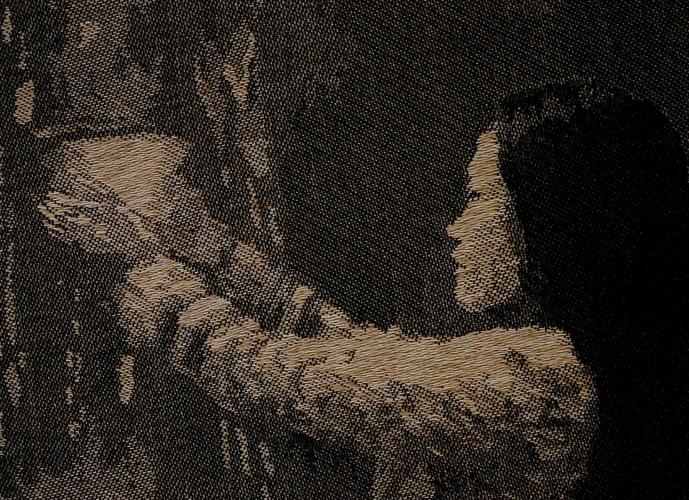
This is a detailed weaving of Autumn Peltier, a member of the Wikwemikong First Nation in Ontario. Just 18 years old, Peltier is an Indigenous rights activist and clean water advocate working to rally other youth around the world.

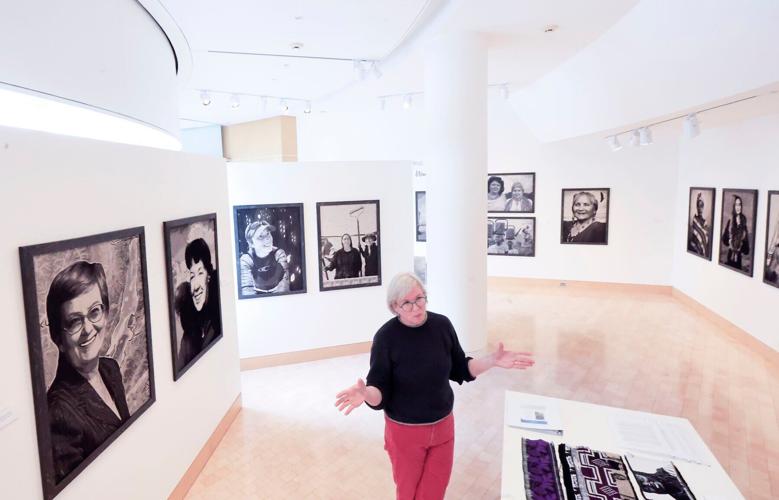
James Watrous Gallery director Jody Clowes displays the weavings of Mary Burns, an artist from Mercer in far northern Wisconsin who uses a high-tech Jacquard loom.

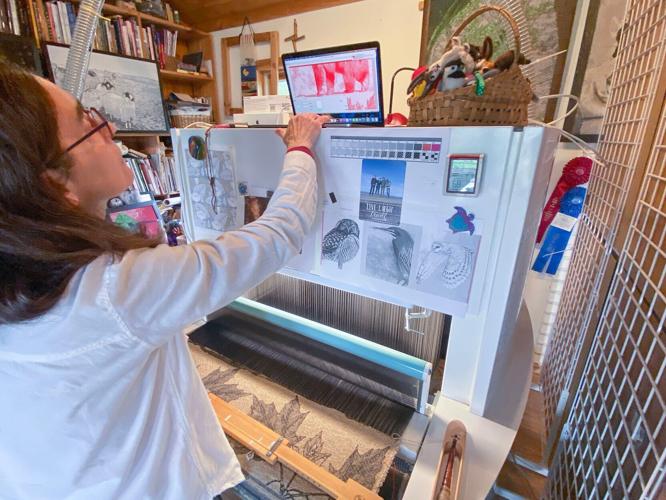
The digital Jacquard loom made in Norway uses a computer to help artist Mary Burns create her detailed weavings. Burns, seen here in 2022 in her Mercer studio, began weaving in high school and began learning Jacquard weaving in the 1990s.

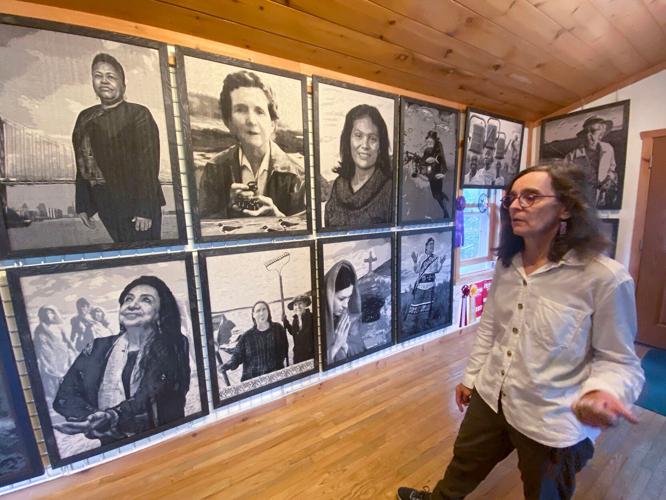
Mary Burns, who lives just south of Mercer, has used a high-tech loom to create dramatic images of women who have advocated for and protected water. Upper left is Monica Lewis-Patrick of Detroit, who is known throughout the environmental justice community as "The Water Warrior" for actively engaging in the struggle for access to safe, affordable water for under-resourced communities.

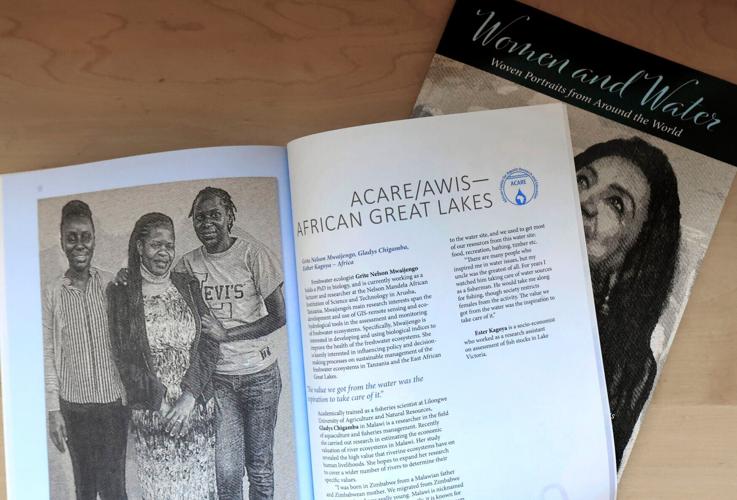
A book accompanying Mary Burns’ exhibit “Women and Water” offers background on the artist’s subjects. It can be purchased at the James Watrous Gallery.
The Jacquard loom weavings of Mary Burns
James Watrous Gallery director Jody Clowes displays the weavings of Mary Burns, an artist from Mercer in far northern Wisconsin who uses a high-tech Jacquard loom.
This is a detailed weaving of Autumn Peltier, a member of the Wikwemikong First Nation in Ontario. Just 18 years old, Peltier is an Indigenous rights activist and clean water advocate working to rally other youth around the world.
Weavings done on a high-tech Jacquard loom by artist Mary Burns are displayed as part of the “Women and Water" exhibit in the James Watrous Gallery at the Overture Center in Madison. The exhibit, which highlights women from around the world who have advocated for the protection of water, runs through Feb. 4.
A book accompanying Mary Burns’ exhibit “Women and Water” offers background on the artist’s subjects. It can be purchased at the James Watrous Gallery.

Mary Burns, seen here in her Manitowish River studio near Mercer, explains the process of a jacquard loom, which can help her create detailed weavings with only a few colors of thread.

Rachel Carson, a world-renowned environmentalist and author of "Silent Spring," is among those who will be featured in the "Women and Water" exhibit scheduled to open in November at the Center for Visual Arts in Wausau.

The digital jacquard loom made in Norway uses a computer to help artist Mary Burns create her detailed weavings. Burns began weaving in high school and began learning jacquard weaving in the 1990s.

Mary Burns looks over her computer with her husband, John Bates, an author and naturalist in northern Wisconsin. The couple, since 1984, has lived in the home along the Manitowish River that was purchased by Burns' grandparents in 1922.

Mary Burns explains how she uses a jacquard loom to make detailed images.

The walls of Mary Burns' Manitowish River studio near Mercer are filled with framed weavings that will make up "Women and Water: A Global Exhibit."

Mary Burns, a fiber artist near Mercer in northern Wisconsin, uses a digital jacquard loom to create stunning, detailed weavings. Her latest project highlights the work of women from the around the world who have advocated, celebrated and protected water.

Mary Burns and her dog, Tippa, look on as her husband, John Bates, shows off his 21-pound Kevlar canoe. The couple spend much of their time exploring and paddling northern Wisconsin.

Mary Burns is hoping to create 30 images of women who have advocated for and protected water. Upper left is Monica Lewis-Patrick of Detroit, who is known throughout the environmental justice community as "The Water Warrior" for actively engaging in the struggle for access to safe, affordable water for under-resourced communities.
Barry Adams covers regional news for the Wisconsin State Journal. Send him ideas for On Wisconsin at 608-252-6148 or by email at badams@madison.com.