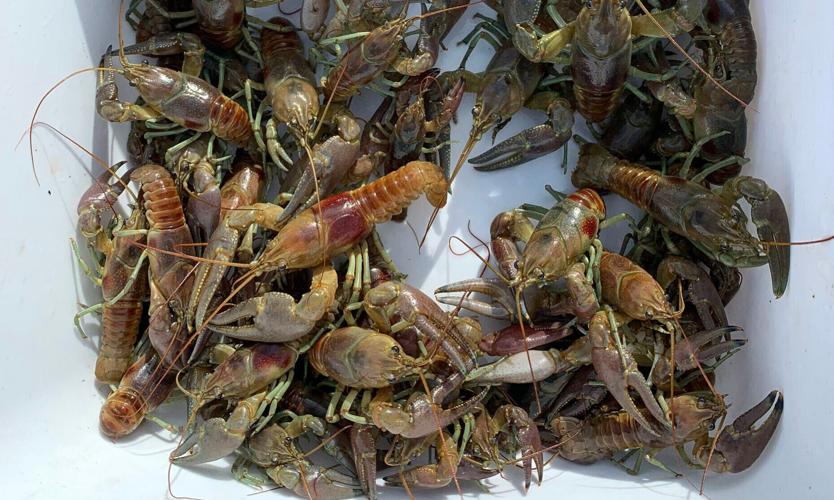

Danny Szydlowski’s first encounter with rusty crayfish came around 20 years ago when visiting his grandparents’ cabin on the Manitowish Chain O’ Lakes in far northern Wisconsin.
If climate change is left unchecked, the Lower Wisconsin and more than half a dozen other rivers could become breeding grounds for invasive carp within a generation.
People are also reading…
- Gateway shows graduate the way to reaching career and life goals
- Gateway helps graduate help family
- Residents receive information about proposed transmission line project
- Pitcher providing little evidence Brewers should have confidence in him for playoffs
- Lake Geneva Public Library to host paranormal investigator
- Lake Geneva Police Department’s expenses expect to increase by $411,000 in 2027
- Rookie wide receiver looks to continue Packers' decades-long tradition
- New pediatrician joins Mercyhealth Hospital and Medical Center
- Cars & Company returns to raise money for children’s cancer research
- In Waunakee, it's live mariachi music amid the bananas, fried chicken and yogurt
- Lake Geneva Badger vs. Westosha Central
- Lake Geneva Business improvement District steps up to help pay for Ice Sculpture Walk
- Bucks sign 7-foot center ahead of training camp
- Lake Geneva-area schools prep-sports schedule for Sept. 10 - Sept. 17
- Kyle Harrison did himself no favors in Brewers' loss to Cubs by tipping pitches

Rusty crayfish were first found in Wisconsin waters in 1973 and likely were introduced by anglers who used the crayfish as bait.
UNIVERSITY OF ILLINOIS
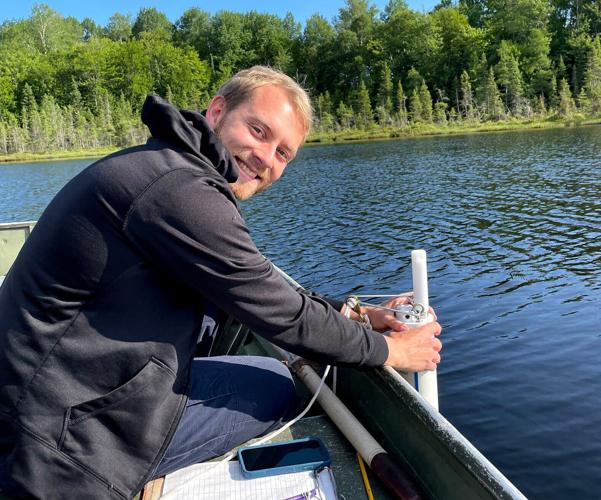
Danny Szydlowski is now pursuing a doctorate in fresh waters and marine science, but when he was at the University of Illinois he was a leading researcher on rusty crayfish infestations in northern Wisconsin lakes.
Danny Szydlowski

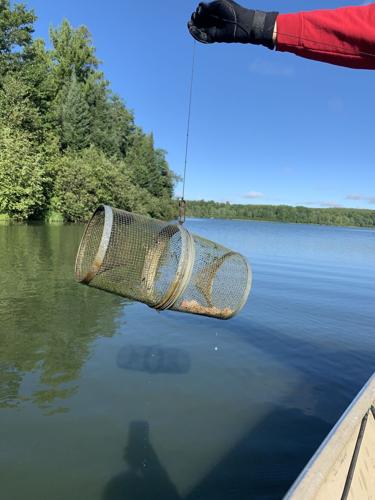
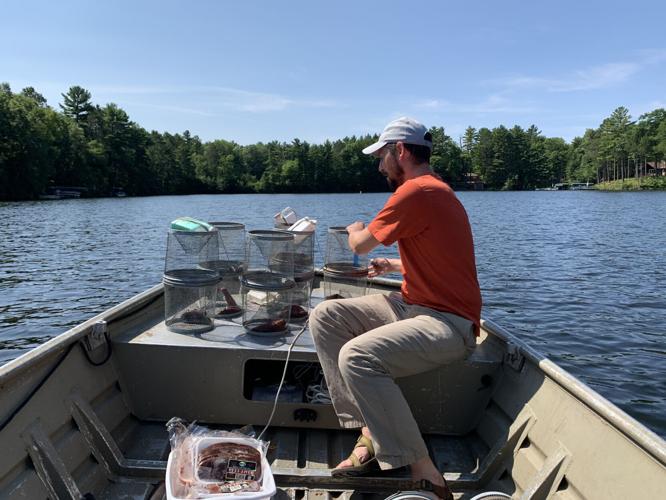
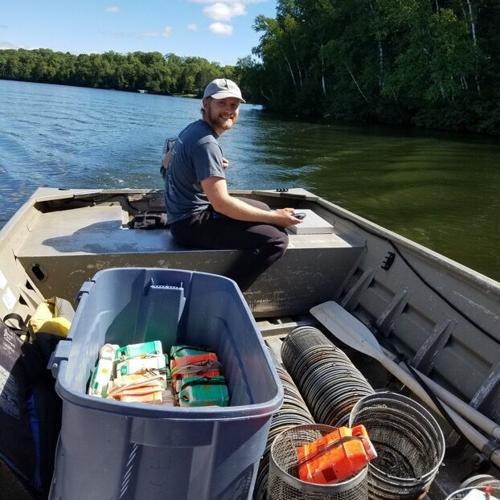
An empty rusty crayfish trap is pulled from Little John Lake in Vilas County. Researchers are encouraged to see declines of the invasive crayfish, which can decimate habitat for native species.
UNIVERSITY OF ILLINOIS
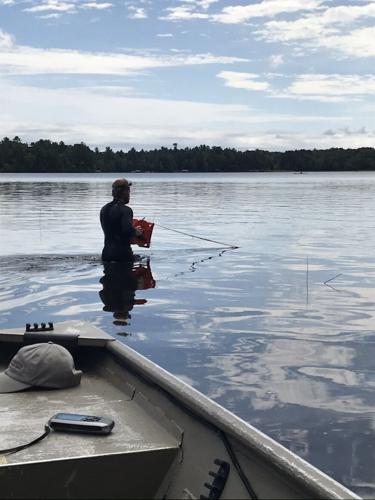
The study of rusty crayfish in 10 northern Wisconsin lakes not only tracked populations of the invasive species but the health of snails and aquatic plants. Lead researcher Danny Szydlowski is seen here checking plants in a shallow area of a lake.
UNIVERSITY OF ILLINOIS
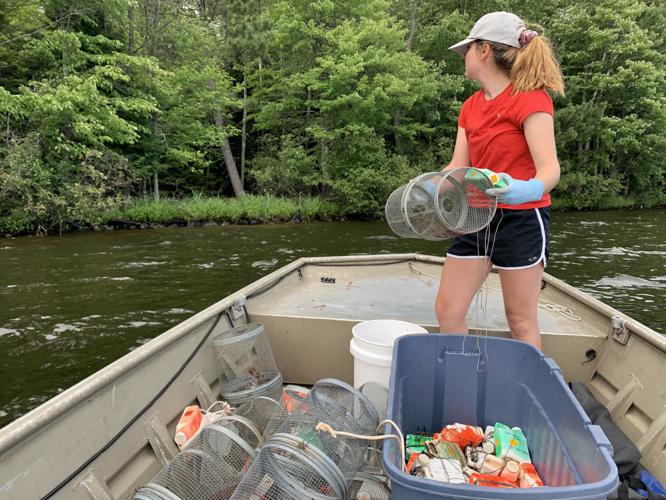
A researcher with the University of Illinois prepares to place a crayfish trap in one of 10 lakes in northern Wisconsin that had been part of a 33-year study on rusty crayfish populations.
UNIVERSITY OF ILLINOIS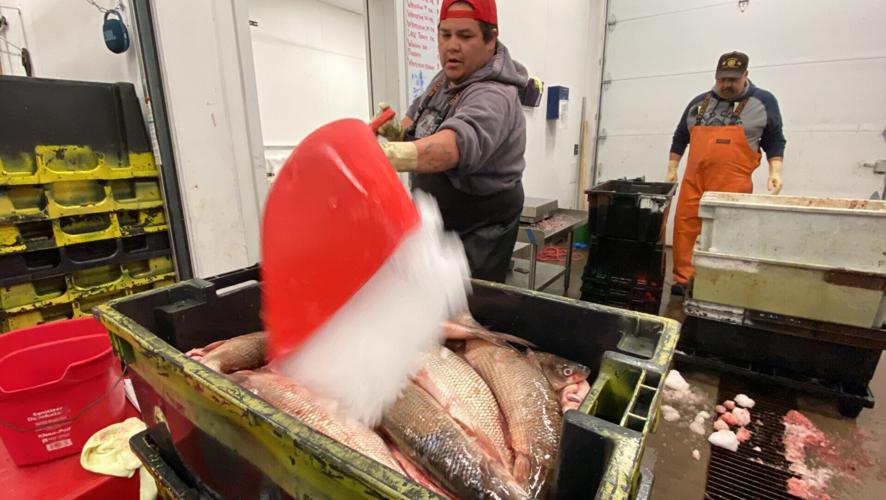
Nick DePerry shovels fresh ice into a tub filled with whitefish caught just hours before on Lake Superior. After fish arrive at Red Cliff Fish Company they are weighed without ice, then covered in new ice before being filleted or cut into chunks. The facility at this time of the year processes between 10,000 and 15,000 pounds of fish per week.
- BARRY ADAMS, STATE JOURNAL
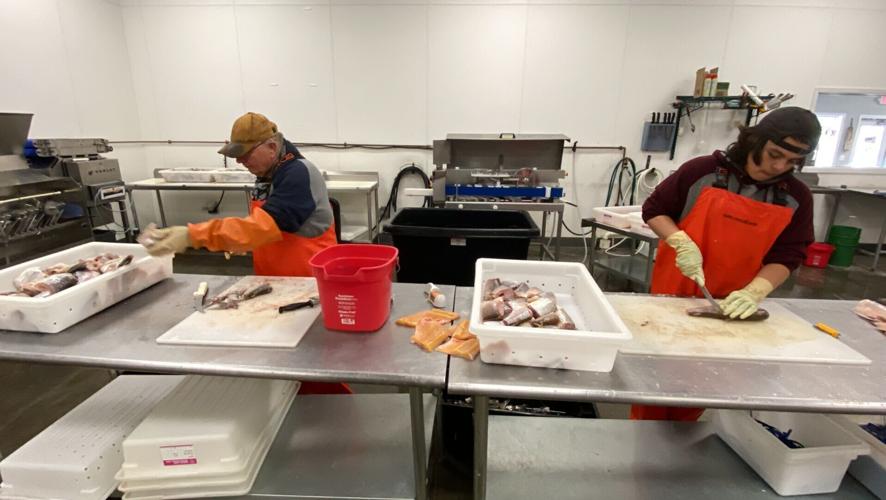
Paul Cadotte, left, and LeAngelo LaPointe chunk up freshly caught whitefish from Lake Superior in the processing room at the Red Cliff Fish Company north of Bayfield on the reservation of the Red Cliff Band of Lake Superior Chippewa.
- BARRY ADAMS, STATE JOURNAL
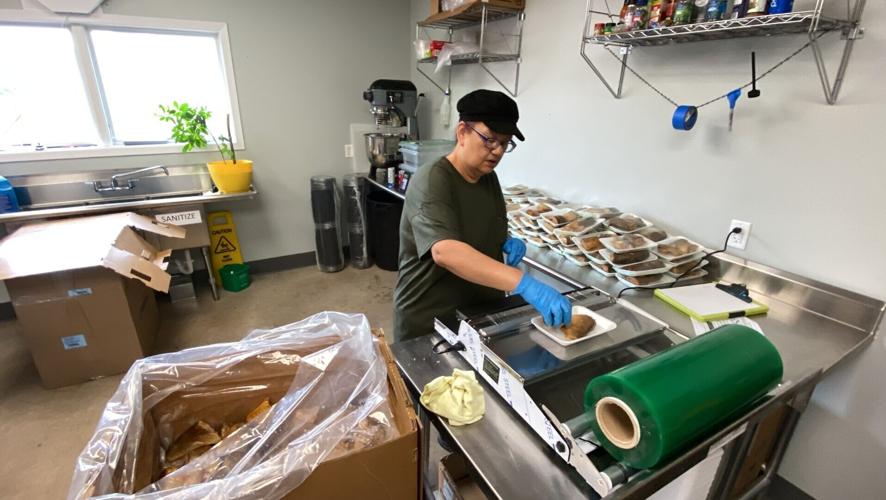
Kelly Holcomb runs the commercial kitchen at Red Cliff Fish Company. One of her duties is packaging smoked whitefish that is distributed to other Native American tribes around the state as part of a program to increase access to Indigenous foods for tribal elders 55 and older.
- BARRY ADAMS, STATE JOURNAL
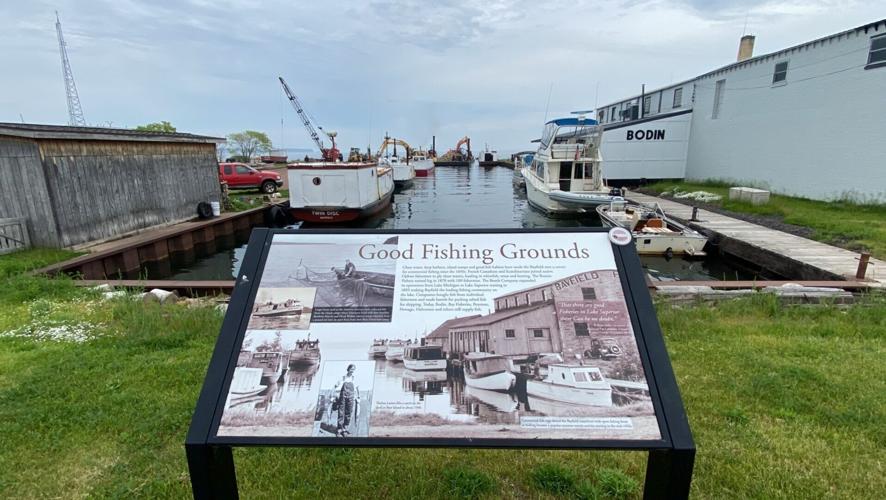
The docks in Bayfield were among the busiest in the state in the 1880s but commercial fishing has declined over the decades due to over harvesting and invasive species like the sea lamprey. The industry is now heavily regulated in an effort to manage sustainable fish populations.
- BARRY ADAMS, STATE JOURNAL
Photos: Red Cliff Fish Company
The market and processing facility on the reservation of the Red Cliff Band of Lake Superior Chippewa is proving another outlet for tribal commercial fisherman.
Nick DePerry shovels fresh ice into a tub filled with whitefish caught just hours before on Lake Superior. After fish arrive at Red Cliff Fish Company they are weighed without ice, then covered in new ice before being filleted or cut into chunks. The facility at this time of the year processes between 10,000 and 15,000 pounds of fish per week.
- BARRY ADAMS, STATE JOURNAL
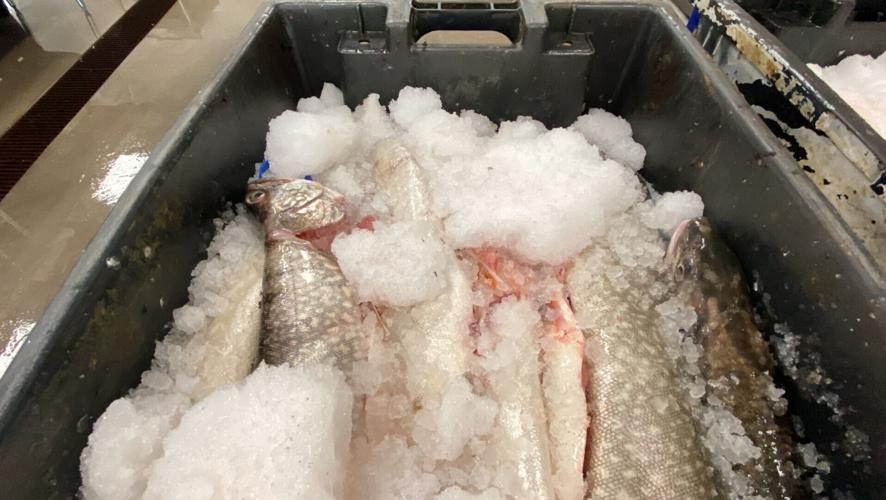
Fresh lake trout fill a tub at Red Cliff Fish Company north of Bayfield, but the vast majority of fish harvested from Lake Superior are whitefish and cisco, also known as lake herring.
- BARRY ADAMS, STATE JOURNAL
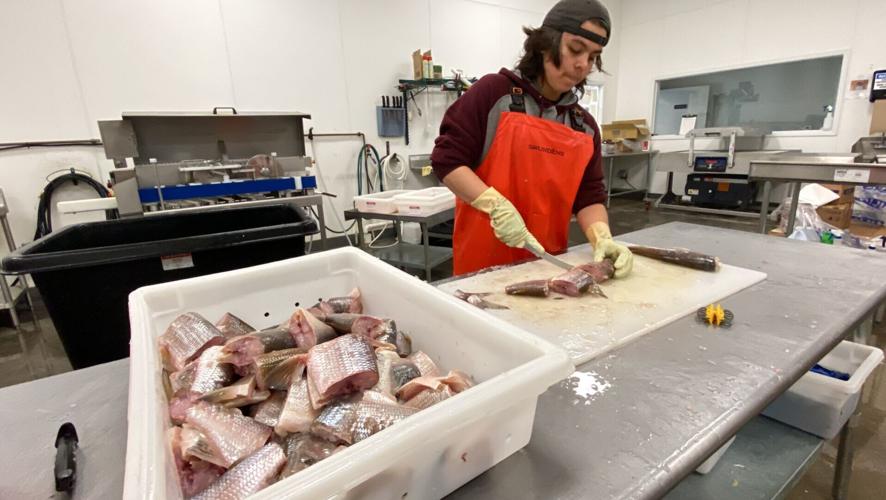
LeAngelo LaPointe chunks up whitefish destined for a smoker at Red Cliff Fish Company north of Bayfield.
- BARRY ADAMS, STATE JOURNAL
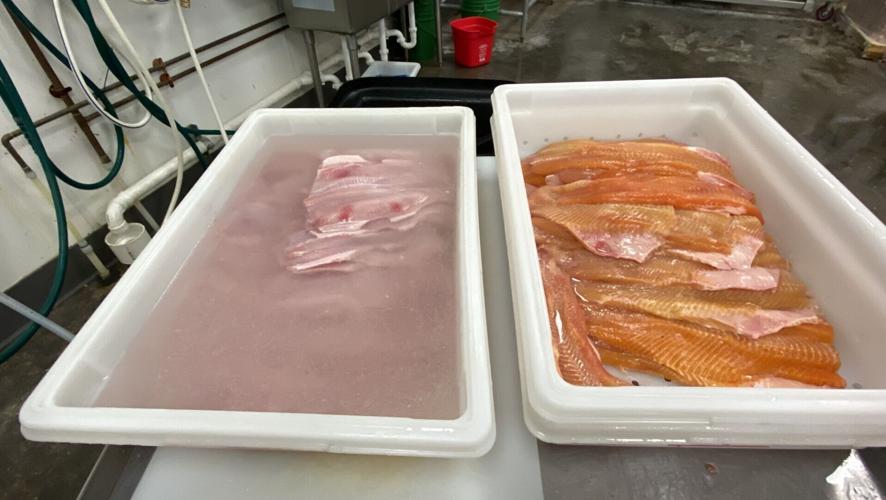
Fillets of whitefish, left, and lake trout.
- BARRY ADAMS, STATE JOURNAL
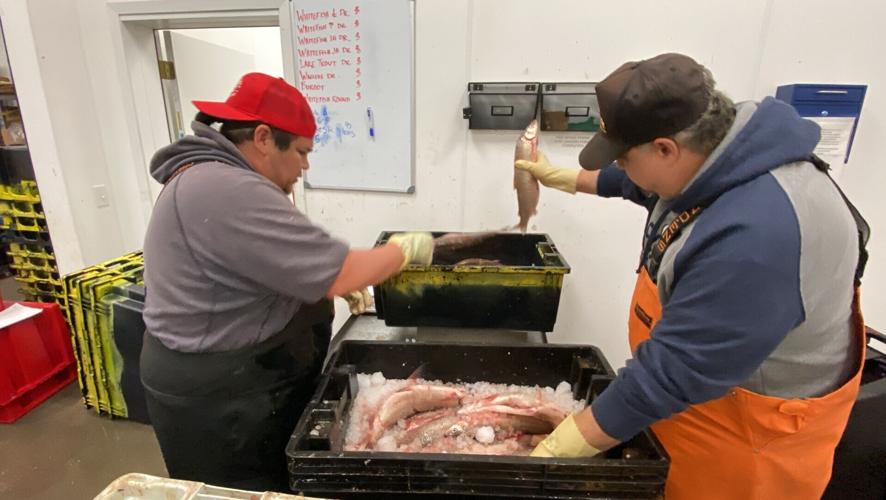
Nick DePerry, left, and Rick Peterson, the former chairman of the Red Cliff Band of Lake Superior Chippewa, transfer freshly caught whitefish into a bin so it can be weighed sans ice at Red Cliff Fish Company.
- BARRY ADAMS, STATE JOURNAL
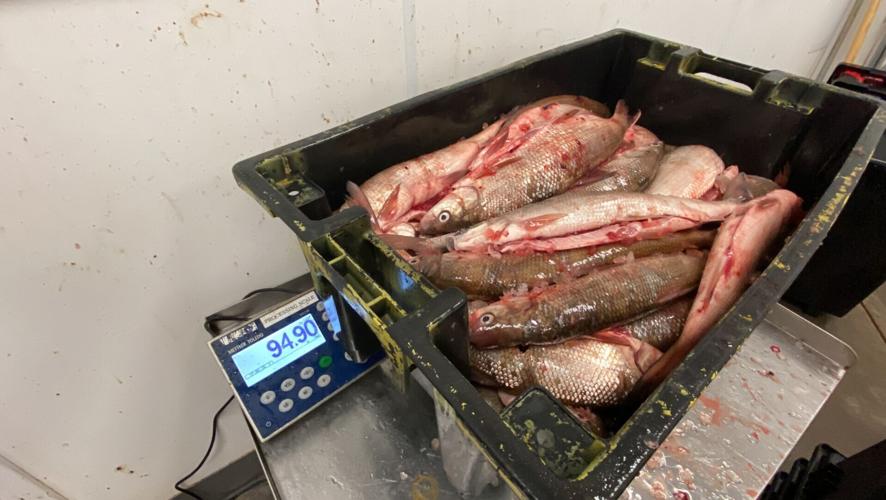
A bin of freshly caught whitefish from Lake Superior is weighed at Red Cliff Fish Company.
- BARRY ADAMS, STATE JOURNAL
Paul Cadotte, left, and LeAngelo LaPointe chunk up freshly caught whitefish from Lake Superior in the processing room at the Red Cliff Fish Company north of Bayfield on the reservation of the Red Cliff Band of Lake Superior Chippewa.
- BARRY ADAMS, STATE JOURNAL
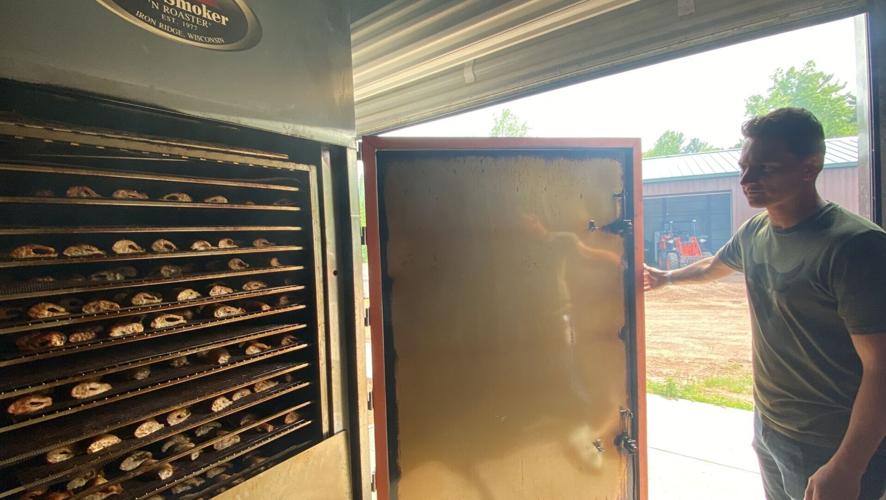
Daniel Grooms, manager of Red Cliff Fish Company, shows off a smoker filled with 400 pounds of whitefish. The smoker was manufactured in the Dodge County community of Iron Ridge by Pro Smoker ’N Roaster.
- BARRY ADAMS, STATE JOURNAL
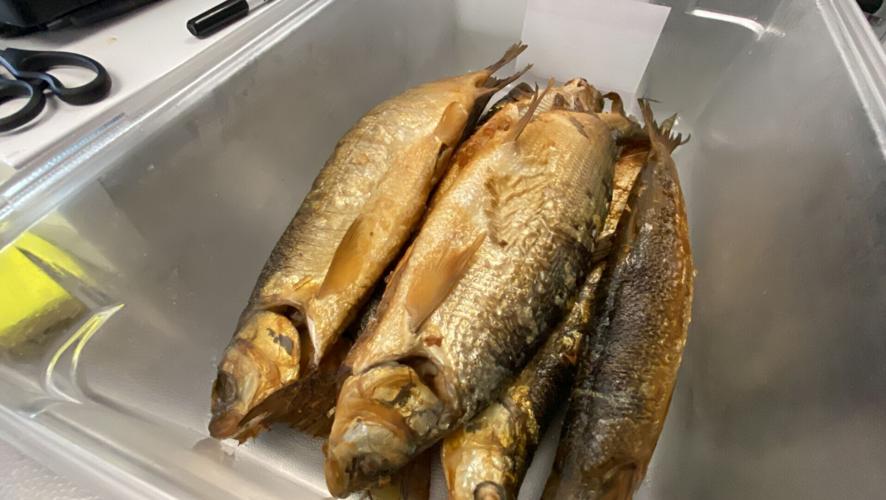
Smoked lake herring is among the staples at Red Cliff Fish Company.
- BARRY ADAMS, STATE JOURNAL
Kelly Holcomb runs the commercial kitchen at Red Cliff Fish Company. One of her duties is packaging smoked whitefish that is distributed to other Native American tribes around the state as part of a program to increase access to Indigenous foods for tribal elders 55 and older.
- BARRY ADAMS, STATE JOURNAL
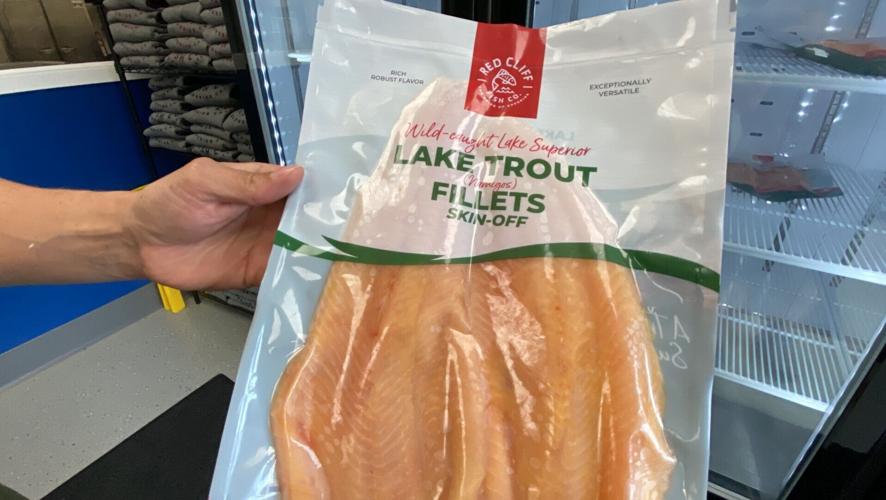
Packaged lake trout fillets are sold at the Red Cliff Fish Company but also at other retailers in northern Wisconsin.
- BARRY ADAMS, STATE JOURNAL
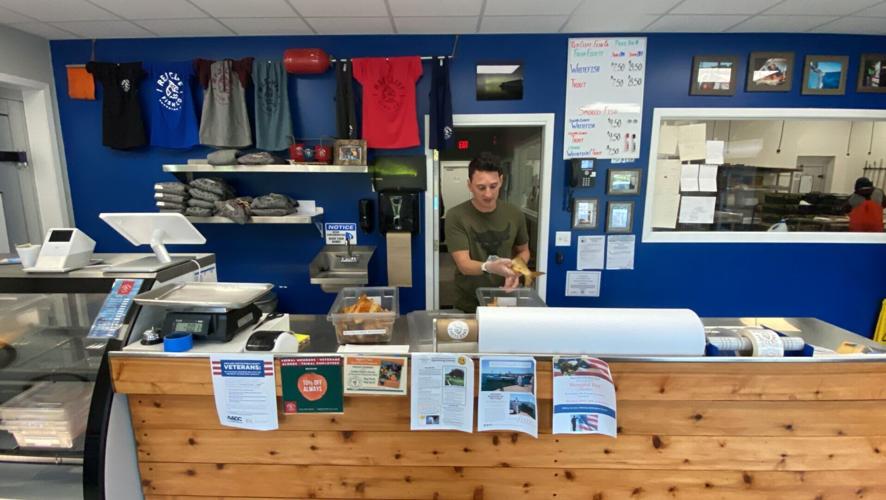
The 3,500-square-foot Red Cliff Fish Company opened in late 2020 and includes a retail shop that sells locally caught fish. Daniel Grooms, a member of the tribe, has been its manager since 2021.
- BARRY ADAMS, STATE JOURNAL
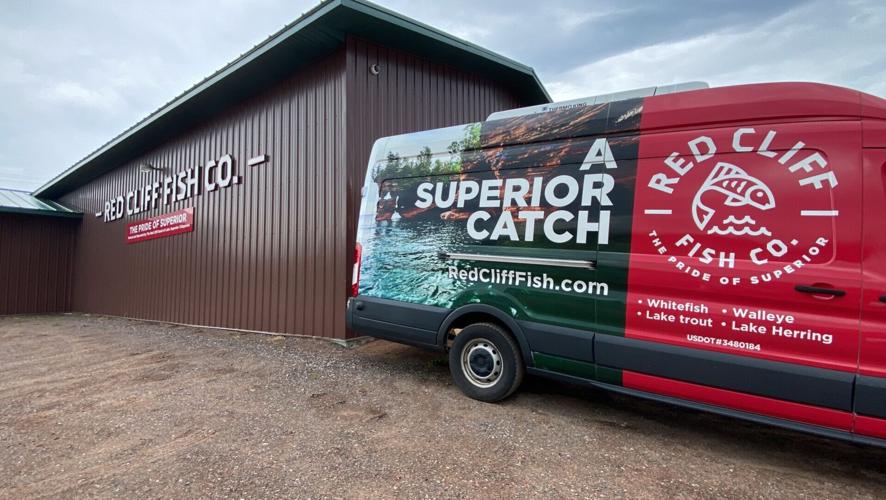
A refrigerated van helps with deliveries of product produced at the Red Cliff Fish Company, located on the reservation of the Red Cliff Band of Lake Superior Chippewa north of Bayfield.
- BARRY ADAMS, STATE JOURNAL
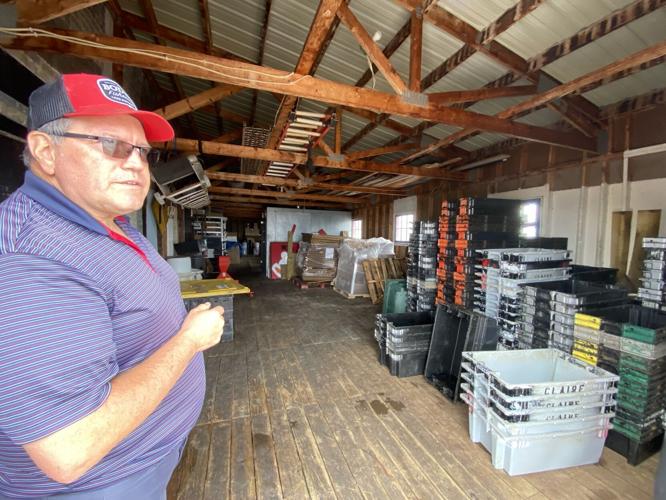
Joe Bodin's family has been fishing Lake Superior since the 1880s. His processing facility and market is located on a dock in Bayfield.
- BARRY ADAMS, STATE JOURNAL
The docks in Bayfield were among the busiest in the state in the 1880s but commercial fishing has declined over the decades due to over harvesting and invasive species like the sea lamprey. The industry is now heavily regulated in an effort to manage sustainable fish populations.
- BARRY ADAMS, STATE JOURNAL
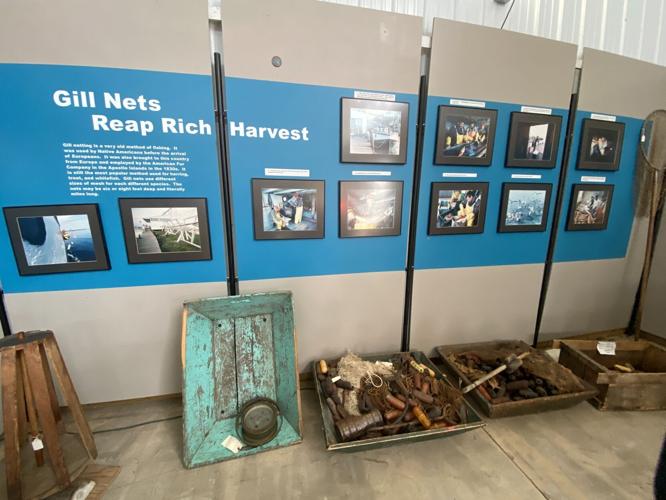
A display on commercial fishing at the Bayfield Maritime Museum.
- BARRY ADAMS, STATE JOURNAL
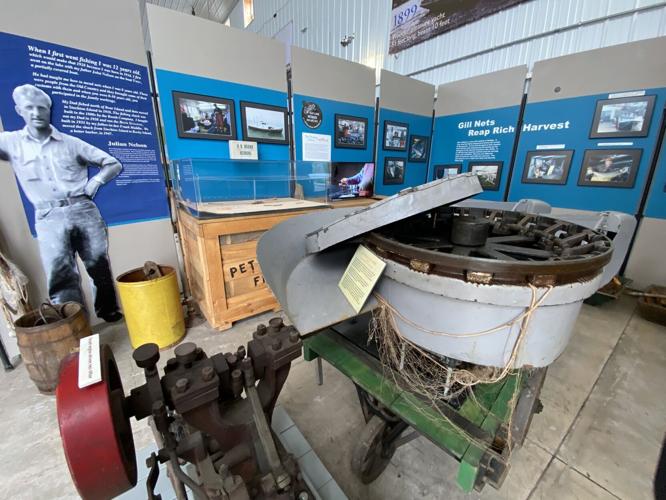
Mechanical equipment used on commercial fishing boats to bring in nets are displayed at the Bayfield Maritime Museum.
- BARRY ADAMS, STATE JOURNAL
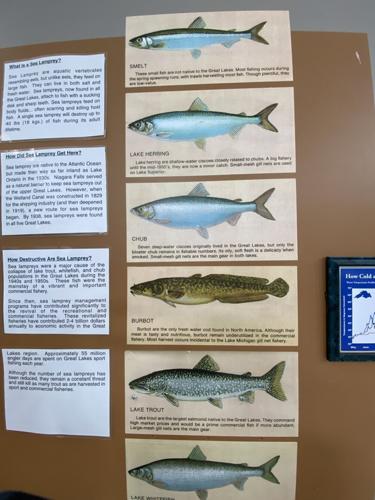
This display in the Bayfield Maritime Museum shows the variety of fish that can be caught in Lake Superior.
- BARRY ADAMS, STATE JOURNAL
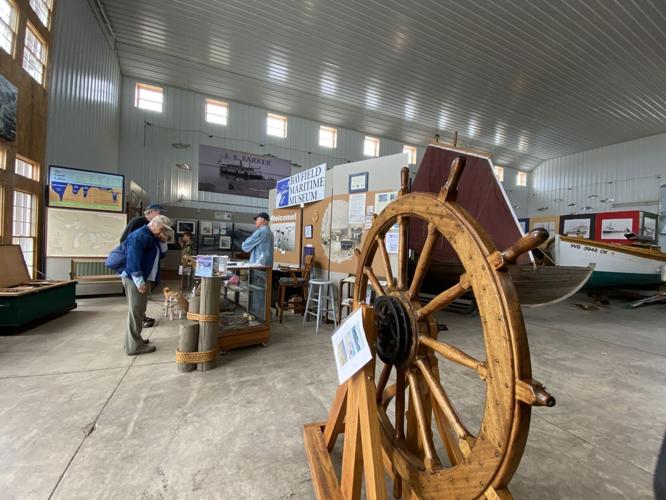
The Bayfield Maritime Museum is a popular stop for tourists visiting the Lake Superior community.
- BARRY ADAMS, STATE JOURNAL
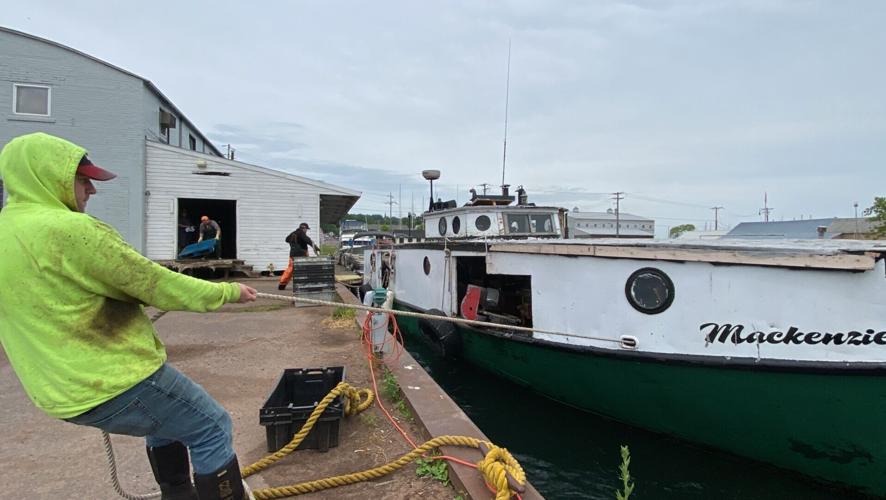
Tim Opatik helps guide the Mackenzie May into the Bodin Dock in Bayfield last month. The boat had been fishing between Madeline and Michigan islands and harvested around 700 pounds of whitefish and lake trout.
- BARRY ADAMS, STATE JOURNAL
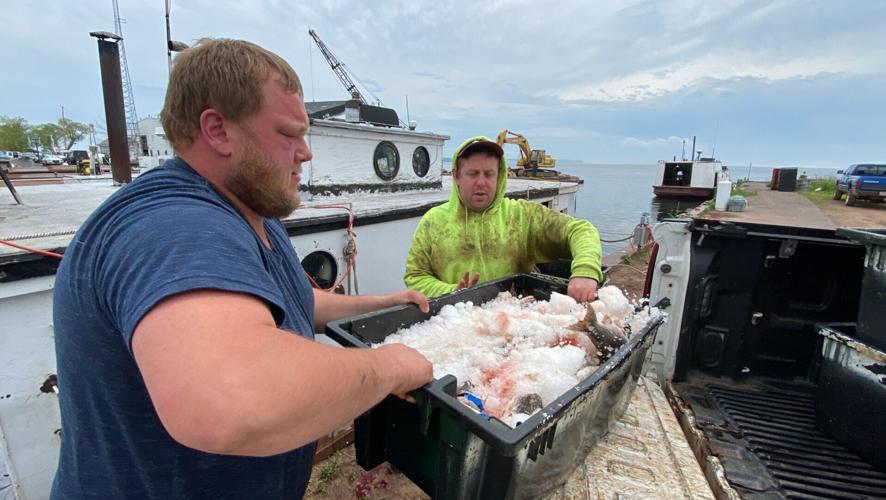
Joe Newago Jr., left, loads freshly caught lake trout and whitefish from his boat in Bayfield into his pickup truck along with crew member Tim Opatik.
- BARRY ADAMS, STATE JOURNAL
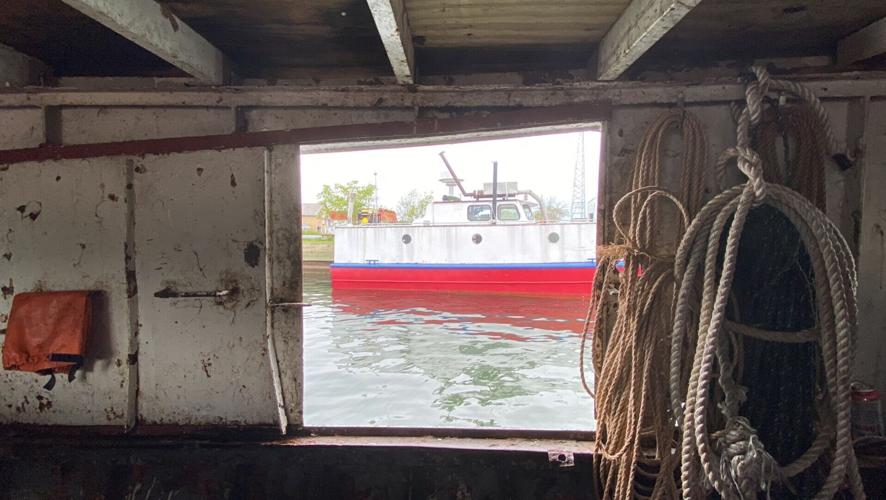
A view through a door of the Mackenzie May after it tied up at he Bodin Dock in Bayfield.
- BARRY ADAMS, STATE JOURNAL
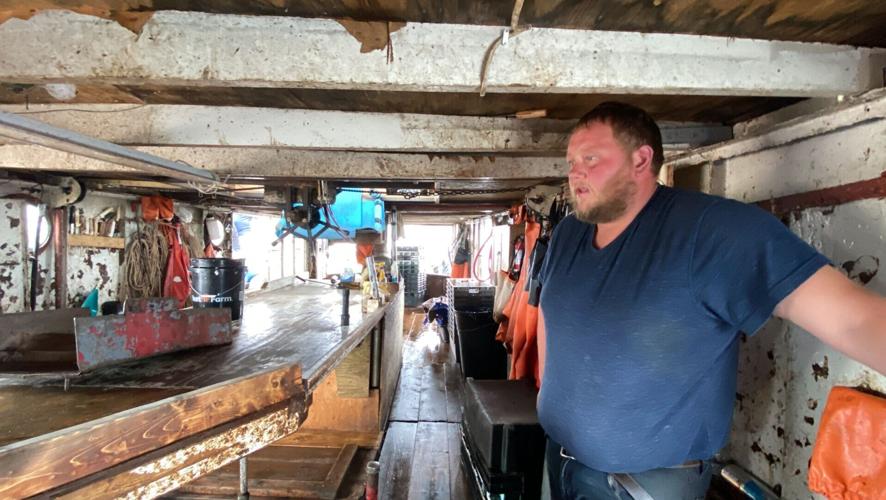
Joe Newago Jr. is a third generation commercial fisherman and a member of the Bad River Band of Lake Superior Chippewa.
- BARRY ADAMS, STATE JOURNAL
Be the first to know
Get local news delivered to your inbox!