Tucsonan finishes five-year quest to profile every USS Arizona casualty at Pearl Harbor
Henry Brean | Arizona Daily Star
Updated
8 min to read
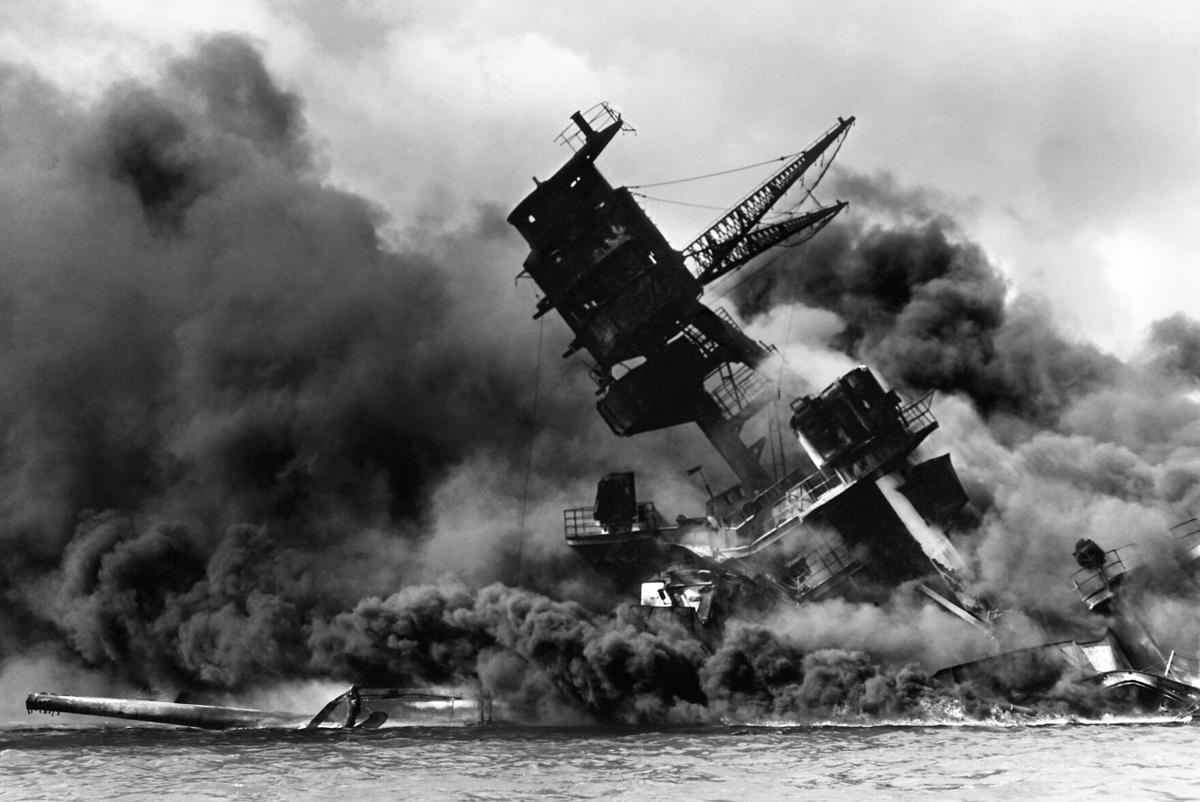
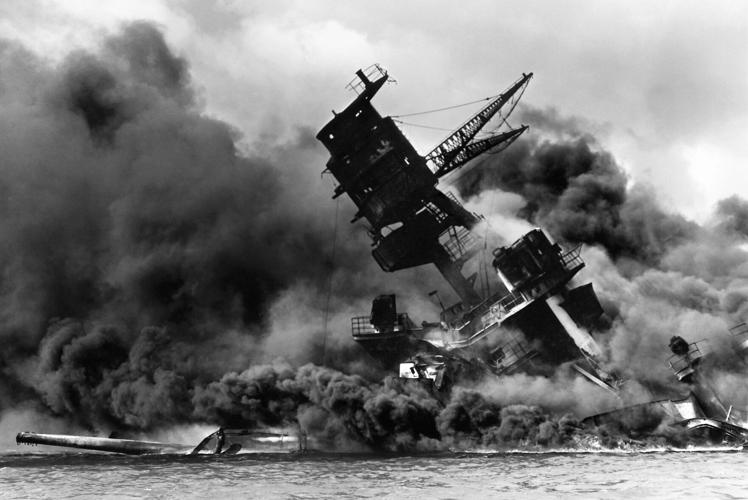
This iconic photo of the USS Arizona (BB-39) burning after the Japanese attack on Pearl Harbor on Dec. 7, 1941, shows that the supporting structure of the forward tripod mast has collapsed after the forward magazine exploded.
When the USS Arizona exploded and sank during the Japanese attack on Pearl Harbor 80 years ago, brothers died with brothers, childhood friends with childhood friends, a father with his son.
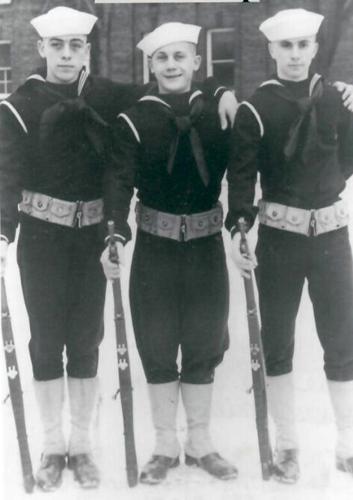
Friends, from left, Clarence W. Lipke, Chester John Miller and Charles W. McClelland pose during Navy boot camp. The teenagers from Detroit enlisted together, even though Miller was just 15 at the time. Miller and Lipke died on the USS Arizona, while McClelland sustained a broken leg but survived the Pearl Harbor attack on the USS Helena.
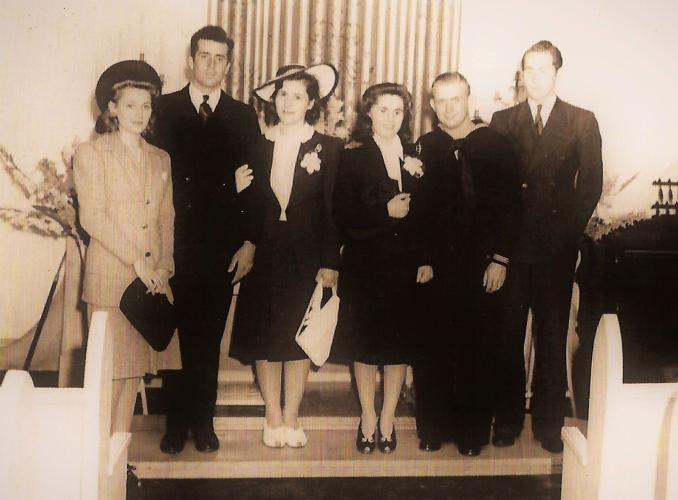
Lloyd Bryant, second from the left, and Vincent “Tommy” Thomas, second from the right, were lifelong best friends from rural Illinois who enlisted together in 1939, then married sisters in 1941, while the USS Arizona was in port at San Pedro, California. The Arizona left for Hawaii a short time later, and Helen Bryant, third from the left, and Myrtle Thomas, third from the right, never saw their husbands again.
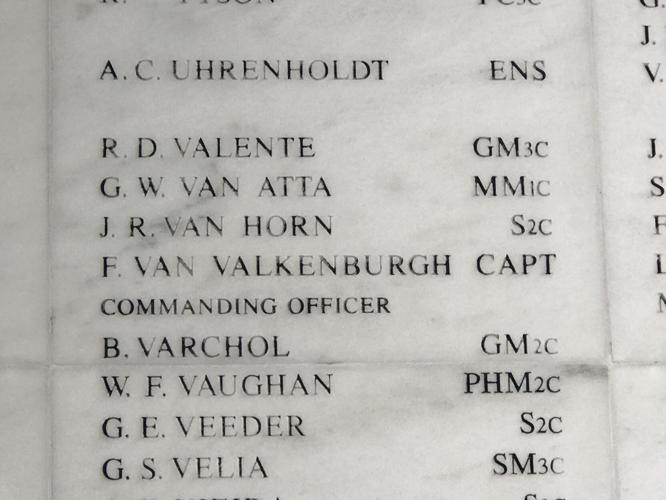
A marble wall inside the USS Arizona Memorial at Pearl Harbor bears the name of Seaman Second Class James Randolf Van Horn, the only Tucsonan killed on the battleship on Dec. 7, 1941.
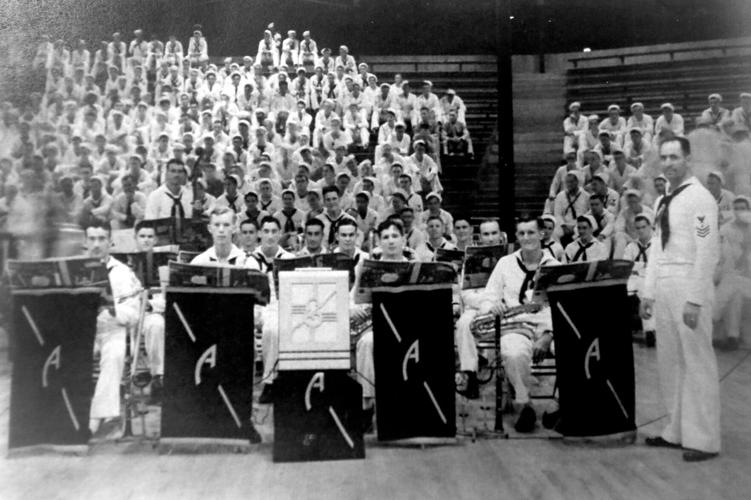
Members of the USS Arizona band perform during the Battle of Music semifinal at Bloch Arena at Pearl Harbor on Nov. 22, 1941. All of the band members were killed in the attack at Pearl Harbor.
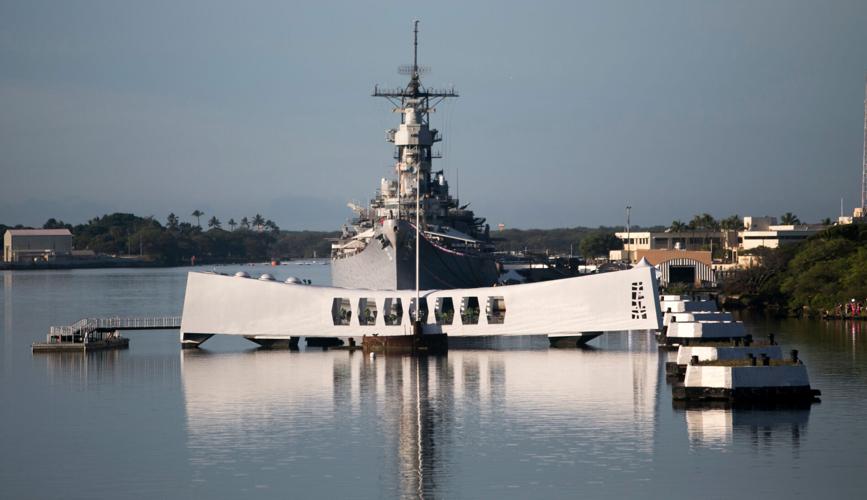
The USS Arizona Memorial, shown in 2016, with the battleship USS Missouri in the background. The Missouri, along with sister ships Iowa, Wisconsin and New Jersey, were the latest generation of battleships, but entered service late in the war. The Japanese surrender was signed on the deck of the Missouri in 1945.
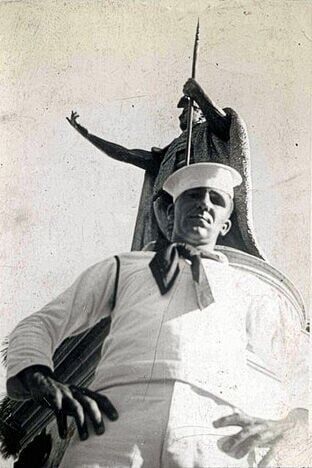
USS Arizona sailor Walter Hamilton Simon poses in front of a statue of King Kamehameha in Hawaii. After he joined the Navy in 1940, he frequently wrote letters to his ailing father and his kid sister, Louise, back in New Jersey.
In honor of the 81th anniversary of Pearl Harbor, take a look at the U.S. Navy's USS Arizona Relics Programs and how the history of the sunken vessel is being preserved. Video courtesy of the U.S. Navy and Petty Officer 2nd Class Evan Diaz.
Courtesy of U.S. Navy
Photos: The Japanese attack on Pearl Harbor, Hawaii, in 1941
Attack on Pearl Harbor in 1941
In this Dec. 7, 1941 file photo provided by the U.S. Navy, the destroyer USS Shaw explodes after being hit by bombs during the Japanese attack on Pearl Harbor, Hawaii. About 20 survivors are gathering on Friday, Dec. 7, 2018, at Pearl Harbor to remember thousands of men lost in the Japanese attack 77 years ago. The youngest of the survivors is in his mid-90s. The Navy and National Park Service will jointly host the remembrance ceremony Friday at a grassy site overlooking the water and the USS Arizona Memorial. (U.S. Navy via AP, File)
National Park Service
The_USS_Arizona
The USS Arizona (BB-39) burning after the Japanese attack on Pearl Harbor, 7 December 1941. The ship is resting on the harbor bottom. The supporting structure of the forward tripod mast has collapsed after the forward magazine exploded.
U.S. National Archives and Records Administration
Attack on Pearl Harbor in 1941
Planes and hangars burning at Wheeler Army Air Field, Oahu, soon after it was attacked in the morning of 7 December 1941, as seen from a Japanese Navy plane. Donation of Theodore Hutton, 1942. U.S. Naval History and Heritage Command Photograph. Catalog #: NH 50473
National Park Service
Attack on Pearl Harbor in 1941
Dense smoke rises from the forward and midships portion of the USS Arizona BB-39. Just ahead of her (L-R) the sinking USS West Virginia BB-48 outboard with the slightly damaged USS Tennessee BB-43 inboard.
National Park Service
Attack on Pearl Harbor in 1941
USS Arizona (BB-39) ablaze, just after her forward magazines exploded. At right, shrouded in smoke from the fire, are the main and foremasts of USS West Virginia, which is listing sharply to port after she was torpedoed. Upright mast further to the right is the mainmast of USS Tennessee (BB-43), moored inboard of West Virginia. The bow and foremast of USS Vestal (AR-4), moored outboard of Arizona, are visible at the left. Official U.S. Navy Photograph, now in the collections of the National Archives.
National Park Service
Attack on Pearl Harbor in 1941
Panorama view of Pearl Harbor, during the Japanese raid, with anti-aircraft shell bursts overhead. The photograph looks southwesterly from the hills behind the harbor. Large column of smoke in lower right center is from the burning USS Arizona (BB-39). Smoke somewhat further to the left is from the destroyers Shaw (DD-373), Cassin (DD-372) and Downes (DD-375), in drydocks at the Pearl Harbor Navy Yard. Official U.S. Navy Photograph, now in the collections of the National Archives.
National Park Service
Attack on Pearl Harbor in 1941
Japanese torpedo makes a direct hit on battleship USS Oklahoma. This dramatic image captures the opening sequences of the attack on Pearl Harbor.
National Park Service
Attack on Pearl Harbor in 1941
PBY at Kaneohe Naval Air Station burns out of control. Sailors rush to rescue another PBY that is badly damaged. No airfield on Oahu suffered more damage to hangars and aircraft than Kaneohe. Of the 37 planes, 28 were lost and the remainder severely damaged.
National Park Service
Attack on Pearl Harbor in 1941
This image was captured by a Japanese naval aviator in the opening moments of the attack on Pearl Harbor. Torpedo tracks can be seen headed towards Battleship Row. Smoke rises in the distance from the burning aircraft and hangars at Hickam Field.
National Park Service
Attack on Pearl Harbor in 1941
A fireboat pours water onto the burning battleship USS West Virginia BB-48 following the attack by Japanese naval aircraft. The USS Tennessee in background.
National Park Service
Attack on Pearl Harbor in 1941
This image was taken from the fleet landing area at Ford Island. Sailors attend to a launch pulling alongside during the raid. The battleship California can be seen to the left and in the center, the clear devastation of Battleship Row. Note to the right the fleet oiler Neosho backing away and seeking safety during the raid. It was taken just before 9:00 a.m.
National Park Service
Attack on Pearl Harbor in 1941
Pearl Harbor Shipyard Floating Dry dock #2: USS Shaw burns after being bombed. Nevada has run around and the Avocet is in the foreground.
National Park Service
Attack on Pearl Harbor in 1941
Shock and amazement are registered on the expression of the Schofield Barracks soldier in the foreground. December 7, 1941.
National Park Service
Attack on Pearl Harbor in 1941
This aerial view was taken over Ford Island on November 10, 1941, less than one month before the Pearl Harbor attack. At the bottom of the photo, six battleships occupy the line that will forever be known as “Battleship Row”. At the top, the western shoreline of Ford Island is the berthing area at Fox-9 of the carrier USS Lexington.
National Park Service
Attack on Pearl Harbor in 1941
Sailors at Ford Island Naval Air Station look on as the USS Shaw explodes in the distance. This view is of the PBY ramp with assorted aircraft scattered among the debris. Barely seen in the background is the beached USS Nevada.
National Park Service
USS Arizona
Fuel oil pours out of battleships moored off Ford Island in Pearl Harbor after the Japanese attack on Dec. 7 1941.
U.S. National Archives and Records Administration
Attack on Pearl Harbor in 1941
Strafed Fire House on Hickam Air Field with two fire trucks outside & Debris from the attack This vivid photo shows the damage to Hickam Field’s fire station. Note pot marks of machine gun fire on the side of the building. This building is presently restored and the home of Hickam Air Force Base Security.
This iconic photo of the USS Arizona (BB-39) burning after the Japanese attack on Pearl Harbor on Dec. 7, 1941, shows that the supporting structure of the forward tripod mast has collapsed after the forward magazine exploded.
Members of the USS Arizona band perform during the Battle of Music semifinal at Bloch Arena at Pearl Harbor on Nov. 22, 1941. All of the band members were killed in the attack at Pearl Harbor.
Lloyd Bryant, second from the left, and Vincent “Tommy” Thomas, second from the right, were lifelong best friends from rural Illinois who enlisted together in 1939, then married sisters in 1941, while the USS Arizona was in port at San Pedro, California. The Arizona left for Hawaii a short time later, and Helen Bryant, third from the left, and Myrtle Thomas, third from the right, never saw their husbands again.
USS Arizona sailor Walter Hamilton Simon poses in front of a statue of King Kamehameha in Hawaii. After he joined the Navy in 1940, he frequently wrote letters to his ailing father and his kid sister, Louise, back in New Jersey.
Friends, from left, Clarence W. Lipke, Chester John Miller and Charles W. McClelland pose during Navy boot camp. The teenagers from Detroit enlisted together, even though Miller was just 15 at the time. Miller and Lipke died on the USS Arizona, while McClelland sustained a broken leg but survived the Pearl Harbor attack on the USS Helena.
A marble wall inside the USS Arizona Memorial at Pearl Harbor bears the name of Seaman Second Class James Randolf Van Horn, the only Tucsonan killed on the battleship on Dec. 7, 1941.
The USS Arizona Memorial, shown in 2016, with the battleship USS Missouri in the background. The Missouri, along with sister ships Iowa, Wisconsin and New Jersey, were the latest generation of battleships, but entered service late in the war. The Japanese surrender was signed on the deck of the Missouri in 1945.