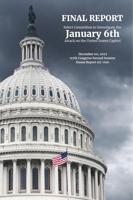
The House Jan. 6 committee released its final report Thursday on the "unimaginable" 2021 attack on the U.S. Capitol, a mob assault by supporters of the defeated president, Donald Trump, that shook the nation and exposed the fragility of American democracy.
People are also reading…
5 takeaways from the Jan. 6 report
1. Eight chapters
From the "Big Lie" of Trump's November 2020 election night claims of a stolen election to the bloody Jan. 6, 2021, siege, the report spells out the start and finish of the mob attack that played out for the world to see.
It details how Trump and his allies engaged in a "multi-part" scheme to overturn Joe Biden's presidential election victory — first through court challenges, then, when those failed, by compiling slates of electors to challenge Joe Biden's victory.
As Congress prepared to convene Jan. 6 to certify the election, Trump summoned a mob to Washington for his "Stop the Steal" rally at the White House.
"When Donald Trump pointed them toward the Capitol and told them to 'fight like hell,' that's exactly what they did," Thompson wrote. "Donald Trump lit that fire. But in the weeks beforehand, the kindling he ultimately ignited was amassed in plain sight."
2. New details, pressures
After blockbuster public hearings, the report and its accompanying materials are providing more detailed accounts of key aspects of the Trump team's plan to overturn the election, join the mob at the Capitol and, once the committee began investigating, pressure those who would testify against him.
Among dozens of new witness transcripts was Thursday's release of a previously unseen account from former White House aide Cassidy Hutchinson (pictured) detailing a stunning campaign by Trump's allies encouraging her to stay "loyal" as she testified before the panel.
The report said the committee estimates that in the two months between the November election and the Jan. 6 attack, "Trump or his inner circle engaged in at least 200 apparent acts of public or private outreach, pressure, or condemnation, targeting either State legislators or State or local election administrators, to overturn State election results."
3. Behind the scenes
The report also details Trump's inaction as his loyalists were violently storming the building.
One Secret Service employee testified to the committee that Trump's determination to go to the Capitol put agents on high alert.
"(We) all knew ... that this was going to move to something else if he physically walked to the Capitol," a unidentified employee said. "I don't know if you want to use the word 'insurrection,' 'coup,' whatever. We all knew that this would move from a normal democratic ... public event into something else."
Once the president arrived back at the White House after delivering a speech to his supporters, he asked an employee if they had seen his remarks on television.
"Sir, they cut it off because they're rioting down at the Capitol," the staffer said, according to the report.
Trump asked what that meant, and was given the same answer. "Oh really?" Trump then asked. "All right, let's go see."
4. Safeguarding democracy
The report makes 11 recommendations for Congress and others to safeguard American democracy and its tradition of the peaceful transfer of presidential power from one leader to the next.
The first, an overhaul of the Electoral Count Act, is on its way to becoming law in the year-end spending bill heading toward final passage this week in Congress.
The committee also made recommendations to the Justice Department to prosecute Trump and others for conspiracy to commit fraud on the public, and other potential charges. It also referred the former president for prosecution for "assisting and providing aid and comfort to an insurrection."
Other changes may be within reach or prove more elusive. Among them, the report recommends beefing up security around key congressional events, overhauling oversight of the Capitol Police and enhancing federal penalties for certain types of threats against election workers.
One recommendation is for Congress to create a formal mechanism to consider barring individuals from public office if they engage in insurrection or rebellion under the Fourteenth Amendment. It holds that those who have taken an oath to support the Constitution can be disqualified from holding future federal or state office if they back an insurrection.
5. Record for history
The Jan. 6 committee was created after Congress rebuked an effort to form an independent 9/11-style commission to investigate the Capitol attack. Republicans blocked the idea.
Instead, Speaker Nancy Pelosi led the House to form the committee. In her foreword to the report, she said it "must be a clarion call to all Americans: to vigilantly guard our Democracy."
Led by Thompson and Vice Chair Liz Cheney, R-Wyo., the panel's work is intended to stand as a record for history of what happened during the most serious attack on the Capitol since the War of 1812.
Five people died in the riot and its aftermath, including Ashli Babbitt, a Trump supporter shot and killed by police, and Brian Sicknick, a police officer who died the day after battling the mob.
Cheney noted the committee decided most of its witnesses needed to be Republicans — the president's own team and allies. In the report's foreword, she wrote that history will remember the "bravery of a handful of Americans" and those who withstood Trump's "corrupt pressure."
For all of them, the committee and report held personal weight.
Thompson, a Black leader in Congress, noted that the iconic U.S. Capitol, built with enslaved labor, "itself is a fixture in our country's history, of both good and bad ... a symbol of our journey toward a more perfect union."
11 searing moments of Jan. 6: From 'an attempted coup' to chaos
'An attempted coup'
The first hearing, aired in prime time and watched by more than 20 million viewers, set the stage for the next seven.
It laid out the conclusion that the panel would come back to in every hearing: that Trump conspired to overturn his own defeat, taking actions that sparked the violent insurrection at the Capitol on Jan. 6, 2021, when hundreds of his supporters beat police and broke through windows and doors to interrupt the certification of Biden’s victory.
“January 6th was the culmination of an attempted coup, a brazen attempt, as one rioter put it shortly after January 6th, to overthrow the government,” said the committee chairman, Rep. Bennie Thompson, D-Miss. “The violence was no accident. It represents seeing Trump’s last stand, most desperate chance to halt the transfer of power.”
'Carnage' at the Capitol
Capitol Police Officer Caroline Edwards (pictured), one of two witnesses at the first hearing, described what she saw outside the Capitol on Jan. 6 as a “war scene.” As some Republicans, including Trump, have tried to play down the violence of the insurrection, calling it “peaceful,” Edwards recalled the brutality she experienced on the front lines. She suffered a traumatic head injury that day as some of the first protesters barreled through the flimsy bike rack barriers that she and other officers were trying to hold.
“I couldn’t believe my eyes,” Edwards testified. “There were officers on the ground. You know, they were bleeding. They were throwing up. … It was carnage. It was chaos.”
'Detached from reality'
The committee has used clips of its interview with former Attorney General Bill Barr (pictured) in almost every hearing, showing the public over and over his definitive statements that the election was not stolen by Biden — and Barr's description of Trump’s resistance as he told the president the truth.
At the second hearing, the committee showed a clip of Barr recalling how he told Trump to his face that the Justice Department had found no evidence of the widespread voter fraud that Trump was claiming. Barr said he thought Trump had become “detached from reality” if he really believed his own theories and said there was “never an indication of interest in what the actual facts were.”
“And my opinion then and my opinion now is that the election was not stolen by fraud and I haven’t seen anything since the election that changes my mind on that,” Barr said.
A tense conversation
One question going into the hearings was what Trump and Vice President Mike Pence talked about in a phone call the morning of Jan. 6. The conversation came after Trump had pressured his vice president for weeks to try and somehow object or delay as he presided over Biden’s certification. Pence firmly resisted and would gavel down Trump's defeat — and his own — in the early hours of Jan. 7, after rioters had been cleared from the Capitol.
While only Trump and Pence were on the Jan. 6 call, White House aides filled in some details at the committee’s third hearing by recounting what they heard Trump say on his end of the line.
“Wimp is the word I remember,” said former Trump aide Nicholas Luna. “You’re not tough enough,” recalled Keith Kellogg, Pence’s national security adviser. “It became heated” after starting out in a calmer tone, said White House lawyer Eric Herschmann.
“It was a different tone than I’d heard him take with the vice president before,” said Ivanka Trump.
40 feet away
Encouraged by Trump’s tweet, after the attack had started, that Pence “didn’t have the courage to do what should have been done,” rioters at the Capitol singled out the vice president. Many chanted “Hang Mike Pence!” as they moved through the building. Pence evacuated the Senate just minutes before the chamber was breached, and later was rushed to safety as rioters were just 40 feet away.
Greg Jacob, the president’s lawyer, testified at the third hearing and said he had not known they were that close.
Jacob said Secret Service agents wanted them to leave the building but Pence refused to get in the car. “The vice president didn’t want to take any chance” that the world would see him leaving the Capitol, Jacob said.
'I will not break my oath'
At the committee’s fourth hearing, state officials detailed the extraordinary pressure the president put on them to overturn their states’ legitimate and certified results. Rusty Bowers (pictured), Arizona’s House speaker, told the committee how Trump asked him directly to appoint alternate electors, falsely stating that he had won the state of Arizona and not Biden.
Bowers detailed additional calls with Trump lawyer Rudy Giuliani. “I will not do it,” Bowers told him, adding: “You are asking me to do something against my oath, and I will not break my oath.”
Lives upended
Georgia election workers Wandrea “Shaye” Moss (left) and her mother, Ruby Freeman, also testified in the fourth hearing, describing constant threats after Trump and his allies spread false rumors that they introduced suitcases of illegal ballots and committed other acts of election fraud. The Justice Department debunked those claims.
The two women said they had their lives upended by Trump’s false claims and his efforts to go after them personally. Through tears, Moss told lawmakers that she no longer leaves her house.
In videotaped testimony, Freeman said there is “nowhere I feel safe” after the harassment she experienced.
Justice Department resists the scheme
When his efforts to overturn his defeat failed in the courts and in the states, Trump turned his focus to the leadership of the Justice Department.
Richard Donoghue (right), the acting No. 2 at the time, testified about his resistance to entreaties by another department official, Jeffrey Clark, who was circulating a draft letter recommending that battleground states reconsider the election results. Trump at one point floated replacing then-acting Attorney General Jeffrey Rosen (center) with Clark, but backed down after Donoghue and others threatened to resign.
“For the department to insert itself into the political process this way, I think would have had grave consequences for the country,” Donoghue testified. “It may very well have spiraled us into a constitutional crisis.”
'They're not here to hurt me'
In a surprise sixth hearing, former White House aide Cassidy Hutchinson (pictured) recounted some of Trump’s actions on Jan. 6, including his dismissive response when told that some in the crowd waiting for him to speak outside the White House were armed.
“I was in the vicinity of a conversation where I overheard the president say something to the effect of, ‘I don’t effing care that they have weapons,’” Hutchinson said. “'They’re not here to hurt me. Take the effin’ mags away. Let my people in. They can march to the Capitol from here.'”
Upset that the crowd didn’t appear larger, Trump told his aides to take the metal-detecting magnetometers away. In the coming hours, he would step on the stage and tell them to “fight like hell.”
Hutchinson also described Trump’s anger after security officials told him he couldn’t go to the Capitol with his supporters after he had told them he would. She said she was told that the president even grabbed the steering wheel in the presidential SUV when he was told he couldn’t go.
For the president to have visited the Capitol during Biden’s certification, and as his supporters descended on the building, would have been unprecedented.
'Unhinged' White House meeting
At its seventh hearing, the committee painstakingly reconstructed a Dec. 18 meeting at the White House where outside advisers to Trump pushing election fraud claims clashed with White House lawyers and others who were telling him to give up the fight.
The six-hour meeting featured profanity, screaming and threats of fisticuffs, according to the participants, as Trump lawyer Sidney Powell and others threw out conspiracy theories, including that the Democrats were working with Venezuelans and that voting machines were hacked. Pat Cipollone (pictured), the top White House lawyer, testified that he kept asking for evidence, to no avail.
Hours later, at 1:42 a.m., Trump sent a tweet urging supporters to come for a “big protest” on Jan. 6: “Will be wild,” Trump promised.
187 minutes
The final hearing focused on what Trump was doing for 187 minutes that afternoon, between his speech at the rally and when he finally released a video telling the rioters to go home at 4:17 p.m.
They showed that Trump was sitting at a dining room table near the Oval Office, watching Fox News coverage of the violence. But he made no calls for help — not to the Defense Department, the Homeland Security Department or the attorney general — even as his aides repeatedly told him to call it off.
In the video released at 4:17 p.m., as some of the worst of the fighting was still happening down the street, Trump told rioters to go home but said they were “very special.”
The committee showed never-before-seen outtakes of a speech Trump released on Jan. 7 in which he condemned the violence and promised an orderly transition of power. But he bristled at one line in the prepared script, telling his daughter Ivanka Trump and others in the room, “I don’t want to say the election is over.”
'Carnage' at the Capitol
Capitol Police Officer Caroline Edwards (pictured), one of two witnesses at the first hearing, described what she saw outside the Capitol on Jan. 6 as a “war scene.” As some Republicans, including Trump, have tried to play down the violence of the insurrection, calling it “peaceful,” Edwards recalled the brutality she experienced on the front lines. She suffered a traumatic head injury that day as some of the first protesters barreled through the flimsy bike rack barriers that she and other officers were trying to hold.
“I couldn’t believe my eyes,” Edwards testified. “There were officers on the ground. You know, they were bleeding. They were throwing up. … It was carnage. It was chaos.”
A tense conversation
One question going into the hearings was what Trump and Vice President Mike Pence talked about in a phone call the morning of Jan. 6. The conversation came after Trump had pressured his vice president for weeks to try and somehow object or delay as he presided over Biden’s certification. Pence firmly resisted and would gavel down Trump's defeat — and his own — in the early hours of Jan. 7, after rioters had been cleared from the Capitol.
While only Trump and Pence were on the Jan. 6 call, White House aides filled in some details at the committee’s third hearing by recounting what they heard Trump say on his end of the line.
“Wimp is the word I remember,” said former Trump aide Nicholas Luna. “You’re not tough enough,” recalled Keith Kellogg, Pence’s national security adviser. “It became heated” after starting out in a calmer tone, said White House lawyer Eric Herschmann.
“It was a different tone than I’d heard him take with the vice president before,” said Ivanka Trump.
40 feet away
Encouraged by Trump’s tweet, after the attack had started, that Pence “didn’t have the courage to do what should have been done,” rioters at the Capitol singled out the vice president. Many chanted “Hang Mike Pence!” as they moved through the building. Pence evacuated the Senate just minutes before the chamber was breached, and later was rushed to safety as rioters were just 40 feet away.
Greg Jacob, the president’s lawyer, testified at the third hearing and said he had not known they were that close.
Jacob said Secret Service agents wanted them to leave the building but Pence refused to get in the car. “The vice president didn’t want to take any chance” that the world would see him leaving the Capitol, Jacob said.
Justice Department resists the scheme
When his efforts to overturn his defeat failed in the courts and in the states, Trump turned his focus to the leadership of the Justice Department.
Richard Donoghue (right), the acting No. 2 at the time, testified about his resistance to entreaties by another department official, Jeffrey Clark, who was circulating a draft letter recommending that battleground states reconsider the election results. Trump at one point floated replacing then-acting Attorney General Jeffrey Rosen (center) with Clark, but backed down after Donoghue and others threatened to resign.
“For the department to insert itself into the political process this way, I think would have had grave consequences for the country,” Donoghue testified. “It may very well have spiraled us into a constitutional crisis.”
187 minutes
The final hearing focused on what Trump was doing for 187 minutes that afternoon, between his speech at the rally and when he finally released a video telling the rioters to go home at 4:17 p.m.
They showed that Trump was sitting at a dining room table near the Oval Office, watching Fox News coverage of the violence. But he made no calls for help — not to the Defense Department, the Homeland Security Department or the attorney general — even as his aides repeatedly told him to call it off.
In the video released at 4:17 p.m., as some of the worst of the fighting was still happening down the street, Trump told rioters to go home but said they were “very special.”
The committee showed never-before-seen outtakes of a speech Trump released on Jan. 7 in which he condemned the violence and promised an orderly transition of power. But he bristled at one line in the prepared script, telling his daughter Ivanka Trump and others in the room, “I don’t want to say the election is over.”
'An attempted coup'
The first hearing, aired in prime time and watched by more than 20 million viewers, set the stage for the next seven.
It laid out the conclusion that the panel would come back to in every hearing: that Trump conspired to overturn his own defeat, taking actions that sparked the violent insurrection at the Capitol on Jan. 6, 2021, when hundreds of his supporters beat police and broke through windows and doors to interrupt the certification of Biden’s victory.
“January 6th was the culmination of an attempted coup, a brazen attempt, as one rioter put it shortly after January 6th, to overthrow the government,” said the committee chairman, Rep. Bennie Thompson, D-Miss. “The violence was no accident. It represents seeing Trump’s last stand, most desperate chance to halt the transfer of power.”
'Detached from reality'
The committee has used clips of its interview with former Attorney General Bill Barr (pictured) in almost every hearing, showing the public over and over his definitive statements that the election was not stolen by Biden — and Barr's description of Trump’s resistance as he told the president the truth.
At the second hearing, the committee showed a clip of Barr recalling how he told Trump to his face that the Justice Department had found no evidence of the widespread voter fraud that Trump was claiming. Barr said he thought Trump had become “detached from reality” if he really believed his own theories and said there was “never an indication of interest in what the actual facts were.”
“And my opinion then and my opinion now is that the election was not stolen by fraud and I haven’t seen anything since the election that changes my mind on that,” Barr said.
'I will not break my oath'
At the committee’s fourth hearing, state officials detailed the extraordinary pressure the president put on them to overturn their states’ legitimate and certified results. Rusty Bowers (pictured), Arizona’s House speaker, told the committee how Trump asked him directly to appoint alternate electors, falsely stating that he had won the state of Arizona and not Biden.
Bowers detailed additional calls with Trump lawyer Rudy Giuliani. “I will not do it,” Bowers told him, adding: “You are asking me to do something against my oath, and I will not break my oath.”
Lives upended
Georgia election workers Wandrea “Shaye” Moss (left) and her mother, Ruby Freeman, also testified in the fourth hearing, describing constant threats after Trump and his allies spread false rumors that they introduced suitcases of illegal ballots and committed other acts of election fraud. The Justice Department debunked those claims.
The two women said they had their lives upended by Trump’s false claims and his efforts to go after them personally. Through tears, Moss told lawmakers that she no longer leaves her house.
In videotaped testimony, Freeman said there is “nowhere I feel safe” after the harassment she experienced.
'They're not here to hurt me'
In a surprise sixth hearing, former White House aide Cassidy Hutchinson (pictured) recounted some of Trump’s actions on Jan. 6, including his dismissive response when told that some in the crowd waiting for him to speak outside the White House were armed.
“I was in the vicinity of a conversation where I overheard the president say something to the effect of, ‘I don’t effing care that they have weapons,’” Hutchinson said. “'They’re not here to hurt me. Take the effin’ mags away. Let my people in. They can march to the Capitol from here.'”
Upset that the crowd didn’t appear larger, Trump told his aides to take the metal-detecting magnetometers away. In the coming hours, he would step on the stage and tell them to “fight like hell.”
Hutchinson also described Trump’s anger after security officials told him he couldn’t go to the Capitol with his supporters after he had told them he would. She said she was told that the president even grabbed the steering wheel in the presidential SUV when he was told he couldn’t go.
For the president to have visited the Capitol during Biden’s certification, and as his supporters descended on the building, would have been unprecedented.
'Unhinged' White House meeting
At its seventh hearing, the committee painstakingly reconstructed a Dec. 18 meeting at the White House where outside advisers to Trump pushing election fraud claims clashed with White House lawyers and others who were telling him to give up the fight.
The six-hour meeting featured profanity, screaming and threats of fisticuffs, according to the participants, as Trump lawyer Sidney Powell and others threw out conspiracy theories, including that the Democrats were working with Venezuelans and that voting machines were hacked. Pat Cipollone (pictured), the top White House lawyer, testified that he kept asking for evidence, to no avail.
Hours later, at 1:42 a.m., Trump sent a tweet urging supporters to come for a “big protest” on Jan. 6: “Will be wild,” Trump promised.
Associated Press writers Farnoush Amiri, Mary Clare Jalonick, Eric Tucker and Nomaan Merchant contributed to this report.