
MUSCODA — Frank’s Hill is actually two hills.
People are also reading…

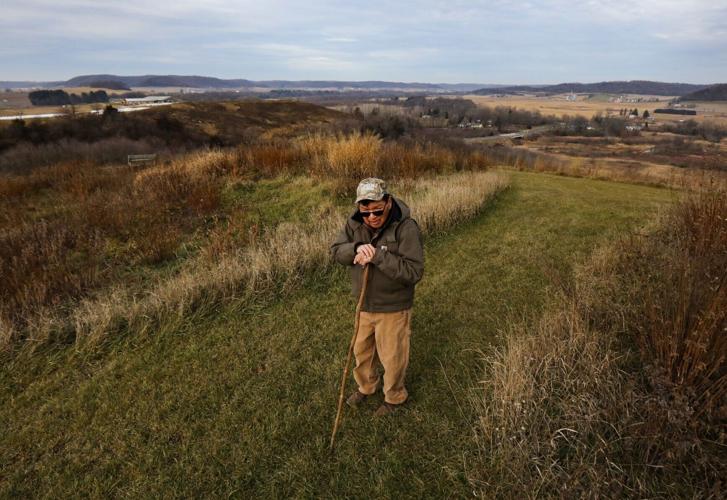
Ho-Chunk Nation elder Ritchie Brown surveys a collection of effigy mounds atop Frank’s Hill near Muscoda. Brown's ancestors, members of the Woodland Indian tribes, built thousands of effigy mounds throughout Wisconsin about 1,000 years ago. On Thursday evening, the winter solstice will be celebrated atop the east hill of Frank's Hill.

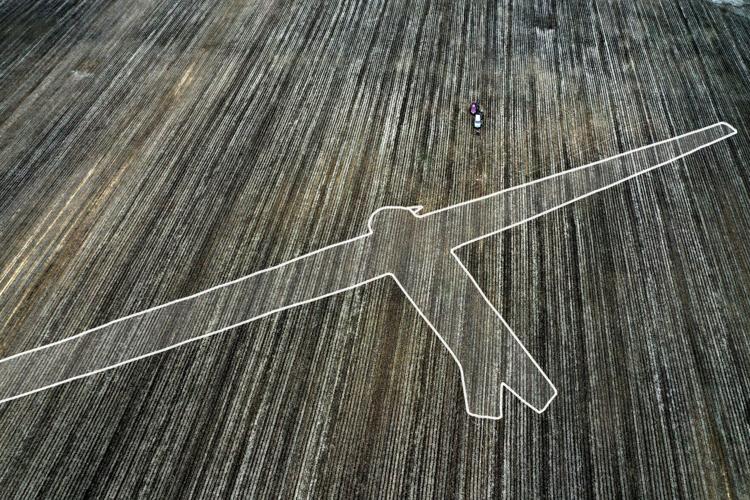
This digitally enhanced and shaded photo shows the outline of a Ghost Eagle mound with a wingspan of 1,240 feet and a 700-foot-long body. It was flattened decades ago and recently outlined in chalk.

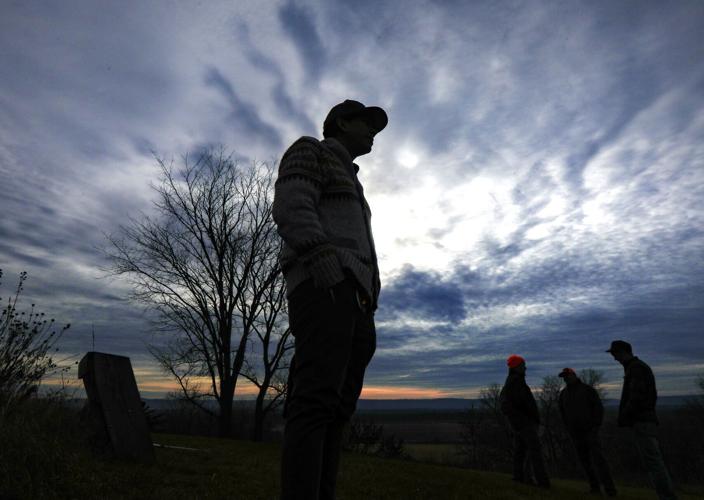
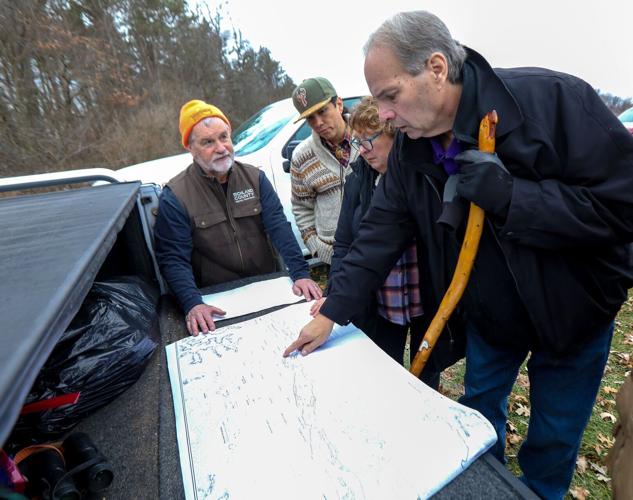
Mark Cupp, executive director of the Lower Wisconsin Riverway Board and an advocate for Native American effigy mounds, right, points out documented mounds on a map to, from left, Steve Williamson, Casey Brown and Debra Schwarze.


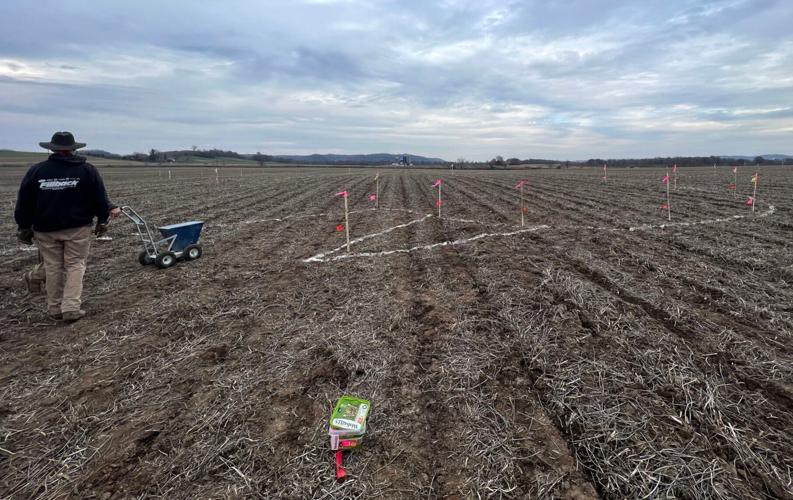
Volunteers gathered last month on this farm field near Muscoda to mark out the location of what had been a massive eagle effigy mound. Flattened decades ago by farming, the mound was created about 1,000 years ago by ancestors of the Ho-Chunk Nation.

Ho-Chunk Nation member Casey Brown visits a collection of Native American effigy mounds atop Frank’s Hill near Muscoda last week. The hill provides sweeping views of the Lower Wisconsin River Valley.
Photos: Frank's Hill and the effigy mounds around Muscoda

Volunteers in November used lime to outline the location of the Ghost Eagle, an effigy mound built about 1,000 years ago. The bird, with a wing span of 1,240 feet and a 700-foot-long body, is located northwest of Muscoda, was first discovered in the 1880s but had been flatten decades ago due to farming. Officials next want to use ground penetrating radar to see what lies beneath the surface.

Ho-Chunk Nation elder Ritchie Brown holds a pinch of Native American tobacco prior to a blessing ceremony of an effigy mound along the Wisconsin River near Muscoda.
Volunteers gathered last month on this farm field near Muscoda to mark out the location of what had been a massive eagle effigy mound. Flattened decades ago by farming, the mound was created about 1,000 years ago by ancestors of the Ho-Chunk Nation.
Ho-Chunk Nation member Casey Brown visits a collection of Native American effigy mounds atop Frank’s Hill near Muscoda last week. The hill provides sweeping views of the Lower Wisconsin River Valley.

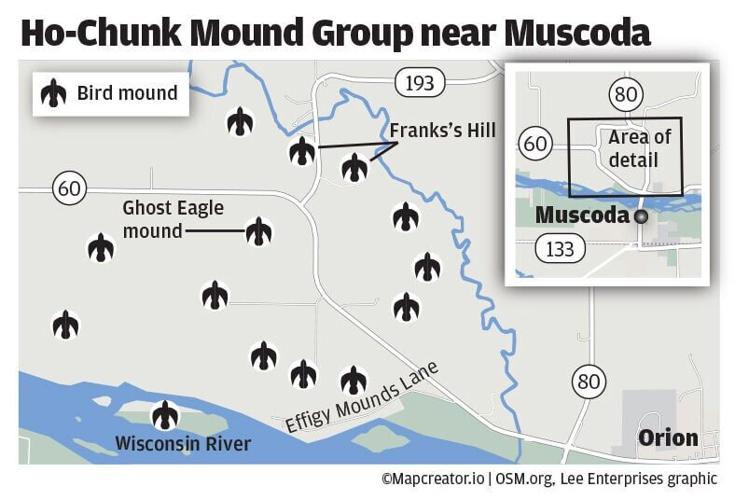
A map of the Lower Wisconsin Riverway shows documented areas of Native American effigy mounds in the shape of birds just west of Muscoda.
Mark Cupp, executive director of the Lower Wisconsin Riverway Board and an advocate for Native American effigy mounds, right, points out documented mounds on a map to, from left, Steve Williamson, Casey Brown and Debra Schwarze.
Ho-Chunk Nation elder Ritchie Brown surveys a collection of effigy mounds atop Frank’s Hill near Muscoda. Brown's ancestors, members of the Woodland Indian tribes, built thousands of effigy mounds throughout Wisconsin about 1,000 years ago. On Thursday evening, the winter solstice will be celebrated atop the east hill of Frank's Hill.

Mark Cupp, executive director of the Lower Wisconsin Riverway Board and an advocate for Native American effigy mounds, right views area mounds through binoculars from atop Frank’s Hill near Muscoda.

Ho-Chunk Nation elder Ritchie Brown and his son, Casey Brown, walk past a whitetail deer rubbing Friday while surveying several effigy mounds on Ho-Chunk-owned land along the Wisconsin River.