
Roughly $140 million in state funds — set aside to help address “forever chemicals” contaminants in Wisconsin’s waterways and support communities dealing with unexpected hospital closures — could be sitting in Madison until next year due to partisan gridlock in the Capitol.
People are also reading…
- Gateway helps graduate help family
- Gateway shows graduate the way to reaching career and life goals
- Lake Geneva Police Department’s expenses expect to increase by $411,000 in 2027
- Bucks sign 7-foot center ahead of training camp
- Residents receive information about proposed transmission line project
- Pitcher providing little evidence Brewers should have confidence in him for playoffs
- Kenosha Laborfest set to return in lakside park on Labor Day
- Kyle Harrison did himself no favors in Brewers' loss to Cubs by tipping pitches
- Rookie wide receiver looks to continue Packers' decades-long tradition
- Yerkes Foundation hosting 'Cosmic Construction' fundraiser
- Prominent UW-Madison professor agrees to resign after investigation
- Where does Brewers prospect Andrew Fischer rank on minors HR record?
- In Waunakee, it's live mariachi music amid the bananas, fried chicken and yogurt
- Lake Geneva Avian Committee hosting annual Swift Night Out
- Records: UW-Madison professor engaged in sex with students, exploited 'power imbalance'

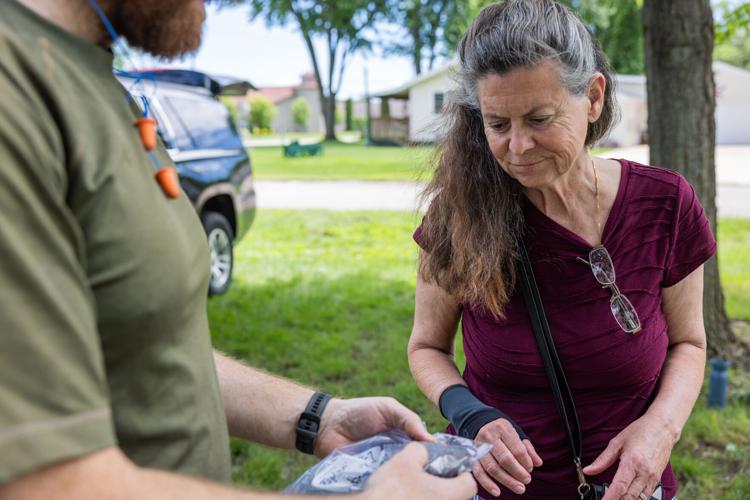
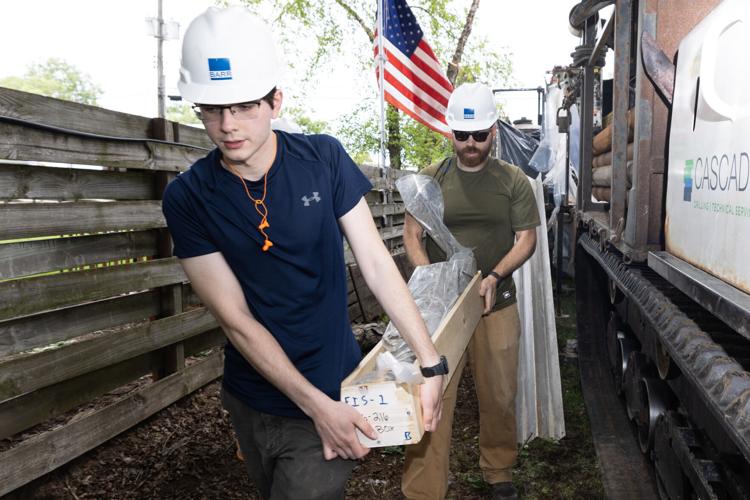
Town of Campbell Supervisor Lee Donahue observes rock samples extracted from a drilling site on French Island earlier this month. An impasse between the governor and the Legislature is holding up tens of millions of dollars in PFAS remediation grants that could help communities like Campbell pay for costly infrastructure improvements.
Saskia Hatvany, La Crosse Tribune
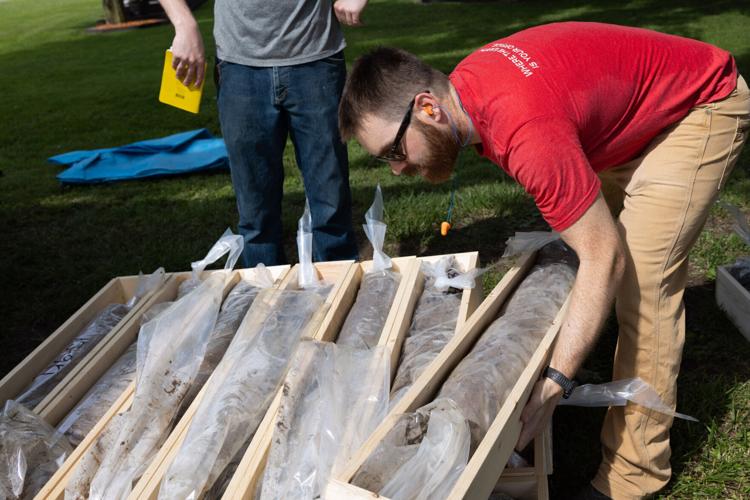
Christopher Zahasky, associate professor in the Department of Geoscience at UW-Madison, stacks rock samples extracted from the drilling site on French Island. Three wells are being drilled to help identify PFAS migration in the area.
Saskia Hatvany, La Crosse Tribune
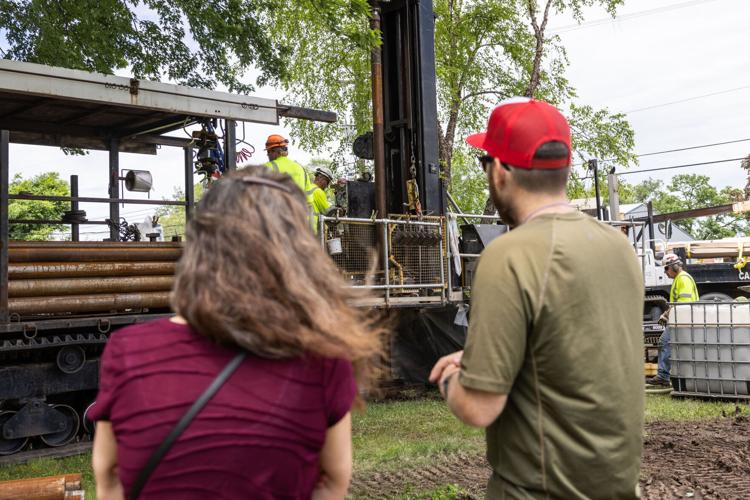
Town of Campbell supervisor Lee Donahue and UW-Madison associate professor Chris Zahasky watch as one of three wells is drilled on French Island, where a majority of wells were found to be contaminated with PFAS. The project will help researchers determine weather the Mount Simon aquifer, located below the surface water table, is a safe municipal well source.
Saskia Hatvany, La Crosse Tribune
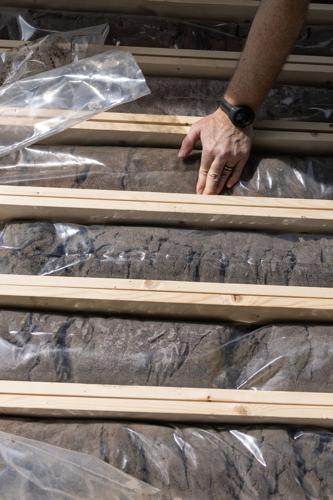
UW-Madison associate professor Chris Zahasky examines the extracted rock and sand from the drilling site on French Island. University researchers will study the samples to determine how they interact with polyfluoroalkyl substances (PFAS).
Saskia Hatvany, La Crosse Tribune
UW-Madison student Paul Summers and associate professor Christopher Zahasky transport a core from a drilling site in Campbell. The rock extracted from the drilling process will be catalogued and studied by students and professors with the university's department of geoscience.
Saskia Hatvany, La Crosse Tribune
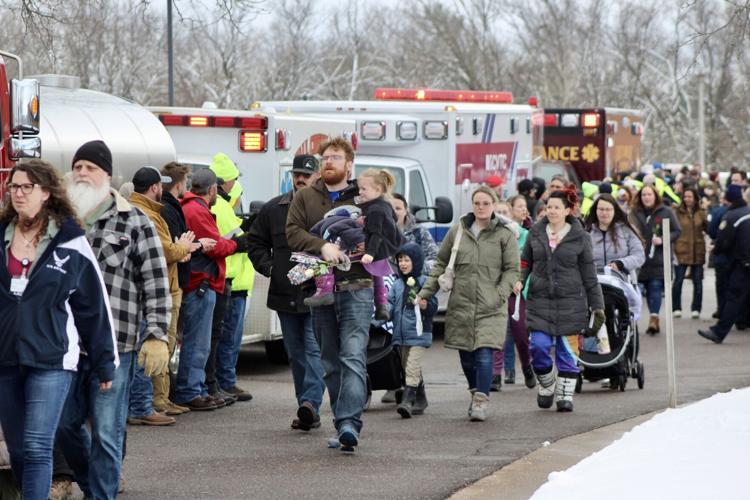
Hospital staff participate in an honor walk in front of HSHS St. Joseph’s Hospital in Chippewa Falls in March. Gov. Tony Evers and GOP lawmakers are at an impasse over funding for hospitals in western Wisconsin to help mitigate the impact of the closures of Hospital Sisters Health System and Prevea Health facilities in the Chippewa Valley.
Audrey Korte, River Valley Media Group

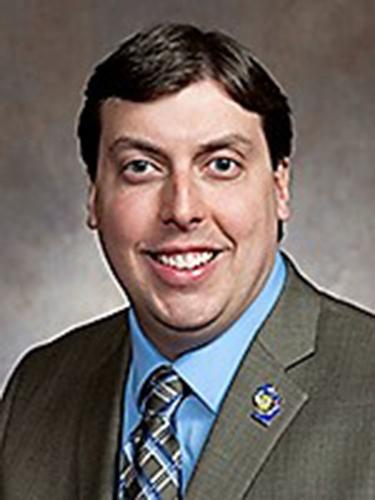
Born
Marklein

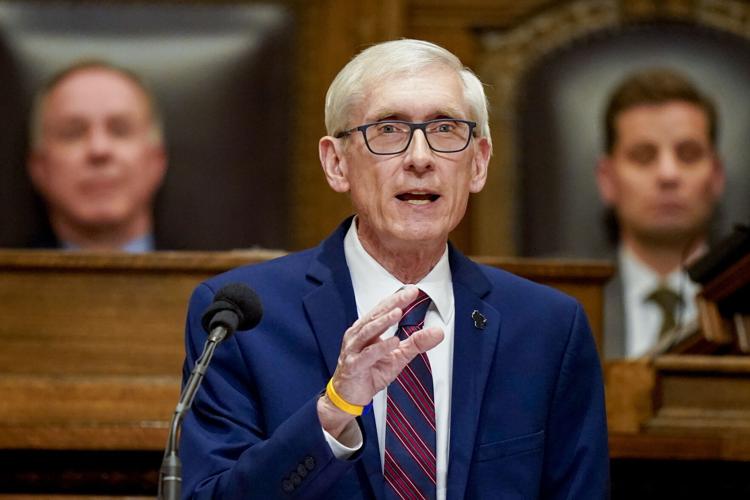
Evers
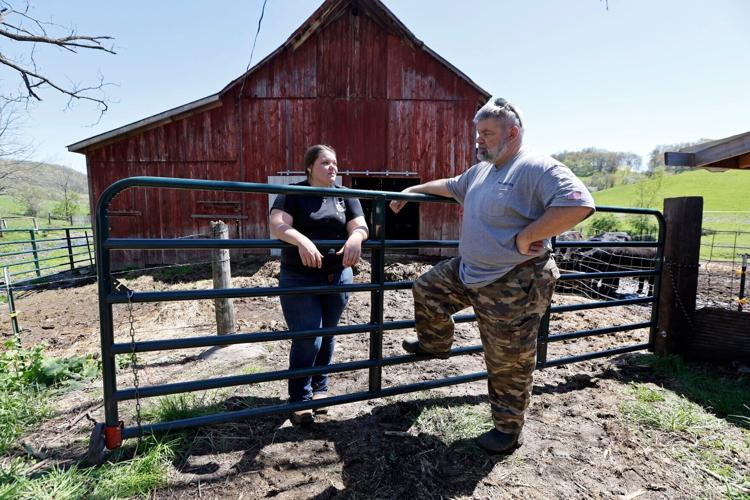
Lund and her dad, J.J. Lund, on the family farm where Emily lives and raises animals in Richland Center. J.J. still lives in Mukwonago more than two hours away but will make the drive out to Emily's farm to help whenever she needs assistance. He sees how determined Emily is to get her bachelor's degree after the local UW campus shuttered. “She’s going to get (her degree) one way or another,” J.J. Lund said. “They took something away, and they didn't give any facility to support it … and now it's a wasted year, wasted tuition, some wasted experiences, in a sense.”
- AMBER ARNOLD, STATE JOURNAL
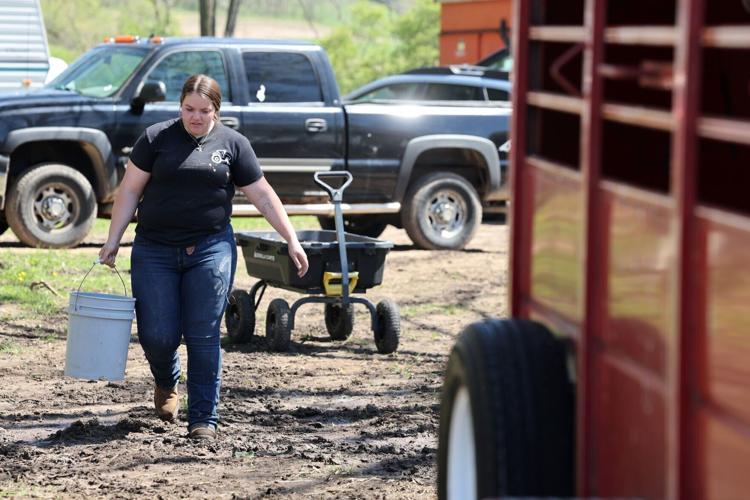
Emily Lund carries feed to the beef cattle she raises on the family farm she revived just outside of Richland Center. She previously attended one of the Universities of Wisconsin's two-year branch campuses, in Richland Center, to get her degrees in agricultural business and science, but when that was ordered to close last year, she opted for UW-Madison, an hour and a half away.
- AMBER ARNOLD, STATE JOURNAL
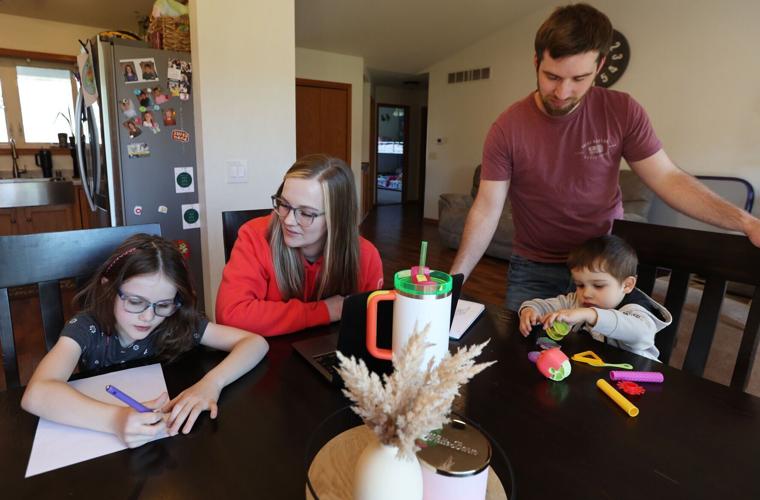
Morgan Biba, a student at Mid-State Technical College, watches as her daughter, Kaydence, 7, writes down complicated math problems, while her husband, Johnathan, interacts with their 3-year-old, Elliott. Morgan is a nursing student who relies on Mid-State's Adams branch so she doesn't have to travel as far to get her degree and can spend more time with her family.
- AMBER ARNOLD, STATE JOURNAL
Morgan Biba, a student at Mid-State Technical College, said the semesters where she'd need to travel more than an hour away to Wisconsin Rapids for classes were hard on her family. Johnathan has a job that allows him to be with their children during the afternoon and early evening hours, but it put a large strain on him, too.
- AMBER ARNOLD, STATE JOURNAL
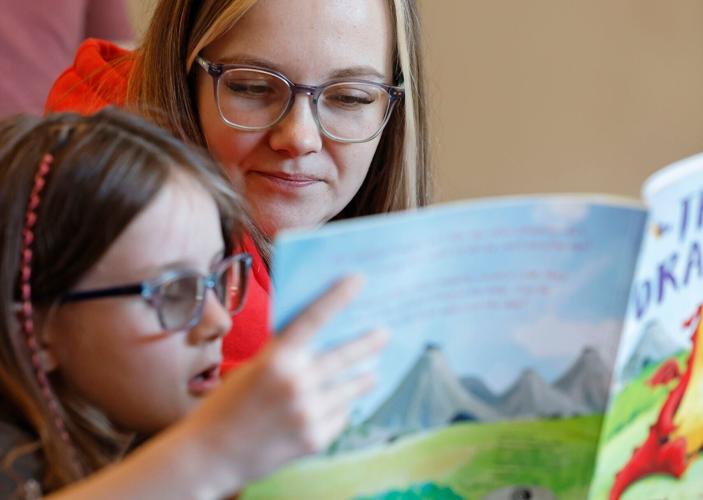
Morgan Biba, a student at Mid-State Technical College, listens to her daughter, Kaydence, 7, read "The Littlest Dragon" at the kitchen table. Morgan will often do her nursing homework alongside her daughter after getting home from classes at the Adams branch.
- AMBER ARNOLD STATE JOURNAL
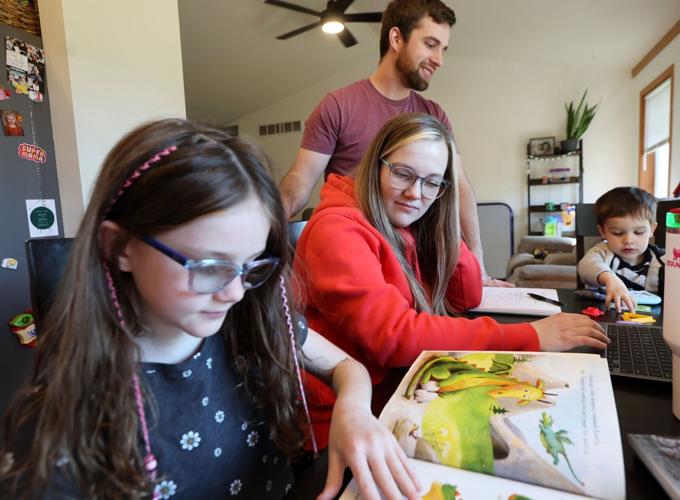
Morgan Biba, a student at Mid-State Technical College, listens to her daughter, Kaydence, 7, read, as her husband, Johnathan, helps with their 3-year-old, Elliott, with Spanish flash cards at the kitchen table in their home in Endeavor.
- AMBER ARNOLD, STATE JOURNAL
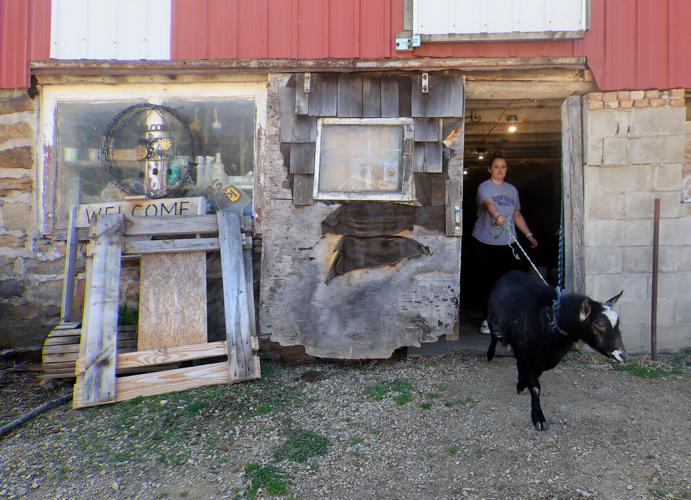
Madison College student Amara O’Leary walks with her goat Billy on her family’s farm in La Valle. She lives about 10 minutes from both a regional campus in Reedsburg and her job at the Sauk County Health Care Center, which is vital for her as she works through her nursing degree. If O'Leary didn't have local access to college, she likely wouldn't go, she said.
- JOHN HART, STATE JOURNAL
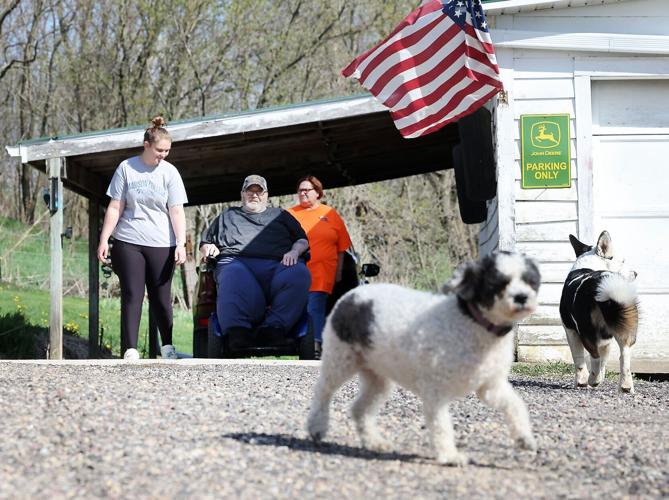
Amara O’Leary, left, is often "on call" to help her grandfather, George McPherson, center, as health conditions have limited his mobility and repeated surgeries have required O'Leary and other family members to pitch in and help him with recovery. Having the nearby Madison College campus in Reedsburg allows O'Leary to be around to help. "I think it's a great idea (for O'Leary to be a nurse) because she'll always have a job," McPherson said. "It's something that people like me need."
- JOHN HART, STATE JOURNAL
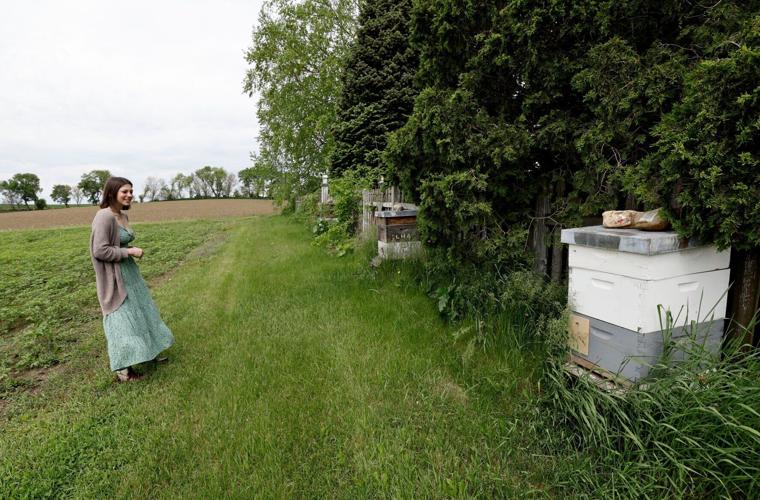
Avery Simpson, a UW-Madison senior and College for Rural Wisconsin ambassador, shows the beehives she cares for on her family’s farmette south of Brooklyn. Simpson spent her first two years of high school in Evansville before transferring to Oregon and saw firsthand the differences in school districts' approach to college.
- AMBER ARNOLD, STATE JOURNAL
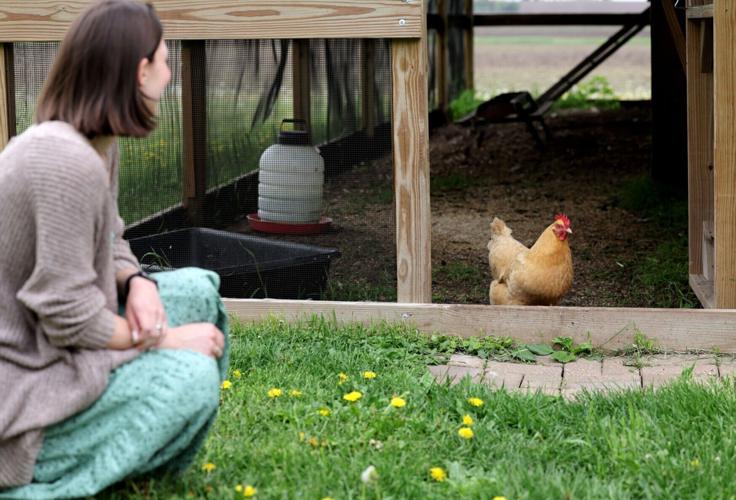
On the Simpson farmette, everything is a family affair. From helping run their parents' small businesses by pouring candles in the kitchen, caring for a dozen chickens and helping Avery Simpson, the middle of three daughters, harvest and process honey from her bees, everyone in the family pitches in — a reality shared by many rural families.
- AMBER ARNOLD, STATE JOURNAL
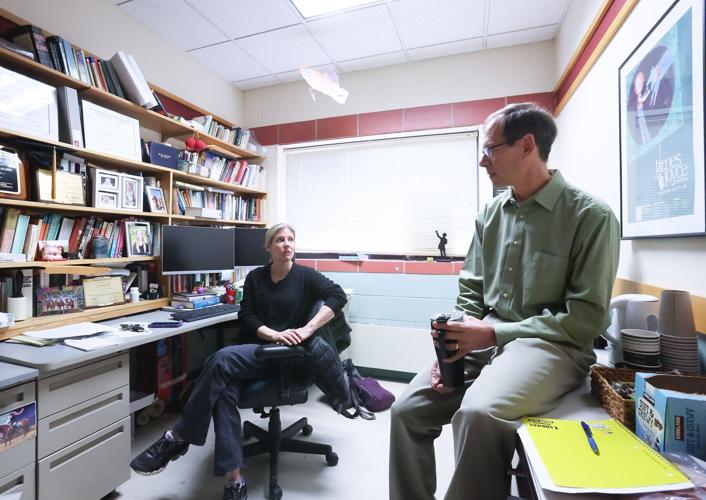
University of Wisconsin-Platteville at Baraboo professor Katie Kalish and Administrative Director Stephen Swallen say they see a lot of first-generation and adult college students at the Baraboo campus. "They just feel that UW-Madison is too big for them and they're not quite ready for such a large place," Swallen said. "(They're) getting their feet wet in higher education, so we help them figure out (what) their goals are going to be, because most of our students come majoring in completely undecided."
- JOHN HART, STATE JOURNAL
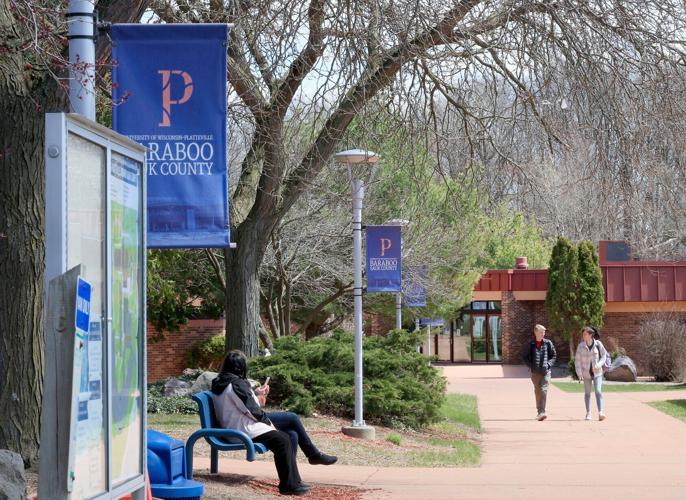
Sauk County board members voted earlier this year to put up county funds to bridge the budgetary gaps that UW-Platteville at Baraboo Sauk County is expected to face in the next two years. Sauk County is one of the richest counties that expects to have a Universities of Wisconsin branch campus after spring 2025, but the county's ability to step up financially might not be a viable solution for other counties with a branch campus in trouble.
- JOHN HART, STATE JOURNAL
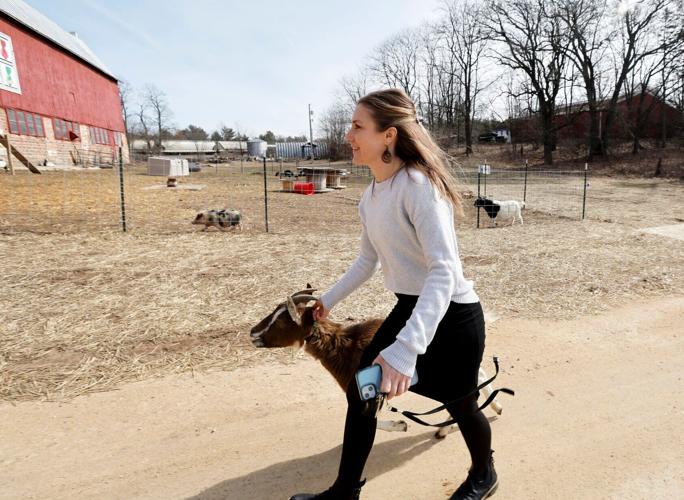
Allison Hoch, principal at Wisconsin Dells High School, walks a loose goat back to the barn on the school property in Wisconsin Dells. The high school is one of a handful around the state that have farms on campus, this one a relic from the family that sold the school district the land for the new high school. Here, students can learn about farming, animal care and crop maintenance.
- AMBER ARNOLD, STATE JOURNAL
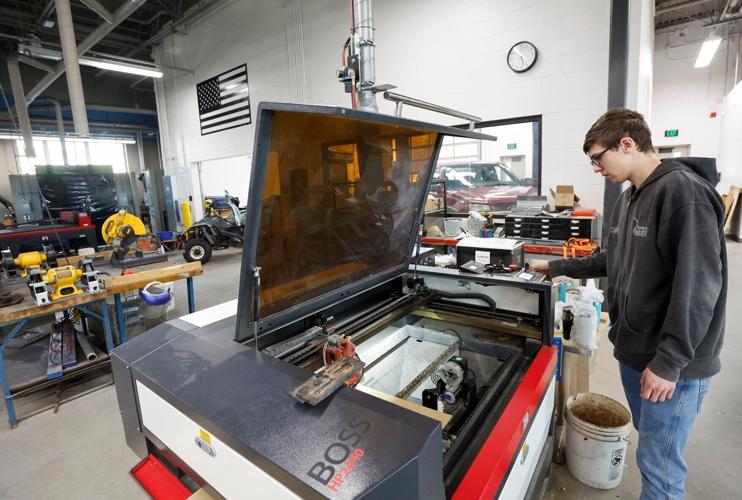
Senior Andrew Seiler works on a laser engraver in the shop at Wisconsin Dells High School. The Wisconsin Dells School District is one of many in rural areas that's investing in Career and Technical Education programs; expanded shop areas were part of a bid for Wisconsin Dells' recently built high school in 2020.
- AMBER ARNOLD, STATE JOURNAL
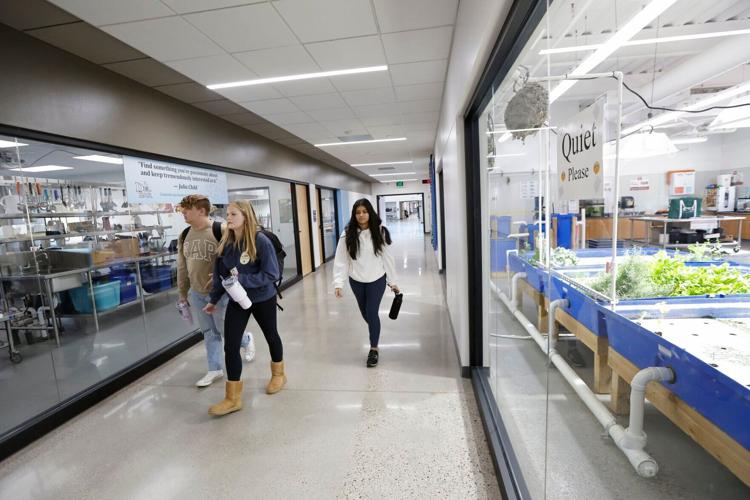
Wisconsin Dells High School seniors, from left, Nick Meller, Claira Weaver and Jaquelin Barrita, walk to their veterinary science and culinary classes at Wisconsin Dells High School. Many Wisconsin Dells High School students are pursuing college degrees, but administrators also have increased efforts to encourage students to find their own path, whether or not it includes a four-year degree.
- AMBER ARNOLD, STATE JOURNAL
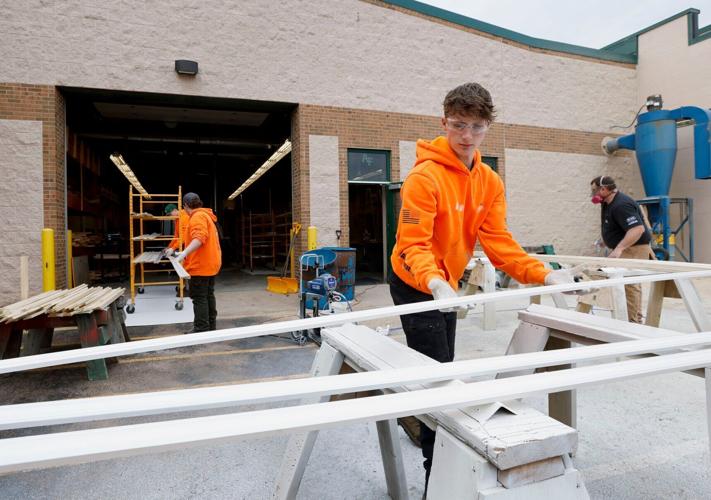
Senior Ian Cole handles recently painted trim work that will be used in a house that students are helping to build for a community member, in the advanced construction class at Adams-Friendship High School. Cole initially entered high school thinking he would go for a four-year college degree but instead found he loved construction and plans to attend a technical college program for it. "Starting in middle school, I started taking a lot of advanced math classes. (My) seventh grade year, I was taking Algebra 1, so I always looked at like a career somewhere involving math, but never really thought the construction route," Cole said. "Coming into high school, I was thinking more something like accounting or working in the bank or something like that. Just because it's all numbers, you know?"
- AMBER ARNOLD, STATE JOURNAL
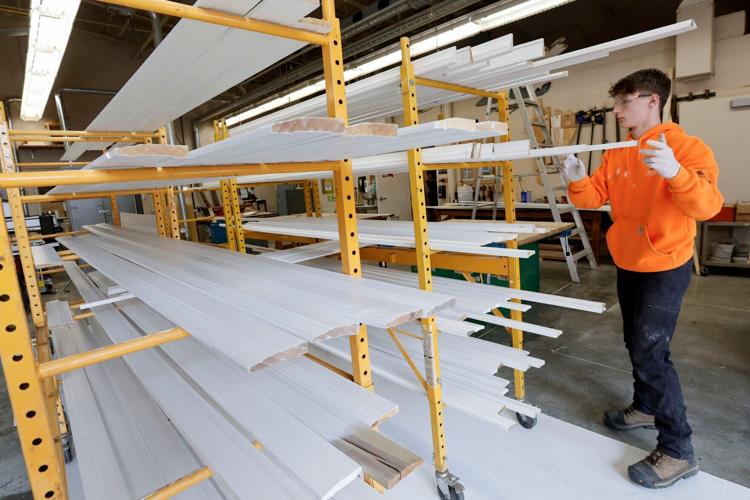
Senior Ian Cole handles recently painted trim work that will be used in a house that students are helping to build for a community member, in the advanced construction class at Adams-Friendship High School in Adams, Wis., Friday, Feb. 23, 2024. AMBER ARNOLD, STATE JOURNAL
- AMBER ARNOLD STATE JOURNAL
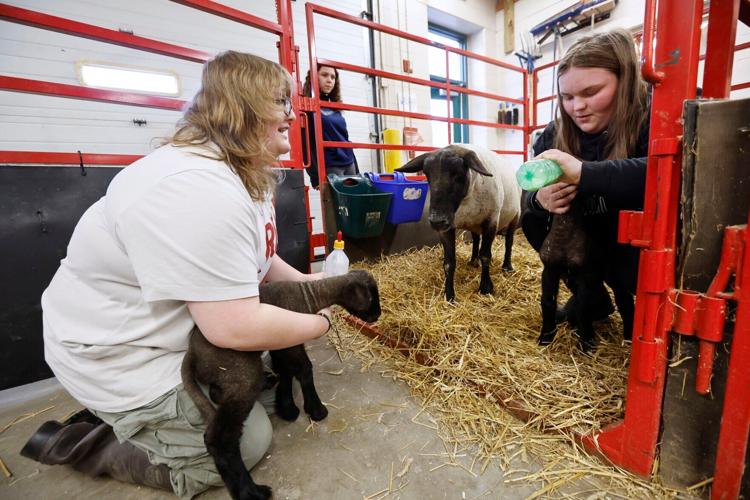
Junior Savannah Bednar, left, and sophomore Destany Amell bottle feed lambs in their agriculture class at Adams-Friendship High School in Adams. In rural areas, high schools are starting to put more emphasis on students pursuing what they want to do post-high school and less on pushing four-year college degrees.
- AMBER ARNOLD, STATE JOURNAL
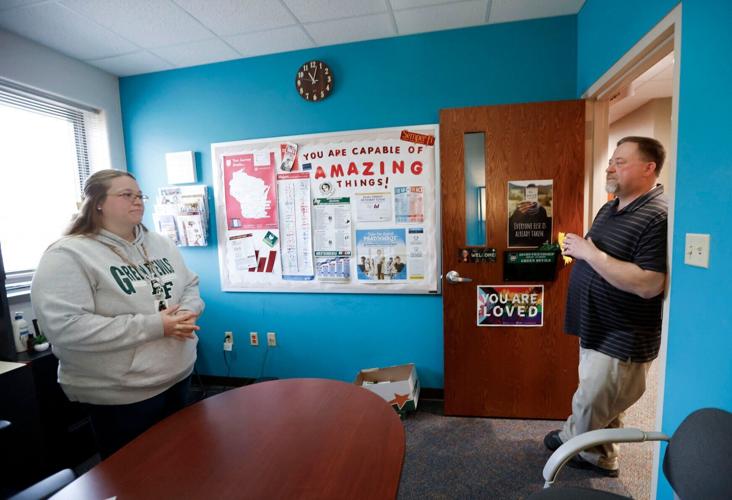
Adams-Friendship High School counselors Kelsey Chojnacki, left, and Tim Jensen talk in Chojnacki’s office. Together, they manage most of the high school students who live in Adams County, based on the sheer size of the rural school district. "We promote not trying to get students to decide to go to college or tech school so much as, 'What do you want to do, what are you what are your abilities, your skills, your interests, your aptitude and how can we help you get there?'" Jensen said.
- AMBER ARNOLD, STATE JOURNAL
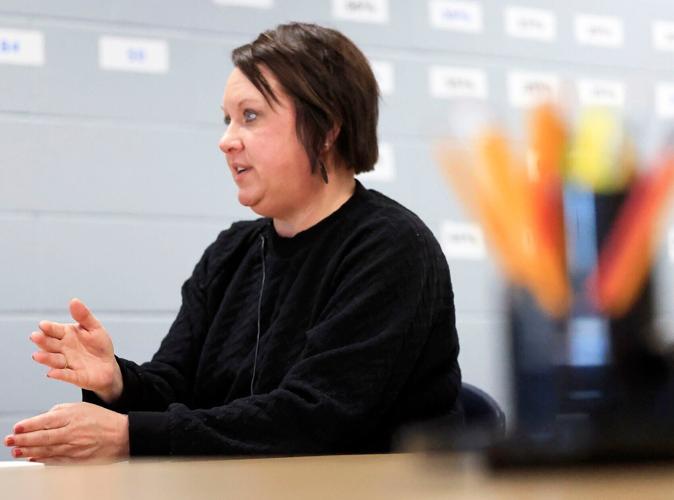
Nekoosa High School Student Services Coordinator Brehon Hoffman helps manage more than 300 students at Nekoosa High School, stepping in for the school's single guidance counselor, who was out on medical leave. Hoffman is the in-between for students: How urgent is their issue, and if it's related to college, how can she help get them information? "They don't have the path at home or they have parents that haven't gone to college ... they're coming in saying, 'I don't know what I'm supposed to be doing, what do I do, where do I go? A lot of it is a live and learn. We don't have all the answers either, but we certainly like to give them places to go."
- JOHN HART, STATE JOURNAL
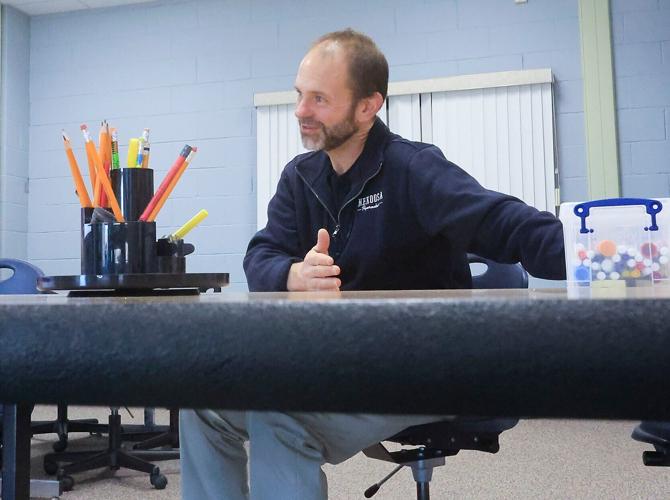
Nekoosa High School Principal Keith Johnson said he's seeing an incredible amount of apathy and "terminal thinking" with high school students. It's always existed, he said, but it seems to that increasingly students don't have a post-high school plan.
- JOHN HART, STATE JOURNAL
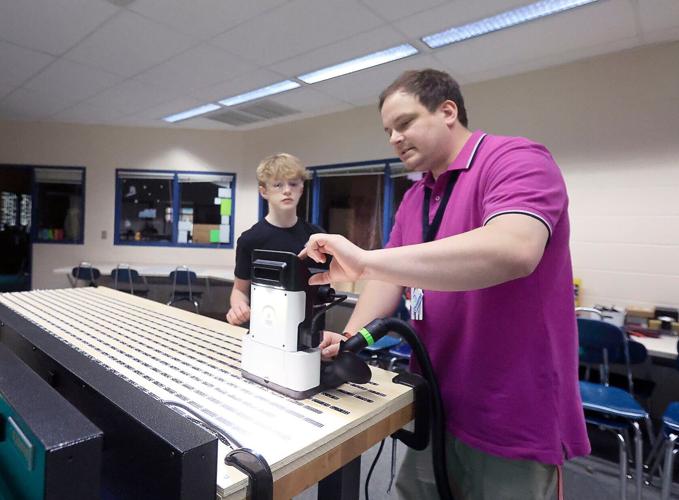
Nekoosa High School tech ed instructor Benjamin Peters guides a student in an engraving exercise at the district’s middle school in Nekoosa. There, students at all grade levels are given age-appropriate exposure to career and technical education topics.
- JOHN HART, STATE JOURNAL
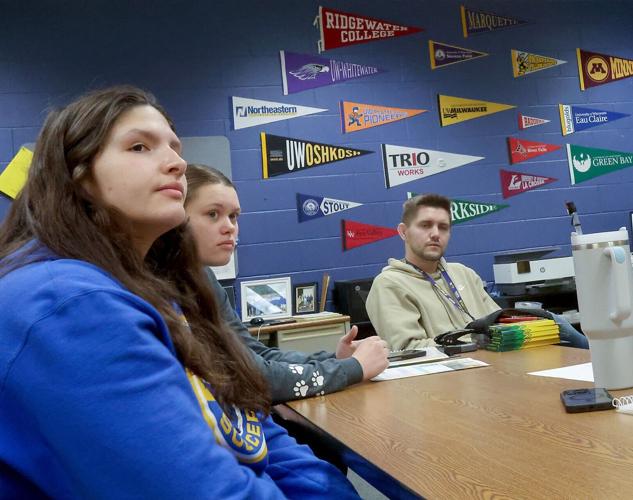
Students participating in Mauston High School’s Upward Bound program, including Brooke Braunschweig, left, talk about summer opportunities. Braunschweig, who is attending UW-Stout this fall, will be the first of her four siblings to leave the Mauston area, despite being the youngest. She isn't the first to attempt college, though: Both her mother and her next oldest brother had taken a few classes at Western Technical College but found the hour-long trip each way where most of classes were held to be taxing.
- JOHN HART, STATE JOURNAL
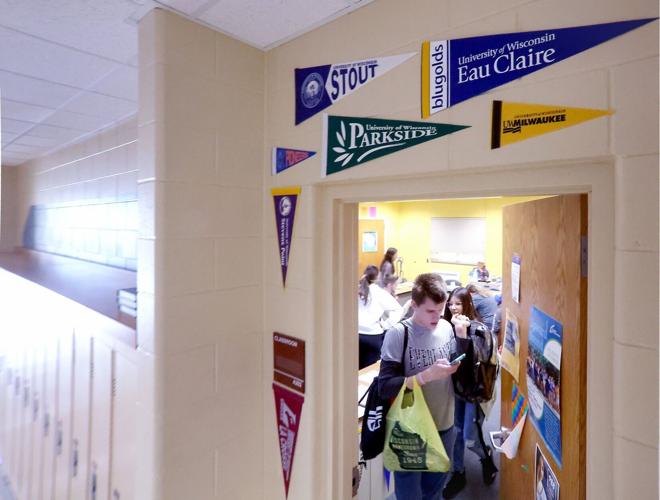
Students participating in Mauston High School’s Upward Bound program head to class after a meeting at the school. Advisers to the program see the difference it makes for their 64 students and often wish it could be expanded. “If this was something that could be more available to other kids, that would be cool, but also just encouraging kids in general, from a school administrative standpoint (to) just pursue some path in some way, even if it's not college-based, it's tech-based,” John Maki, one of the advisers for Upward Bound, said.
- JOHN HART, STATE JOURNAL
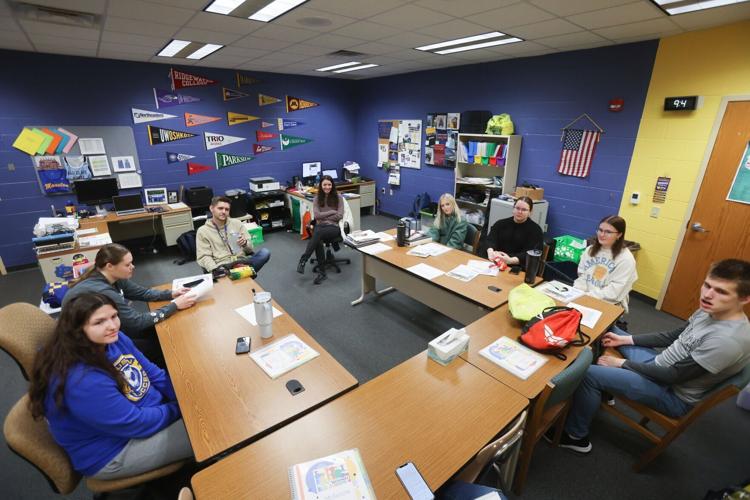
Students participating in Mauston High School’s Upward Bound program gather at the school in Mauston. Upward Bound is a federally funded program that provides information about going to college, financial aid and applying for scholarships to students who are rural, first-generation or live in poverty.
- JOHN HART, STATE JOURNAL
Collection: A look at rural higher education access across the state
Lund and her dad, J.J. Lund, on the family farm where Emily lives and raises animals in Richland Center. J.J. still lives in Mukwonago more than two hours away but will make the drive out to Emily's farm to help whenever she needs assistance. He sees how determined Emily is to get her bachelor's degree after the local UW campus shuttered. “She’s going to get (her degree) one way or another,” J.J. Lund said. “They took something away, and they didn't give any facility to support it … and now it's a wasted year, wasted tuition, some wasted experiences, in a sense.”
- AMBER ARNOLD, STATE JOURNAL
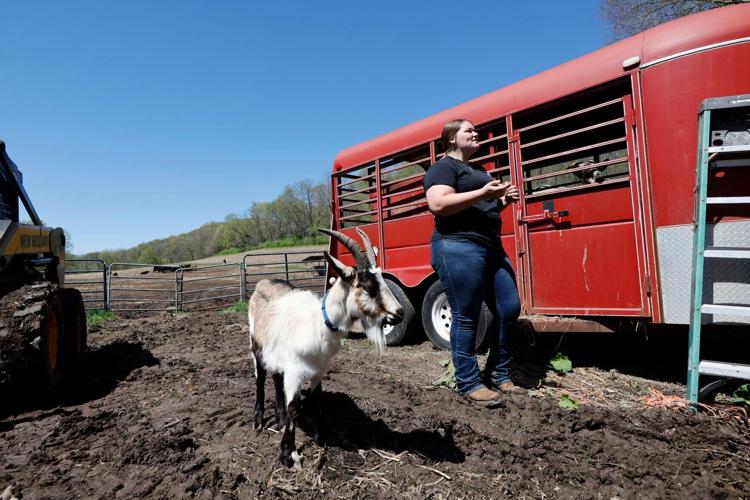
Emily Lund, with her goat, Michael, on her family’s property where she lives and raises farm animals in Richland Center. Michael doubles as an official therapy pet, Lund said.
- AMBER ARNOLD STATE JOURNAL
Emily Lund carries feed to the beef cattle she raises on the family farm she revived just outside of Richland Center. She previously attended one of the Universities of Wisconsin's two-year branch campuses, in Richland Center, to get her degrees in agricultural business and science, but when that was ordered to close last year, she opted for UW-Madison, an hour and a half away.
- AMBER ARNOLD, STATE JOURNAL
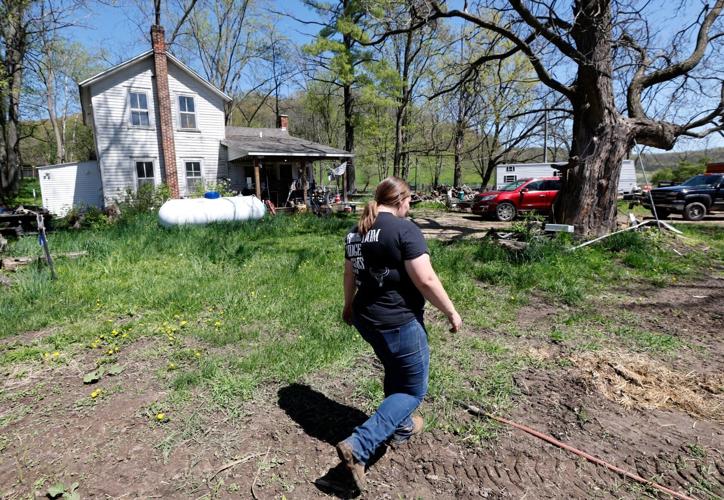
Emily Lund restarted the Richland Center area farm, which has sat in her family for generations but went unfarmed for more than 150 years. She moved there from Mukonago three years ago after taking an interest in cattle.
- AMBER ARNOLD, STATE JOURNAL
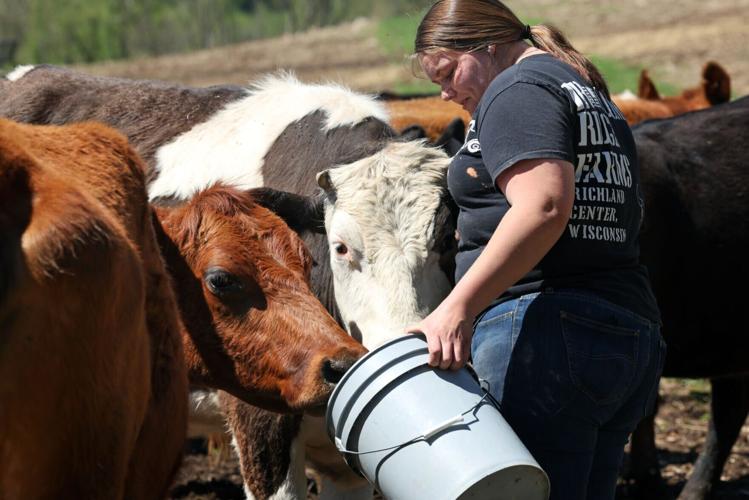
Emily Lund, who grew up in Mukwonago, cares for dozens of animals full time while trying to get her bachelor's degree.
- AMBER ARNOLD, STATE JOURNAL
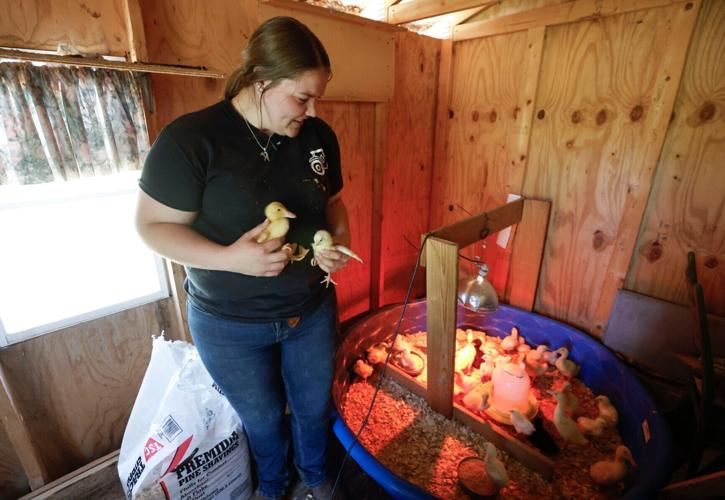
Emily Lund is raising ducklings and chicks. Previously, when the Richland Center campus closed last summer, she had to sell off some of her birds to reduce her workload at the farm.
- AMBER ARNOLD STATE JOURNAL
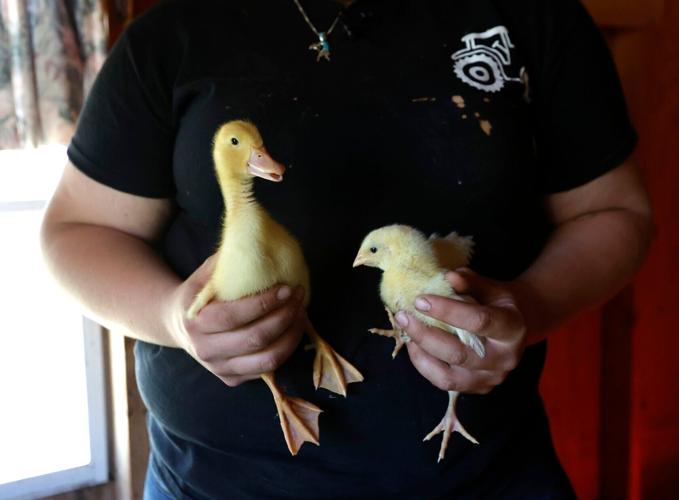
Emily Lund shows the ducklings and chicks she raises on her family’s property in Richland Center.
- AMBER ARNOLD, STATE JOURNAL
Morgan Biba, a student at Mid-State Technical College, watches as her daughter, Kaydence, 7, writes down complicated math problems, while her husband, Johnathan, interacts with their 3-year-old, Elliott. Morgan is a nursing student who relies on Mid-State's Adams branch so she doesn't have to travel as far to get her degree and can spend more time with her family.
- AMBER ARNOLD, STATE JOURNAL
Morgan Biba, a student at Mid-State Technical College, said the semesters where she'd need to travel more than an hour away to Wisconsin Rapids for classes were hard on her family. Johnathan has a job that allows him to be with their children during the afternoon and early evening hours, but it put a large strain on him, too.
- AMBER ARNOLD, STATE JOURNAL
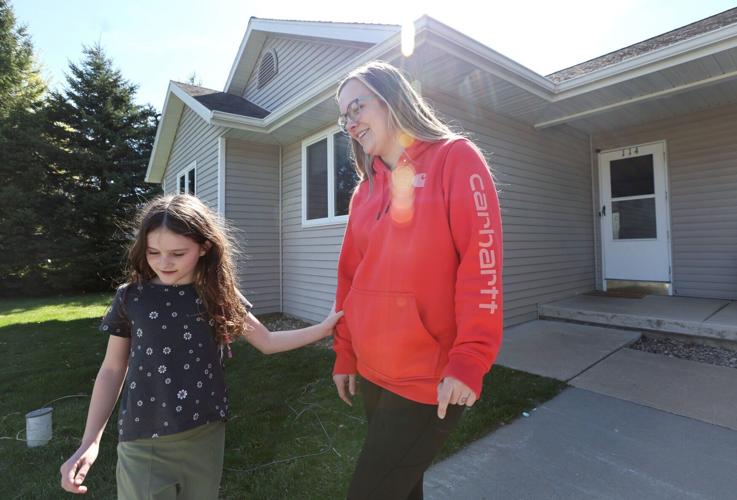
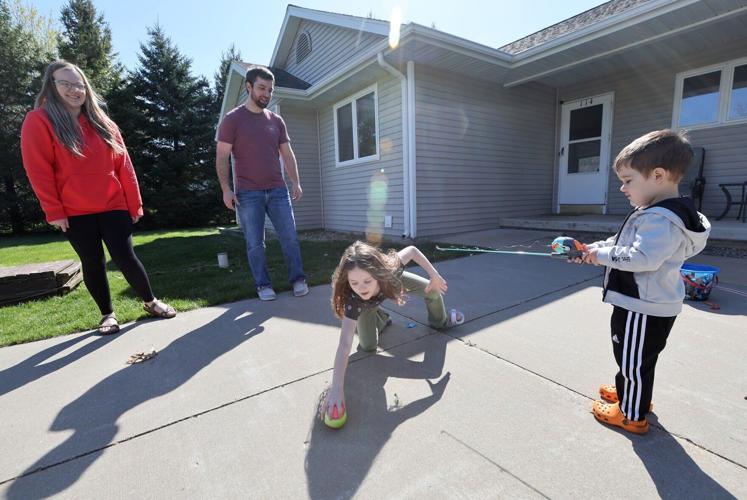
Morgan Biba, a student at Mid-State Technical College, with her daughter, Kaydence, 7, spend time outside after school at their home in Endeavor.
- AMBER ARNOLD STATE JOURNAL
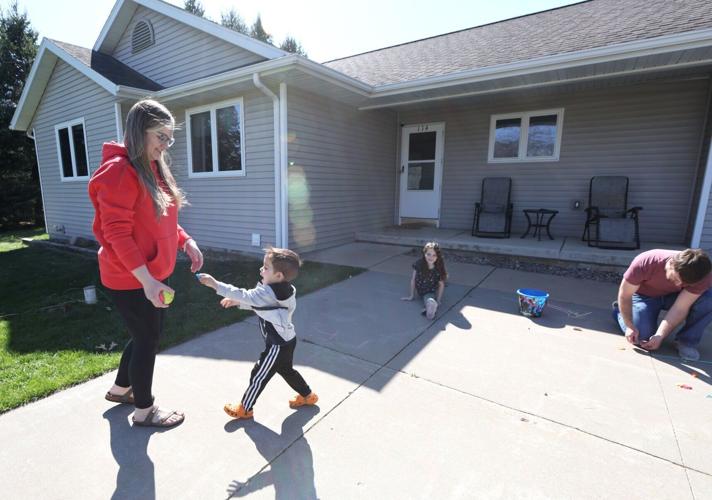
Morgan Biba, a student at Mid-State Technical College, with husband, Johnathan, right, and kids, Elliott, 3, and Kaydence, 7, play outside after school at their home in Endeavor.
- AMBER ARNOLD, STATE JOURNAL
Morgan Biba, a student at Mid-State Technical College, listens to her daughter, Kaydence, 7, read "The Littlest Dragon" at the kitchen table. Morgan will often do her nursing homework alongside her daughter after getting home from classes at the Adams branch.
- AMBER ARNOLD STATE JOURNAL
Morgan Biba, a student at Mid-State Technical College, listens to her daughter, Kaydence, 7, read, as her husband, Johnathan, helps with their 3-year-old, Elliott, with Spanish flash cards at the kitchen table in their home in Endeavor.
- AMBER ARNOLD, STATE JOURNAL
Madison College student Amara O’Leary walks with her goat Billy on her family’s farm in La Valle. She lives about 10 minutes from both a regional campus in Reedsburg and her job at the Sauk County Health Care Center, which is vital for her as she works through her nursing degree. If O'Leary didn't have local access to college, she likely wouldn't go, she said.
- JOHN HART, STATE JOURNAL
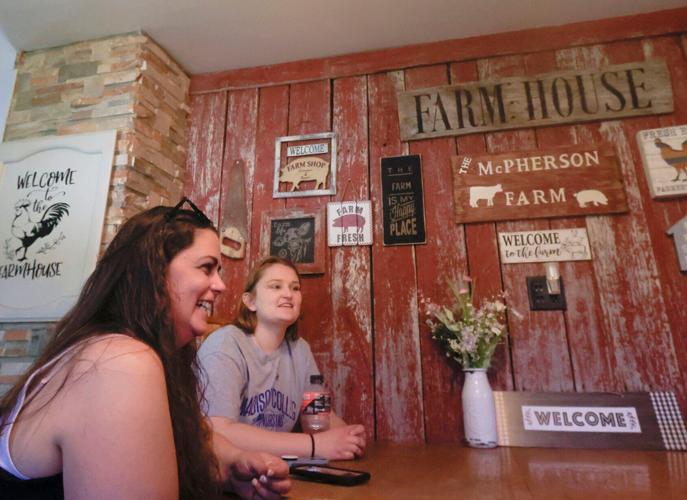
Michelle McPherson and her daughter, Amara O’Leary, converse in La Valle, Wis. home Saturday, April 27, 2024. JOHN HART, STATE JOURNAL
- JOHN HART STATE JOURNAL
Amara O’Leary, left, is often "on call" to help her grandfather, George McPherson, center, as health conditions have limited his mobility and repeated surgeries have required O'Leary and other family members to pitch in and help him with recovery. Having the nearby Madison College campus in Reedsburg allows O'Leary to be around to help. "I think it's a great idea (for O'Leary to be a nurse) because she'll always have a job," McPherson said. "It's something that people like me need."
- JOHN HART, STATE JOURNAL
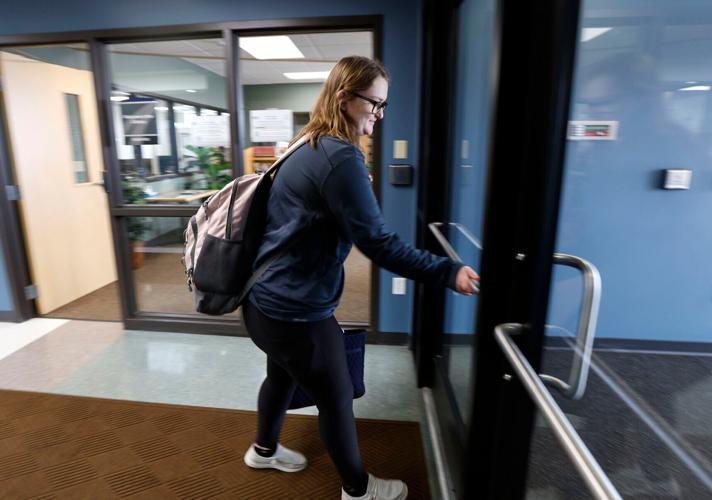
Amara O’Leary leaves Madison Area Technical College’s Reedsburg Campus after finishing up class in Reedsburg, Wis., Thursday, April 4, 2024. AMBER ARNOLD, STATE JOURNAL
- AMBER ARNOLD STATE JOURNAL
Avery Simpson, a UW-Madison senior and College for Rural Wisconsin ambassador, shows the beehives she cares for on her family’s farmette south of Brooklyn. Simpson spent her first two years of high school in Evansville before transferring to Oregon and saw firsthand the differences in school districts' approach to college.
- AMBER ARNOLD, STATE JOURNAL
On the Simpson farmette, everything is a family affair. From helping run their parents' small businesses by pouring candles in the kitchen, caring for a dozen chickens and helping Avery Simpson, the middle of three daughters, harvest and process honey from her bees, everyone in the family pitches in — a reality shared by many rural families.
- AMBER ARNOLD, STATE JOURNAL
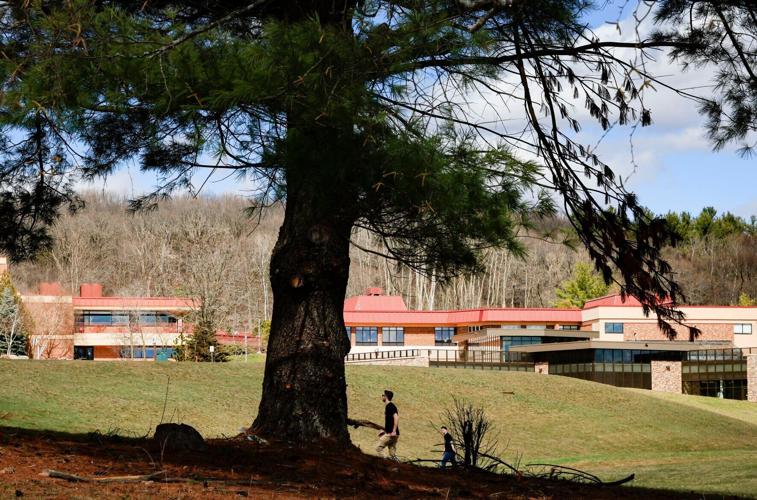
Campus of UW-Platteville at Baraboo in Baraboo, Wis. Tuesday, April 9, 2024. JOHN HART, STATE JOURNAL
- JOHN HART STATE JOURNAL
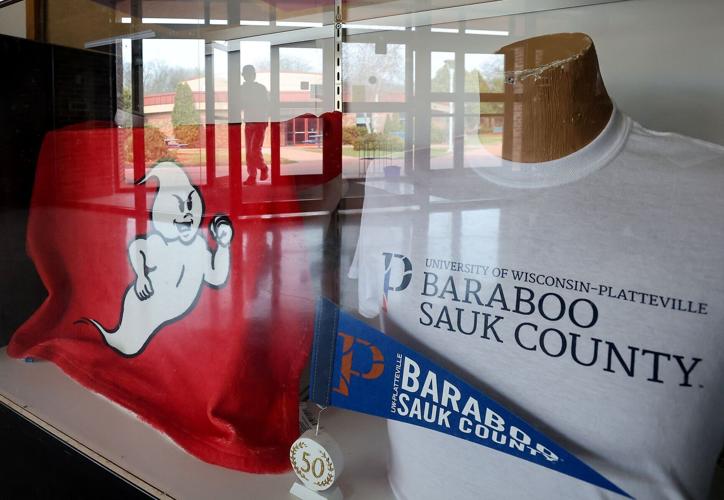
Merchandise promoting the University of Wisconsin-Platteville at Baraboo’s Fighting Spirits mascot are displayed on the campus in Baraboo, Wis. Tuesday, March 19, 2024. JOHN HART, STATE JOURNAL
- JOHN HART STATE JOURNAL
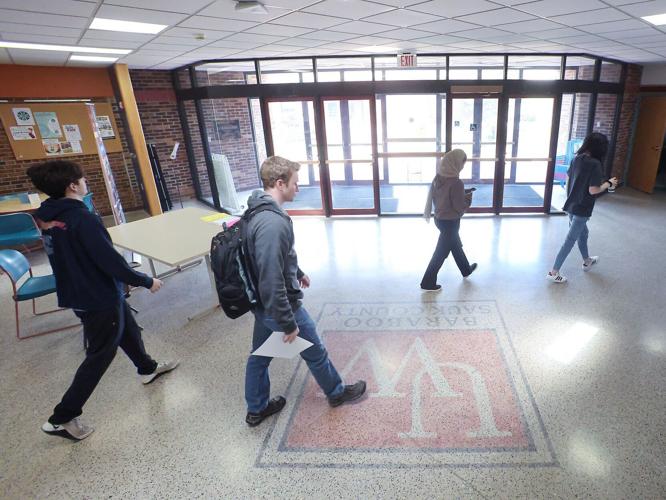
UW-Platteville at Baraboo students make their way to classes on the campus in Baraboo.
- JOHN HART, STATE JOURNAL
University of Wisconsin-Platteville at Baraboo professor Katie Kalish and Administrative Director Stephen Swallen say they see a lot of first-generation and adult college students at the Baraboo campus. "They just feel that UW-Madison is too big for them and they're not quite ready for such a large place," Swallen said. "(They're) getting their feet wet in higher education, so we help them figure out (what) their goals are going to be, because most of our students come majoring in completely undecided."
- JOHN HART, STATE JOURNAL
Sauk County board members voted earlier this year to put up county funds to bridge the budgetary gaps that UW-Platteville at Baraboo Sauk County is expected to face in the next two years. Sauk County is one of the richest counties that expects to have a Universities of Wisconsin branch campus after spring 2025, but the county's ability to step up financially might not be a viable solution for other counties with a branch campus in trouble.
- JOHN HART, STATE JOURNAL
Allison Hoch, principal at Wisconsin Dells High School, walks a loose goat back to the barn on the school property in Wisconsin Dells. The high school is one of a handful around the state that have farms on campus, this one a relic from the family that sold the school district the land for the new high school. Here, students can learn about farming, animal care and crop maintenance.
- AMBER ARNOLD, STATE JOURNAL
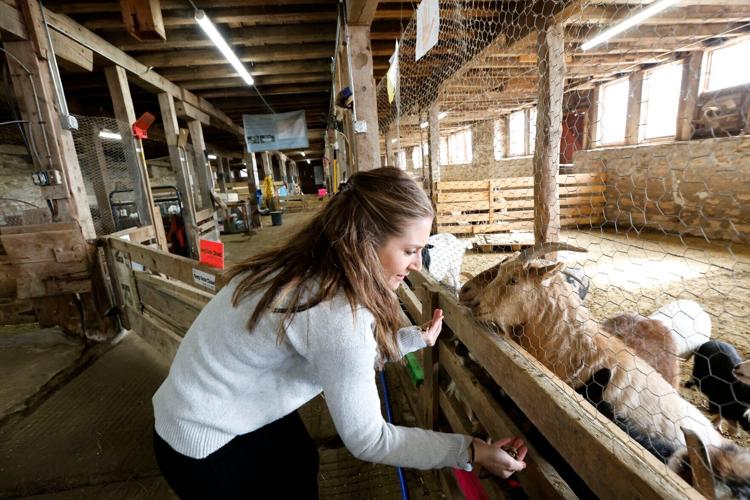
Allison Hoch, principal at Wisconsin Dells High School, feeds the goats as she gives a tour of the school’s barn in Wisconsin Dells, Wis., Monday, Feb. 26, 2024. AMBER ARNOLD, STATE JOURNAL
- AMBER ARNOLD STATE JOURNAL
Senior Andrew Seiler works on a laser engraver in the shop at Wisconsin Dells High School. The Wisconsin Dells School District is one of many in rural areas that's investing in Career and Technical Education programs; expanded shop areas were part of a bid for Wisconsin Dells' recently built high school in 2020.
- AMBER ARNOLD, STATE JOURNAL
Wisconsin Dells High School seniors, from left, Nick Meller, Claira Weaver and Jaquelin Barrita, walk to their veterinary science and culinary classes at Wisconsin Dells High School. Many Wisconsin Dells High School students are pursuing college degrees, but administrators also have increased efforts to encourage students to find their own path, whether or not it includes a four-year degree.
- AMBER ARNOLD, STATE JOURNAL
Senior Ian Cole handles recently painted trim work that will be used in a house that students are helping to build for a community member, in the advanced construction class at Adams-Friendship High School. Cole initially entered high school thinking he would go for a four-year college degree but instead found he loved construction and plans to attend a technical college program for it. "Starting in middle school, I started taking a lot of advanced math classes. (My) seventh grade year, I was taking Algebra 1, so I always looked at like a career somewhere involving math, but never really thought the construction route," Cole said. "Coming into high school, I was thinking more something like accounting or working in the bank or something like that. Just because it's all numbers, you know?"
- AMBER ARNOLD, STATE JOURNAL
Senior Ian Cole handles recently painted trim work that will be used in a house that students are helping to build for a community member, in the advanced construction class at Adams-Friendship High School in Adams, Wis., Friday, Feb. 23, 2024. AMBER ARNOLD, STATE JOURNAL
- AMBER ARNOLD STATE JOURNAL
Junior Savannah Bednar, left, and sophomore Destany Amell bottle feed lambs in their agriculture class at Adams-Friendship High School in Adams. In rural areas, high schools are starting to put more emphasis on students pursuing what they want to do post-high school and less on pushing four-year college degrees.
- AMBER ARNOLD, STATE JOURNAL
Adams-Friendship High School counselors Kelsey Chojnacki, left, and Tim Jensen talk in Chojnacki’s office. Together, they manage most of the high school students who live in Adams County, based on the sheer size of the rural school district. "We promote not trying to get students to decide to go to college or tech school so much as, 'What do you want to do, what are you what are your abilities, your skills, your interests, your aptitude and how can we help you get there?'" Jensen said.
- AMBER ARNOLD, STATE JOURNAL
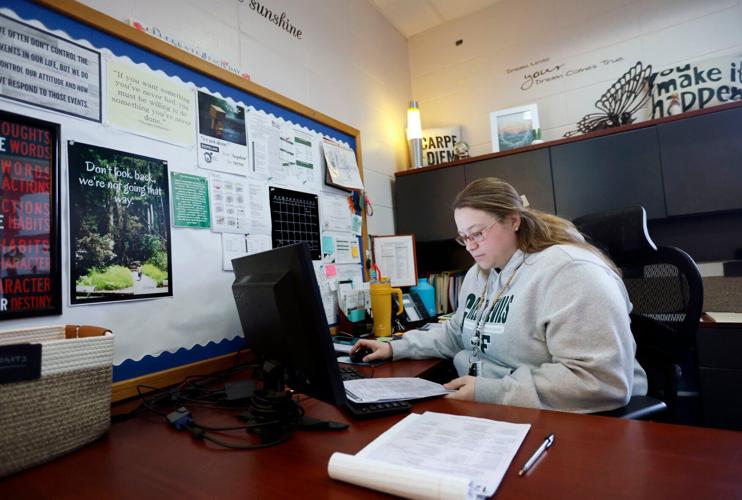
Counselor Kelsey Chojnacki checks on student class requests for the next school year at Adams-Friendship High School in Adams, Wis., Friday, Feb. 23, 2024. AMBER ARNOLD, STATE JOURNAL
- AMBER ARNOLD STATE JOURNAL
Nekoosa High School Student Services Coordinator Brehon Hoffman helps manage more than 300 students at Nekoosa High School, stepping in for the school's single guidance counselor, who was out on medical leave. Hoffman is the in-between for students: How urgent is their issue, and if it's related to college, how can she help get them information? "They don't have the path at home or they have parents that haven't gone to college ... they're coming in saying, 'I don't know what I'm supposed to be doing, what do I do, where do I go? A lot of it is a live and learn. We don't have all the answers either, but we certainly like to give them places to go."
- JOHN HART, STATE JOURNAL
Nekoosa High School Principal Keith Johnson said he's seeing an incredible amount of apathy and "terminal thinking" with high school students. It's always existed, he said, but it seems to that increasingly students don't have a post-high school plan.
- JOHN HART, STATE JOURNAL
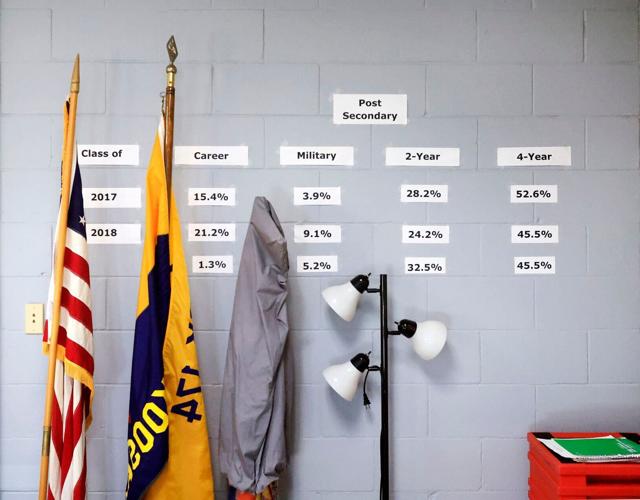
Post-high school placement percentages are displayed at Nekoosa High School. The number of Wisconsin high schoolers participating in either a four-year or two-year college program has shrunk by 14% in the last five years.
- JOHN HART, STATE JOURNAL
Nekoosa High School tech ed instructor Benjamin Peters guides a student in an engraving exercise at the district’s middle school in Nekoosa. There, students at all grade levels are given age-appropriate exposure to career and technical education topics.
- JOHN HART, STATE JOURNAL
Students participating in Mauston High School’s Upward Bound program, including Brooke Braunschweig, left, talk about summer opportunities. Braunschweig, who is attending UW-Stout this fall, will be the first of her four siblings to leave the Mauston area, despite being the youngest. She isn't the first to attempt college, though: Both her mother and her next oldest brother had taken a few classes at Western Technical College but found the hour-long trip each way where most of classes were held to be taxing.
- JOHN HART, STATE JOURNAL
Students participating in Mauston High School’s Upward Bound program head to class after a meeting at the school. Advisers to the program see the difference it makes for their 64 students and often wish it could be expanded. “If this was something that could be more available to other kids, that would be cool, but also just encouraging kids in general, from a school administrative standpoint (to) just pursue some path in some way, even if it's not college-based, it's tech-based,” John Maki, one of the advisers for Upward Bound, said.
- JOHN HART, STATE JOURNAL
Students participating in Mauston High School’s Upward Bound program gather at the school in Mauston. Upward Bound is a federally funded program that provides information about going to college, financial aid and applying for scholarships to students who are rural, first-generation or live in poverty.
- JOHN HART, STATE JOURNAL
Locations
Get Government & Politics updates in your inbox!
Stay up-to-date on the latest in local and national government and political topics with our newsletter.