UW-Madison takes another crack at demolishing decrepit Mosse Humanities building
KIMBERLY WETHAL
Updated
1 of 10
UW-Madison and Universities of Wisconsin system leaders are hoping Mosse Humanities' demolition and replacement facilities for the last two remaining academic units, music and art, will be included in the upcoming capital budget. This time, the three separate projects have been combined into just one, costing $292.5 million.
JOHN HART, STATE JOURNAL
A rectangle of concrete on the west-facing side of Mosse Humanities building is darker than the others because it is far newer: UW-Madison had to replace the concrete slab in recent years because the previous concrete had become unsafe. The new concrete is in a sixth-floor art department lithography lab.
JOHN HART, STATE JOURNAL
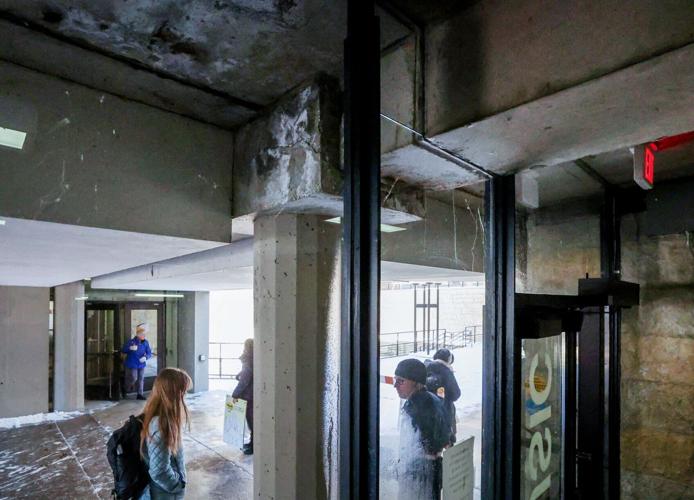
Concrete deteriorates above the Park Street entrance of the Mosse Humanities building. Because the building's concrete has no weather sealing, the concrete is especially susceptible to spalling and cracking, as Wisconsin's alternating warm and cold seasons cause the concrete to expand and contract.
JOHN HART, STATE JOURNAL
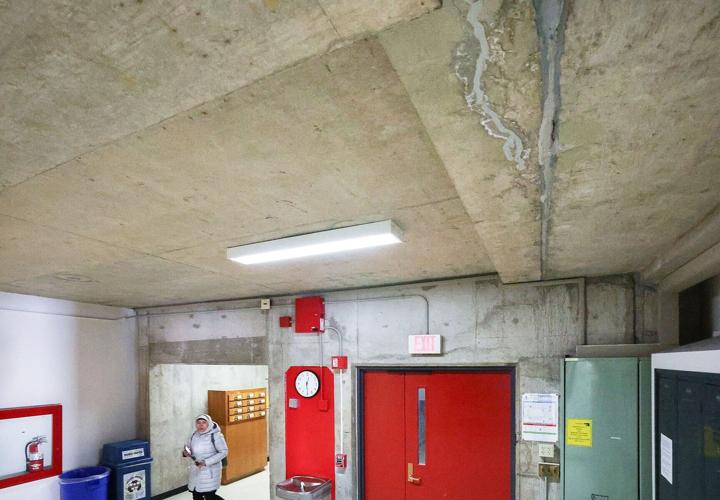
In an effort to keep moisture from reaching an interior space of UW-Madison’s Mosse Humanities building, sealant material fills cracks in the concrete of the structure. Without it, water drips from the first floor into the basement.
JOHN HART, STATE JOURNAL
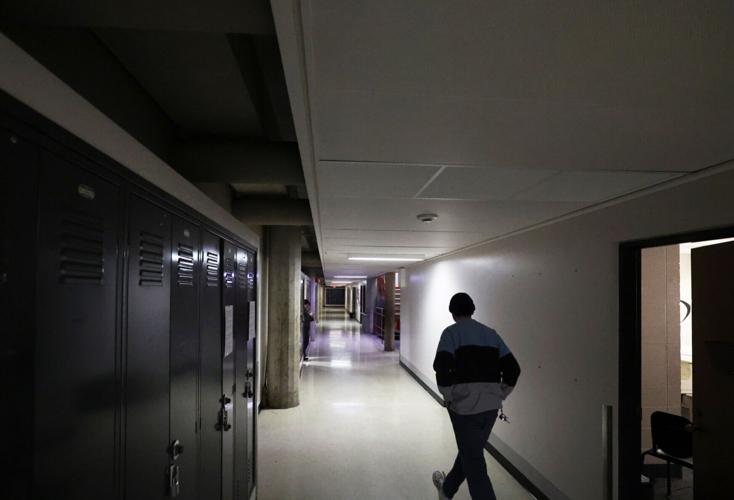
Diminished light levels are a distinguishing feature of the lower floors of the Mosse Humanities building. Navigating the maze of the building is also dangerous, UW-Madison leaders contend, as some hallways lead to dead ends.
JOHN HART, STATE JOURNAL
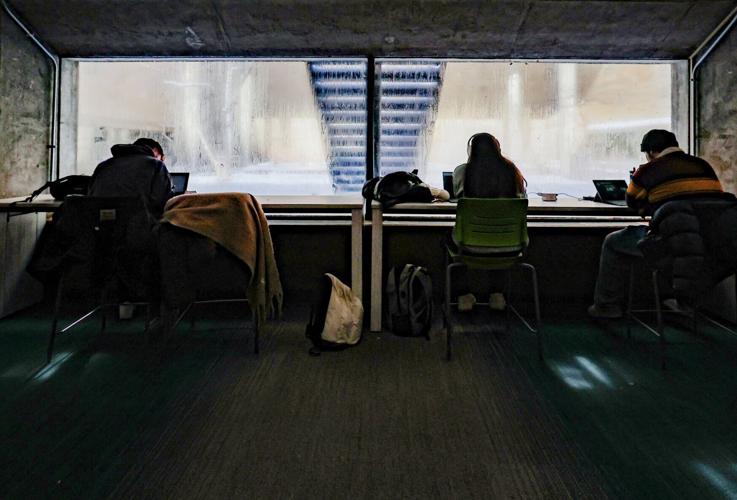
Condensation holds to windows inside a study area in the Mosse Humanities building. It's a common occurrence on the building's windows, which are single-pane and were installed as such to help cut costs when it was built.
JOHN HART, STATE JOURNAL
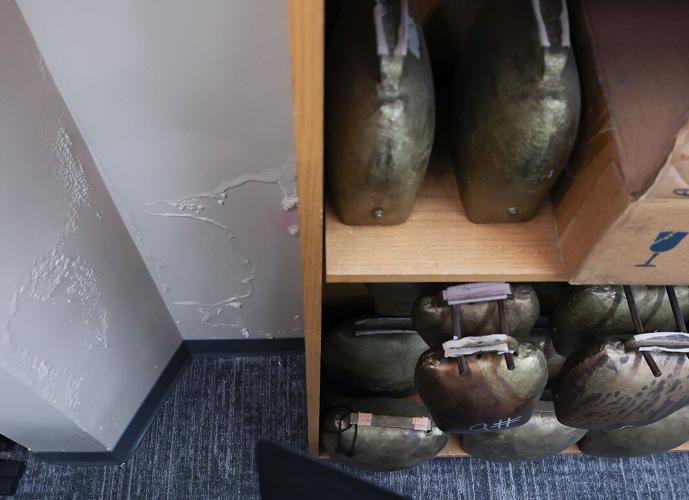
A water-damaged wall in the basement of the Mosse Humanities building shows signs of previous mitigation efforts inside a music room. The signs of water damage in Humanities are everywhere, with cracked plaster and spalled concrete every few feet and sometimes every few inches throughout the building.
JOHN HART, STATE JOURNAL
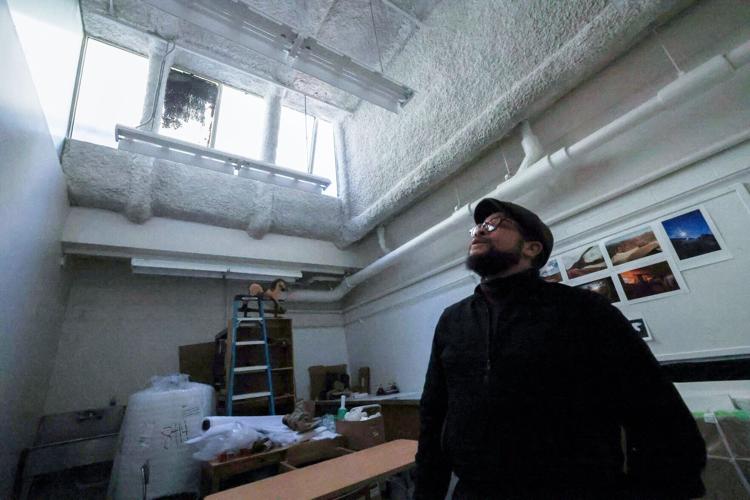
Leslie Smith, chair of the UW-Madison Art Department, views leaking windows on the top floor of the Mosse Humanities building. There's a lot of equipment and materials on the sixth and seventh floors of Humanities that should have limited access to humidity and moisture. The department's archives are housed in the building, as are computers for game design, professional cameras and lithography and printing presses.
JOHN HART, STATE JOURNAL
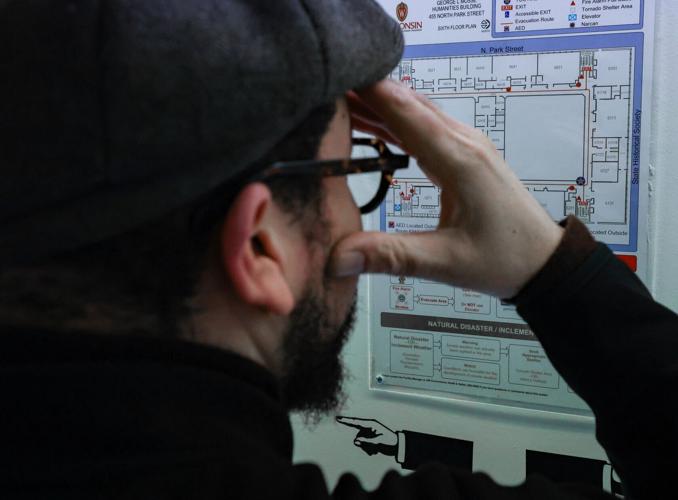
Leslie Smith, chair of the UW-Madison Art Department, is challenged by the layout of a building directory for the Mosse Humanities building. The layout of the building, which includes multiple dead-end hallways and elevators that skip floors, is more than just a nuisance, UW-Madison leaders say; it's also dangerous.
JOHN HART, STATE JOURNAL
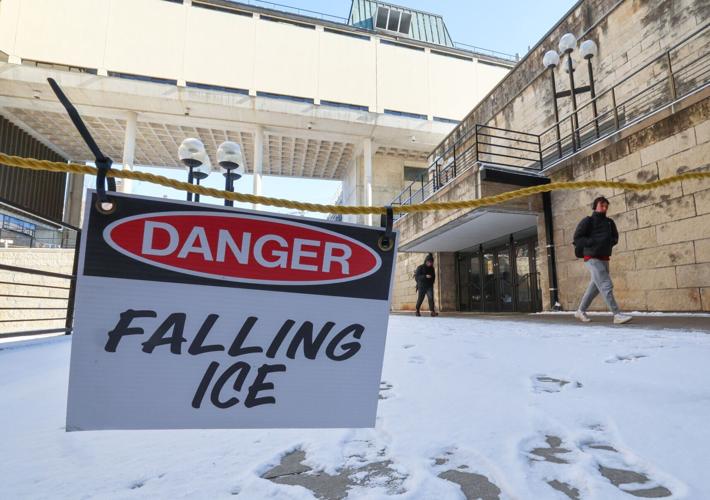
A sign cautions students about the potential for falling ice from the roof of the Mosse Humanities building after a recent snowfall.
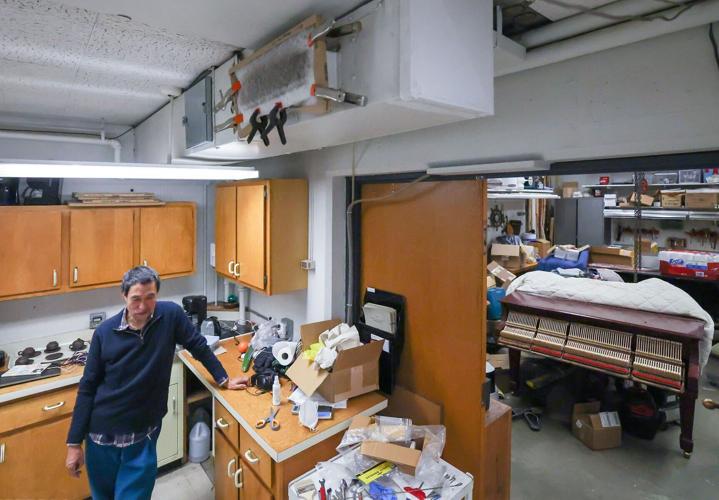
Mosse Humanities building piano technician Baoli Liu tends to the UW-Madison music department’s piano repairs in a cramped, antiquated space in the building. When pianos need to be brought in from other floors to be repaired, the music department has to hire piano movers who dismantle the pianos because the building's freight elevator no longer works and parts are no longer made to replace them.
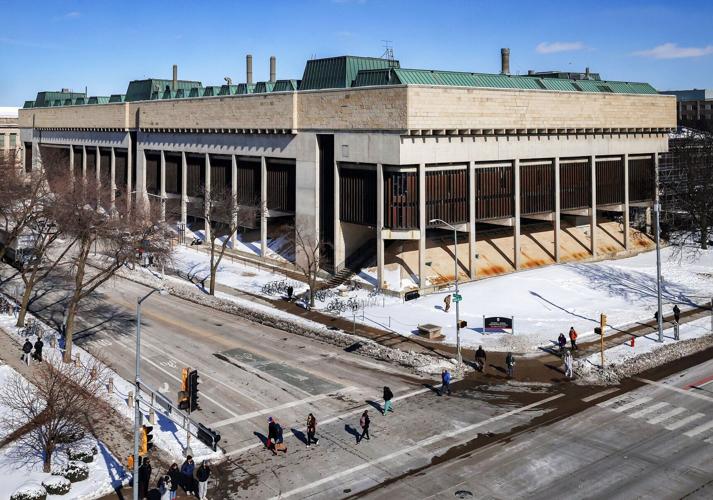
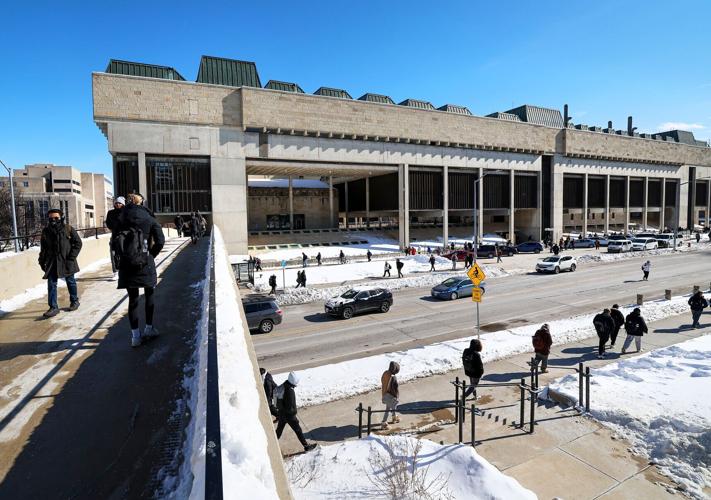
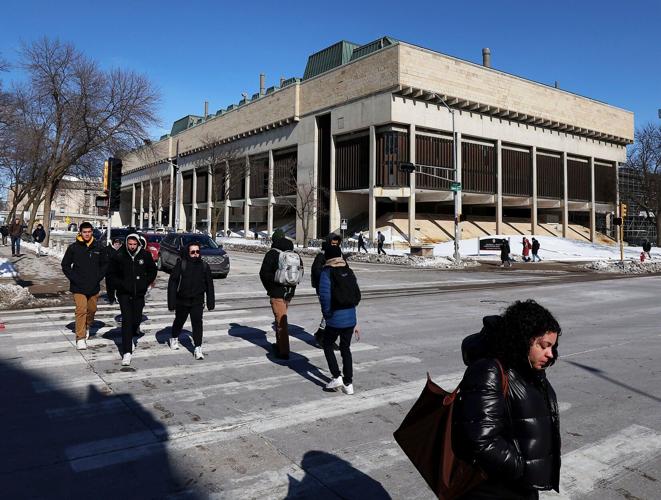
UW-Madison leaders are hoping for the demise of the Mosse Humanities building, which at 56 years old, has been failing for years. A concrete fortress designed in the Brutalist style, lawmakers and university leaders took cost-cutting measures with the building's construction in the 1960s that have led to myriad problems now. It costs more to maintain and repair per square foot than other buildings on campus built in the same era.
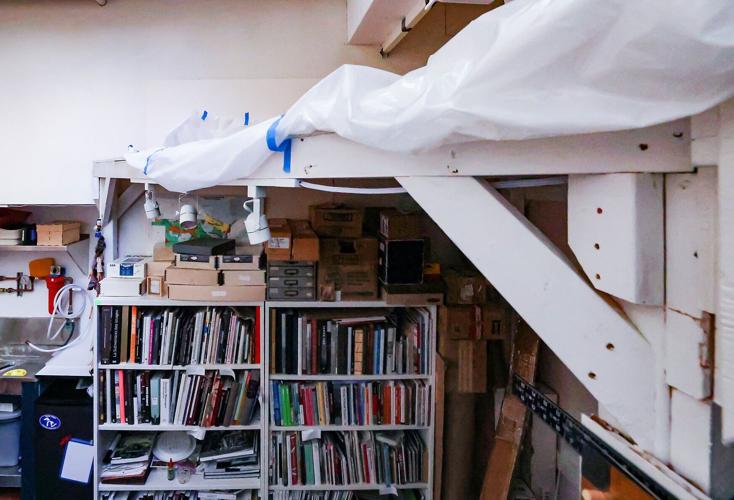
Plastic tarps protect books and film negatives from leaking windows above inside the Mosse Humanities building on the seventh floor. Leaking water is a persistent problem throughout the building but is especially damaging for an art department attempting to prepare for exhibitions. Some exhibitions have had to be reprinted in the past due to damage the building caused, art department chair Leslie Smith said.
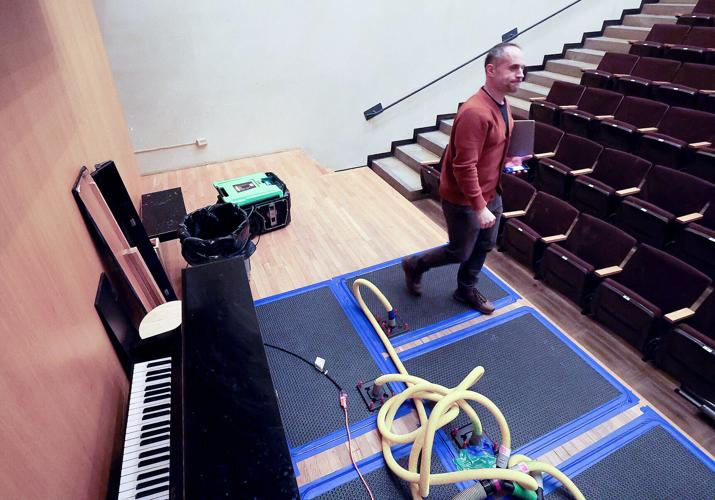
A moisture mitigation apparatus shares the stage of a recital hall in UW-Madison's Mosse Humanities building on Feb. 13. The equipment was brought in after the failure of an air circulation system the weekend prior resulted in the hall being enveloped in exceptionally humid conditions, ruining a piano worth nearly $10,000 and causing plaster on the walls to further chip. Viewing the space is Benjamin Bell Bern, music operations director for the building.
UW-Madison leaders are hoping for the demise of the Mosse Humanities building, which at 56 years old, has been failing for years. A concrete fortress designed in the Brutalist style, lawmakers and university leaders took cost-cutting measures with the building's construction in the 1960s that have led to myriad problems now. It costs more to maintain and repair per square foot than other buildings on campus built in the same era.
UW-Madison and Universities of Wisconsin system leaders are hoping Mosse Humanities' demolition and replacement facilities for the last two remaining academic units, music and art, will be included in the upcoming capital budget. This time, the three separate projects have been combined into just one, costing $292.5 million.
A rectangle of concrete on the west-facing side of Mosse Humanities building is darker than the others because it is far newer: UW-Madison had to replace the concrete slab in recent years because the previous concrete had become unsafe. The new concrete is in a sixth-floor art department lithography lab.
Concrete deteriorates above the Park Street entrance of the Mosse Humanities building. Because the building's concrete has no weather sealing, the concrete is especially susceptible to spalling and cracking, as Wisconsin's alternating warm and cold seasons cause the concrete to expand and contract.
In an effort to keep moisture from reaching an interior space of UW-Madison’s Mosse Humanities building, sealant material fills cracks in the concrete of the structure. Without it, water drips from the first floor into the basement.
A moisture mitigation apparatus shares the stage of a recital hall in UW-Madison's Mosse Humanities building on Feb. 13. The equipment was brought in after the failure of an air circulation system the weekend prior resulted in the hall being enveloped in exceptionally humid conditions, ruining a piano worth nearly $10,000 and causing plaster on the walls to further chip. Viewing the space is Benjamin Bell Bern, music operations director for the building.
Diminished light levels are a distinguishing feature of the lower floors of the Mosse Humanities building. Navigating the maze of the building is also dangerous, UW-Madison leaders contend, as some hallways lead to dead ends.
Mosse Humanities building piano technician Baoli Liu tends to the UW-Madison music department’s piano repairs in a cramped, antiquated space in the building. When pianos need to be brought in from other floors to be repaired, the music department has to hire piano movers who dismantle the pianos because the building's freight elevator no longer works and parts are no longer made to replace them.
Condensation holds to windows inside a study area in the Mosse Humanities building. It's a common occurrence on the building's windows, which are single-pane and were installed as such to help cut costs when it was built.
A water-damaged wall in the basement of the Mosse Humanities building shows signs of previous mitigation efforts inside a music room. The signs of water damage in Humanities are everywhere, with cracked plaster and spalled concrete every few feet and sometimes every few inches throughout the building.
Plastic tarps protect books and film negatives from leaking windows above inside the Mosse Humanities building on the seventh floor. Leaking water is a persistent problem throughout the building but is especially damaging for an art department attempting to prepare for exhibitions. Some exhibitions have had to be reprinted in the past due to damage the building caused, art department chair Leslie Smith said.
Leslie Smith, chair of the UW-Madison Art Department, views leaking windows on the top floor of the Mosse Humanities building. There's a lot of equipment and materials on the sixth and seventh floors of Humanities that should have limited access to humidity and moisture. The department's archives are housed in the building, as are computers for game design, professional cameras and lithography and printing presses.
Leslie Smith, chair of the UW-Madison Art Department, is challenged by the layout of a building directory for the Mosse Humanities building. The layout of the building, which includes multiple dead-end hallways and elevators that skip floors, is more than just a nuisance, UW-Madison leaders say; it's also dangerous.