UW-Madison and Universities of Wisconsin leaders are urging the state’s congressional representatives to protect access to funding through the National Institutes of Health after President Donald Trump targeted the agency’s research contracts as part of a series of slashing spending cuts.
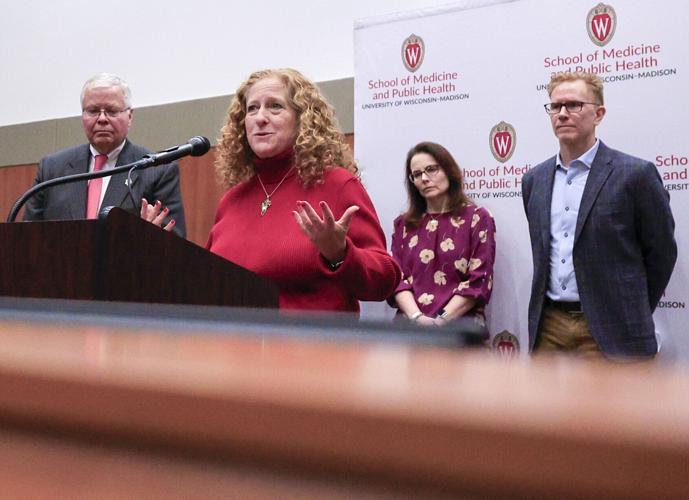
From left, Universities of Wisconsin President Jay Rothman, UW-Madison Chancellor Jennifer Mnookin, UW-Milwaukee neuroscience chair Karyn Frick and UW-Madison professor of medicine Sterling Johnson said scaling back federal funding that has already been pledged threatens to disrupt lifesaving research.
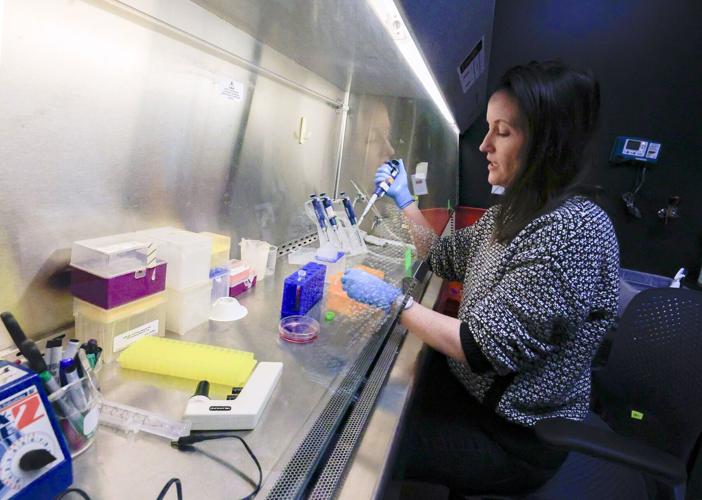
UW-Madison scientist Molly Lettman works Thursday in the laboratory of professor Anjon Audhya. Among the lab's work funded by grants from the National Institutes of Health is research on cancer, neurodegenerative diseases, asthma and diabetes — all of which could be slowed if UW-Madison sees promised cuts of $65 million.
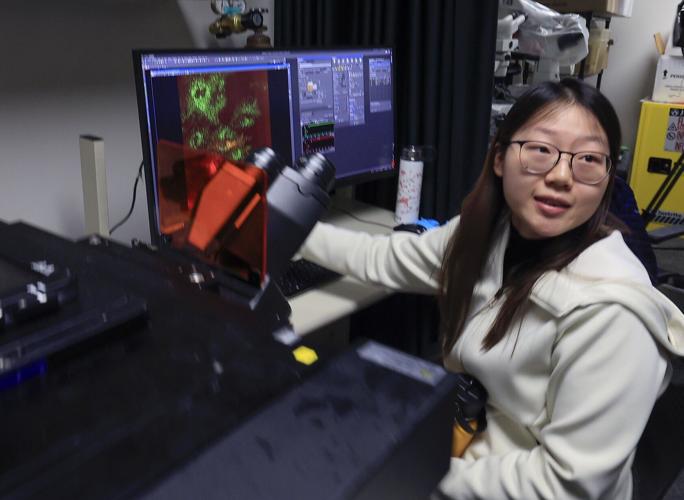
UW-Madison research assistant Jessica Hu examines retinal pigment epithelium cells in the laboratory of UW-Madison professor Anjon Audhya. UW-Madison's graduate researchers could be hit hard by any sustained cuts in indirect cost reimbursements for National Institutes of Health grants, as UW-Madison leaders are asking college deans to reconsider accepting any additional graduate students.
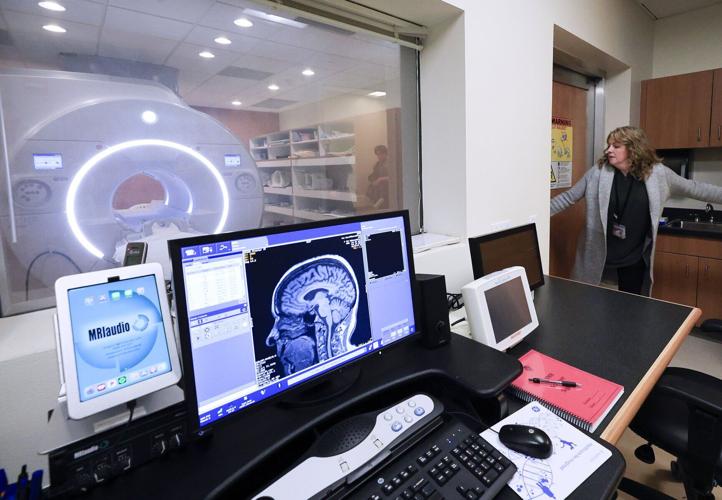
An MRI scanner used for Alzheimer’s disease research at the Institute for Medical Research on the UW-Madison campus. Of UW-Madison's top 10 grants from the National Institutes of Health, five of them involve the study of Alzheimer's disease and dementia.
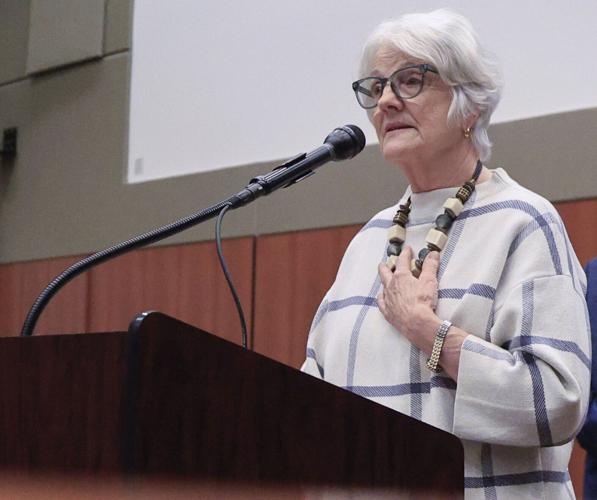
Sigrid Knuti has participated in a nearly 20-year study of Alzheimer's disease at UW-Madison and she hopes her generation will be the last that has to suffer with Alzheimer's disease. Her mother and a cousin died of the disease.
UW-Madison scientist Molly Lettman works Thursday in the laboratory of professor Anjon Audhya. Among the lab's work funded by grants from the National Institutes of Health is research on cancer, neurodegenerative diseases, asthma and diabetes — all of which could be slowed if UW-Madison sees promised cuts of $65 million.
From left, Universities of Wisconsin President Jay Rothman, UW-Madison Chancellor Jennifer Mnookin, UW-Milwaukee neuroscience chair Karyn Frick and UW-Madison professor of medicine Sterling Johnson said scaling back federal funding that has already been pledged threatens to disrupt lifesaving research.
UW-Madison research assistant Jessica Hu examines retinal pigment epithelium cells in the laboratory of UW-Madison professor Anjon Audhya. UW-Madison's graduate researchers could be hit hard by any sustained cuts in indirect cost reimbursements for National Institutes of Health grants, as UW-Madison leaders are asking college deans to reconsider accepting any additional graduate students.
Sigrid Knuti has participated in a nearly 20-year study of Alzheimer's disease at UW-Madison and she hopes her generation will be the last that has to suffer with Alzheimer's disease. Her mother and a cousin died of the disease.
An MRI scanner used for Alzheimer’s disease research at the Institute for Medical Research on the UW-Madison campus. Of UW-Madison's top 10 grants from the National Institutes of Health, five of them involve the study of Alzheimer's disease and dementia.