Indigenous Foodways class has UW-Madison students eating like it's 1491
KIMBERLY WETHAL
Updated
UW-Madison's Indigenous Foodways class seeks to teach students about the ways Indigenous people in Wisconsin lived off the land for thousands of years. During a Feb. 27 class, held at the fire ring outside of Dejope Residence Hall, guest instructor Jon Greendeer cooked deer meat over the fir…
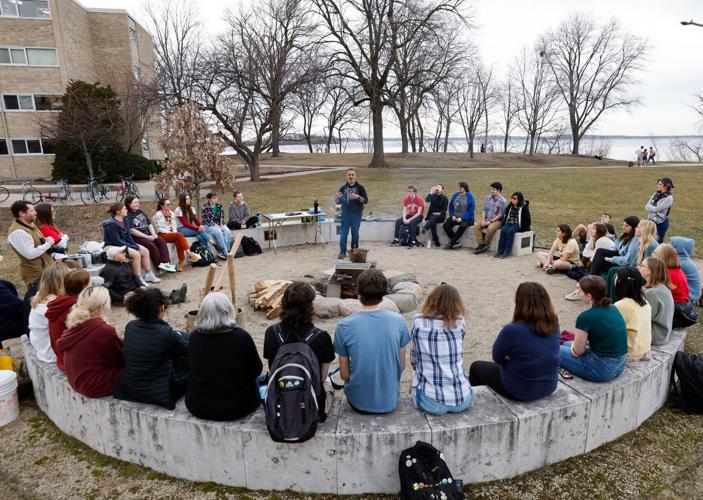
Sitting around a fire ring outside Dejope Residence Hall last Tuesday, a group of UW-Madison students pondered how they would feed themselves that night.
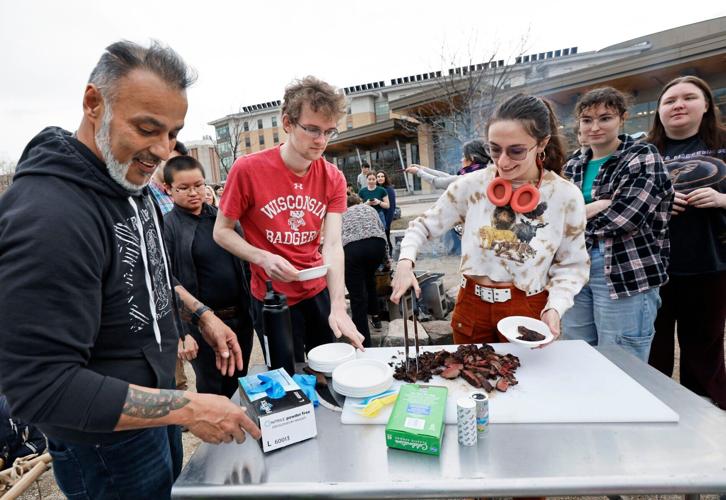
Jon Greendeer, president of the Ho-Chunk Nation, cooked venison over a fire for UW-Madison students to sample, including senior Carter Horman, center left, and junior Christina Kelly, during their Indigenous Foodways class last week. Greendeer, who also works as the health and wellness coordinator for the tribe, is a guest speaker for the Indigenous Foodways class each year, and typically leads a deer demonstration and teaches students how to spearfish on frozen Lake Mendota.
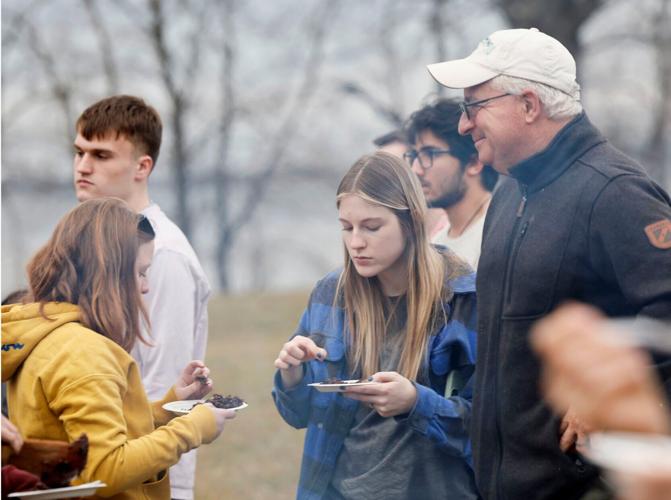
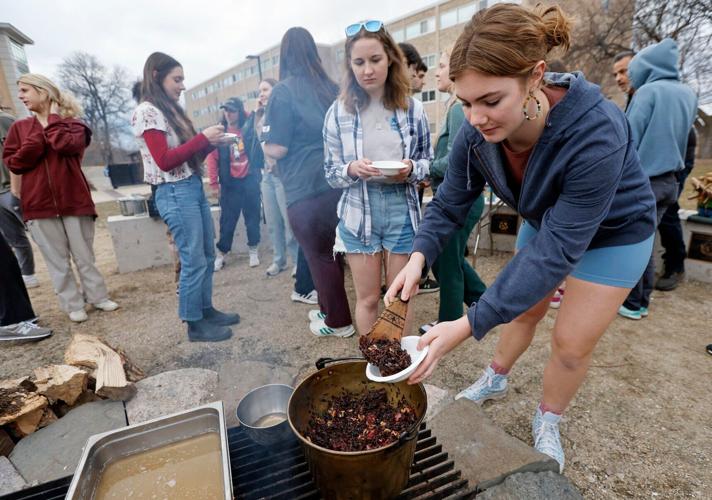
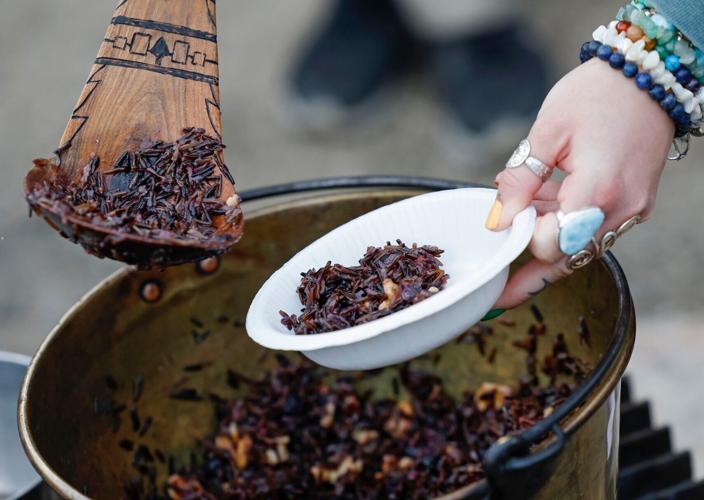
UW-Madison sophomores Olivia Field, right, and Lydia Pulsinelli try a wild rice and raisin medley during an Indigenous Foodways class outside Dejope Residence Hall. Ho-Chunk President Jon Greendeer also prepared venison for students to try as he spoke about how those traditional foods are crucial to Indigenous health and wellness, as those populations are more vulnerable to chronic health conditions such as heart disease and diabetes.
UW-Madison professor Irwin Goldman, right, talks to students as they try venison and wild rice during their Indigenous Foodways class outside Dejope Residence Hall.
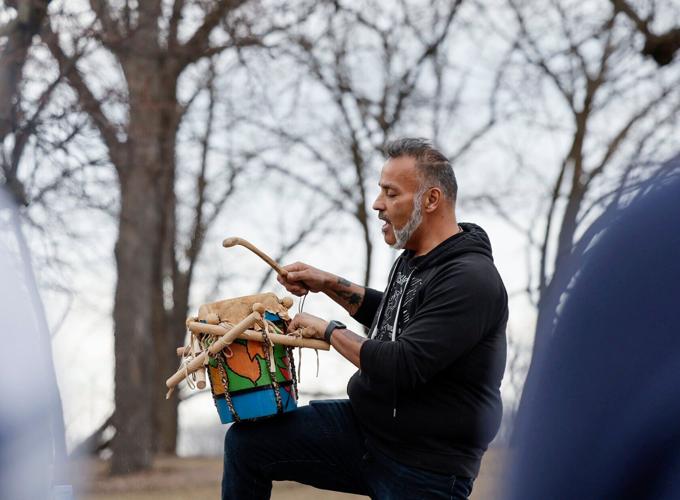
Greendeer plays the drum as he demonstrates to UW-Madison students how members of the Ho-Chunk tribe would pause work after each harvest to thank their Creator for the gifts bestowed on them during each growing season.
AMBER ARNOLD, STATE JOURNAL
Greendeer asks UW-Madison students to contemplate how they might get dinner tonight if all they had access to was tools and knowledge the Ho-Chunk tribe used to live off the land for thousands of years prior to European settlement.
AMBER ARNOLD, STATE JOURNAL
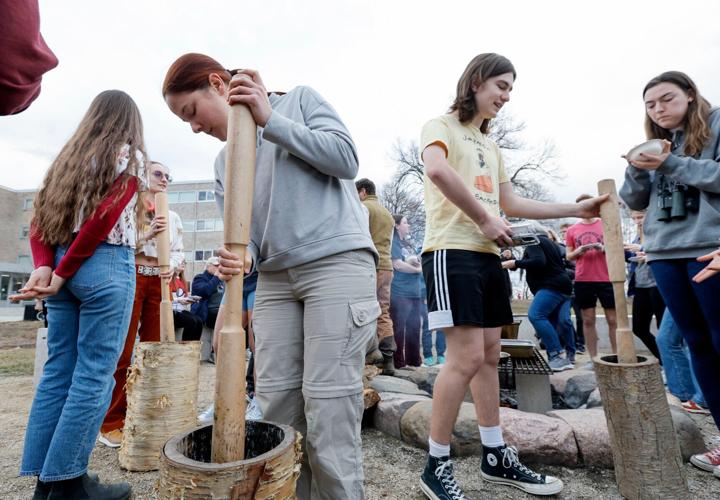
From left, UW-Madison graduate student Calla Olson and sophomore Tyler Manzardo grind flour from blue corn supplied by co-instructor Dan Cornelius, an Oneida tribal member and UW-Madison Great Lakes Indigenous Law Center outreach program manager, who uses Indigenous agriculture practices on his farm south of Stoughton.
AMBER ARNOLD, STATE JOURNAL
UW-Madison students in an Indigenous Foodways class try a wild rice and raisin medley outside Dejope Residence Hall. The wild rice medley was made by Greendeer, who focuses heavily on food choices when it comes to solving some of the chronic health conditions tribal members are more susceptible to, including heart disease and diabetes.
Jon Greendeer, president of the Ho-Chunk Nation, cooked venison over a fire for UW-Madison students to sample, including senior Carter Horman, center left, and junior Christina Kelly, during their Indigenous Foodways class last week. Greendeer, who also works as the health and wellness coordinator for the tribe, is a guest speaker for the Indigenous Foodways class each year, and typically leads a deer demonstration and teaches students how to spearfish on frozen Lake Mendota.
Greendeer asks UW-Madison students to contemplate how they might get dinner tonight if all they had access to was tools and knowledge the Ho-Chunk tribe used to live off the land for thousands of years prior to European settlement.
UW-Madison professor Irwin Goldman, right, talks to students as they try venison and wild rice during their Indigenous Foodways class outside Dejope Residence Hall.
From left, UW-Madison graduate student Calla Olson and sophomore Tyler Manzardo grind flour from blue corn supplied by co-instructor Dan Cornelius, an Oneida tribal member and UW-Madison Great Lakes Indigenous Law Center outreach program manager, who uses Indigenous agriculture practices on his farm south of Stoughton.
UW-Madison sophomores Olivia Field, right, and Lydia Pulsinelli try a wild rice and raisin medley during an Indigenous Foodways class outside Dejope Residence Hall. Ho-Chunk President Jon Greendeer also prepared venison for students to try as he spoke about how those traditional foods are crucial to Indigenous health and wellness, as those populations are more vulnerable to chronic health conditions such as heart disease and diabetes.
UW-Madison students in an Indigenous Foodways class try a wild rice and raisin medley outside Dejope Residence Hall. The wild rice medley was made by Greendeer, who focuses heavily on food choices when it comes to solving some of the chronic health conditions tribal members are more susceptible to, including heart disease and diabetes.
Greendeer plays the drum as he demonstrates to UW-Madison students how members of the Ho-Chunk tribe would pause work after each harvest to thank their Creator for the gifts bestowed on them during each growing season.