The Trump administration’s ban on the use of fetal tissue from elective abortions in federally funded research earlier this year has left UW-Madison scientist Anita Bhattacharyya with more questions than answers.
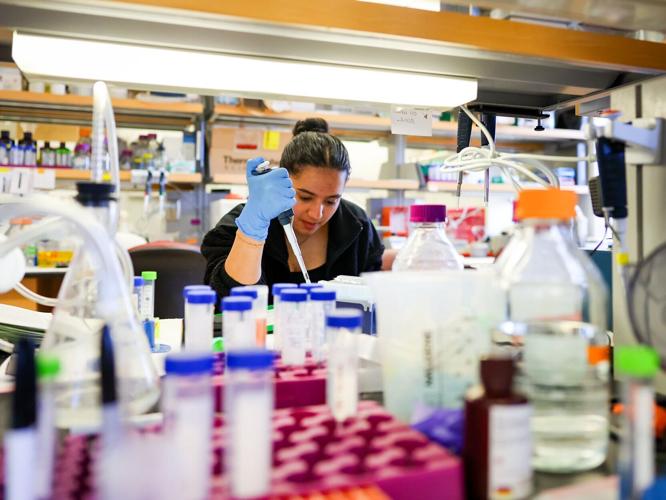
UW-Madison sophomore Suraksha Kodgi is one of eight undergraduate students who work in Dr. Anita Bhattacharyya’s lab. The National Institutes of Health announced Jan. 22 that, effective immediately, it would stop funding research involving human fetal tissue from elective abortions.
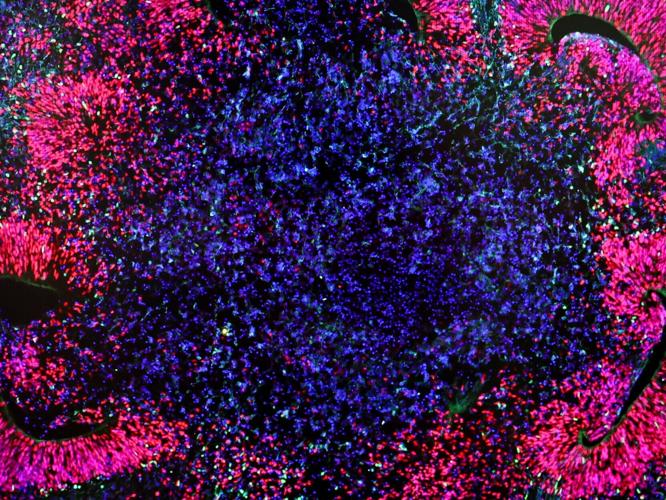
Dr. Anita Bhattacharyya’s lab has been affected by the Trump administration’s abrupt ban on fetal tissue research from elective abortions. The order has effectively frozen Bhattacharyya’s federal NIH grant for fetal tissue research, she said.
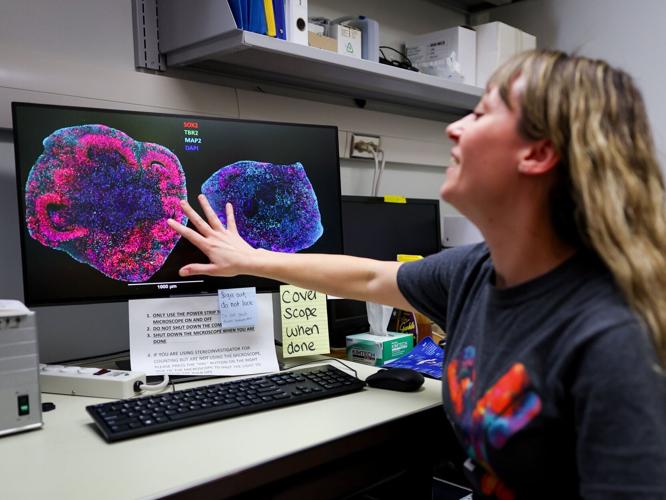
UW-Madison fourth-year cell and molecular biology Ph.D. student Megan Jandy says she might have to pivot because of a federal order that affects fetal tissue research.
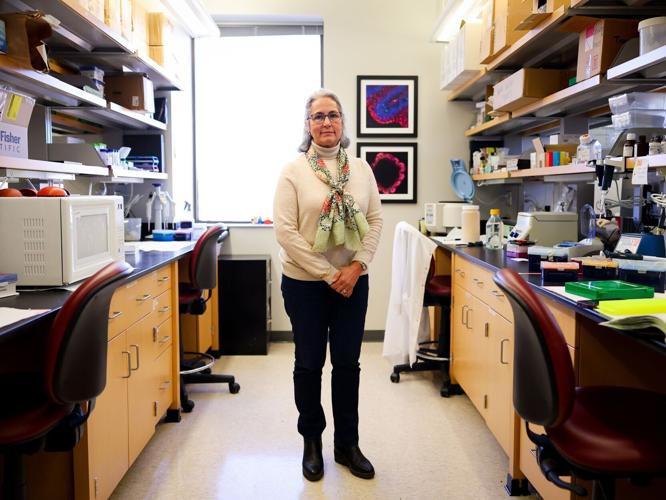
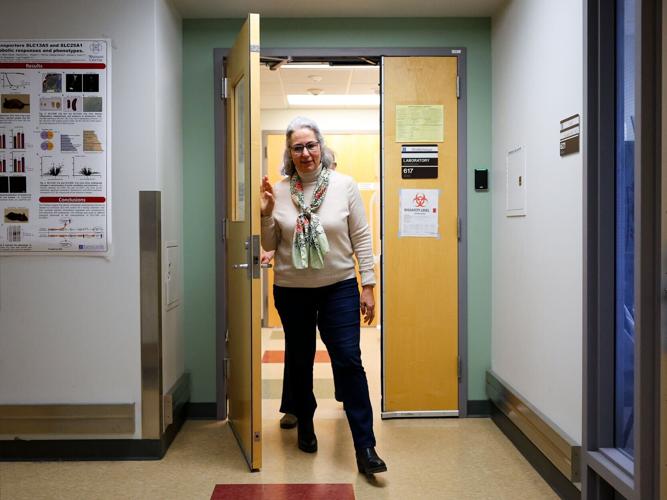
Dr. Anita Bhattacharyya says she’s hopeful her lab at UW-Madison can find alternative funding to continue its experiments and use the data from the fetal tissue it has already collected.
Dr. Anita Bhattacharyya says she’s hopeful her lab at UW-Madison can find alternative funding to continue its experiments and use the data from the fetal tissue it has already collected.
UW-Madison sophomore Suraksha Kodgi is one of eight undergraduate students who work in Dr. Anita Bhattacharyya’s lab. The National Institutes of Health announced Jan. 22 that, effective immediately, it would stop funding research involving human fetal tissue from elective abortions.
UW-Madison fourth-year cell and molecular biology Ph.D. student Megan Jandy says she might have to pivot because of a federal order that affects fetal tissue research.
Dr. Anita Bhattacharyya’s lab has been affected by the Trump administration’s abrupt ban on fetal tissue research from elective abortions. The order has effectively frozen Bhattacharyya’s federal NIH grant for fetal tissue research, she said.