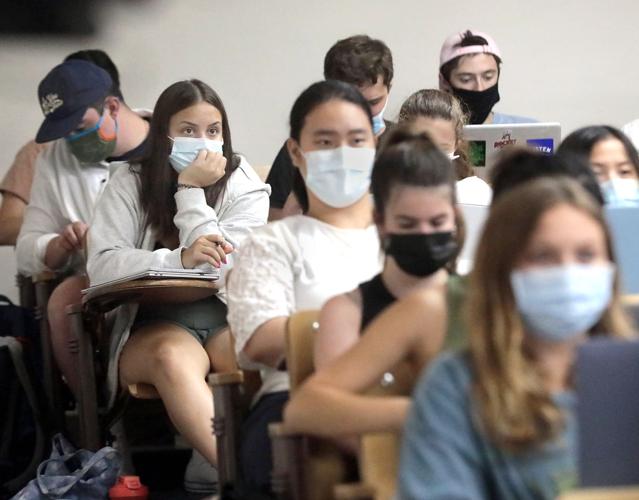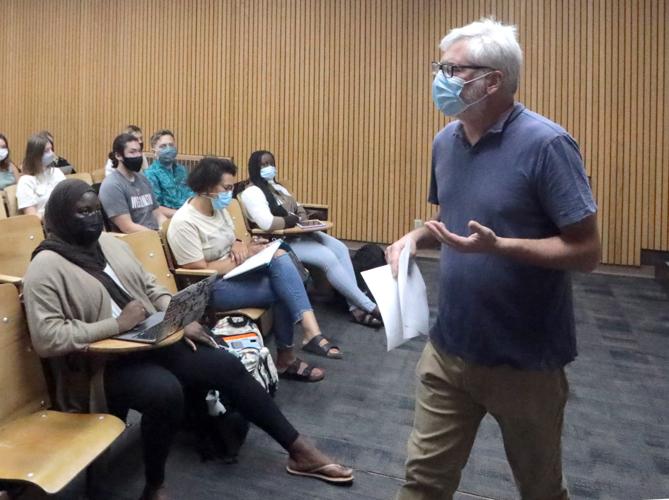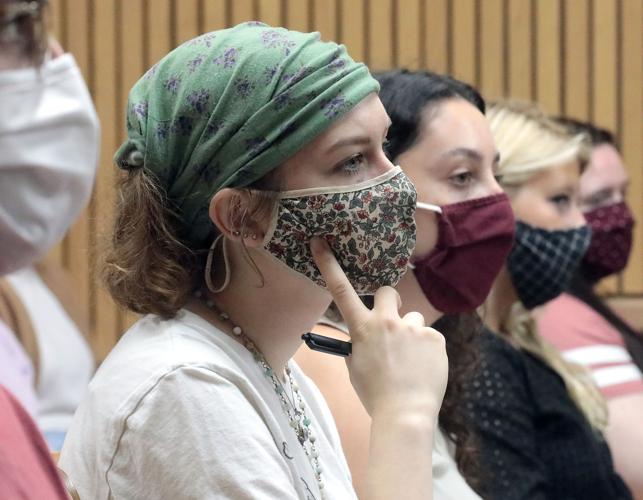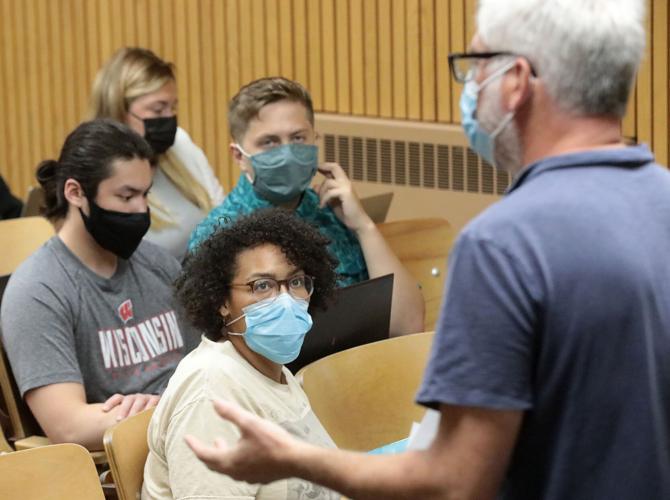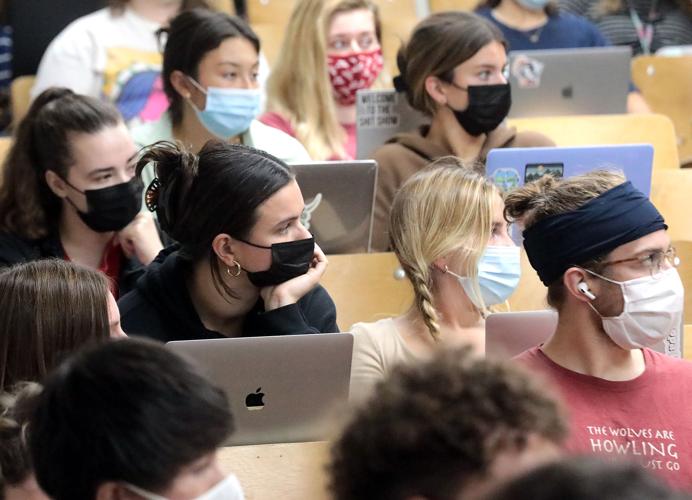

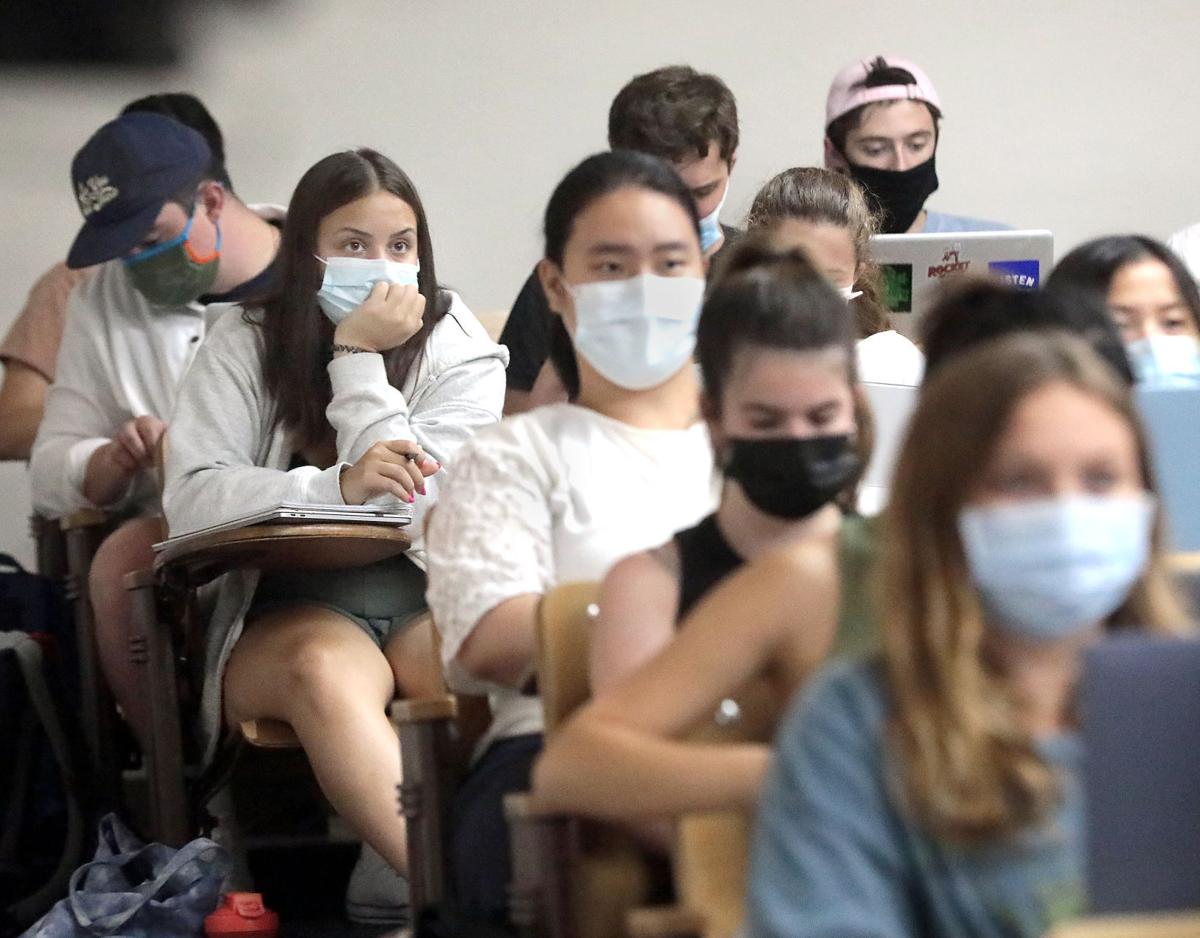
The first day of class for UW-Madison students enrolled in International Health and Global Society with professor Richard Keller started two minutes late.
People are also reading…

Professor Richard Keller's International Health and Global Society course includes topics such as the bubonic plague, cholera, smallpox, the pandemic of 1918 and the COVID-19 pandemic. He last taught the course in 2019 when Ebola ravaged the Democratic Republic of Congo.

UW-Madison professor Richard Keller leads a discussion with students on Tuesday. Classes moved online the same day last year.


"The situation is dynamic and we'll just have to see what happens," Keller said about teaching in person this semester.

After teaching two days, Keller said, he gained a bit of confidence about returning to in-person classes, but noted that everyone still needs to exercise significant precautions.
6 lives disrupted: How COVID-19 changed Madison
The torrent of disruption to daily life over the past year has been inescapable.
Calendar squares filled with weddings and events cleared. Vacations vanished. Schools shuttered and hand sanitizer was in short supply. We learned new words, like social distancing, herd immunity and doomscrolling.

“Reporting the death counts out day after day was draining,” she said. “It felt like I was announcing a funeral every day.”

"I was getting my work done from 9 p.m. to 3 a.m. every day," she said.

Rev. Marcus Allen knew what bringing everyone together could do for their spiritual and mental health. But each time he considered reopening the church, COVID-19 cases surged.

"We’re used to taking whatever comes through the door," said nurse Maria Hanson, who started journaling about the pandemic soon after treating the patient.

"It’s a risk vs. reward thing and I risk my life to save others," said Brandon Jones, who always worried about bringing the virus home to his wife and two kids.

“Usually a funeral is a major step in understanding that a life was lived and the person is now gone,” he said. “If families don’t get that, it’s just really hard.”

“Reporting the death counts out day after day was draining,” she said. “It felt like I was announcing a funeral every day.”

"I was getting my work done from 9 p.m. to 3 a.m. every day," she said.

"We’re used to taking whatever comes through the door," said nurse Maria Hanson, who started journaling about the pandemic soon after treating the patient.

"It’s a risk vs. reward thing and I risk my life to save others," said Brandon Jones, who always worried about bringing the virus home to his wife and two kids.

“Usually a funeral is a major step in understanding that a life was lived and the person is now gone,” he said. “If families don’t get that, it’s just really hard.”

The torrent of disruption to daily life over the past year has been inescapable.