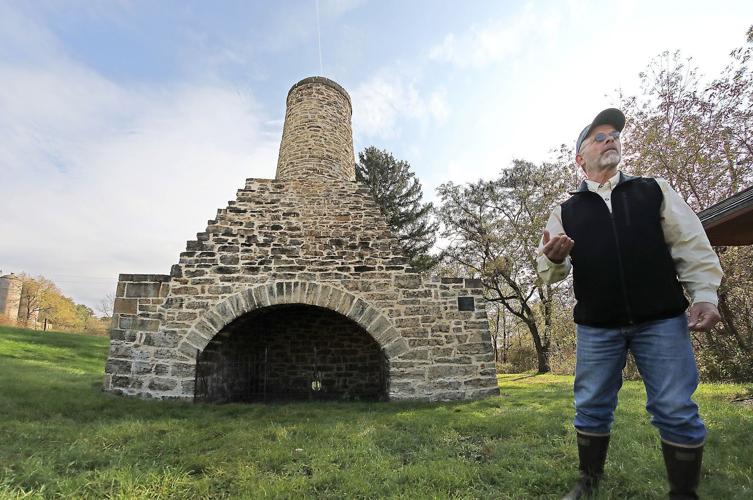
Tom Hunt, an expert in land reclamation and Wisconsin’s lead and zinc mining history, stands on the grounds of a former lead processing site in Dodgeville. At left is a slag furnace, built in 1876, that was used to melt lead from nearby mines.
JOHN HART, STATE JOURNAL
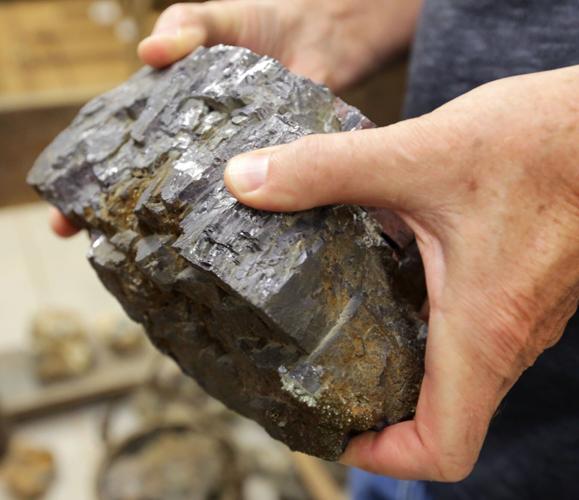
Michael Bradley displays a chunk of lead at Badger Mine and Museum in Shullsburg in a 2018 file photo.
HIGHLAND — The first year he planted soybeans in the 22-acre field at the edge of town, Kurt Menke noticed something odd: His crop came up healthy, but sometime in June the plants in one section all died.
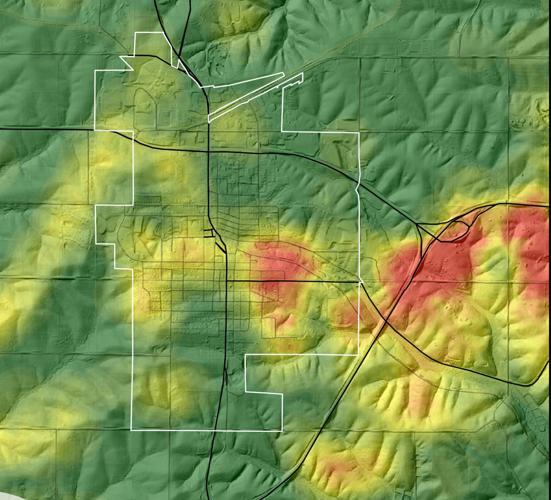
A map produced by University of Wisconsin researchers shows the potential for lead and zinc soil contamination as a result of historic mining activity around Dodgeville.
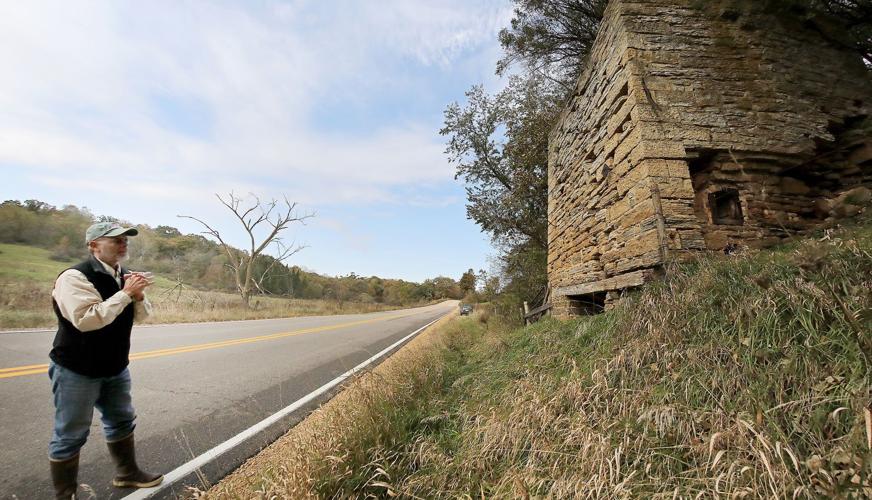
Tom Hunt surveys the remnants of a 19th-century limestone furnace along Highway 191 near Dodgeville. Aside from such relics there are few visible markers of the lead and zinc mining industry that defined southwestern Wisconsin in the 1800s and early 1900s.
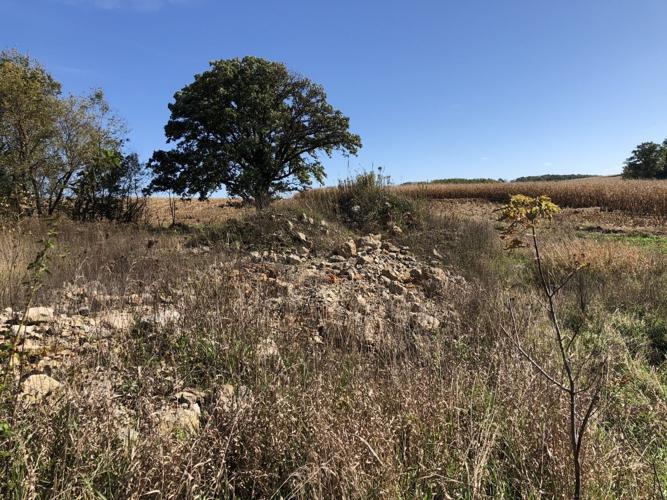
A pile of rocks amid corn fields at the site of the former Mulcahy Mine near Shullsburg. The mine operated from 1950 to 1955, producing less than 200,000 tons of ore, according to mining historian Loren Farrey.
Tom Hunt, an expert in land reclamation and Wisconsin’s lead and zinc mining history, stands on the grounds of a former lead processing site in Dodgeville. At left is a slag furnace, built in 1876, that was used to melt lead from nearby mines.
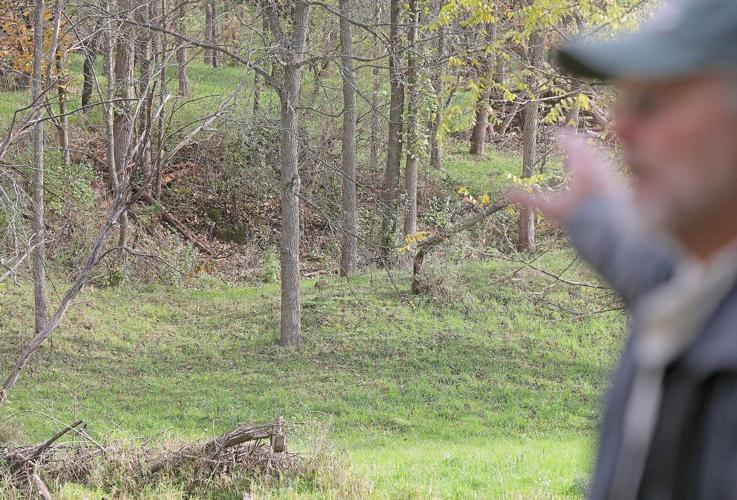
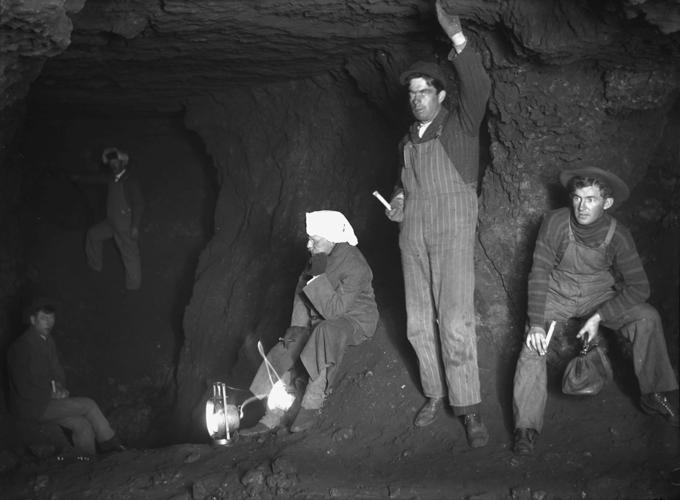
A recess in a hillside of Tom Hunt's property near Ridgeway reveals evidence of the mining that took place in the 1830s, when southwestern Wisconsin was one of the nation's primary sources of lead. Using picks and shovels, miners dug shallow "badger holes" in search of iron sulfide, or galena.
Tom Hunt surveys the remnants of a 19th-century limestone furnace along Highway 191 near Dodgeville. Aside from such relics there are few visible markers of the lead and zinc mining industry that defined southwestern Wisconsin in the 1800s and early 1900s.
A pile of rocks amid corn fields at the site of the former Mulcahy Mine near Shullsburg. The mine operated from 1950 to 1955, producing less than 200,000 tons of ore, according to mining historian Loren Farrey.
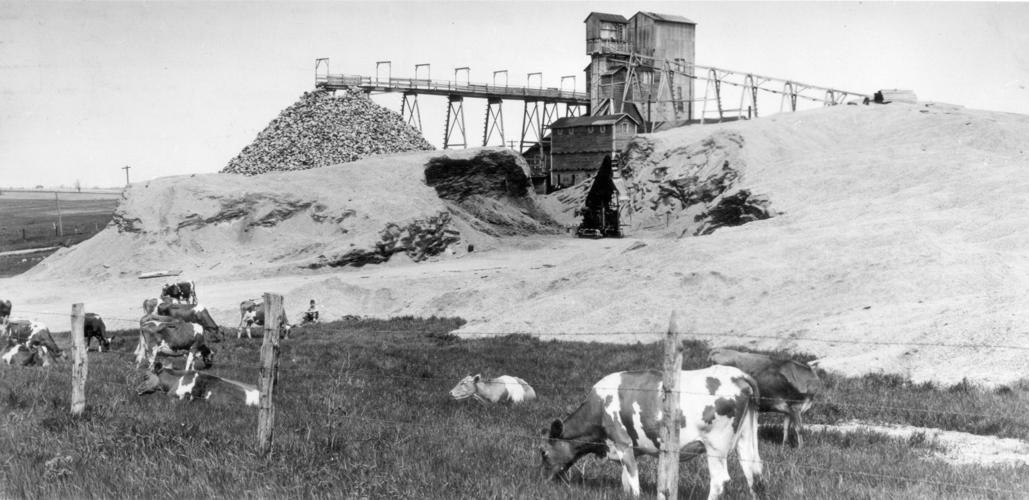
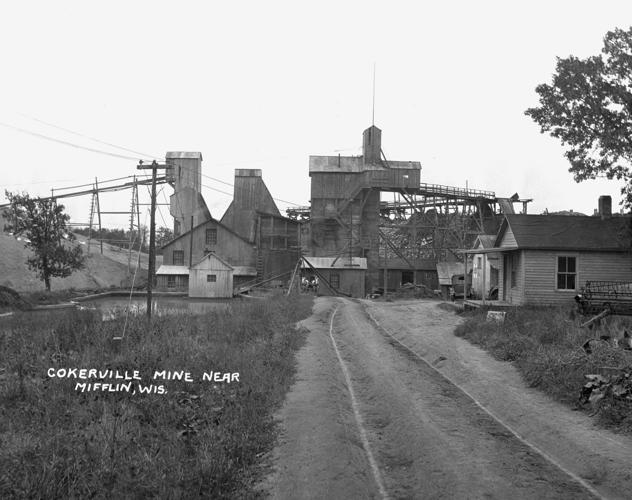
The Cokerville Mine near Mifflin is shown in an undated photo. After lead production dropped in the late 1800s, demand for zinc soared. Wisconsin's zinc production peaked during the first World War, and the last operating mine closed in 1979. WISCONSIN HISTORICAL SOCIETY Image ID: 92898.
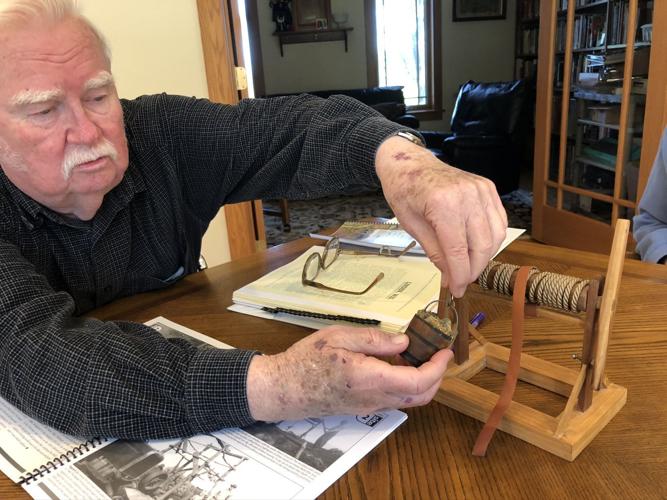
Loren Farrey, author of a guide to mining sites of Lafayette County, demonstrates how lead ore was pulled from mine shafts with a model windlass built by his wife, Arlene.
Loren Farrey, author of a guide to mining sites of Lafayette County, demonstrates how lead ore was pulled from mine shafts with a model windlass built by his wife, Arlene.
A recess in a hillside of Tom Hunt's property near Ridgeway reveals evidence of the mining that took place in the 1830s, when southwestern Wisconsin was one of the nation's primary sources of lead. Using picks and shovels, miners dug shallow "badger holes" in search of iron sulfide, or galena.
Tom Hunt, an expert in land reclamation and Wisconsin’s lead and zinc mining history, stands on the grounds of a former lead processing site in Dodgeville. At left is a slag furnace, built in 1876, that was used to melt lead from nearby mines.
A recess in a hillside of Tom Hunt's property near Ridgeway reveals evidence of the mining that took place in the 1830s, when southwestern Wisconsin was one of the nation's primary sources of lead. Using picks and shovels, miners dug shallow "badger holes" in search of iron sulfide, or galena.
Tom Hunt surveys the remnants of a 19th-century limestone furnace along Highway 191 near Dodgeville. Aside from such relics there are few visible markers of the lead and zinc mining industry that defined southwestern Wisconsin in the 1800s and early 1900s.
A map produced by University of Wisconsin researchers shows the potential for lead and zinc soil contamination as a result of historic mining activity around Dodgeville.
A pile of rocks amid corn fields at the site of the former Mulcahy Mine near Shullsburg. The mine operated from 1950 to 1955, producing less than 200,000 tons of ore, according to mining historian Loren Farrey.
Loren Farrey, author of a guide to mining sites of Lafayette County, demonstrates how lead ore was pulled from mine shafts with a model windlass built by his wife, Arlene.