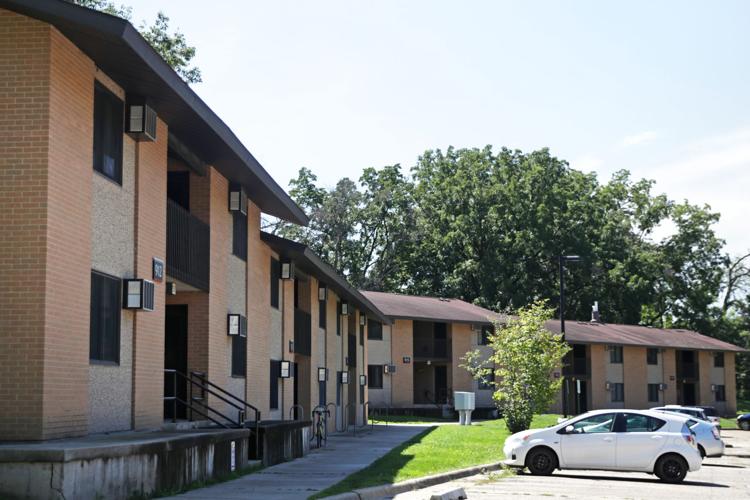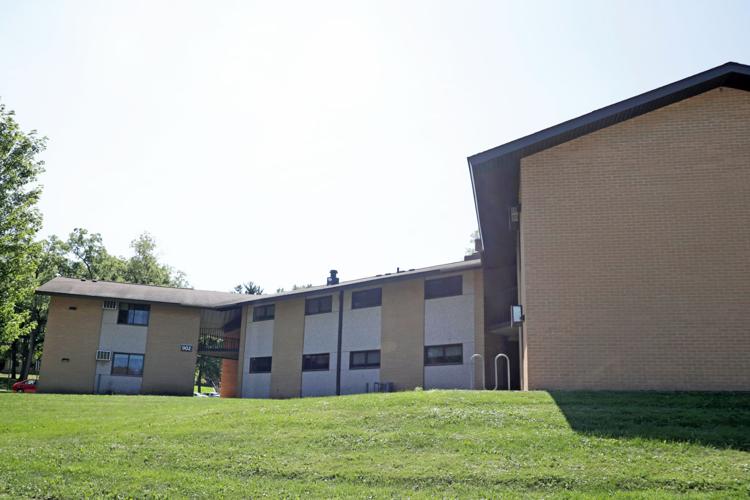

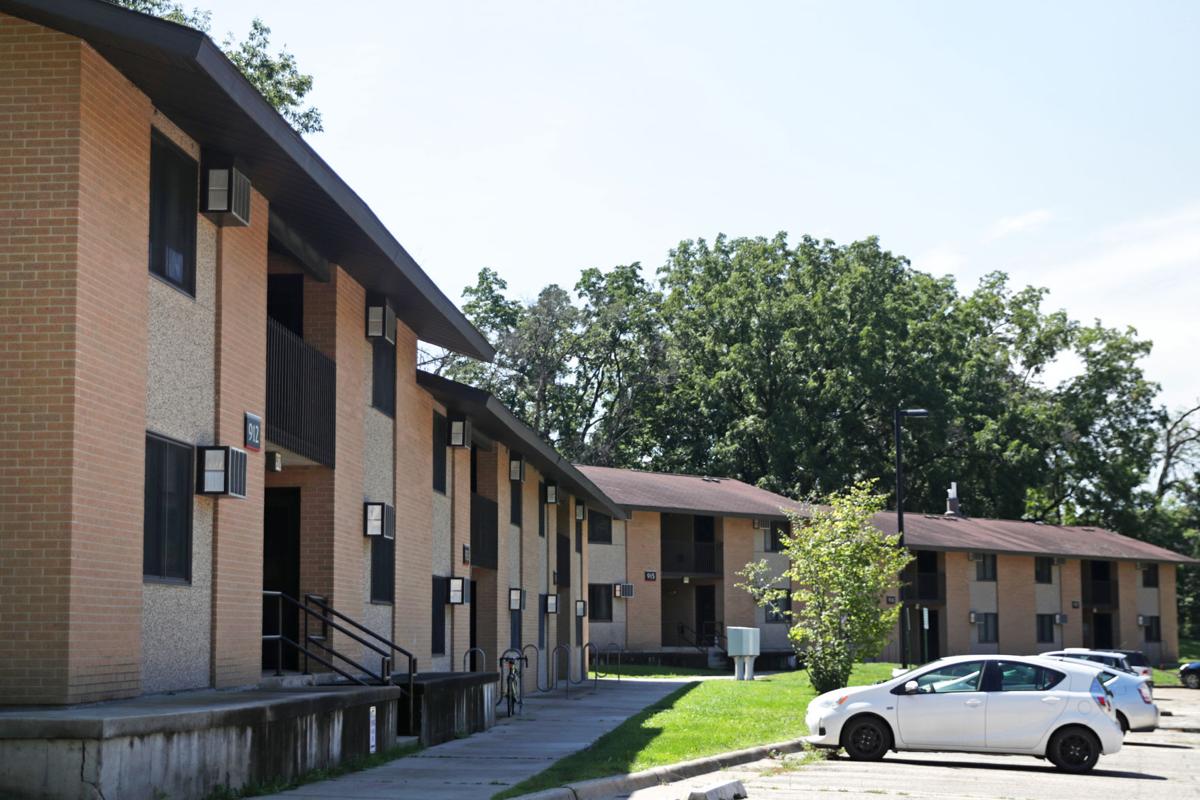
A UW-Madison plan to temporarily house students who are exposed to or infected with COVID-19 in university-owned apartments worries residents who live there, many of whom have young children who cannot yet get vaccinated.
People are also reading…

Liging Feng, left, and her daughter Isabella Yang play in the courtyard of their building at Eagle Heights, the UW-Madison-owned apartment complex. Feng is among more than 400 residents who signed a petition opposing the university's plan to use some vacant apartments as quarantine and isolation space.

The Eagle Heights apartment complex
Chamberlin Rock: Rediscovery and removal
The rediscovery in recent years of a nearly century-old Wisconsin State Journal article that referred to a large boulder found on the UW-Madison campus as a "n-----head rock" led to the removal of the glacial erratic from Observatory Hill on Aug. 6, 2021. Read the State Journal's series of stories about the dispute, and some of the reaction to it, here.

The big boulder on Observatory hill, which is the largest of its kind in the immediate vicinity of Madison, is now out where folks can look at it.

While the rock itself is blameless, the cultural associations with it are enough for some to call for its removal.

Students of color called for the rock's removal because in the 1920s it was described using a racial slur.
I am fond of glacial erratics, those gigantic boulders originating in Canada during the last Ice Age that are now strewn across the glaciated parts of Wisconsin. My love of glacial erratics has indirectly made me admire geologists, especially those who study the last Ice Age.
I’ve read with bewilderment and disbelief the Nov. 19 article "70-ton boulder on UW campus on its way out," about removing the Chamberlin Rock.
It seems about 100 years ago simpletons called a rock on the campus of UW-Madison a derogatory racial slur.
A familiar and treasured rock on UW-Madison property is being removed because of the offensive name given to it 100 years ago. This removal has been compared to the removal of the names of Porter Butts and Frederic March from the Memorial Union, presumably because of racist conduct long ago.
Chamberlin Rock on Bascom Hill in Madison has proven recently to be problematic. The rock was once known by a disgusting and racist term a century ago. If that term had been used by everyone all these years since then, I would help break it into pieces and throw it into Lake Mendota with my own hands.

A glacial rock on the campus of UW-Madison has sparked a controversy.
I find it difficult to believe that a 70-ton boulder can be a reminder of racism on campus.
I am a 78-year-old lifelong Madison resident. I am a UW alumnus. I have long been aware of the Chamberlin Rock on its beautiful setting overlooking Lake Mendota. That area of Observatory Hill was once a sacred place for Native Americans.

If all goes smoothly, the rock could be removed this summer.

The rock will be placed on university-owned land southeast of Madison near Lake Kegonsa.