
With Wisconsin's "Safer at Home" order struck down and Dane County's COVID-19 restrictions set to expire May 26, people will be able to resume more normal activities. But are they safe? Here are doctors' answers to frequently asked questions.
Q&A: What can I do to stay safe as Wisconsin reopens after COVID-19?
County parks and most state parks are open. Can I invite friends or family for a picnic?

If fewer than 10 people bring their own food and utensils, and stay 6 feet apart, this should be OK, said Dr. Nasia Safdar, medical director of infection control at UW Health. Family is better than friends because risk of exposure may be better known and contact tracing is easier if a COVID-19 case arises, she said.
Gathering outside is preferred to meeting indoors, said Dr. Pat Remington, director of the preventive medicine residency program at the UW School of Medicine and Public Health and former associate dean. “There’s no question the risk of transmission is lower outdoors,” he said.
Dr. Ryan Westergaard, a medical officer with the state Department of Health Services, said it's better to keep one's circle of contacts small.
"Until we feel like we have the virus contained and have confidence that most new cases are linked to known outbreaks, limiting close contact between people from different households is an important strategy for preventing chains of transmission," he said.
What about neighborhood barbecues or potlucks?

This type of gathering presents more risk because people would likely share food and utensils, Safdar said. “The environment is hard to manage," she said.
Westergaard agreed, comparing the situation to cruise ships. "People using common serving utensils and generally being in close proximity can lead to clusters of cases," he said.
Remington is open to the idea, especially if a host can learn about guests' exposure to COVID-19 and ask those with known risks to wear masks, though that’s not possible while eating. “I think people will be asking neighbors or relatives, ‘Tell me what you do in a typical day,’” he said.
Can I visit my elderly parents if they and I feel fine?

“Caution is the best approach," Remington said. "The price of getting it wrong could be tragic.”
Being with parents who are healthy and in their 60s is less of a concern than with those in their 80s or 90s who have chronic diseases, he said.
"Elderly folks are still at the very highest risk of becoming severely ill," Westergaard said.
Safdar said it would be best to self-quarantine for two weeks before visiting, wear a mask, maintain physical distancing and avoid hugs and kisses. “That might defeat the purpose of going to see them a little bit, but there still might be something you could gain from it," she said.
Nursing homes and assisted living facilities generally are not allowing visitors.
What about play dates for my children?

This is a “high-risk situation," but just saying “no” is like abstinence-only sex education in that it doesn’t work, Remington said. “We know people are going to be doing this,” he said. “You should understand the risks and the consequences.”
Assume some children are infected and will transmit the virus. Will your kids later be close to others with medical conditions? “What is the risk of getting it wrong?” Remington said.
Westergaard discouraged play dates, given ongoing community spread of the coronavirus.
Safdar said children don’t seem to spread COVID-19 as much as initially thought, but some have developed an inflammatory syndrome apparently related to the coronavirus. Virtual meetups are better, though she said playing separately in different parts of a park might be OK.
When Madison-area beaches open, will swimming be safe?

Beaches are expected to open after water sample testing begins this week, said Sarah Mattes, spokeswoman for Public Health Madison and Dane County.
“Swimming by itself is not a risk," Safdar said. "We don’t expect there to be waterborne transmission of COVID,” Safdar said.
If there are few or no other people at the beach, “you couldn’t ask for a lower risk environment,” Remington said. But if it becomes crowded, “that becomes as high risk as any place,” he said.
Community pools are more of a problem because tables, chairs and equipment can be contaminated, Safdar said. Mattes said pools can open once Dane County’s “Safer at Home” order expires — as of now, May 26 — under certain conditions.
If I’m bicycling, jogging or hiking and the path becomes crowded, what should I do?

Try to avoid busy paths, Remington said. Hikers can wear masks, but that’s harder for runners and bicyclists. If you pass others closely, he said the advice is simple: “Don’t breathe in.”
Another approach: Temporarily cover your mouth and nose with a t-shirt or other clothing if possible, Safdar said.
Westergaard advised wearing a mask on bike paths in Madison but said "they’re probably not necessary on a ride out in the country."
If restaurants open for on-site dining, is that safe? Is outdoor seating better?

COVID-19 is like some other infections in this regard. “There is an amount of trust with any restaurant that no one has coughed or sneezed on the food and employees are illness-free,” Safdar said.
Outdoor seating is better, and indoor seating should have plenty of space. “When you’ve entered a restaurant, it’s often impossible to fully control who comes in and sits where,” Safdar said.
If customers pay by credit card or leave contact information, it will be easier for contact tracers to locate them if a COVID-19 case arises, Remington said.
Should I use disinfectant to wipe down groceries?

Washing hands after putting away groceries is enough, Safdar and Remington said. Safdar called disinfecting groceries “overkill,” and Remington said viruses don’t live well on paper and cardboard. “The risk of transmission from grocery bags and packaging is extremely small,” he said.
However, Westergaard said "this is a reasonable idea for all 'high-touch' surfaces ... any object that has been touched by a person with COVID-19 who has previously touched their face could have the virus on it."
If hair salons open, is it risky to get a haircut?

"The type of close contact that is required in salons makes this one of the higher risk businesses that we really feel should people should not use until we have made substantial progress in reducing community spread and have universal testing," Westergaard said.
“It is a risk; you’re not going to be physically distant,” Remington said. But if customers wear masks and employees wears masks and possibly face shields, and both parties clean their hands before and after, the risk will be lower, he and Safdar said.
Knowing how much community transmission of COVID-19 is occurring can help, Remington said. Get your hair cut during a lull, he said.
Hair salons aren't known to be major sources of coronavirus transmission, but that could change, Safdar said. “There may be clusters that will only become apparent when the salons open up,” she said.
If my gym reopens, should I exercise there?

Gyms that have robust cleaning, good ventilation, physical distancing space, use of masks and good sick leave policies will be safest, the doctors said.
Older adults and people with chronic conditions should probably avoid gyms, Safdar said. “Exercising outdoors is a lower-risk alternative,” Remington said.
What about getting my teeth cleaned?

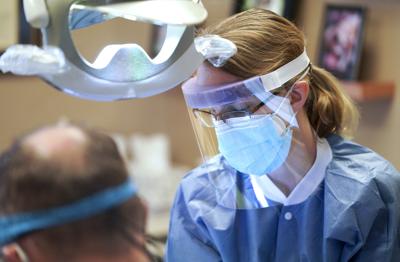
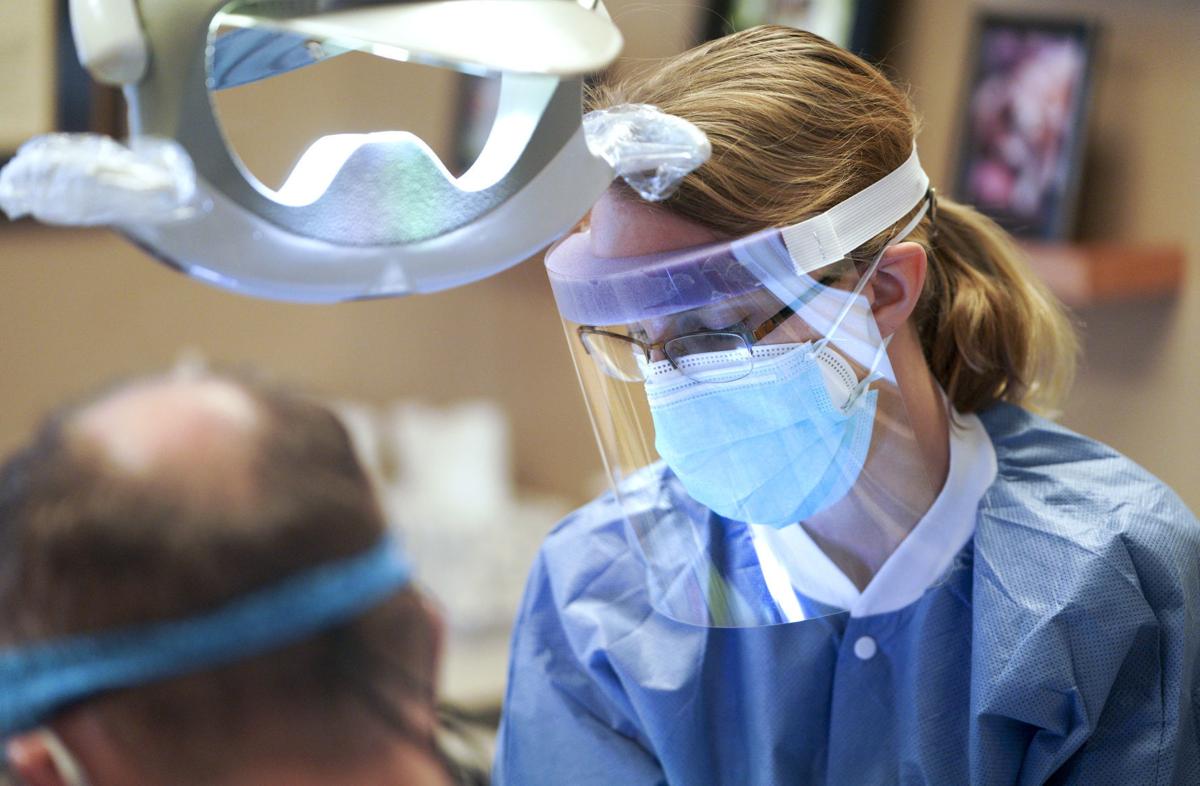
People should continue to put off routine cleanings for a while unless there’s a particular dental concern, the doctors said. “You’re basically in someone’s face,” Remington said. “Even with masks and face shields, it’s a high-risk interaction.”
But Dr. Patrick Tepe, a dentist with Associated Dentists in Verona who is immediate past president of the Wisconsin Dental Association, said his office started offering routine cleanings again this month, with extra precautions. Like most dentist offices, it previously limited care to emergency procedures during the outbreak.
Tepe said patients' temperatures are taken upon arrival, and hygienists and dentists wears masks and face shields — and in some cases single-use gowns. Equipment that can cause aerosols, or fine particles in the air, is not being used during cleanings, he said. Rooms are left empty for an hour between patients and upgraded air purification soon will be installed.
“It’s safe to come and have routine procedures done,” though people who are older or have medical conditions may want to be more cautious, he said.
My surgeon postponed my knee surgery earlier but now says I can have it. Should I?

Madison hospitals stopped non-urgent procedures in mid-March. In late April, they started resuming them, saying increased screening, testing and protective equipment had improved safety.
“Anyone coming into contact with a patient will be wearing a mask and a face shield, and patients will be wearing face coverings,” Safdar said. “There’s very low chance you would be inadvertently exposed.”
Remington accompanied his wife to UW Health’s American Center hospital last week for her knee surgery. He confirmed the environment is as safe as possible. “Everything you could do to reduce the risk is being done,” he said.
In this Series
Weekend re-reads: Check out these Wisconsin State Journal stories honored in state newspaper contest
-
Updated
Owner vows to rebuild, but a popular northern Wisconsin destination in Boulder Junction won't be the same
-
Updated
Urban League helping fill Exact Sciences’ many job openings
-
Updated
'A church that stands for something that is vitally needed': Black and white churches form alliance
- 29 updates