Paul Morrison's Wood Cycle of Wisconsin mills urban trees that would otherwise be burned or chipped into boards for handmade furniture and building products
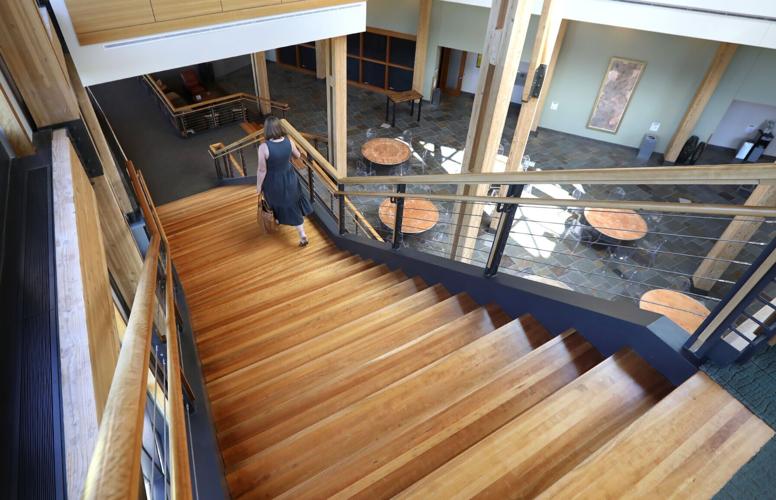
The stairs at Promega's Feynman Center are made from walnut trees harvested on the company’s property in Fitchburg, which architect David Rousseau said was an effort to honor the trees.
Generally seen as waste, wood from urban trees can be a valuable resource, but there are challenges to marketing an irregular material in a mass-production economy.
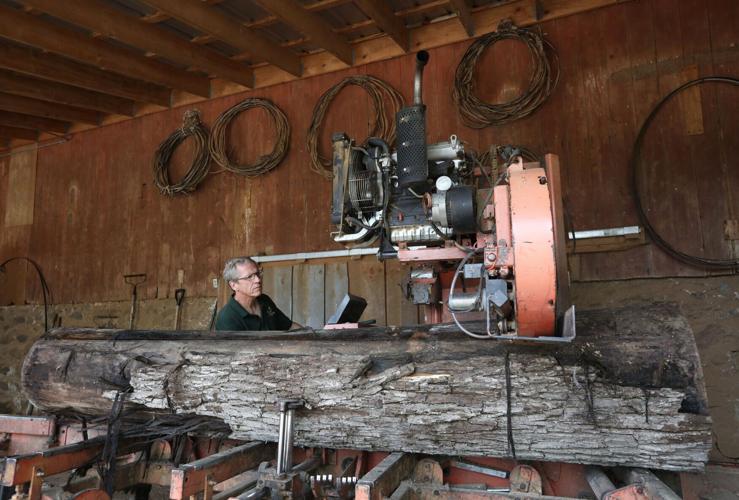
Paul Morrison cuts a walnut log at The Wood Cycle of Wisconsin, where he specializes in milling urban trees. “Literally, the carbon in those trees is what we exhaled as we enjoyed the shade under those trees," he says. "The connection is that real."
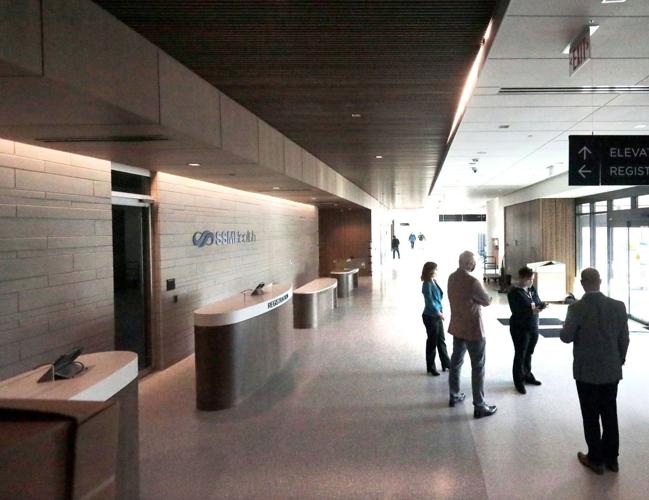
Reception desks at the SSM Health South Madison Campus incorporated veneer from black walnut trees cut down to make way for the $75 million project on Fish Hatchery Road.
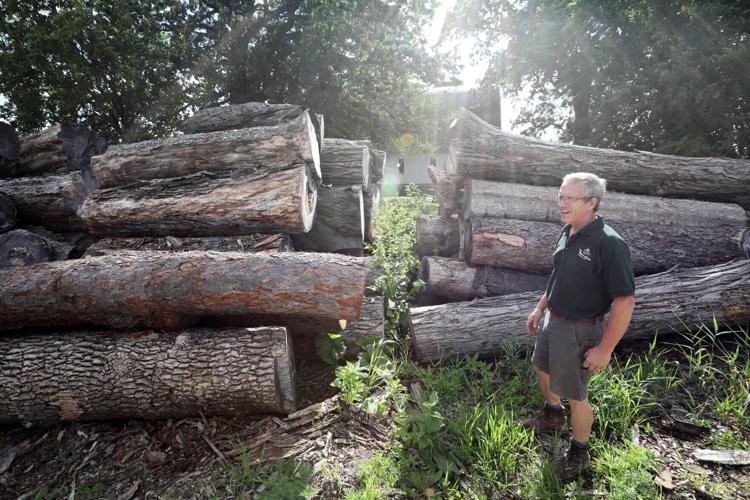
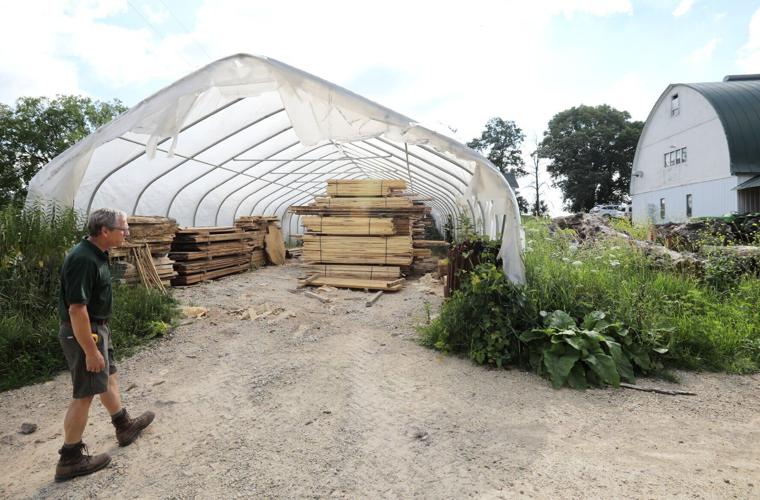
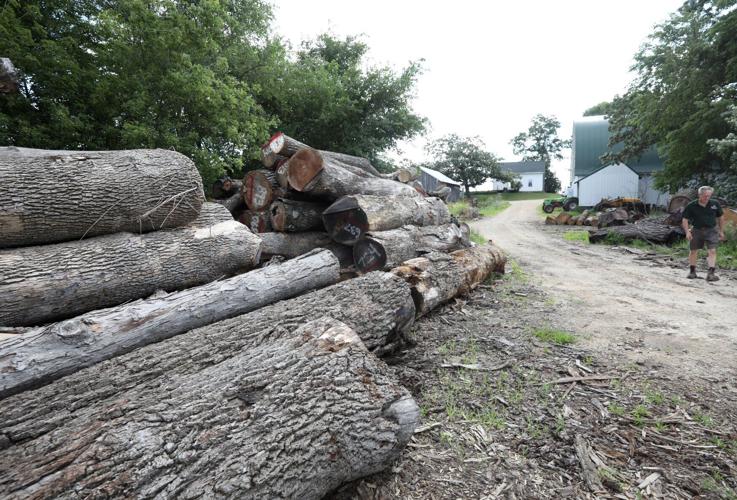
Paul Morrison, owner of The Wood Cycle of Wisconsin, shows logs stockpiled at the town of Oregon mill where he cuts, dries and builds with wood from urban trees that could otherwise be turned into mulch.
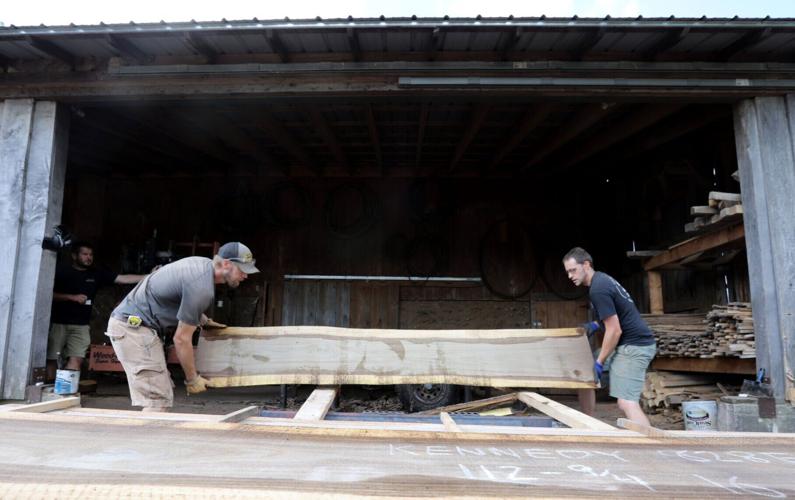
Tim Boettner, left, and Matt McCoy carry a piece of walnut cut from a log at The Wood Cycle of Wisconsin in the town of Oregon. Put to other uses instead of mulching or landfilled, urban wood can lock up millions of tons of heat-trapping carbon dioxide.
Generally seen as waste, wood from urban trees can be a valuable resource, but there are challenges to marketing an irregular material in a mass-production economy.
Paul Morrison cuts a walnut log at The Wood Cycle of Wisconsin, where he specializes in milling urban trees. “Literally, the carbon in those trees is what we exhaled as we enjoyed the shade under those trees," he says. "The connection is that real."
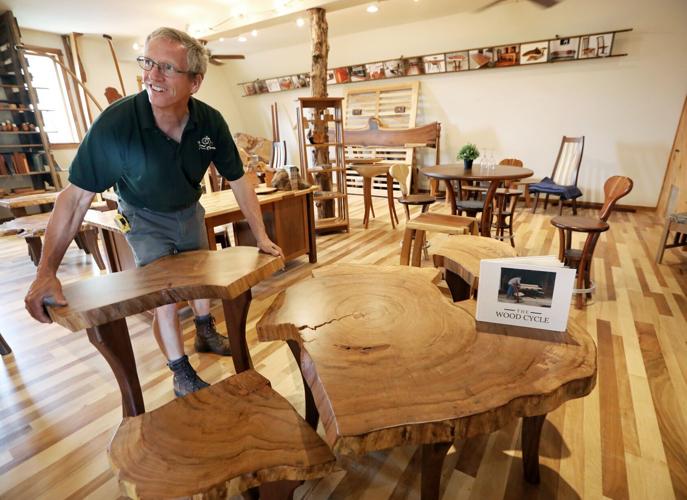
Paul Morrison, owner of The Wood Cycle of Wisconsin, talks about a table he made from a harvested elm tree in the showroom in Oregon, Wis., Wednesday, July 20, 2022. AMBER ARNOLD, STATE JOURNAL
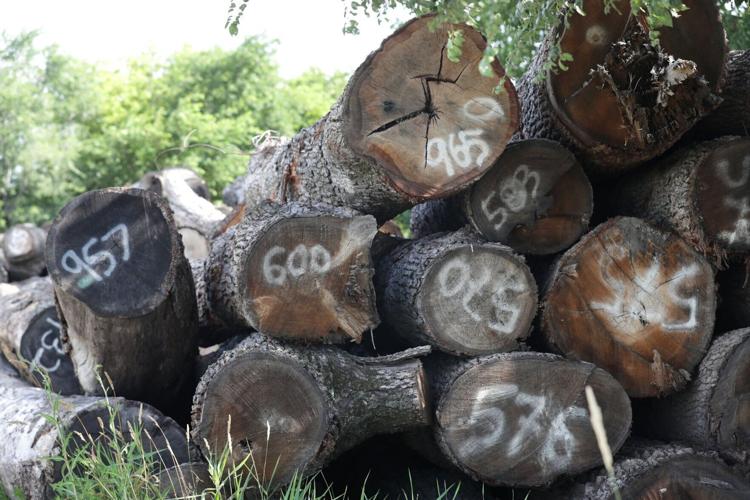
Trees that have been harvested are labeled with a number that identifies where they came from at The Wood Cycle of Wisconsin, in Oregon, Wis., Wednesday, July 20, 2022. AMBER ARNOLD, STATE JOURNAL
Paul Morrison, owner of The Wood Cycle of Wisconsin, shows logs stockpiled at the town of Oregon mill where he cuts, dries and builds with wood from urban trees that could otherwise be turned into mulch.
Paul Morrison, owner of The Wood Cycle of Wisconsin, shows the area where milled wood is dried out in a solar kiln on his property in Oregon, Wis., Wednesday, July 20, 2022. AMBER ARNOLD, STATE JOURNAL
The stairs at Promega's Feynman Center are made from walnut trees harvested on the company’s property in Fitchburg, which architect David Rousseau said was an effort to honor the trees.
Tim Boettner, left, and Matt McCoy carry a piece of walnut cut from a log at The Wood Cycle of Wisconsin in the town of Oregon. Put to other uses instead of mulching or landfilled, urban wood can lock up millions of tons of heat-trapping carbon dioxide.
Paul Morrison, owner of The Wood Cycle of Wisconsin, shows some of the harvested wood on his property before it is milled in Oregon, Wis., Wednesday, July 20, 2022. AMBER ARNOLD, STATE JOURNAL
Reception desks at the SSM Health South Madison Campus incorporated veneer from black walnut trees cut down to make way for the $75 million project on Fish Hatchery Road.
Generally seen as waste, wood from urban trees can be a valuable resource, but there are challenges to marketing an irregular material in a mass-production economy.
Urban wood
AMBER ARNOLD, STATE JOURNAL
Paul Morrison cuts a walnut log at The Wood Cycle of Wisconsin, where he specializes in milling urban trees. “Literally, the carbon in those trees is what we exhaled as we enjoyed the shade under those trees," he says. "The connection is that real."
2022072010WoodCycle369-07202022155802
AMBER ARNOLD
Paul Morrison, owner of The Wood Cycle of Wisconsin, talks about a table he made from a harvested elm tree in the showroom in Oregon, Wis., Wednesday, July 20, 2022. AMBER ARNOLD, STATE JOURNAL
2022072006WoodCycle496-07202022155802
AMBER ARNOLD
Trees that have been harvested are labeled with a number that identifies where they came from at The Wood Cycle of Wisconsin, in Oregon, Wis., Wednesday, July 20, 2022. AMBER ARNOLD, STATE JOURNAL
Urban wood
AMBER ARNOLD, STATE JOURNAL
Paul Morrison, owner of The Wood Cycle of Wisconsin, shows logs stockpiled at the town of Oregon mill where he cuts, dries and builds with wood from urban trees that could otherwise be turned into mulch.
2022072007WoodCycle222-07202022155802
AMBER ARNOLD
Paul Morrison, owner of The Wood Cycle of Wisconsin, shows the area where milled wood is dried out in a solar kiln on his property in Oregon, Wis., Wednesday, July 20, 2022. AMBER ARNOLD, STATE JOURNAL
Urban wood
AMBER ARNOLD, STATE JOURNAL
The stairs at Promega's Feynman Center are made from walnut trees harvested on the company’s property in Fitchburg, which architect David Rousseau said was an effort to honor the trees.
Urban wood
AMBER ARNOLD, STATE JOURNAL
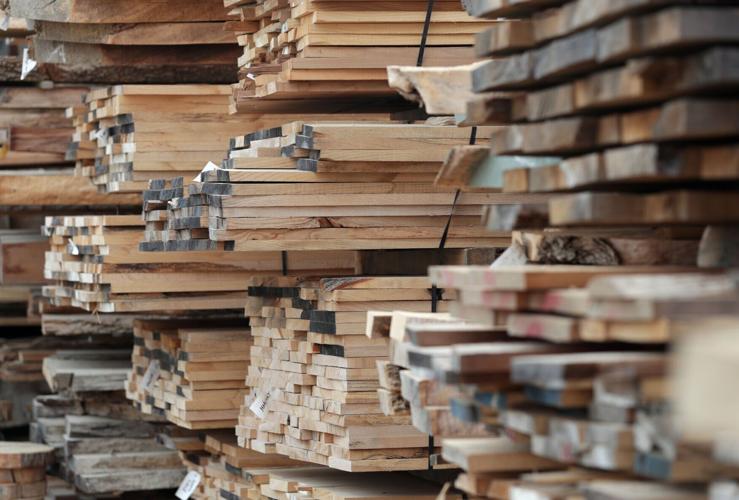
Wood that has been milled is labeled with the street name of where it came from as it dries in a solar kiln at The Wood Cycle of Wisconsin.
Urban wood
AMBER ARNOLD, STATE JOURNAL
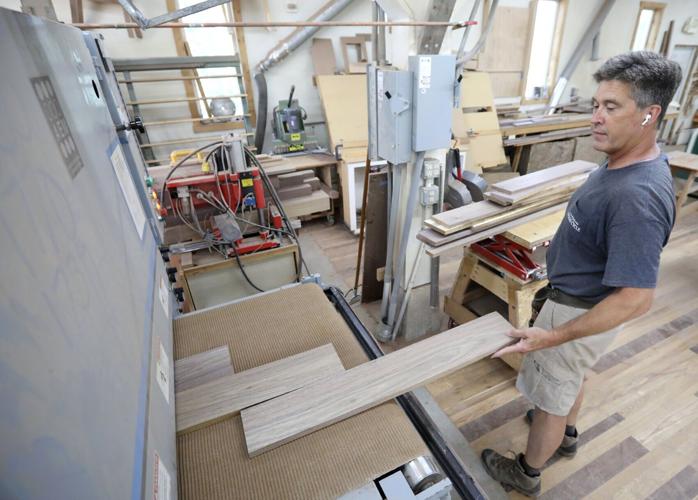
Andy Linch puts pieces of walnut to be used for a cabinet into a sanding machine at The Wood Cycle of Wisconsin in Oregon.
Urban wood
AMBER ARNOLD, STATE JOURNAL
Tim Boettner, left, and Matt McCoy carry a piece of walnut cut from a log at The Wood Cycle of Wisconsin in the town of Oregon. Put to other uses instead of mulching or landfilled, urban wood can lock up millions of tons of heat-trapping carbon dioxide.
2022072008WoodCycle188-07202022155802
AMBER ARNOLD
Paul Morrison, owner of The Wood Cycle of Wisconsin, shows some of the harvested wood on his property before it is milled in Oregon, Wis., Wednesday, July 20, 2022. AMBER ARNOLD, STATE JOURNAL
SSM Health black walnut
JOHN HART, STATE JOURNAL ARCHIVES
Reception desks at the SSM Health South Madison Campus incorporated veneer from black walnut trees cut down to make way for the $75 million project on Fish Hatchery Road.
Paul Morrison, owner of The Wood Cycle of Wisconsin, shows logs stockpiled at the town of Oregon mill where he cuts, dries and builds with wood from urban trees that could otherwise be turned into mulch.
Generally seen as waste, wood from urban trees can be a valuable resource, but there are challenges to marketing an irregular material in a mass-production economy.
Tim Boettner, left, and Matt McCoy carry a piece of walnut cut from a log at The Wood Cycle of Wisconsin in the town of Oregon. Put to other uses instead of mulching or landfilled, urban wood can lock up millions of tons of heat-trapping carbon dioxide.
The stairs at Promega's Feynman Center are made from walnut trees harvested on the company’s property in Fitchburg, which architect David Rousseau said was an effort to honor the trees.
Paul Morrison cuts a walnut log at The Wood Cycle of Wisconsin, where he specializes in milling urban trees. “Literally, the carbon in those trees is what we exhaled as we enjoyed the shade under those trees," he says. "The connection is that real."
Reception desks at the SSM Health South Madison Campus incorporated veneer from black walnut trees cut down to make way for the $75 million project on Fish Hatchery Road.