Evidence of the Trump administration’s militarization at Arizona’s southern border has been mounting in recent weeks, even as migrant arrivals there have dwindled to historic lows.
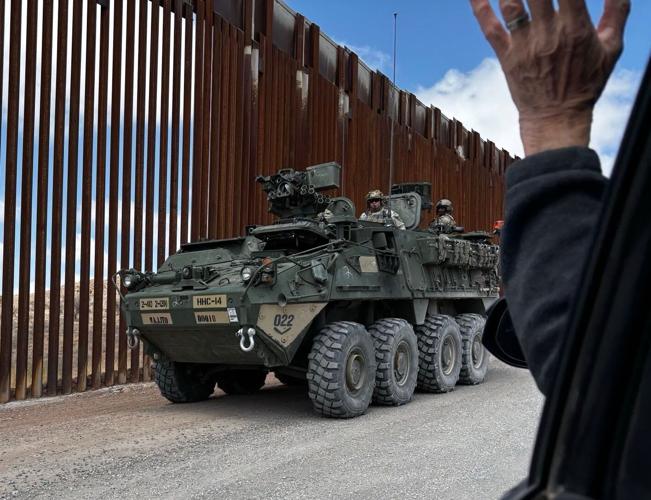
A military Stryker vehicle — one of more than 100 of the eight-wheeled armored vehicles currently deployed to support the southern border mission — was spotted by humanitarian volunteers this month on a remote stretch of border road, east of Sásabe, Arizona. As on the rest of the U.S.-Mexico border, migrant arrivals here have been very few lately, aid workers say.
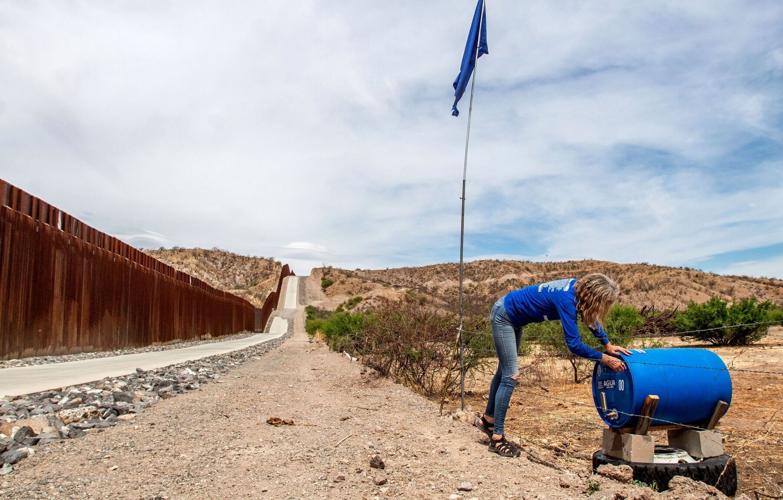
No migrants were in sight on a recent visit to the border wall east of Sásabe, Arizona, where humanitarian volunteer Christy Coverdale Stewart checked on the water level in one of Humane Borders’ water stations.
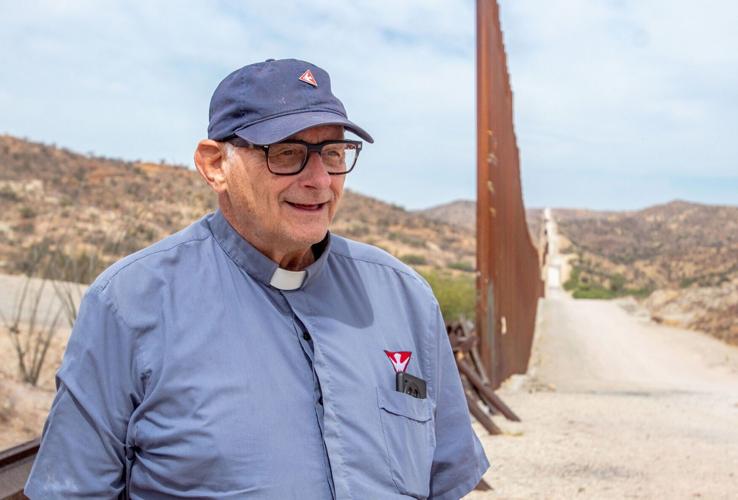
Father Ray Riding, a Catholic priest and volunteer with the Tucson Samaritans, said he’s visited the border region east of Sásabe once or twice a week for months, and he hasn’t seen a single migrant on his recent visits. It’s a departure from last fall, when aid workers routinely encountered dozens of migrants each day, said Riding, pictured here about 22 hilly miles east of the Sásabe port of entry on May 12.
In late April, a volunteer with Humane Borders spotted at least four Stryker armored vehicles at the Border Patrol station in the town of Why, Arizona, about 27 miles north of the U.S.-Mexico border.
A military Stryker vehicle — one of more than 100 of the eight-wheeled armored vehicles currently deployed to support the southern border mission — was spotted by humanitarian volunteers this month on a remote stretch of border road, east of Sásabe, Arizona. As on the rest of the U.S.-Mexico border, migrant arrivals here have been very few lately, aid workers say.
No migrants were in sight on a recent visit to the border wall east of Sásabe, Arizona, where humanitarian volunteer Christy Coverdale Stewart checked on the water level in one of Humane Borders’ water stations.
Father Ray Riding, a Catholic priest and volunteer with the Tucson Samaritans, said he’s visited the border region east of Sásabe once or twice a week for months, and he hasn’t seen a single migrant on his recent visits. It’s a departure from last fall, when aid workers routinely encountered dozens of migrants each day, said Riding, pictured here about 22 hilly miles east of the Sásabe port of entry on May 12.
In late April, a volunteer with Humane Borders spotted at least four Stryker armored vehicles at the Border Patrol station in the town of Why, Arizona, about 27 miles north of the U.S.-Mexico border.