
CAPE CANAVERAL, Fla. — NASA's Mars rover Perseverance uncovered rocks in a dry river channel that may hold potential signs of ancient microscopic life, scientists reported Wednesday.
People are also reading…

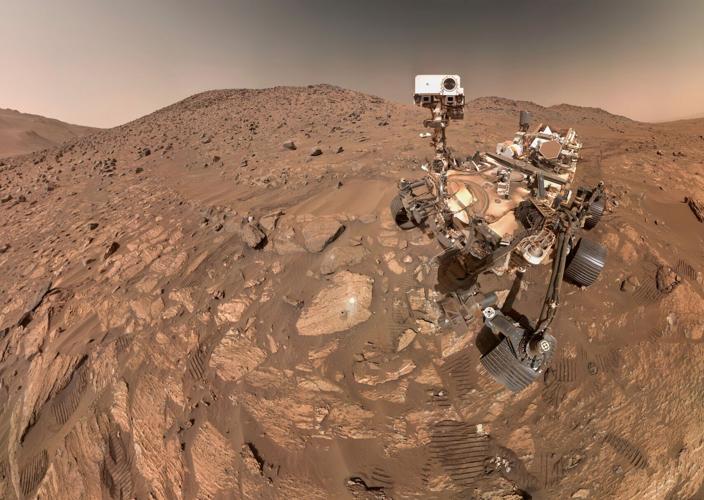
NASA's Perseverance Mars rover takes a selfie July 23, 2024, made up of 62 individual images.

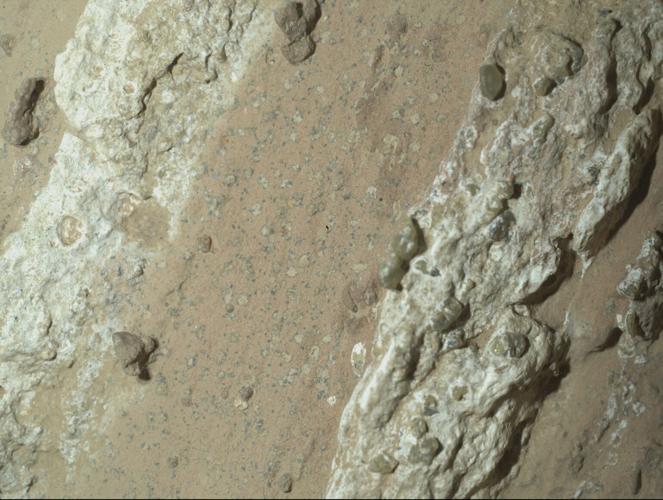
Leopard spots are seen on a reddish rock nicknamed “Cheyava Falls” in Mars’ Jezero Crater, discovered in July 2024 by NASA’s Perseverance rover.

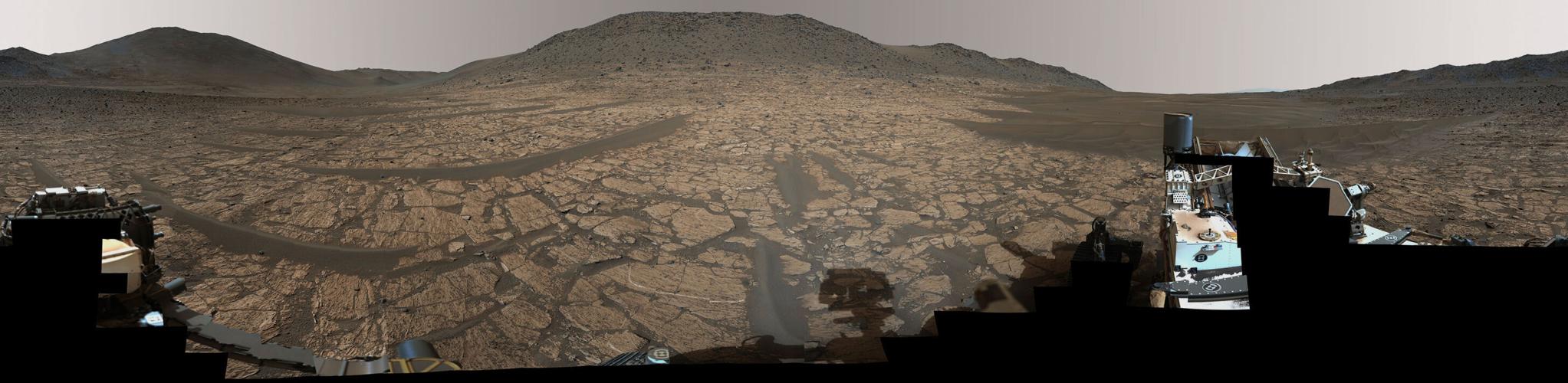
A 360-degree view of a region on Mars called “Bright Angel,” captured June 12, 2024, by NASA’s Perseverance Mars rover and made up of 346 individual images stitched together after being sent back to Earth.
Photos: NASA releases Webb telescope images

This image provided by NASA on Monday, July 11, 2022, shows galaxy cluster SMACS 0723, captured by the James Webb Space Telescope. The telescope is designed to peer back so far that scientists can get a glimpse of the dawn of the universe about 13.7 billion years ago and zoom in on closer cosmic objects, even our own solar system, with sharper focus.

This combo of images provided by NASA on Tuesday, July 12, 2022, shows a side-by-side comparison of observations of the Southern Ring Nebula in near-infrared light, at left, and mid-infrared light, at right, from the Webb Telescope.

This image released by NASA on Tuesday, July 12, 2022, shows the bright star at the center of NGC 3132 for the first time in near-infrared light.

This image provided by NASA on Tuesday, July 12, 2022, shows Stephan's Quintet, a visual grouping of five galaxies, as observed from the Webb Telescope. This mosaic was constructed from almost 1,000 separate image files, according to NASA.

This image provided by NASA on Tuesday, July 12, 2022, shows Stephan's Quintet, a visual grouping of five galaxies captured by the Webb Telescope's Mid-Infrared Instrument (MIRI).


This image released by NASA on Tuesday, July 12, 2022, shows the edge of a nearby, young, star-forming region NGC 3324 in the Carina Nebula. Captured in infrared light by the Near-Infrared Camera (NIRCam) on the James Webb Space Telescope, this image reveals previously obscured areas of star birth, according to NASA.

This image released by NASA on Tuesday, July 12, 2022, combined the capabilities of the James Webb Space Telescope's two cameras to create a never-before-seen view of a star-forming region in the Carina Nebula. Captured in infrared light by the Near-Infrared Camera (NIRCam) and Mid-Infrared Instrument (MIRI), this combined image reveals previously invisible areas of star birth.

This image released by NASA on Tuesday, July 12, 2022, shows the bright star at the center of NGC 3132 for the first time in near-infrared light.

This image provided by NASA on Tuesday, July 12, 2022, shows Stephan's Quintet, a visual grouping of five galaxies captured by the Webb Telescope's Mid-Infrared Instrument (MIRI).


This image released by NASA on Tuesday, July 12, 2022, shows the edge of a nearby, young, star-forming region NGC 3324 in the Carina Nebula. Captured in infrared light by the Near-Infrared Camera (NIRCam) on the James Webb Space Telescope, this image reveals previously obscured areas of star birth, according to NASA.

This image released by NASA on Tuesday, July 12, 2022, combined the capabilities of the James Webb Space Telescope's two cameras to create a never-before-seen view of a star-forming region in the Carina Nebula. Captured in infrared light by the Near-Infrared Camera (NIRCam) and Mid-Infrared Instrument (MIRI), this combined image reveals previously invisible areas of star birth.