Gene editing helped a desperately ill baby thrive. Scientists say it could someday treat millions
LAURA UNGAR
Associated Press
Updated
1 of 4
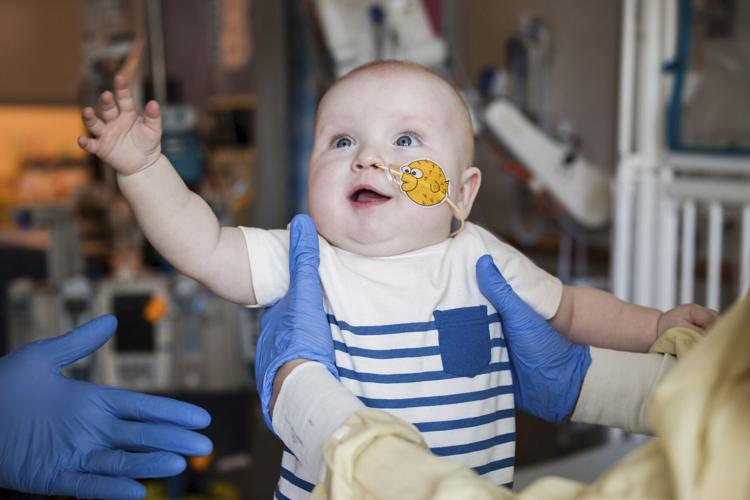
KJ Muldoon is seen in April after a follow-up dose of an experimental gene editing treatment at the Children's Hospital of Philadelphia.
Chloe Dawson, Children's Hospital of Philadelphia
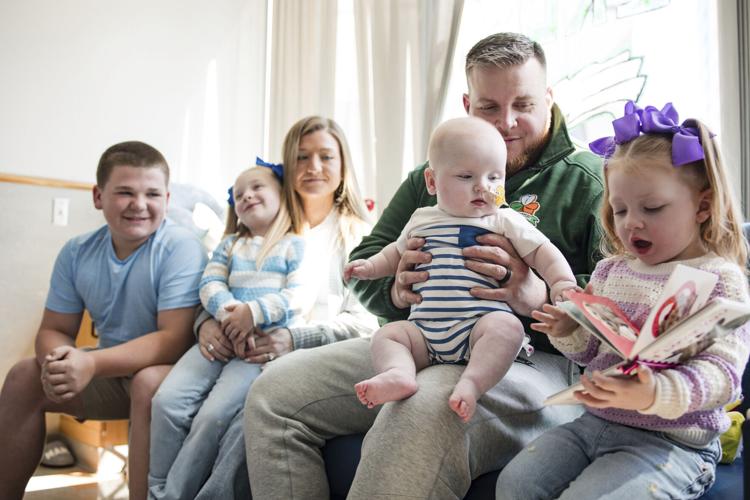
KJ Muldoon sits with his parents, Kyle and Nicole, and his siblings in April after a follow-up dose of an experimental gene editing treatment at the Children's Hospital of Philadelphia.
Chloe Dawson, Children's Hospital of Philadelphia
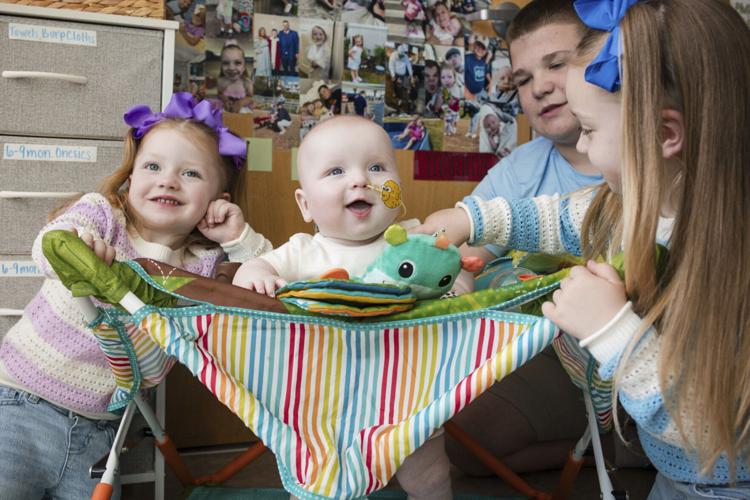
In this photo provided by the Children's Hospital of Philadelphia, KJ Muldoon, center, sits with his siblings after a follow up dose of an experimental gene editing treatment at the hospital in April 2025. (Chloe Dawson/Children's Hospital of Philadelphia via AP)
Chloe Dawson
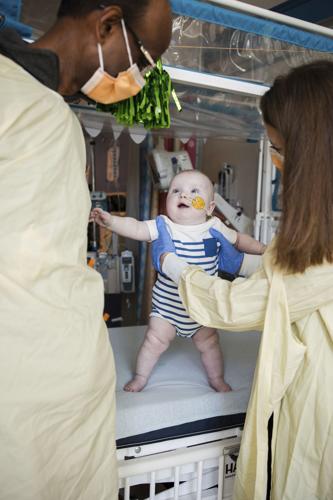
In this photo provided by the Children's Hospital of Philadelphia, Drs. Kiran Musunuru, left, and Rebecca Ahrens-Nicklas stand with KJ Muldoon, center, after a follow up dose of an experimental gene editing treatment at the hospital in April 2025. (Chloe Dawson/Children's Hospital of Philadelphia via AP)
KJ Muldoon sits with his parents, Kyle and Nicole, and his siblings in April after a follow-up dose of an experimental gene editing treatment at the Children's Hospital of Philadelphia.
In this photo provided by the Children's Hospital of Philadelphia, KJ Muldoon, center, sits with his siblings after a follow up dose of an experimental gene editing treatment at the hospital in April 2025. (Chloe Dawson/Children's Hospital of Philadelphia via AP)
In this photo provided by the Children's Hospital of Philadelphia, Drs. Kiran Musunuru, left, and Rebecca Ahrens-Nicklas stand with KJ Muldoon, center, after a follow up dose of an experimental gene editing treatment at the hospital in April 2025. (Chloe Dawson/Children's Hospital of Philadelphia via AP)