Archaeologists dig up St. Louis-area town, hope to get its history on the map
Steph Kukuljan
St. Louis Post-Dispatch
By Christian Gooden
St. Louis Post-Dispatch
The Illinois State Archaeological Survey is conducting an excavation in Brooklyn, Illinois. The aim of the endeavor is to discover and provide physical information that gives the town, founded by freed African Americans in the mid 1800s, a sense of its history by archaeological means.
BROOKLYN, Ill. — Just past the garishly painted gentlemen’s clubs off Illinois Route 3, a team of archaeologists have spent the past week looking for artifacts of this small town’s founding families.
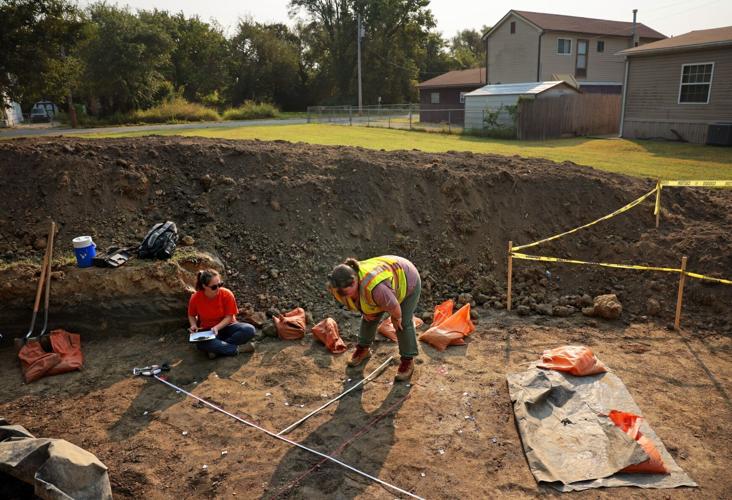
Tori Rothe, left, and Emma Pritchard, with the Illinois State Archaeological Survey map an excavation site area on Wednesday, Sept. 11, 2024, suspected of being the foundation of a mid 19th-century home on Third Street in Brooklyn, Ill. A team from the University of Illinois' Prairie Research Institute aims is to uncover and provide historical information about the town founded in the mid 1800s by freed African Americans through archaeological means.
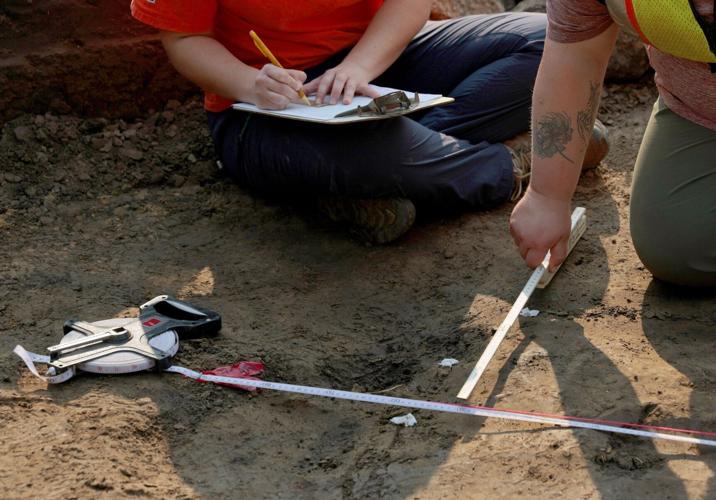
Tori Rothe left, and Emma Pritchard, with the Illinois State Archaeological Survey map an excavation site area on Wednesday, Sept. 11, 2024, suspected of being the foundation of a mid 19th-century home on Third Street in Brooklyn, Ill. A team from the University of Illinois' Prairie Research Institute aims is to uncover and provide historical information about the town founded in the mid 1800s by freed African Americans through archaeological means.
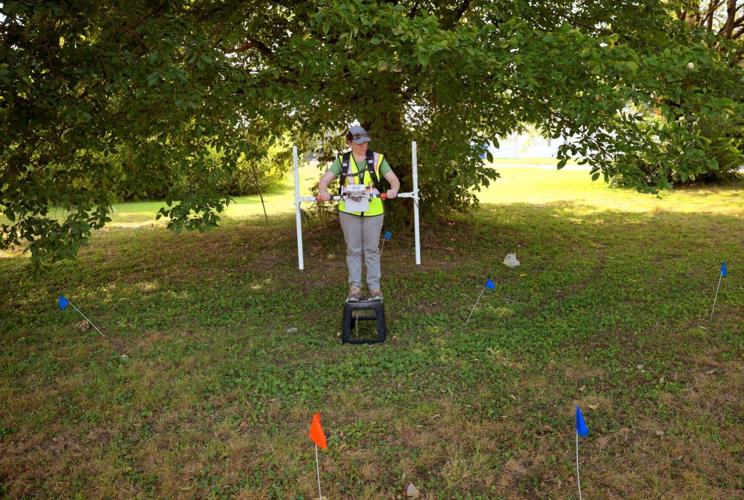
Sarah Scattergood-Crapnell, a senior scientific specialist with the Illinois State Archaeological Survey, uses a magnetometer to conduct a geophysical survey on Wednesday, Sept. 11, 2024, where a lost cemetery is believed to be, in Brooklyn, Ill.
Tori Rothe, left, and Emma Pritchard, with the Illinois State Archaeological Survey map an excavation site area on Wednesday, Sept. 11, 2024, suspected of being the foundation of a mid 19th-century home on Third Street in Brooklyn, Ill. A team from the University of Illinois' Prairie Research Institute aims is to uncover and provide historical information about the town founded in the mid 1800s by freed African Americans through archaeological means.
Tori Rothe left, and Emma Pritchard, with the Illinois State Archaeological Survey map an excavation site area on Wednesday, Sept. 11, 2024, suspected of being the foundation of a mid 19th-century home on Third Street in Brooklyn, Ill. A team from the University of Illinois' Prairie Research Institute aims is to uncover and provide historical information about the town founded in the mid 1800s by freed African Americans through archaeological means.
Sarah Scattergood-Crapnell, a senior scientific specialist with the Illinois State Archaeological Survey, uses a magnetometer to conduct a geophysical survey on Wednesday, Sept. 11, 2024, where a lost cemetery is believed to be, in Brooklyn, Ill.