


Collection: 'Keeping It Blue' guest columns on protecting our lake
The Lake Geneva region's new water quality task force has published several guest columns this year about protecting Geneva Lake. Here are the "Keeping It Blue" columns compiled in one place for easy reference.

- Charles Colman Guest columnist
Editor’s note: The Lake Geneva Regional News introduces “Keeping It Blue,” a new series of guest columns about water quality issues from members of the newly created Geneva Lake Task Force.
Over the past few years, the Geneva Lake Conservancy (GLC) has received increasing complaints from residents and members about the condition of Geneva Lake. Their concerns include algae blooms, brown water flowing from creeks after strong rains, questions about possible farm runoff and septic system problems, buildup of sediment from the gravel pit north of Williams Bay and, more recently, the arrival of the new invasive species starry stonewort in and around Trinke Estates harbor.
- By Ted Peters Guest columnist
In August 2018, a new aquatic invasive, starry stonewort (Niteliopsis obtuse), was identified in a lagoon of Geneva Lake. Within a year, it was found nearby in Geneva Lake. Initially it was hoped that the isolated population in the lagoon could be eradicated by dredging before it got into the lake. Despite efforts to contain it in the lagoon and plans to eradicate it, two populations were found in the lake during the summer of 2019. As a result, the management strategy for this invasive alga shifted to “contain and control.”
Starry stonewort is a macro-algae that was brought to the United States as a “hitchhiker” from Eurasia. Most likely an unwanted passenger in bilge waters of freighters, it was first found in the United States in 1978 in the St. Lawrence River. It is now found in several Great Lake states. It was first discovered in Wisconsin in September 2014, and is now known to be in more than 14 different lakes, including the shore waters of Lake Michigan and Green Bay.
- By Tom Nickols Guest columnist
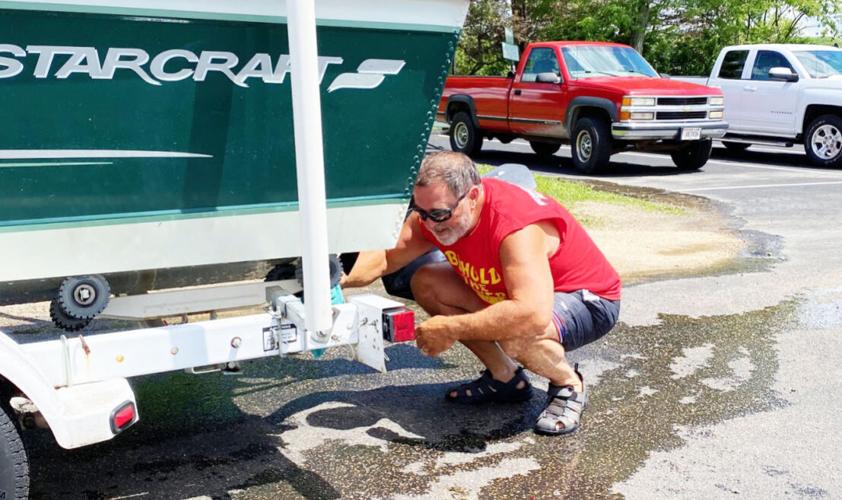
Geneva Lake is a favorite lake of boaters and fishermen who frequent public boat launches for day use.
But these fisherman and boaters who often have used their boats in other lakes — especially Lake Michigan and Illinois’ Chain of Lakes — need to take special care not to harm Geneva Lake.

- By Fay U. Amerson Guest columnist
Walworth County lakes, creeks and wetlands are vital to the county’s economy and quality of life. These remarkable and vital Walworth County resources lure residents, businesses and visitors to their shores for swimming, boating, fishing and viewing wildlife.
Unfortunately, many of these resources are threatened by storm water pollution caused by inadequate precautions during construction and other land-disturbing activities.

- By Brian Smetana Guest columnist
As we all know, farming is what supplies most of our food. There are many types of farms and many ways to farm. It is the way farmers farm that can have an effect on what happens downstream. Farmers need to feed their crops nutrients, and it is these nutrients that can impact water quality, especially in lakes.
As part of my conservation work, I look at two aspects of farming. One is soil erosion, and the other is water quality. The two can go hand in hand. By keeping the soil and nutrients on the farm field, we keep them out of the water.
- By Shannon Haydin Guest columnist
When looking for pollution sources to our waterways, we often look at our landscape and see obvious sources right in front of us. What we often don’t see is below-ground pollution sources.
Septic systems or “Private Onsite Wastewater Treatment Systems” are designed to take sewage and disburse it on the land to slowly infiltrate through the soil and into the groundwater. When designed and functioning correctly, they are effective at treating domestic wastewater. When not designed properly or failing, they will discharge nutrients, bacteria and other contaminants into ground and surface water.
- By Mark Lillie Guest columnist
It’s been a busy first year for the Geneva Lake Task Force. Here are some updates on our progress and our plan forward.
The task force is re-branding. The task force decided last month to rename itself the “Water Alliance for Preserving Geneva Lake.” Why? Put simply, there are too many organizations in the area whose name begins with “Geneva Lake:” Geneva Lake Environmental Agency, Geneva Lake Association, Geneva Lake Conservancy, Geneva Lake Level Corp., etc.
More like this...
- Charles Colman Guest columnist
Editor’s note: The Lake Geneva Regional News introduces “Keeping It Blue,” a new series of guest columns about water quality issues from members of the newly created Geneva Lake Task Force.
Over the past few years, the Geneva Lake Conservancy (GLC) has received increasing complaints from residents and members about the condition of Geneva Lake. Their concerns include algae blooms, brown water flowing from creeks after strong rains, questions about possible farm runoff and septic system problems, buildup of sediment from the gravel pit north of Williams Bay and, more recently, the arrival of the new invasive species starry stonewort in and around Trinke Estates harbor.
- By Ted Peters Guest columnist
In August 2018, a new aquatic invasive, starry stonewort (Niteliopsis obtuse), was identified in a lagoon of Geneva Lake. Within a year, it was found nearby in Geneva Lake. Initially it was hoped that the isolated population in the lagoon could be eradicated by dredging before it got into the lake. Despite efforts to contain it in the lagoon and plans to eradicate it, two populations were found in the lake during the summer of 2019. As a result, the management strategy for this invasive alga shifted to “contain and control.”
Starry stonewort is a macro-algae that was brought to the United States as a “hitchhiker” from Eurasia. Most likely an unwanted passenger in bilge waters of freighters, it was first found in the United States in 1978 in the St. Lawrence River. It is now found in several Great Lake states. It was first discovered in Wisconsin in September 2014, and is now known to be in more than 14 different lakes, including the shore waters of Lake Michigan and Green Bay.
- By Tom Nickols Guest columnist
Geneva Lake is a favorite lake of boaters and fishermen who frequent public boat launches for day use.
But these fisherman and boaters who often have used their boats in other lakes — especially Lake Michigan and Illinois’ Chain of Lakes — need to take special care not to harm Geneva Lake.
- By Fay U. Amerson Guest columnist
Walworth County lakes, creeks and wetlands are vital to the county’s economy and quality of life. These remarkable and vital Walworth County resources lure residents, businesses and visitors to their shores for swimming, boating, fishing and viewing wildlife.
Unfortunately, many of these resources are threatened by storm water pollution caused by inadequate precautions during construction and other land-disturbing activities.
- By Brian Smetana Guest columnist
As we all know, farming is what supplies most of our food. There are many types of farms and many ways to farm. It is the way farmers farm that can have an effect on what happens downstream. Farmers need to feed their crops nutrients, and it is these nutrients that can impact water quality, especially in lakes.
As part of my conservation work, I look at two aspects of farming. One is soil erosion, and the other is water quality. The two can go hand in hand. By keeping the soil and nutrients on the farm field, we keep them out of the water.
- By Shannon Haydin Guest columnist
When looking for pollution sources to our waterways, we often look at our landscape and see obvious sources right in front of us. What we often don’t see is below-ground pollution sources.
Septic systems or “Private Onsite Wastewater Treatment Systems” are designed to take sewage and disburse it on the land to slowly infiltrate through the soil and into the groundwater. When designed and functioning correctly, they are effective at treating domestic wastewater. When not designed properly or failing, they will discharge nutrients, bacteria and other contaminants into ground and surface water.
- By Mark Lillie Guest columnist
It’s been a busy first year for the Geneva Lake Task Force. Here are some updates on our progress and our plan forward.
The task force is re-branding. The task force decided last month to rename itself the “Water Alliance for Preserving Geneva Lake.” Why? Put simply, there are too many organizations in the area whose name begins with “Geneva Lake:” Geneva Lake Environmental Agency, Geneva Lake Association, Geneva Lake Conservancy, Geneva Lake Level Corp., etc.
More like this...

Scott Williams
Get email notifications on {{subject}} daily!
{{description}}
Email notifications are only sent once a day, and only if there are new matching items.
Followed notifications
Please log in to use this feature
Log InMore information
Most Popular
-
Cheese shop owner following in family’s 100-year tradition
-
City administrator presents update on Highway 50 project
-
Wisconsin men's hockey lands defenseman hours into transfer portal period
-
Restaurant review: The Del-Bar earns its prime reputation
-
Lake Geneva restaurant owner honored for quick response
Most Popular
-
Cheese shop owner following in family’s 100-year tradition
-
City administrator presents update on Highway 50 project
-
Wisconsin men's hockey lands defenseman hours into transfer portal period
-
Restaurant review: The Del-Bar earns its prime reputation
-
Lake Geneva restaurant owner honored for quick response


