

An incumbent Linn Town Board supervisor is facing a challenge for his seat on the Tuesday, April 4 spring general election ballot.
People are also reading…

Livingston
The Town of Linn Fire Department responds to the scene of a fire at the professional building, 415 Broad St. in Lake Geneva.

Gavin
In 42 Photos: Black Point Estate and Gardens, Lake Geneva, Summer 2022
Black Point Bedroom 2.jpg

Black Point, a 17-room Queen Anne-styled Victorian summer estate built by Chicago beer baron Conrad Seipp in 1888, includes numerous, one of which is pictured here. Black Point was owned by four generations of the Seipp family before its 2005 donation to the Wisconsin Historical Society, which opened Black Point Estate & Gardens to the public in 2007.
Black Point Estate Bedroom

Black Point, a 17-room Queen Anne-styled Victorian summer estate built by Chicago beer baron Conrad Seipp in 1888, includes numerous bedrooms, one of which is pictured here. Black Point was owned by four generations of the Seipp family before its 2005 donation to the Wisconsin Historical Society, which opened Black Point Estate & Gardens to the public in 2007.
Black Point: Catherina Seipp (1846-1920)

Catherina Orb Seipp, wife of leading Chicago beer baron Conrad Seipp, inherited the equivalent of $97 million, adjusted for inflation, when her husband died in 1890, ensuring the future of Black Point Estate for generations to come. Catherina, born in 1846, passed in 1920. This 1910 photo was taken in the drawing room of her Chicago home on Michigan Avenue.
Black Point: Conrad Seipp portrait

German immigrant Conrad Seipp (1825-1890), a leading Chicago brewer, built his Black Point Estate summer home on the shores of scenic Geneva Lake in the Town of Linn in 1887-1888. Seipp Brewing Co., founded in 1854, ranked as the nation's largest brewer from 1872-1874 and remained in the top 10 nationally during his lifetime. Despite pivoting to the production of soft drinks, malt syrup and near beer with the arrival of Prohibition in 1920, Seipp Brewing was among Prohibition's casualties, closing in 1930. Repeal of Prohibition came in 1933, too late for Seipp Brewing.
Black Point: Conrad Seipp photograph

German immigrant Conrad Seipp (1825-1890), a leading Chicago brewer, built his Black Point Estate summer home on the shores of scenic Geneva Lake in the Town of Linn in 1888. Seipp Brewing Co., founded in 1854, ranked as the nation's largest brewer from 1872-1874 and remained in the top ten nationally until the implementation of Prohibition in 1920. Despite pivoting to the production of soft drinks, malt syrup and near beer, Seipp Brewing was among Prohibition's casualties, closing in 1930.
Black Point: Emma Seipp Schmidt

Emma Seipp Schmidt (1862-1942), daughter of Conrad and Catherina Seipp, was the second generation owner of Black Point Estate along with her husband Otto L. Schmidt (1863-1935).
Black Point Estate & Gardens, Town of Linn

Designed by Adolph Cudell and built for Chicago beer baron Conrad Seipp at a cost of $20,000 in 1887-1888, Queen Anne-styled Black Point Estate today is one of a handful of surviving Victorian mansions that once ringed Geneva Lake. The 8,000-square-foot summer home, handed down through four generations of the Seipp family before it was gifted to the Wisconsin Historical Society in 2005, includes a distinctive four-story corner tower that offers sweeping, breezy views of Geneva Lake and Yerkes Observatory in Williams Bay. The 12-acre lakefront estate, listed on the National Register of Historic Places in September 1994, includes a variety of picturesque garden plantings.
Black Point Estate Grounds
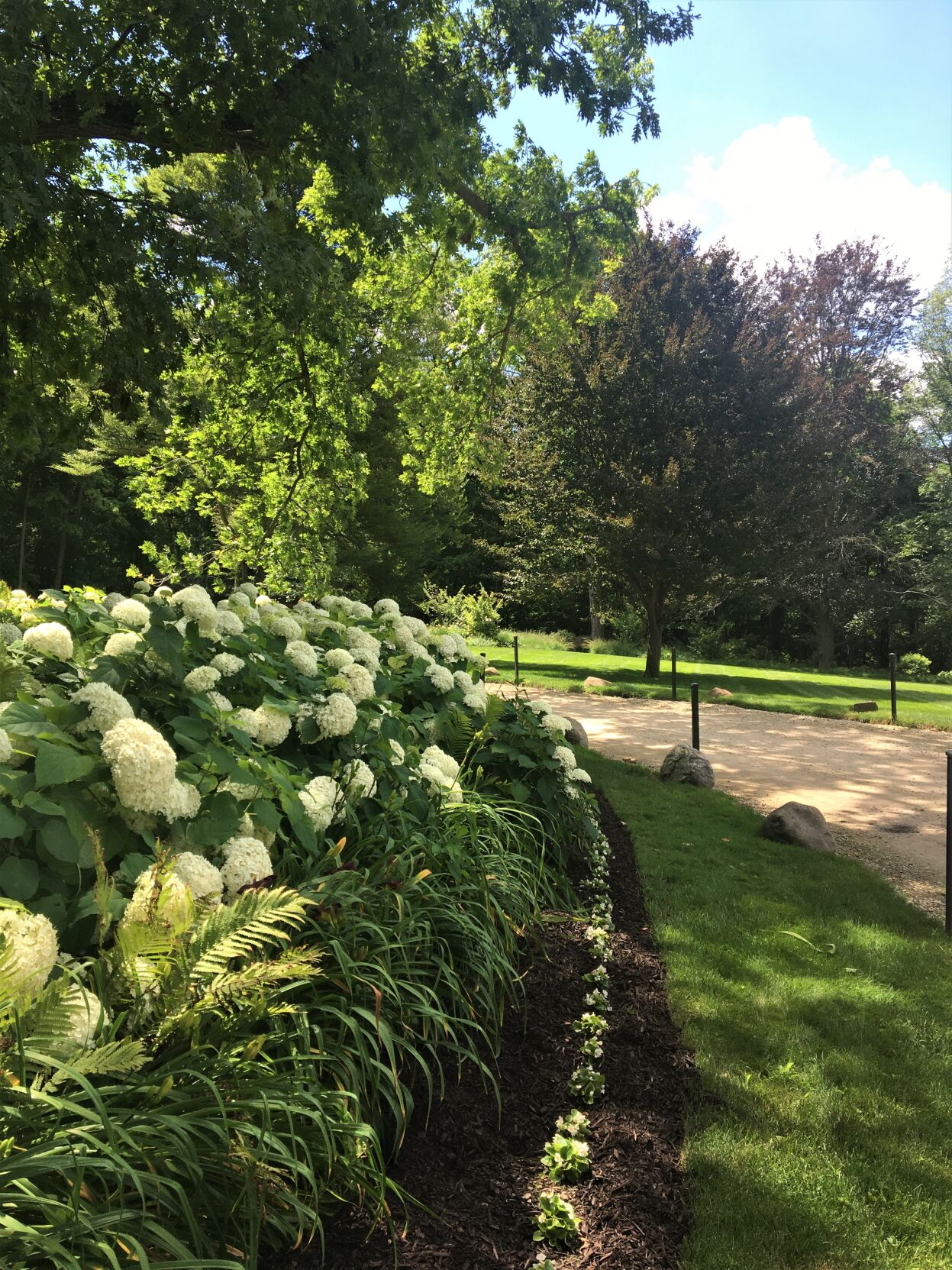
Black Point Estate & Gardens in the Town of Linn offers a variety of plantings and scenic paved walkways on its 12-acre grounds overlooking Geneva Lake. The picturesque gardens are maintained by two part-time groundskeepers with a combine 75 years of service at Black Point.
Black Point Flower Bed

Black Point Estate & Gardens on Geneva Lake in the Town of Linn features a variety of colorful plantings on the historic 12-acre house museum site, owned and operated by the Wisconsin Historical Society. Docent-guided tours of Black Point are offered May-October in partnership with Lake Geneva Cruise Line.
Black Point Garden Beds

Black Point Estate & Gardens on Geneva Lake in the Town of Linn features a variety of colorful plantings on the historic 12-acre house museum site, owned and operated by the Wisconsin Historical Society. Docent-guided tours of Black Point are offered May-October in partnership with Lake Geneva Cruise Line.
Black Point Gift Shop

Tours of Chicago beer baron Conrad Seipp's historic circa-1888 Black Point summer estate in the Town of Linn end with a visit to the house museum's gift shop, which features a variety of local history books and Seipp Brewing Co. memorabelia, among other items. Guests can also purchase a retro-nostalgic recreation of pre-Prohibition beers for on-site-only consumption. The beers are brewed by Seipp's great-great-great-granddaughter, Dr. Laurin Mack, in partnership with Chicago craft brewer Metropolitan Brewing.
Black Point Guests Stroll Grounds

Owned and operated by the Wisconsin Historical Society, Black Point Estate & Gardens on Geneva Lake in the Town of Linn is a popular Lake Geneva area tourist destination.
Black Point: Headboard Detail

Intricate, detailed carving craftsmanship highlights this Victorian era bed headboard at Black Point Estate.
Black Point Hillside View, Approaching From Geneva Lake

National Register-listed Black Point Estate cuts an impressive architectural profile on Geneva Lake as one of the few surviving Victorian mansions on the lake. The Queen Anne-styled summer estate, today owned and operated by the Wisconsin Historical Society as a house museum, was built by leading Chicago brewer Conrad Seipp in 1987-1888, serving as a Seipp family summer home across four generations until 2005.
Black Point View From Geneva Lake

Perched high on a cool, breezy hill overlooking Geneva Lake in the Town of Linn, Black Point Estate & Gardens is a popular warm weather tourist destination, drawing some 8,000-10,000 visitors annually to the National Register-listed home.
Black Point Medicine Cabinet

A medicine cabinet at circa-1888 Black Point Estate remains as it was left when the National Register-listed summer home was gifted to the Wisconsin Historical Society in 2005 by fourth generation descendants of leading Chicago beer baron Conrad Seipp. Cabinet contents range from 1920s-era tooth powder to a contemporary early 2000s tin of NIVEA skin cream.
Black Point Paving Bricks.jpg

Black Point: Seipp Beer Bottles

Chicago's Conrad Seipp Brewing Co. (1854-1930) was a leading Chicago brewer, turning out 250,000 barrels of beer annually at its height. A top-ten national brewer during namesake Seipp's lifetime, Seipp Brewing ranked as the nation's largest brewer in 1872-1874 before being overtaken by Milwaukee's Schlitz and Pabst and St. Louis' Anheuser-Busch. Like most of the nation's breweries, Seipp failed to survive Prohibition. A selection of pre-Prohibition Seipp beer bottles is seen on display at beer baron Conrad Seipp's getaway Wisconsin summer home, Black Point Estate on Geneva Lake in the Town of Linn. Black Point is today owned and operated by the Wisconsin Historical Society as a home museum, drawing nearly 10,000 visitors annually.
Black Point: Seipp Beer Bottles 2

Chicago's Conrad Seipp Brewing Co. (1854-1930) was a leading Chicago brewer, turning out 250,000 barrels of beer annually at its height. A top-ten national brewer, Seipp was the nation's largest brewer in 1872-1874 before being overtaken by Milwaukee's Schlitz and Pabst and St. Louis' Anheuser-Busch. Like most of the nation's breweries, Seipp failed to survive Prohibition. A selection of pre-Prohibition Seipp beer bottles is seen on display at beer baron Conrad Seipp's getaway Wisconsin summer home, Black Point Estate on Geneva Lake in the Town of Linn. Black Point is today owned and operated by the Wisconsin Historical Society as a home museum, drawing nearly 10,000 visitors annually.
Black Point: Seipp Beer Bottles 3

Chicago's Conrad Seipp Brewing Co. (1854-1930) was a leading Chicago brewer, turning out 250,000 barrels of beer annually at its height. A top-ten national brewer, Seipp was the nation's largest brewer in 1872-1874 before being overtaken by Milwaukee's Schlitz and Pabst and St. Louis' Anheuser-Busch. Like most of the nation's breweries, Seipp failed to survive Prohibition. A selection of pre-Prohibition Seipp beer bottles is seen on display at beer baron Conrad Seipp's getaway Wisconsin summer home, Black Point Estate on Geneva Lake in the Town of Linn. Black Point is today owned and operated by the Wisconsin Historical Society as a home museum, drawing nearly 10,000 visitors annually.
Black Point: Seipp family photo

Four generations of the Conrad and Catherina Seipp family called Black Point Estate on Geneva Lake in the Town of Linn their summer home across four generations from 1888-2005. This Christmas 1915 photo of the Seipp family gathered at their Michigan Avenue home in Chicago is among the heirlooms on display at National Register-listed Black Point Estate & Gardens, owned and maintained by the Wisconsin Historical Society as a house museum.
Black Point: Side View Showing Verandas

Built by leading Chicago brewer Conrad Seipp as a breezy and cool Wisconsin summer getaway from the hot and humid Windy City, Queen Anne-styled Black Point Estate features airy wrap-around ground and second floor verandas overlooking the estate's colorful, shady grounds and picturesque Geneva Lake. Built in 1887-1888, Black Point served as a summer getaway for four generations of the Seipp family, which gifted the summer estate to the Wisconsin Historical Society in 2005. Opened to the public in 2007, between 8,000-10,000 visitors tour Black Point annually during its May-October tour season.
Black Point: Site Director David A. Desimone

David A. Desimone serves as site director of Black Point Estate & Gardens for the Wisconsin Historical Society. In the off-season, Black Point presents off-site programs on local history throughout the Lake Geneva area.
Black Point: Table Scene

Four generations of uninterrupted Seipp family ownership from 1888-2005 have built Black Point Estate into a unique time capsule of Geneva Lake and Chicago brewing history. Built by leading Chicago beer baron Conrad Seipp as a summer vacation residence for his family, Black Point Estate is today owned and operated by the Wisconsin Historical Society, with tours offered annual from May to October.
Black Point: Billiard Room

The billiard room at Black Point Estate.
Black Point: Group Outing Visit

With an 8,000-square-foot mansion on 100 lakefront acres back in the day, Chicago brewer Conrad Seipp's Black Point Estate could accommodate large groups for social gatherings of various sorts. On July 26, 1908, members of the Seipp's Säengerbund choir from the family's Chicago brewery and Lake Geneva's Germania Mannerchor singing society gathered at Black Point for a joint men's choir concert at Black Point.
Black Point: Music Room

One of the most lavishly appointed rooms at Black Point Estate is the main floor music room, which includes fine artwork, a ornate and colorful stained glass window, and a crystal chandelier. Centerpiece of the music room is the Seipp family's 1911 Chickering grand piano. As part of its 2005 donation of Black Point Estate, the Seipp family left the Wisconsin Historical Society a sizeable collection of piano sheet music.
Black Point: Parlor 2

The parlor at Black Point Estate.
Black Point: Parlor

The parlor at Black Point Estate.
Black Point: Billiard Room 2

The billiard room at Black Point Estate, the original man cave, is anchored by this 151-year-old pool table, built in 1871 by Chicago pool table manufacturer Zeller.
Black Point: Tower View of Geneva Lake in the Early Evening

An early evening view of Geneva Lake as seen from Black Point Estate's signature four-story tower.
Black Point: Dining Room

The dining room at Black Point Estate.
Black Point: Early Evening View of Geneva Lake from Tower

An early evening view of Geneva Lake as seen from Black Point Estate's signature four-story tower.
Black Point: Amy Bachtell of Hartland Taking Picture of Flowers

Looking for some gardening ideas to take back home, Hartland resident Amy Barchtell takes pictures of the colorful plantings at Black Point Estate & Gardens during a recent tour.
Black Point: Stained Glass in Music Room.jpg

Detail of the stained glass window in the music room at Black Point Estate.
Black Point: Staircase

A visit to Black Point Estate & Gardens is a step back in time to the Victorian era. The Queen Anne-styled summer estate was built by leading Chicago brewer Conrad Seipp in 1887-1888 and used by four generations of the Seipp family until 2005, when the property was donated to the Wisconsin Historical Society for use as a house museum. Some 8,000-10,000 visitors tour Black Point annually between May-October.
Black Point Estate Tower with Blue Sky

Built by Chicago beer baron Conrad Seipp at a cost of $20,000 in 1887-1888. Queen Anne-styled Black Point Estate today is one of a handful of surviving Victorian mansions that once ringed Geneva Lake. The 8,000-square-foot summer home, handed down through four generations of the Seipp family before it was gifted to the Wisconsin Historical Society in 2005, includes a distinctive four-story corner tower that offers sweeping, breezy views of Geneva Lake and Yerkes Observatory in Williams Bay. The 12-acre estate includes a variety of picturesque garden plantings.
Black Point: View from Second Story Wrap-Around Veranda

The second floor wrap-around veranda at Black Point Estate offers a pictureque view of Geneva Lake and the 12-acre estate grounds. The home's cool, breezy verandas augmented the 17-room summer home's 8,000 square feet of living space.
Black Point: Wardrobe

When the Seipp family turned ownership of Black Point Estate over to the Wisconsin Historical Society in 2005, an estimated 95% of its contents were left behind, including artwork, furniture, decor, knick-knacks and personal items, including the contents of this wardrobe.
Conrad Seipp Brewing Co. ad 2

Chicago-based Seipp Brewing Co. was once a dominant player in the Chicago and U.S. beer market, producing over 250,000 barrels annually at its height and briefly ranking as the nation's largest brewer between 1872-1874. Beer baron Conrad Seipp, who built a Wisconsin summer home on Geneva Lake in the Town of Linn, was a pioneer of modern brewing with innovations including new techniques in refrigeration, distribution and marketing. Seipp died in 1890 and members of his family continued to run the company until its 1930 demise, shortly before the 1933 end of Prohibition. The company and several of its historic pre-Prohibition brews were revived by Seipp's great-great-great-granddaughter, Laurin Mack, in collaboration with Chicago craft brewer Metropolitan Brewing.
Conrad Seipp Brewing Co. ad 1

German immigrant Conrad Seipp started making beer in Chicago in 1854. Brewers of beers touted as "just a little better than the kind you thought was best," the Conrad Seipp Brewing Co. was among hundreds of U.S. breweries that failed to survive Prohibition (1919-1933). The company and several of its historic pre-Prohibition brews were revived in 2020 by Seipp's great-great-great-granddaughter, Laurin Mack. Tourists at Black Point Estate, the family's 1888-2005 Geneva Lake summer home in the Town of Linn, have the opportunity to purchase and quaff a cold Seipp brew at the end of their tour. The revived Seipp brews are made in collaboration with Metropolitan Brewing, a Chicago craft brewer.
Artist's view of Chicago's Conrad Seipp Brewing Co. facility

Chicago's Conrad Seipp Brewing Co. briefly ranked as the nation's largest brewer between 1872-1874 before being eclipsed by Milwaukee-based brewers Schlitz and Pabst, among others. At its height, Seipp Brewing produced a quarter million barrels of beer annually. Brewery namesake Seipp built a Wisconsin summer estate, Black Point, on the cool, breezy shores of Geneva Lake in the Town of Linn in 1888. Black Point Estate & Gardens is today owned and operated by the Wisconsin Historical Society as a house museum.