For former Capitol Police chief, communication with protesters was key
RILEY VETTERKIND
Updated
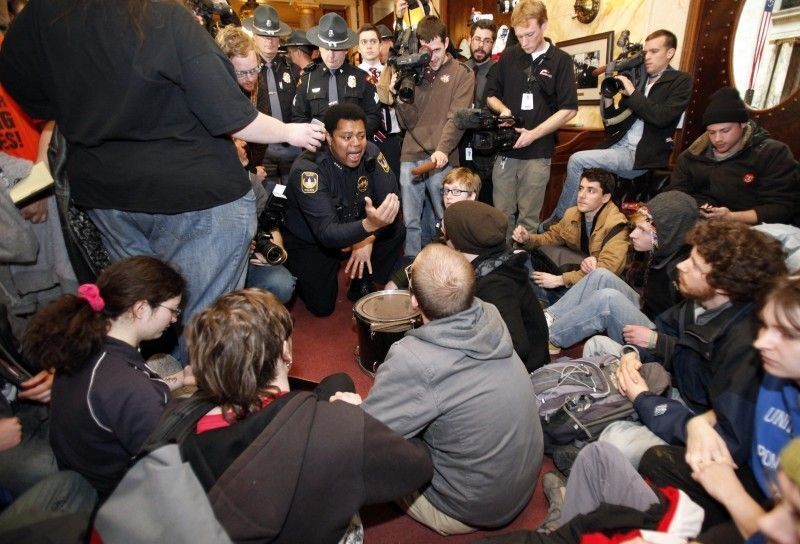
Capitol Police Chief Charles Tubbs pleads with protesters to leave the state Assembly antechamber voluntarily March 10, 2011, to avoid being hauled out.
Ten years after the introduction of Act 10 led to hundreds of thousands of protesters to descend on the state Capitol, protests and civil unrest have once again become a common occurrence in Wisconsin and the nation.
The most seismic political story of the last decade in Wisconsin began on Feb. 7, 2011, when Republican Gov. Scott Walker informed a gathering of cabinet members of plans to unilaterally roll back the power of public sector unions in the state. He "dropped the bomb," as Walker would describe it afterward, four days later.
The audacious proposal, to be known forever after as Act 10, required public employees to pay more for pension and health insurance benefits, but also banned most subjects of collective bargaining and placed obstacles to maintaining union membership.
The contract calls for a 2% across-the-board wage increase in each year, with lump sump payments equal to a 2% increase for all hours worked d…
Capitol Police Chief Charles Tubbs pleads with protesters to leave the state Assembly antechamber voluntarily March 10, 2011, to avoid being hauled out.