
Free speech is essential to democracy
Banning vile views is counterproductive, deprives public of chance to engage, reject
ANOTHER VIEW | BLOOMBERG NEWS
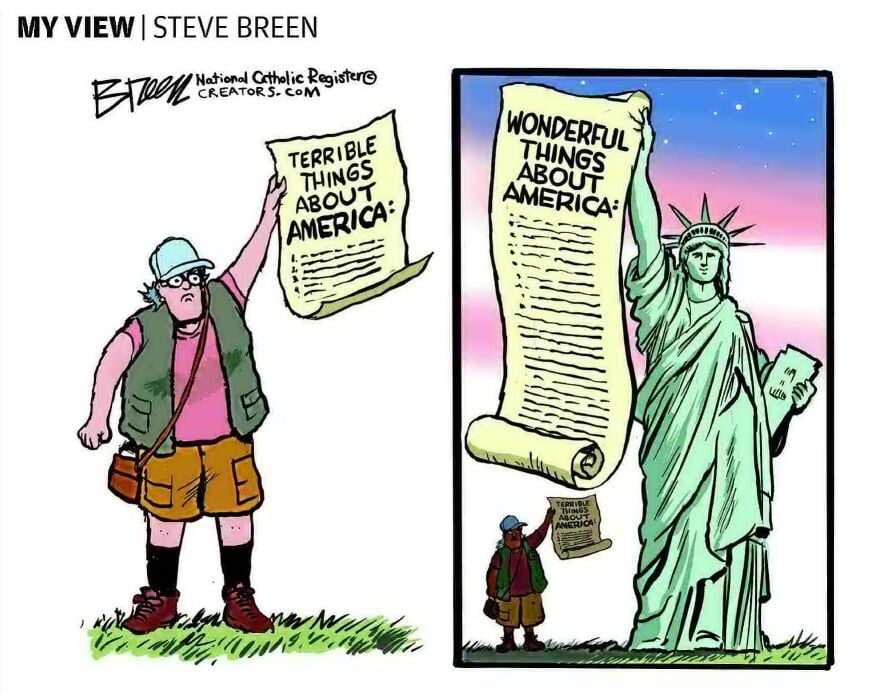
'If liberty means anything at all," George Orwell wrote in a preface to his book "Animal Farm," "it means the right to tell people what they do not want to hear." Generations of students have been taught that lesson. Yet some of the world's most robust democracies are in danger of forgetting it.
The UK's recent decision to deny entry to two American media figures, Hasan Piker and Cenk Uygur, is the latest retreat from free speech by a country that should know better. Piker and Uygur, far-left critics of Israel who have been accused of antisemitism, were invited to speak at the Oxford Union, a storied debating society. That, apparently, set off alarms at the British Home Office, which refused to issue them visas, declaring that their visit "may not be conducive to the public good" — a rationale so broad that it could encompass almost anyone.
If Piker and Uygur had, say, criminal records relating to inciting riots, such a ban might be defensible. But they merely espouse offensive ideas. Banning them is an insult to the public's intelligence.
The answer to bad ideas should always be better ideas. Nor is this the Labour government's first foray into censorship: It recently banned an American hip-hop star with a long history of antisemitism, as well as far-right activists who planned to attend a London march. Britain also has a habit of arresting people for social media posts.
Unfortunately, the U.S. — whose citizens have among the strongest speech protections in the world — isn't immune to this kind of thinking. As part of its visa application and renewal process, the U.S. government now reviews people's social feeds for commentary that might run afoul of the administration's politics.
Such censorship has proved tempting to democracies around the world. Australia canceled the visa of a Jewish influencer who called for Islam to be banned. It also denied a visa to right-wing American commentator Candace Owens.
Countries have every right to decide who crosses their borders, and many of those banned have indefensible views. Even so: Far better for such decisions to be handled by security experts, not the thought police.
Denying entry to people on the basis of their ideas is often counterproductive. Government censorship tends to elevate the censored, bringing them greater publicity and sympathy (not to mention money). Piker and Uygur could hardly have asked for a more beneficial outcome: Their profiles were raised while their thoughts were still broadcast to the Oxford Union via livestream.
More worrying, such bans could represent a step toward authoritarianism.
Most important, banning speakers deprives the public of the opportunity to engage with their ideas, including rejecting and denouncing them.
Politicians who pay lip service to free speech ought to have the courage to stand behind their words — by letting others, including foreigners, speak theirs.