People who live in Lake Geneva in 2023 should know the names and biographies of the individuals who built the village of Geneva in the 19th century.
In 1837, there were seven founders of Geneva. The village of Geneva was formally incorporated in 1844. It did not become the city of Lake Geneva until 1886. The U.S. Post Office changed the name of Geneva to Lake Geneva in 1882 in order to prevent mail for Geneva from being misdirected to Geneva, Illinois.
The seven founders of Lake Geneva in 1837 were Andrew Ferguson; his brother-in-law Lewis Goodsell; Robert Wells Warren; his brother Greenleaf S. Warren; Dr. Philip Maxwell; his brother Col. James Maxwell; and George Campbell.
Of the seven founders, only two would go on to become primary builders of the village of Geneva during the 19th Century.
The most well-known founder was Dr. Philip Maxwell, for whom Maxwell Street in Lake Geneva and the famous Maxwell Street in Chicago are named. He was born in Guilford, Vermont, in 1799. Dr. Maxwell moved from Chicago to Geneva in 1856 and had a mansion built for him on Baker Street that still exists today. He passed away only three years later in 1859. He and his wife Jerusha are buried beneath the largest tombstone in the Pioneer Cemetery.
His brother, Col. James Maxwell, lived in what is now Fontana. Eventually, James Maxwell moved to Baraboo.
Robert Wells Warren was born in Ludlow, Vermont, on Oct. 5, 1798. He moved to Chicago in 1836 and shortly thereafter moved to Geneva. For the next 40 years, Robert Wells Warren was a player in Geneva, initially as a millwright at the saw and grain mill that had been established on the lake’s outlet where the Geneva Lake Museum is today. He later became a landlord with extensive property holdings in Geneva. He passed away on Dec. 30, 1876. Warren Street in Lake Geneva is named after him.
Robert’s brother, Greenleaf S. Warren, was also born in Ludlow, in 1802. At the age of 12 he accompanied Robert Wells Warren to the village of Lewis in Essex County, New York. They lived there until 1829 when they moved to Casawaga in Crawford County, Pennsylvania.
Six years later, in 1835, Greenleaf S. Warren moved west to Dubuque, Iowa where he engaged in mining and discovered a very good lode of lead. In 1836, Greenleaf moved to Chicago, arriving there on May 31. He stayed a short time in Chicago before moving to Geneva. In 1837 Greenleaf Warren opened a hotel on the northeast corner of Broad and Main streets. In 1850 he went to California where he participated in the Gold Rush and as a result became quite well-to-do. In 1852, he boarded a ship which took him to New York City. While on the road between New York City and Philadelphia he was set upon by thieves. He became ill and died a short time later.
Lewis Goodsell was born in Fairfield, Connecticut, in 1800. He moved with his father to Cooperstown, New York, where he became a merchant in partnership with George Campbell. In 1836, Goodsell and Campbell moved to Chicago and opened a store. In 1845 Goodsell moved to Geneva and opened a store. In 1852 he was in Chicago about to board a ship bound for Southport — today’s Kenosha — when he died. He was buried in Geneva’s Pioneer Cemetery.
George Campbell was the only one of Geneva’s seven founders to never have lived in or near the Geneva area. Nonetheless a street in Lake Geneva, Campbell Street, is named after him. Campbell passed away in Chicago several years after he had moved to Chicago from Cooperstown, New York.
Andrew Ferguson served as the bridge between Geneva’s seven founders, of which he was one, and the five individuals who would build the Village of Geneva, of which he also was one, during the middle of the 19th Century.
Andrew Ferguson was born in Laurens, Otsego County, New York, on Sept. 17, 1803. He was educated in the area’s common schools and became a farmer.
In 1822 he moved with his father to Cooperstown, New York, where he became a merchant and sold shoes and leather. In 1832 he moved to Chicago where he became a business partner with his brother-in-law Lewis Goodsell and George L. Campbell. They all became founders of Geneva.
Ferguson moved to Geneva in May 1837. Over the course of the next 47 years he was a prominent community leader in Geneva. He served as Geneva’s first postmaster and held the position for 12 years. He opened a store on Main Street. After Geneva was incorporated as a village in 1844 he became a member of the village’s Board of Supervisors. Ann Street is named after Andrew Ferguson’s daughter Ann and Henry Street is named after his son Henry.
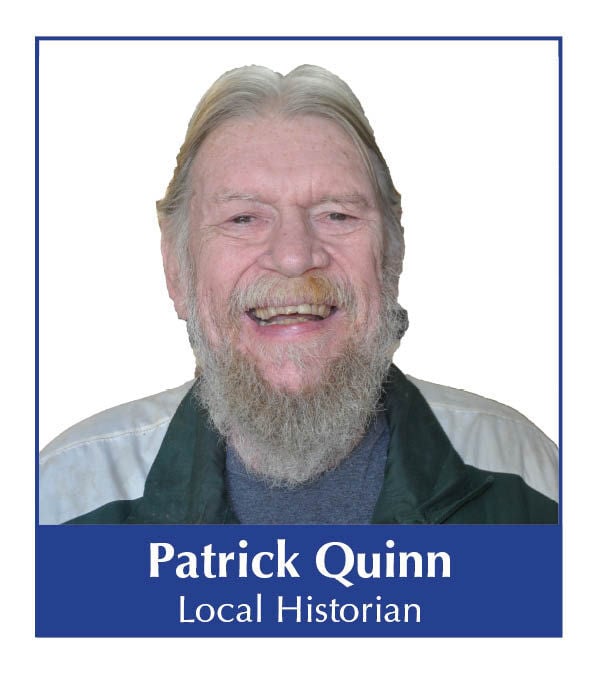
Andrew Ferguson’s son Charles Ferguson built the house next door to the north of the house that I live in on Maxwell Street in 1856. When I was growing up, the house next to mine was always known as the Ferguson farm house. Andrew Ferguson passed away on May 14, 1884, at the age of 81. Andrew Ferguson was the person who built the first frame building in Geneva and opened the first store in the village. He was, without a doubt, the most significant resident of Geneva in the middle of the 19th Century. Andrew Ferguson and four other individuals platted and developed the first five additions to the village of Geneva during the middle of the 19th century. Those additions were the Ferguson Addition, the Rich Addition, the Phillips Addition, the Crawford Addition and the Marsh Addition.
The five builders of the village of Geneva during the 19th Century were Andrew Ferguson, Erasmus Darwin Phillips, Harrison Rich, John Haskins and Fernando C. Marsch.
Erasmus Darwin Phillips who developed the Phillips Addition to Geneva south of Main Street on Catholic Hill was born on May 31, 1809 in Savoy, Massachusetts. He was educated at Williams College in Williamstown, Massachusetts and studied law in Buffalo, New York.
In 1836 he moved to Milwaukee, Wisconsin where he became a “land speculator,” buying and selling land. In 1856 he moved to the Village of Geneva where he platted the Phillips Addition to Geneva on Catholic Hill and built a house in the addition. Darwin Street in Lake Geneva is named after him. Erasmus Darwin Phillips died in Lake Geneva on Sept. 15, 1902, at the age of 93.
Harrison Rich was born in upstate New York in 1814. He moved to Geneva prior to 1855. He purchased the land between today’s Madison and Williams streets north of North Street and developed it. Marshall Street and Williams Street are named after his sons. He held various offices in Geneva. He built a house where Su Wings restaurant is today. He passed away on April 26, 1889, at the age of 75 and was buried in the Pioneer Cemetery. Harrison Rich’s descendant Evelyn Mahoney was a well-known real estate developer in Lake Geneva.
John Haskins was born in Washington, Massachusetts in 1811. In 1835 he moved to Ontario County, New York where he lived until 1841 when he and his brother James Haskins moved to Geneva. He purchased a dam and water power on the White River near the end of today’s Haskins Street which is named after him. In 1843 he opened a saw mill on the site which he operated until 1875. He also operated a linseed oil factory. He passed away on November 19, 1887 at the age of 76. John Haskins and his brother James developed the northeast side of Lake Geneva north of Water Street between Center Street and the White River. The neighborhood is known as the Crawford, after the Crawford Manufacturing Company, which manufactured grain reapers. Its factory was on the White River at the eastern end of today’s Haskins Street.
Fernando C. Marsh was born in Canada in August 1835 to a Canadian-born father, Fernando Coelle Marsh, and an Irish-born mother, Jennie Cullen Marsh. After he moved to Geneva at the beginning of the 1870s, he developed the Marsh Addition to Geneva which was west of the Pioneer Cemetery between Dodge Street and the northern end of the cemetery. It included Maxwell Street, Franklin Avenue, Jefferson Street, and Fremont Street. Fernando C. Marsh lived in a house on the north side of Main Street between Maxwell Street and Elmwood Avenue. He passed away on May 28, 1928 at the British Old People’s Home in Hollywood, Illinois at the age of 92. He was buried in the Oak Hill Cemetery.
After the Marsh Addition to the village of Geneva was platted at the beginning of the 1870s Geneva/Lake Geneva did not grow again until the Columbian Addition was platted in 1893. It was named after the Columbian Exposition — or World’s Fair — in Chicago which was held south of the University of Chicago, adjacent to the Midway Plaisance. Park Row in Lake Geneva is modeled after the Midway Plaisance.
The Columbian Addition to Lake Geneva north and northwest of the Pioneer Cemetery included Park Row, Pleasant and Clover streets. It was developed by a consortium of Lake Geneva investors.
In the United States a severe economic depression began in 1893 and very few houses were built in the Columbian Addition until after World War I. During the years that followed the Columbian Addition there would be no additions to Lake Geneva until the middle of the 20th Century when State Sen. William F. Trinke developed the Manor subdivision on the shore of Geneva Lake on what had once had been the Levi Leiter estate.