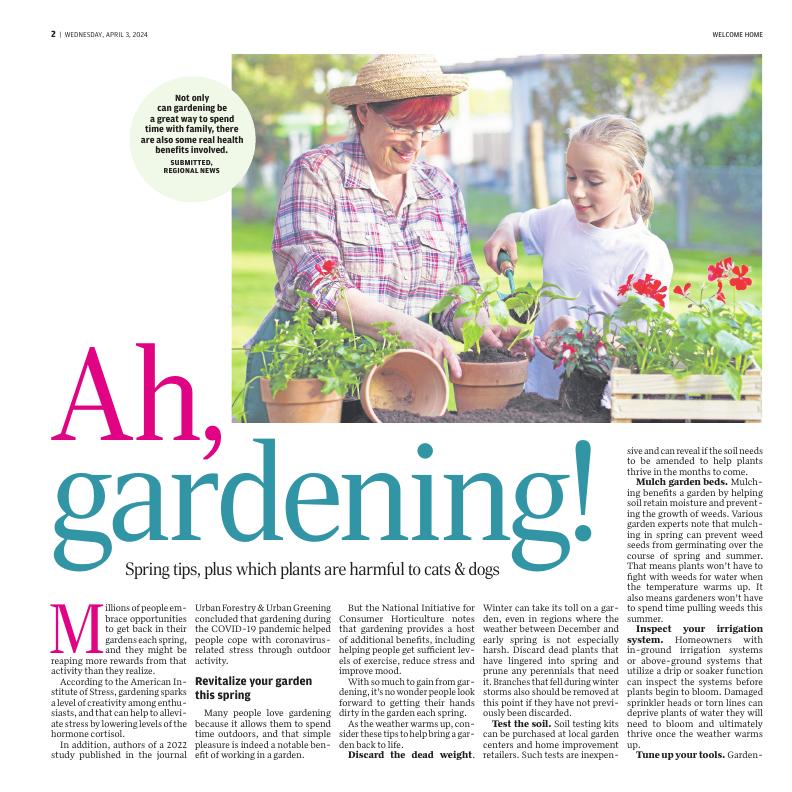


Ahhh, gardening! Spring tips, plus which plants are harmful to cats & dogs

Not only can gardening be a great way to spend time with family, there are also some real health benefits involved.
Millions of people embrace opportunities to get back in their gardens each spring, and they might be reaping more rewards from that activity than they realize.
According to the American Institute of Stress, gardening sparks a level of creativity among enthusiasts, and that can help to alleviate stress by lowering levels of the hormone cortisol.
In addition, authors of a 2022 study published in the journal Urban Forestry & Urban Greening concluded that gardening during the COVID-19 pandemic helped people cope with coronavirus-related stress through outdoor activity.
Revitalize your garden this spring
Many people love gardening because it allows them to spend time outdoors, and that simple pleasure is indeed a notable benefit of working in a garden.
But the National Initiative for Consumer Horticulture notes that gardening provides a host of additional benefits, including helping people get sufficient levels of exercise, reduce stress and improve mood.
With so much to gain from gardening, it’s no wonder people look forward to getting their hands dirty in the garden each spring.
As the weather warms up, consider these tips to help bring a garden back to life.
Discard the dead weight. Winter can take its toll on a garden, even in regions where the weather between December and early spring is not especially harsh. Discard dead plants that have lingered into spring and prune any perennials that need it. Branches that fell during winter storms also should be removed at this point if they have not previously been discarded.
Test the soil. Soil testing kits can be purchased at local garden centers and home improvement retailers. Such tests are inexpensive and can reveal if the soil needs to be amended to help plants thrive in the months to come.
Mulch garden beds. Mulching benefits a garden by helping soil retain moisture and preventing the growth of weeds. Various garden experts note that mulching in spring can prevent weed seeds from germinating over the course of spring and summer. That means plants won’t have to fight with weeds for water when the temperature warms up. It also means gardeners won’t have to spend time pulling weeds this summer.
Inspect your irrigation system. Homeowners with in-ground irrigation systems or above-ground systems that utilize a drip or soaker function can inspect the systems before plants begin to bloom. Damaged sprinkler heads or torn lines can deprive plants of water they will need to bloom and ultimately thrive once the weather warms up.
Tune up your tools. Gardening tools have likely been sitting around gathering dust since fall. Serious gardeners know that tools can be expensive, so it pays to protect that investment by maintaining the tools. Sharpened pruners help make plants less vulnerable to infestation and infection. Well-maintained tools like shovels and hoes also make more demanding gardening jobs a little bit easier, so don’t forget to tune up your tools before the weather warms up.
It’s almost gardening season, which means gardeners can start on the necessary prep work to ensure their gardens grow in strong and beautiful this spring.
Some plants are toxic to pets
For those with dogs and cats that will spend time outdoors, it’s best to be aware of potentially toxic plants, courtesy of the American Society for the Prevention of Cruelty to Animals (ASPCA).
Autumn crocus: There are various types of crocus plants, but the one most toxic to dogs is autumn crocus. The entire plant is toxic, but the highest concentration of toxic agent is found in the bulbs.
Lily: Lilies are highly toxic to cats in particular. Even grooming pollen off of their fur or drinking water out of a vase where lilies are kept may cause kidney failure.
Tulips and hyacinth: These early bloomers are beautiful flowers, but each contains a similar alkaloid toxin that is mild to moderately toxic to pets. Again, the highest concentration is found in the bulbs, which dogs or cats may dig up while exploring.
Aloe vera: This soothing succulent may be part of an arid climate landscape. Aloe contains saponin, a toxin with foaming properties that can harm pets if ingested and cause severe dehydration.
Begonia: A popular outdoor and houseplant, begonia has decorative flowers and attractive leaves. However, the plant can be toxic to cats and dogs if ingested, particularly the underground tubers.
Azalea: This flowering shrub produces flowers in many colors, so it’s often present in household landscapes. It s important to note that azaleas can be toxic to dogs and cats.
Yew: American, Canadian and Japanese yew may be found around properties. These shrubs produce small red berries with green centers, almost looking like the reverse of a Spanish olive with pimento. Yew is toxic to cats and dogs.
Dahlia: Dahlia produce flowers in different colors, so they are common in flower beds. However, these plants also are mildly toxic to pets.
Many toxic plants can irritate the gastrointestinal system in pets, potentially resulting in vomiting, diarrhea or lethargy.
Those who suspect a pet has ingested a poisonous plant should contact the ASPCA Animal Poison Control Center at 888-426-4435 or their local veterinarian to learn about how to respond to possible exposure.