

WHEN IN DROUGHT
In parched Hungary, volunteers build dams to hold on to vanishing water

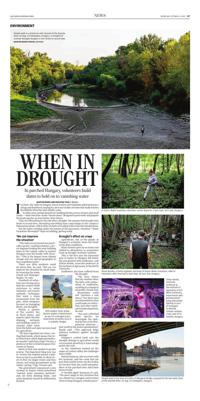
People walk in a dried-out side channel of the Danube river on Aug. 4 in Budapest, Hungary. a drought-hit summer brought Hungary's river levels to record lows.
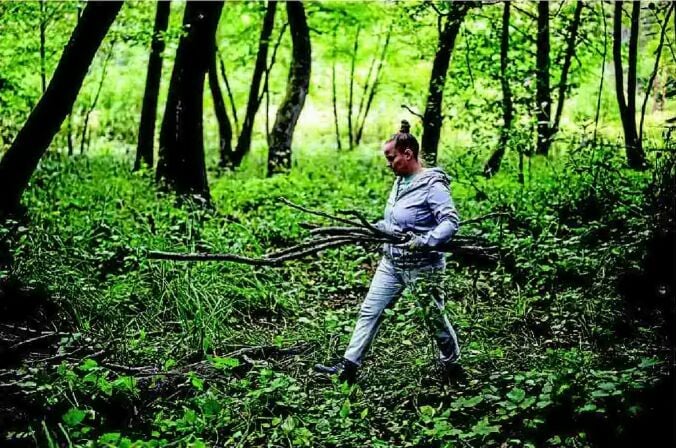
A Gomor Water Guardians volunteer carries wood for a dam sept. 18 in Ozd, Hungary.
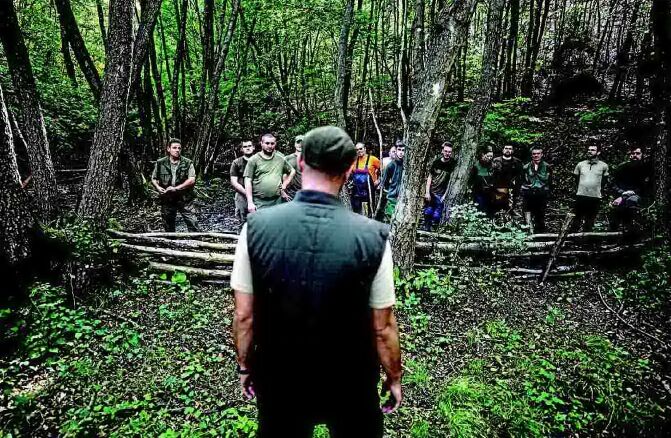
Bence Bardos, a forest engineer and head of Gomor Water Guardians, talks to volunteers after they built a dam sept. 18 near Ozd, Hungary.
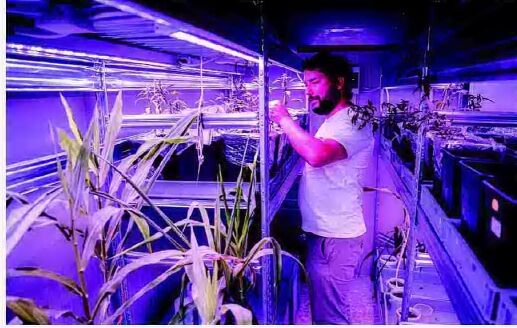
Zoltan Kende, associate professor at the Institute of agronomy at the Mate University, experiments with growing plants using specialized lighting as part of strategies to develop climate-esilient crops June 22 in Godollo, Hungary.

People walk at the base of a pillar of Margaret bridge, exposed by the low water level of the Danube river, on Aug. 4 in Budapest, Hungary.
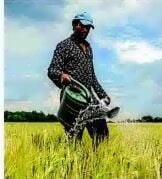
PhD student Yimer Arebu Hussen applies a biostimulant as part of a drought-stress experiment on barley June 22 in Godollo, Hungar.
ENVIRONMENT
In a bone-dry valley in Hungary, forest workers and volunteers piled up terraces of logs and deadwood, hoping to catch any trickles of water that make it down the hillside when the rains finally come.In other areas, groups fanned out, building barriers across streams and small creeks — their own man-made "beaver dams" designed to pool water and prepare the landscape for an even hotter, drier future.
They are still waiting for the rain after a drought-hit summer that brought river levels to record lows, disrupting everything from cargo barges to the country's Paksnuclear plant, which relies on flows of cooling water from the Danube River.
But the teams working under the banner of the grassroots, volunteer "Water Guardians Movement" kept on building, getting ready.
'We can improve the situation'
"The wells (on my farm) have practically run dry," said Bence Bardos, a forest engineer leading the team building dams in the Ladany valley in eastern Hungary near the border with Slovakia. "This is the impact from climate change and our special geography in the Carpathian basin."
There was little residents could do about that, he said. "But we can improve the situation by small steps, by reversing the water runoff and drainage," Bardos, 36, said.
Hundreds of volunteers are turning up to help the country build structures to retain rainwater and restore wetlands — techniques that mark a sharp turnaround from the past, when programs focused on managing floods, not droughts.
Nearly a quarter of the country lies in flood plains, and experts spent decades draining wetlands and building canals to channel water away from the fields and open up more land for agriculture.
"We have regulated our rivers, cutting their bends, which means the rivers flow faster, which drains groundwater nearby," said Diana Ürge-Vorsatz, a professor at the Central European University in Vienna.
Much of that now needed to go into reverse. The important thing now was to "restore the original natural conditions as much as possible, to allow rivers to flow on longer routes and thus slower, and retain groundwater in the winter-spring," Ürge-Vorsatz said.
The government announced a new strategy in August which prioritized "natural water retention methods" and, far from draining fields, said some farmland should be deliberately flooded.
Drought's effect on crops
Agriculture, one of the planks of Hungary's economy, bears the brunt of the drier conditions.
Many farmers gave up on maize and shifted to alternatives as researchers work on drought-resistant varieties.
This is the first year the harvested area of maize in Hungary fell below the area planted with sunflowers, said Zoltan Kende, associate professor at the Institute of Agronomy at the MATE University.
Sunflowers also have suffered from the drought.
"We have shown that dry weather alters the fatty acid composition of sunflowers, resulting in a change in oil quality," Kende said.
Researchers could not "perform a rain dance," but there were recommendations they could make on cultivation and other methods to help adaptation, he said.
"For each cultivated plant species, we investigate the optimal factors as for temperature, moisture … that result in the fastest germination," Kende said. "This approach helps enhance resilience against drought damage."
Hungary's central bank says the drought damage to agriculture would cut economic growth by 0.4 percentage points this year.
As the volunteers worked on the slopes of Ladany valley, the challenges were visible.
Borbala Kanizsay, who was there with her husband, said the creek that ran past their nearby house ran dry in May for the first time she could remember. Most of her parched trees shed their leaves in July.
A "terrible sight," Kanizsay, 41, said. "We must adapt to this situation that our climate has changed, and we must strive to keep Hungary a livable place."